formularioRDF
The itinerary <em>TITULORECORRIDO</em> has been successfully created. Now you can add in works from the Collection browser
<em>TITULOOBRA</em> added to <em>TITULORECORRIDO</em> itinerary

Metabuscador

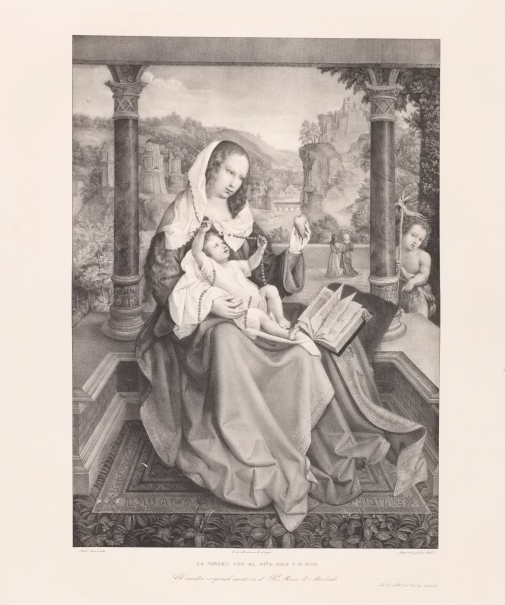
Mary with Child
Lithographic aquatint, Crayon lithography, Scraper, Pen lithography on wove paper. 1832 - 1837
Es una litografía de Augusto Guglielmi (activo en Madrid entre 1829 y 1837) que reproduce un lienzo de Bernard van Orley (P01932) cuya autoría era desconocida en el siglo XIX tal y como figura en la estampa. Esta estampa se entregaba con el cuadernillo CXXXVIII acompañado de un texto explicativo de José Musso y Valiente. Iba encuadernada en el tomo III de la serie dirigida por José de Madrazo, Colección litográfica de cuadros del rey de España el señor don Fernando VII, editada por el Real Estab
ARTWORK
Augusto Guglielmi – Lithographer – (The original work, according to inscriptions, attributed to: Not identified)
Bernard van Orley – (Author of the original work)
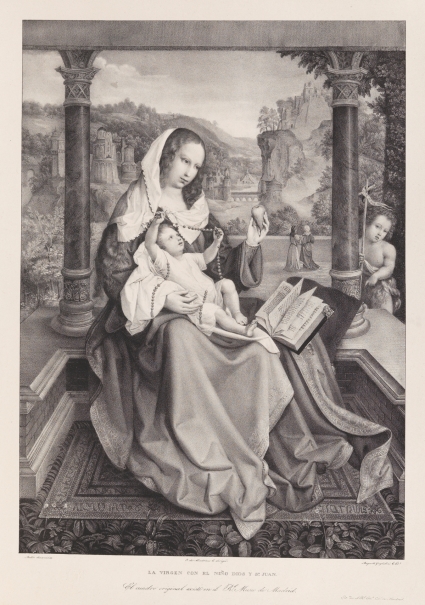
The Virgin and Child with the Infant Saint John the Baptist
Lithographic aquatint, Scraper, Printing on japon, Pen lithography, Crayon lithography on wove paper. 1832 - 1837
Es una litografía de Augusto Guglielmi (activo en Madrid entre 1829 y 1837) que reproduce un lienzo de Bernard van Orley (P01932) cuya autoría era desconocida en el siglo XIX tal y como figura en la estampa. El título que aparece en la estampa es La Virgen con el niño Dios y Sn. Juan. Esta estampa se entregaba con el cuadernillo CXXXVIII acompañado de un texto explicativo de José Musso y Valiente. Está encuadernada en el tomo III de la serie dirigida por José de Madrazo, Colección litográfica de
ARTWORK
Augusto Guglielmi – Lithographer – (The original work, according to inscriptions, attributed to: Not identified)
Bernard van Orley – (Author of the original work)
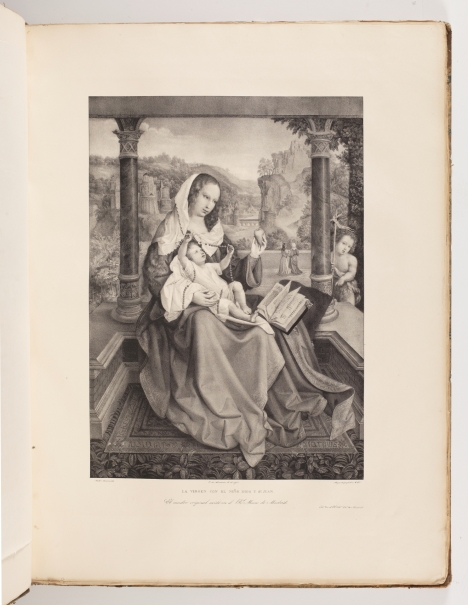
The Virgin and Child with the Infant Saint John the Baptist
Lithographic aquatint, Pen lithography, Crayon lithography, Scraper on wove paper. 1832 - 1837
Es una litografía de Augusto Guglielmi (activo en Madrid entre 1829 y 1837) que reproduce un lienzo de Bernard van Orley (P01932) cuya autoría era desconocida en el siglo XIX tal y como figura en la estampa. Esta estampa se entregaba con el cuadernillo CXXXVIII acompañado de un texto explicativo de José Musso y Valiente. Está encuadernada en el tomo III de la serie dirigida por José de Madrazo, Colección litográfica de cuadros del rey de España el señor don Fernando VII, editada por el Real Esta
ARTWORK
Augusto Guglielmi – Lithographer – (The original work, according to inscriptions, attributed to: Not identified)
Bernard van Orley – (Author of the original work)
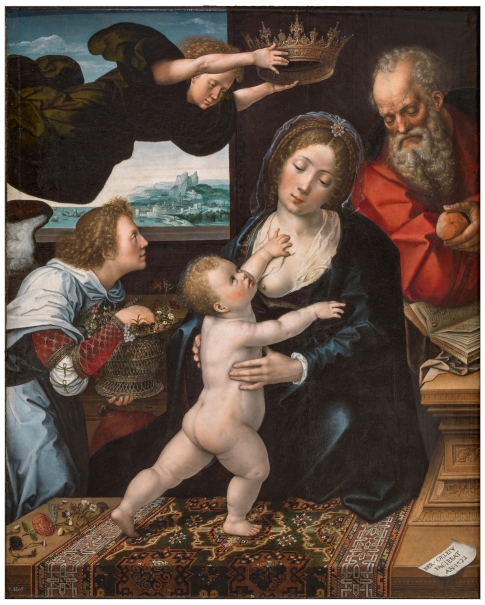
The Holy Family
Oil on panel. 1522
The Holy Family is shown indoors, in front of a window thought which a costal landscape is visible. The Christ Child stands on a sumptuous carpet and plays with his mother. Saint Joseph holds an apple —an allusion to the Garden of Eden-that symbolizes Mary´s condition as the new Eve. An Angel crowns the Virgin as Queen of Heaven while another offers her a basket of flowers like those resting on the table, alluding to the Passion Jesus must suffer to save humankind from sin. This panel owes much
ARTWORK
The Virgin and Child with singing angels
Oil on panel. 1515 - 1520
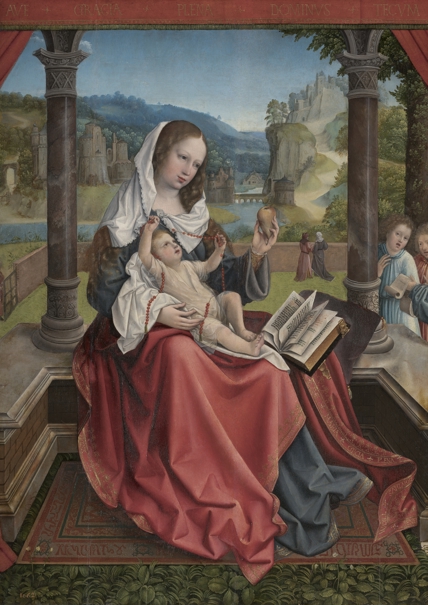
The scene takes place under renaissance architecture in the form of a gallery or observatory open to a garden. Behind it lies a broad landscape with a river. Between 1515 and 1520, van Orley made several works on the same subject, but this one stands out for its background, as well as for the couple in the garden with their backs to the viewer. These are similar to what is depicted in Jan van Eyck´s Madonna of Chancellor Rolin, at the Louvre in Paris.During the restoration of the painting in the
ARTWORK
The Virgin nursing the Child
Oil on panel. Ca. 1520
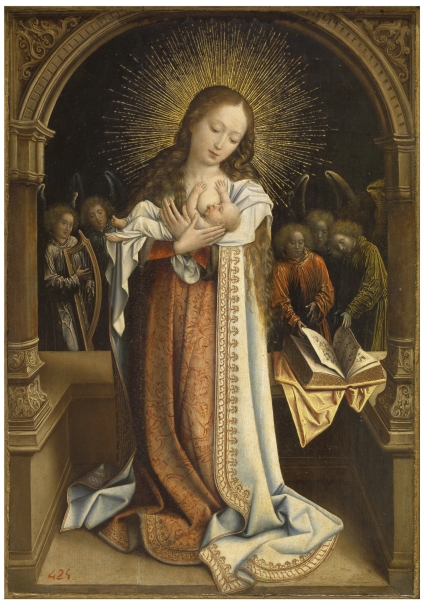
The Virgin, with an idealized face, stands under a semi-circular arch, holding her Child in her arms. In the background are five angels: a harpist and a singer on the left, and on the right, three more, reading a large music book. The painter from Brussels modeled this work after the so-called Madonna of the Apse by Robert Campin. The scene is framed by renaissance architecture that reveals van Orley´s esthetic interests at that time. Typical of his style is the meticulous technique and his inte
ARTWORK
The Virgin of Louvain
Oil on panel. Ca. 1520
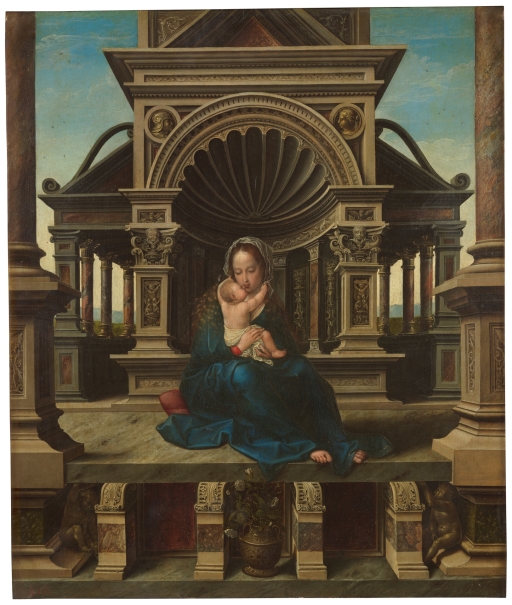
According to the Latin inscription on the back of this panel, which attributes it to Jan Gossaert, it was acquired by the magistrate of Louvain in 1588 from that city’s Augustinian monks. It was intended as a gift of thanks to Philip II for having waived the taxes and tariffs owed by the inhabitants of Louvain for twelve years after that city was decimated by the plague in 1578. Seeking to give the king something he would enjoy, they chose a painting. As Philip II’s appreciation of old Flemish p
ARTWORK
The Virgin and Child with Hernán Gómez Dávila y San Francisco
Oil on panel. XVI century
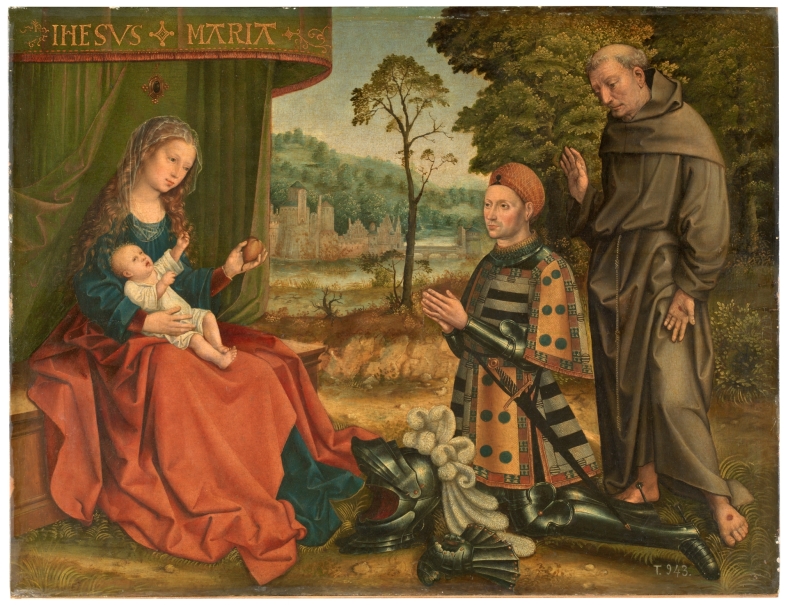
Cruzada Villaamil (1865) no registró la procedencia de esta obra. Pedro de Madrazo señaló en el catálogo del Museo del Prado de 1873 que procedía de la capilla ochavada del convento de San Francisco de Ávila, donde estuvo sepultado Gómez Dávila, y esa noticia ha sido recogida en todos los catálogos posteriores. La descripción y las medidas del cuadro de Monasterio de Santa María la Real de Valdeiglesias (Pelayos de la Presa, Madrid) que aparece en una nota fechable en 1842 de los cuadros remitid
ARTWORK
Loading...

Loading...

Up