formularioRDF
The itinerary <em>TITULORECORRIDO</em> has been successfully created. Now you can add in works from the Collection browser
<em>TITULOOBRA</em> added to <em>TITULORECORRIDO</em> itinerary

Metabuscador

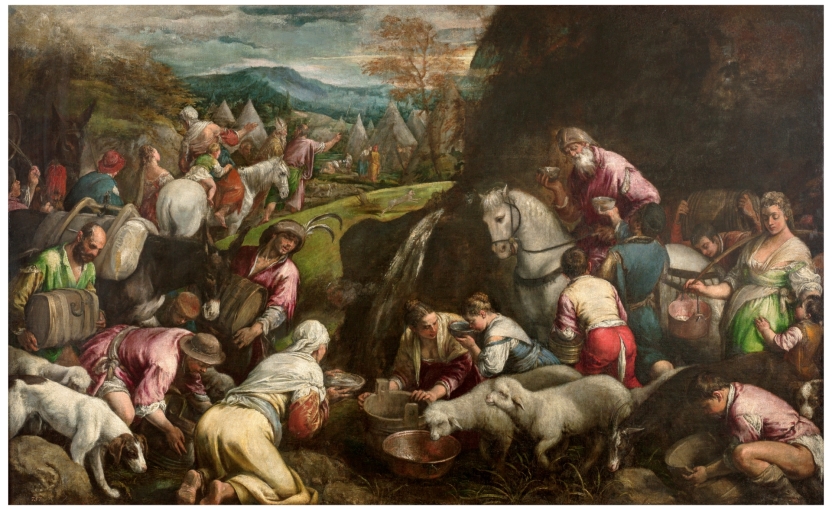
The Israelites drinking the miraculous Water
Oil on canvas. 1566 - 1568
During the sixteenth and seventeenth centuries, Jacopo Bassano and his sons were renowned throughout Europe, but most of all in Spain, after Philip II began acquiring their works in the 1570s. Jacopo was then appreciated as an eminently naturalist painter who specialised in depictions of animals and genre scenes. As the Spanish ambassador to Venice put it in 1574: He is very esteemed for his paintings of natural animals and other things. The Israelites drinking the Miraculous Water, c.1566-68, i
ARTWORK
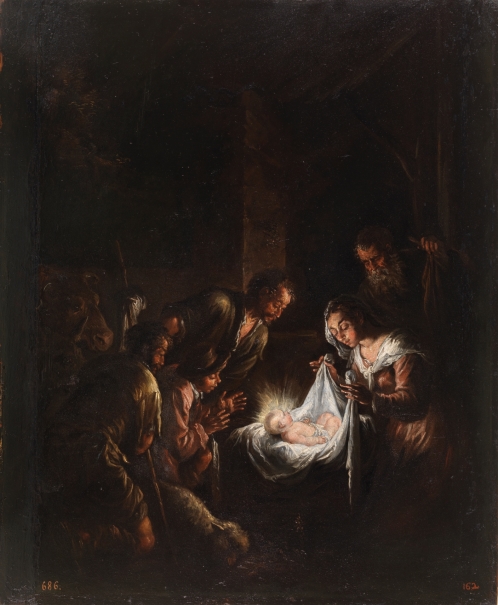
Adoration of the Shepherds
Oil on panel. Ca. 1580
There are two more known versions of this work in Vienna (Kunsthistorisches Museum, inv. 1581) and a private collection in Padua. The former has always been attributed to Francesco, whereas Ballarin has assigned the second to Jacopo, dating it to about 1575. In Ballarin´s view, the Padua painting is the original from which the other versions were derived and on which Jacopo based his first Adoration of the Shepherds in a nocturnal setting, which marked the beginning of a sequence of works that e
ARTWORK
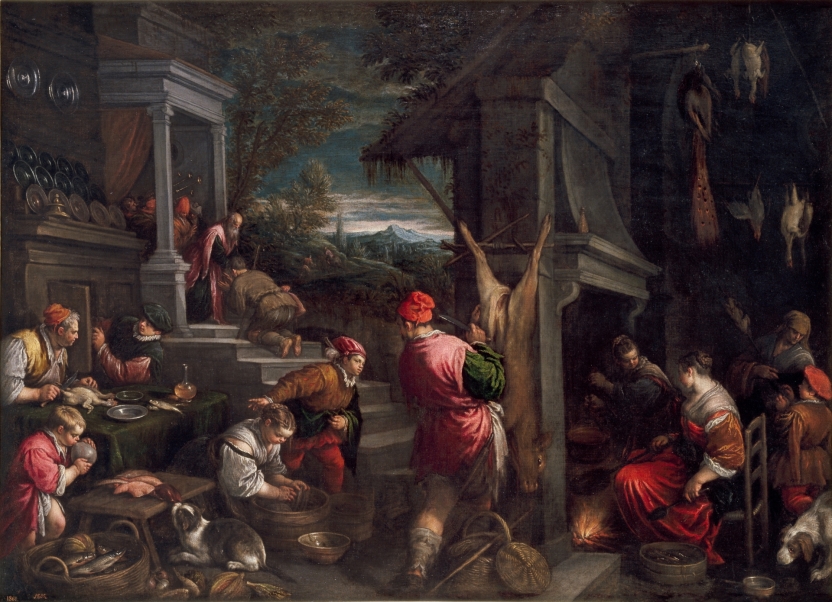
The Return of the Prodigal Son
Oil on canvas. Ca. 1570
This work portrays the well-known New Testament parable (Luke, 15: 11-32) illustrating the repentance of the sinner and the virtues of forgiveness. The pretext for the setting is the banquet given by the father to celebrate the return of the son, in which, according to the gospel, a fatted calf was served. The painter chose to recreate the festive nature of the event, ignoring the angry protests of the eldest son (often identified with the Jewish people) at the welcome with which the younger pro
ARTWORK
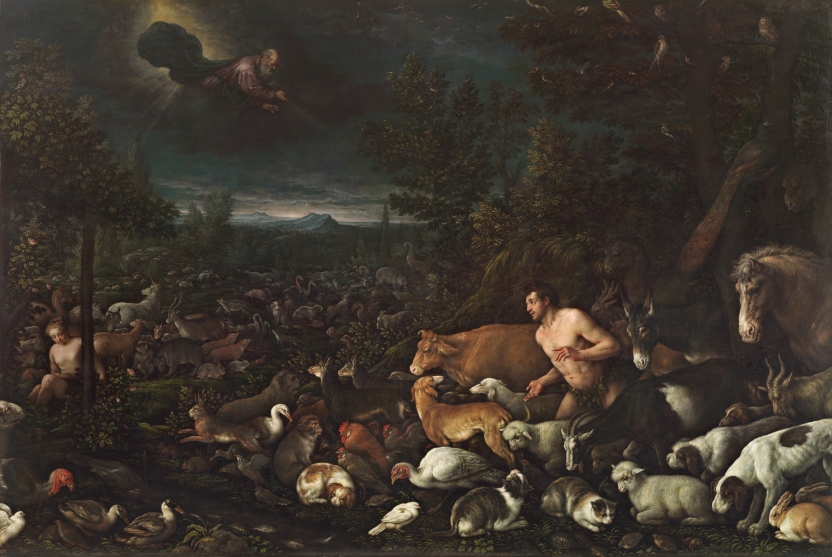
God reprimanding Adam
Oil on canvas. Ca. 1570
It is surprising that such a significant passage was seldom represented pictorially, whereas there are many examples of the moment immediately after the expulsion from Paradise. Neither was it a frequent theme of the Bassano bottega, despite lending itself well to a display of masterful representation of animals. In fact, this is the only known version. Jacopo convincingly depicted the moment God discovered man´s disobedience, which led to his expulsion from Paradise. Faithfully following the te
ARTWORK
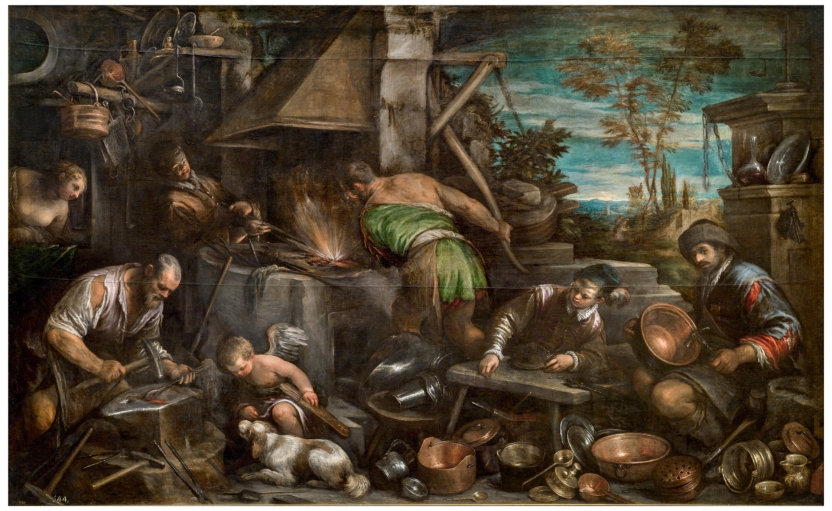
Vulcan's Forge
Oil on canvas. Ca. 1577
It was Ballarin who discovered what is probably the Prado´s finest painting by Jacopo, and one of his most impressive late works, hanging in the Sala de Juntas of the Universidad de Barcelona, where it was deposited, having been attributed to a follower of Leandro Bassano. The painting appears to be a monumental refutation of Vasari´s description of Jacopo in the second edition of his Lives (Florence, 1568), as a painter of animals and small figures. The Forge is the result of a profound study o
ARTWORK
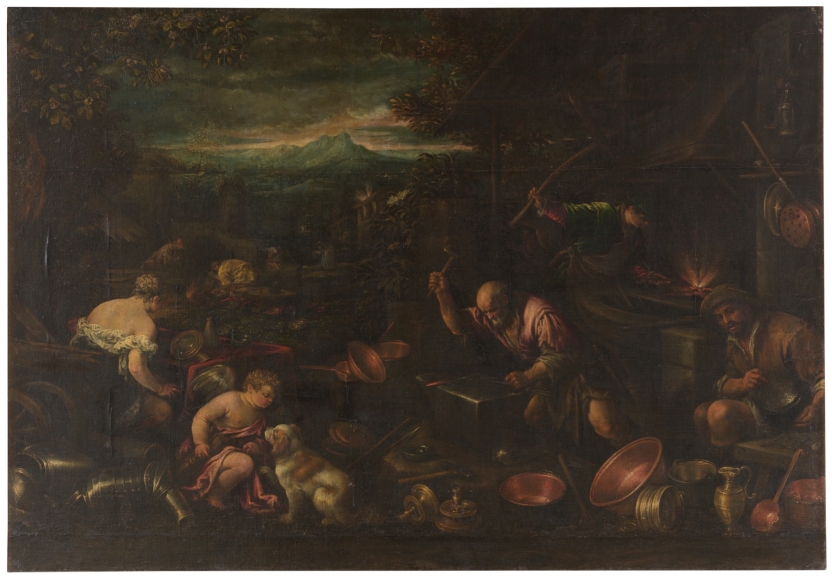
The Forge of Vulcan
Oil on canvas. Late XVI century
The Elements, the last of the series of four canvases conceived by Jacopo after the Noah cycle and the Seasons, is dated around 1576-1577. There are three known incomplete series produced by the bottega, in which Jacopo´s degree of involvement varies. Of the original series, executed mainly by Francesco, Air (Berlin, Kaiser Friederich Museum) remains; of a later set produced in 1578-1580 and executed chiefly by Leandro, Earth (Baltimore, Walters Art Gallery) survives; and of the last, dated to 1
ARTWORK
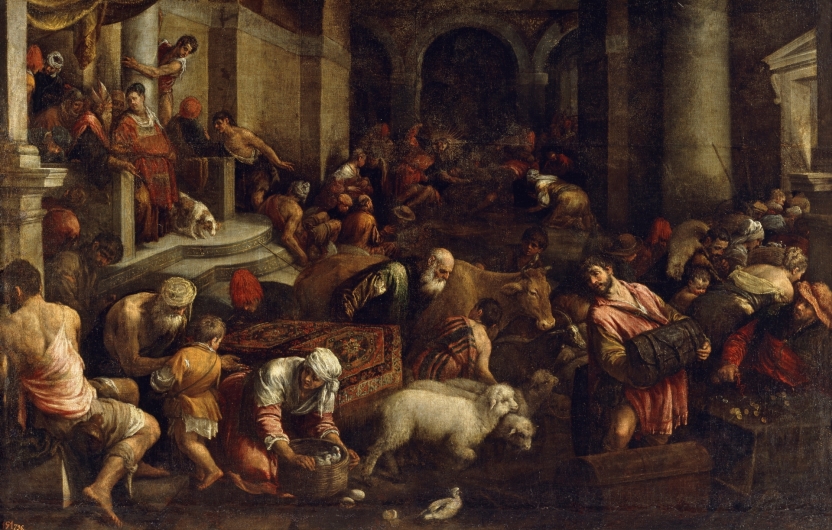
Expulsion of the Merchants from the Temple
Oil on canvas. Ca. 1568
Although for this first version Jacopo borrowed elements from early works such as the young man peeking his head round the column, which appears in the 1536 La fornace ardente (Bassano del Grappa, Museo Civico), he drew mainly from Stefano Cernotto´s Expulsion of the Merchants from the Temple (Venice, Accademia, deposited at the Ceni Foundation). Cernotto, an artist of Dalmatian origin who worked in Venice between 1530 and 1545, painted his Expulsion about 1535 for the second courtroom of the Ma
ARTWORK
The Animals entering Noah’s Ark
Oil on canvas. Ca. 1570
This painting is Jacopo´s first depiction of the passage from Genesis 6:20 and the only one in which the theme is treated separately rather than as part of a series depicting the story of Noah. Jacopo respected the biblical tale in terms of the number of people who were saved -Noah, his wife, and his three sons Shem, Ham and Japheth, with their wives- but took liberties with the animals. In some cases, such as the dogs, lambs and cows, he included more than two. He also failed to respect the pri
ARTWORK
Loading...

Loading...

Up