formularioRDF
The itinerary <em>TITULORECORRIDO</em> has been successfully created. Now you can add in works from the Collection browser
<em>TITULOOBRA</em> added to <em>TITULORECORRIDO</em> itinerary

Metabuscador

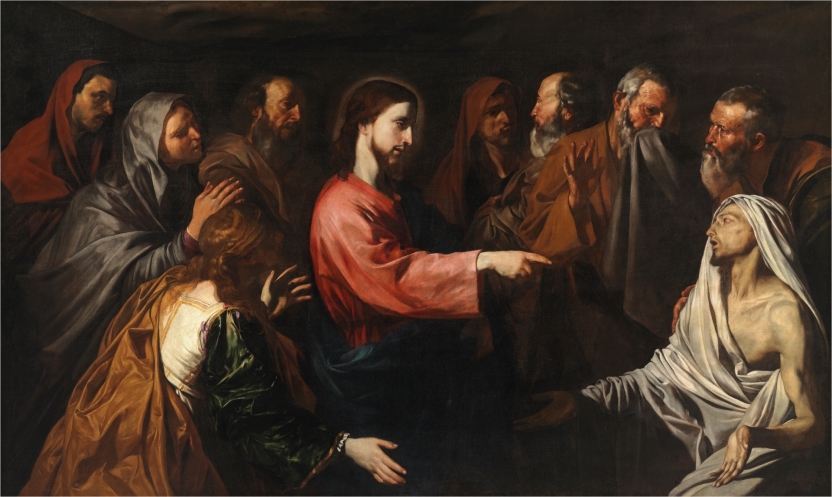
The Raising of Lazarus
Oil on canvas. Ca. 1616
Having been told of the death of his disciple Lazarus, Christ went to his grave in Bethany and commanded him to arise from the tomb. Lazarus arose, “bound hand and foot with graveclothes: and his face was bound about with a napkin”. Among the witnesses to this event were Lazarus’ sisters Martha and Mary. Ribera emphasised the dramatic aspect of this subject, depicting a wide range of emotional states. The canvas is one of the most complex and ambitious of the artist’s early career when he lived
ARTWORK
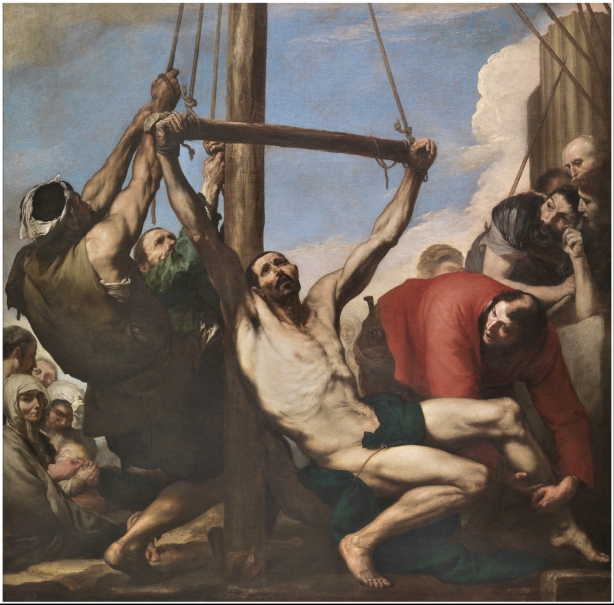
The Martyrdom of Saint Philip
Oil on canvas. 1639
According to sources from antiquity and The Golden Legend (a 13th-century book that narrates the lives of saints), the apostle Philip preached the Gospel in Scythia and was crucified in the city of Hierapolis. His martyrdom has rarely been represented -the best known depiction is Filippino Lippi’s (1457-1504) fresco at the Strozzi Chapel in the Florentine church of Santa Maria Novella- but it usually shows him tied, rather than nailed, to the cross. The present work was long classified as a mart
ARTWORK
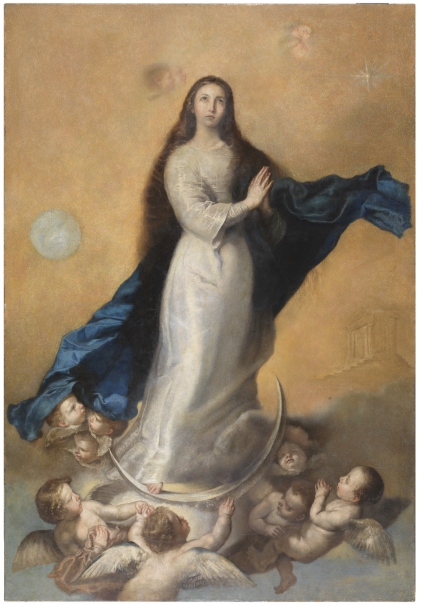
The Immaculate Conception
Oil on canvas. 1647
La obra se sitúa en la fase final de la actividad del artista, que utiliza el mismo esquema compositivo que otras composiciones anteriores suyas del mismo tema. Se conocen numerosas copias, entre ellas una en el convento de las Carmelitas de Boadilla del Monte (Madrid) y otra (280x180) en la iglesia de San Andrés de Calahorra (La Rioja) (Spinosa, N. Ribera: la obra completa, Fundación Arte Hispánico, 2008, p. 477).
ARTWORK
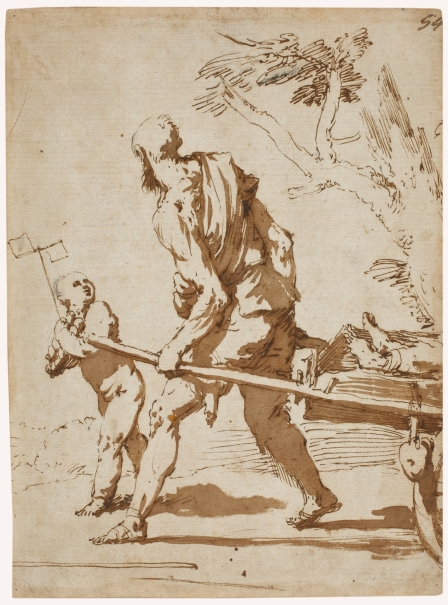
Boy with a Pinwheel and Man pulling a Cart with a body
Wash, Pencil strokes, Pencil, Grey-brown ink on laid paper. Ca. 1640
Until now, this drawing has been dated in the 1630s, fundamentally because its subject matter can be related to the epidemics of cholera and leprosy that struck the city of Naples in those years. Stylistically, however, this drawing more closely resembles the artist’s late works. While his drawings from the 1630s are characterized by very precise pencil or pen lines and a very nuanced use of washes, those from the following decade are more like the present work, with broken lines, much less prec
ARTWORK
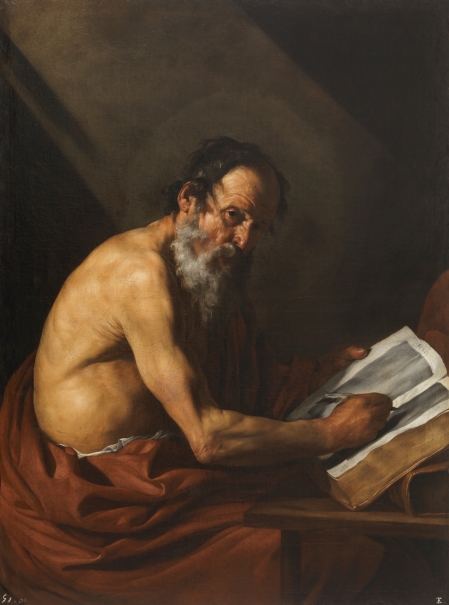
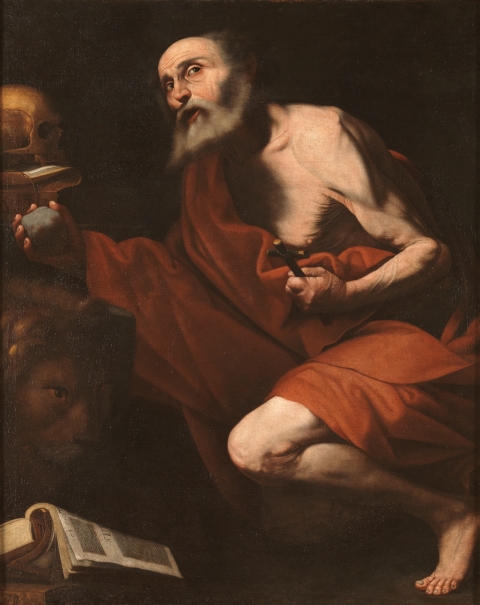
Saint Jerome writing
Oil on canvas. Ca. 1615
Saint Jerome, who translated the Bible into Latin, is shown here as both an intellectual and penitent. Ribera painted this canvas around 1615. Together with The Raising of Lazarus, also in the Prado (P-7768), it casts light on his early career at a time when he was particularly influenced by caravaggesque models.
ARTWORK
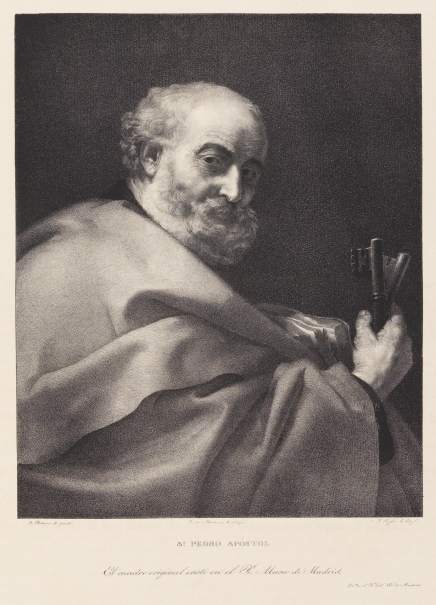
Saint Peter
Crayon lithography, Pen lithography, Lithographic tusche wash, Scraper on wove paper. 1832 - 1837
Aunque la estampa está firmada por F. Taylor, esta litografía que reproduce el óleo de José de Ribera (P01071), se atribuye a Isidore-Justine-Séverin Taylor (1789-1879) (Vega, J.: Museo del Prado. Catálogo de estampas, Museo del Prado, 1992, p. 274, n. 1400).Esta estampa se entregaba con el cuadernillo CLXXXIV acompañado de un texto explicativo de José Musso y Valiente. Está encuadernada en el tomo III de la serie dirigida por José de Madrazo, Colección litográfica de cuadros del rey de España e
ARTWORK
Jusepe de Ribera lo Spagnoletto – (Author of the original work)
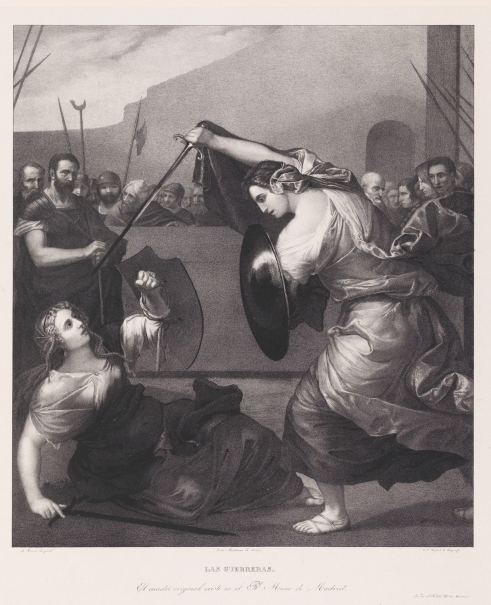
Women Gladiators
Lithographic aquatint, Printing on japon, Crayon lithography, Pen lithography, Scraper on wove paper. 1832 - 1837
Aunque la estampa está firmada por J. F. Taylor, esta litografía, que reproduce el óleo de José de Ribera (P01124), custodiado en el Museo Nacional del Prado, se atribuye a Isidore-Justine-Séverin Taylor (1789-1879) (Vega, J.: Museo del Prado. Catálogo de estampas, Museo del Prado, 1992, p. 276, n. 1413). Esta estampa se entregaba con el cuadernillo CXCVII acompañado de un texto explicativo de José Musso y Valiente. Está encuadernada en el tomo III de la serie dirigida por José de Madrazo, Colec
ARTWORK
Isidore-Justine-Séverin Taylor – Lithographer – (Attributed to)
Jusepe de Ribera lo Spagnoletto – (Author of the original work)
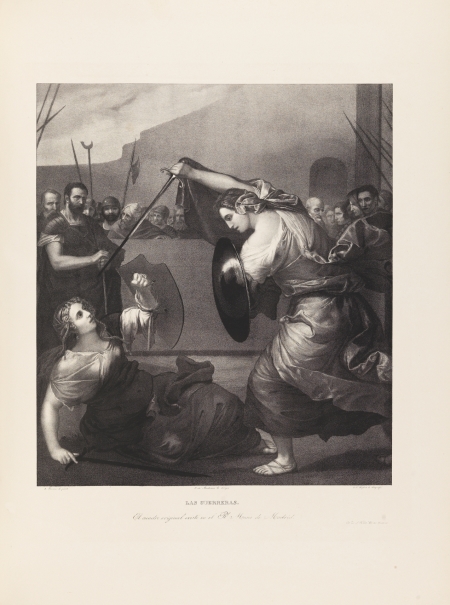
Women Gladiators
Lithographic aquatint, Pen lithography, Scraper, Crayon lithography on wove paper. 1832 - 1837
Aunque la estampa está firmada por J. F. Taylor, esta litografía, que reproduce el óleo de José de Ribera (P01124), custodiado en el Museo Nacional del Prado, se atribuye a Isidore-Justine-Séverin Taylor (1789-1879) (Vega, J.: Museo del Prado. Catálogo de estampas, Museo del Prado, 1992, p. 276, n. 1413). El título que aparece en la estampa es Las guerreras. Esta estampa se entregaba con el cuadernillo CXCVII acompañado de un texto explicativo de José Musso y Valiente. Está encuadernada en el to
ARTWORK
Isidore-Justine-Séverin Taylor – Lithographer – (Attributed to)
Jusepe de Ribera lo Spagnoletto – (Author of the original work)
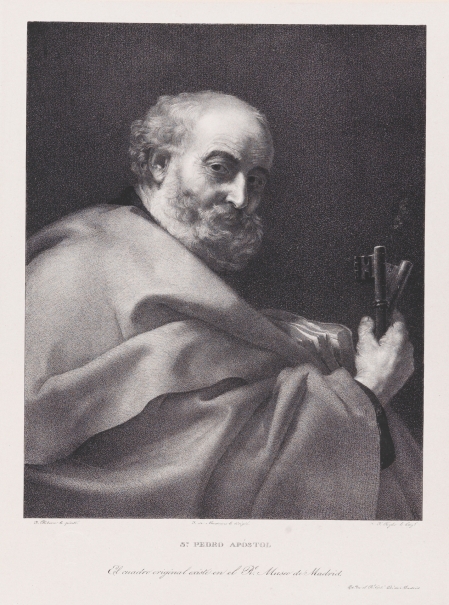
Saint Peter
Lithographic aquatint, Crayon lithography, Scraper, Printing on japon, Pen lithography on wove paper. 1832 - 1837
Aunque la estampa está firmada por F. Taylor, esta litografía que reproduce el óleo de José de Ribera (P01071), se atribuye a Isidore-Justine-Séverin Taylor (1789-1879) (Vega, J.: Museo del Prado. Catálogo de estampas, Museo del Prado, 1992, p. 274, n. 1400). Esta estampa se entregaba con el cuadernillo CLXXXIV acompañado de un texto explicativo de José Musso y Valiente. Está encuadernada en el tomo III de la serie dirigida por José de Madrazo, Colección litográfica de cuadros del rey de España
ARTWORK
Jusepe de Ribera lo Spagnoletto – (Author of the original work)
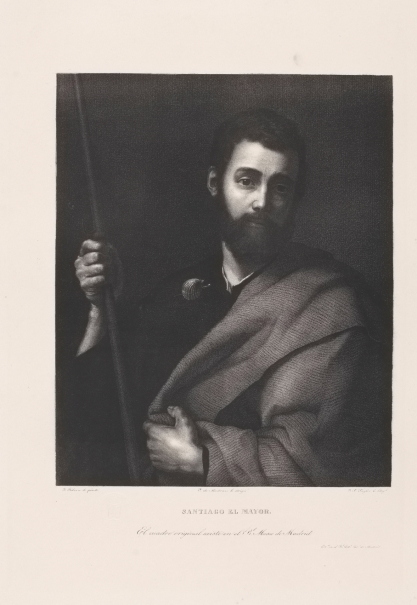
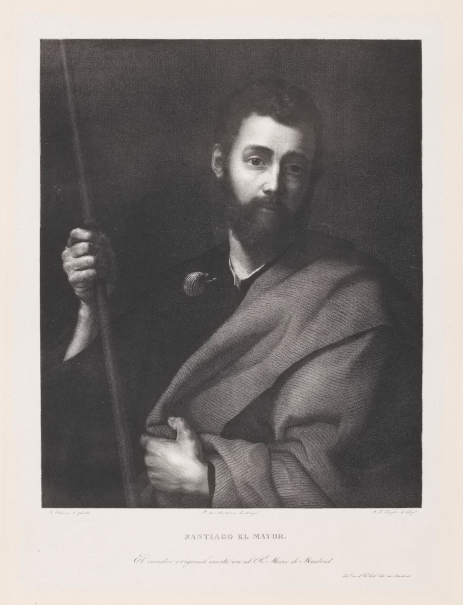
Saint James the Greater
Crayon lithography, Lithographic aquatint, Pen lithography, Scraper on wove paper. 1826 - 1837
Aunque la estampa está firmada por J. F. Taylor, esta litografía que reproduce el óleo de José Ribera (P01082), se le asigna a Isidore-Justine-Séverin Taylor (1789-1879) según la atribución que hace Jesusa Vega de otras estampas para esta colección (Vega, J.: Museo del Prado. Catálogo de estampas, Museo del Prado, 1992).De esta estampa existen pocos ejemplares. Salió al mercado sin encuadernar en ninguno de los tres volúmenes de los que constaba la Colección litográfica de cuadros del rey de Esp
ARTWORK
Isidore-Justine-Séverin Taylor – Lithographer – (Attributed to)
Jusepe de Ribera lo Spagnoletto – (Author of the original work)
Saint James the Greater
Lithographic aquatint, Printing on japon, Scraper, Crayon lithography, Pen lithography on wove paper. 1826 - 1837
Aunque la estampa está firmada por J. F. Taylor, esta litografía que reproduce el óleo de José Ribera (P01082), se le asigna a Isidore-Justine-Séverin Taylor (1789-1879) según la atribución que hace Jesusa Vega de otras estampas para esta colección (Vega, J.: Museo del Prado. Catálogo de estampas, Museo del Prado, 1992).De esta estampa existen pocos ejemplares. Salió al mercado sin encuadernar en ninguno de los tres volúmenes de los que constaba la Colección litográfica de cuadros del rey de Esp
ARTWORK
Isidore-Justine-Séverin Taylor – Lithographer – (Attributed to)
Jusepe de Ribera lo Spagnoletto – (Author of the original work)
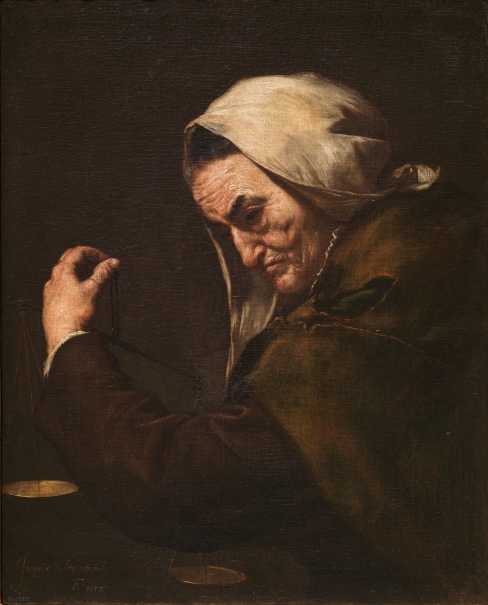
The Old Usurer
Oil on canvas. 1638
In this depiction that some have interpreted as an allegory of avarice, an old usurer, with wrinkled face, ragged clothes, an annoyed gaze and a distrustful expression, holds a set of scales, probably for weighing gold. In the sixteen thirties, Ribera´s style grew closer to that of the Venetians and Bolognese painters, yet this work affirms his continuing relation to Caravaggio´s naturalism. This is especially clear in the rendering of the scales and of the old woman´s figure. Unlike his youthfu
ARTWORK
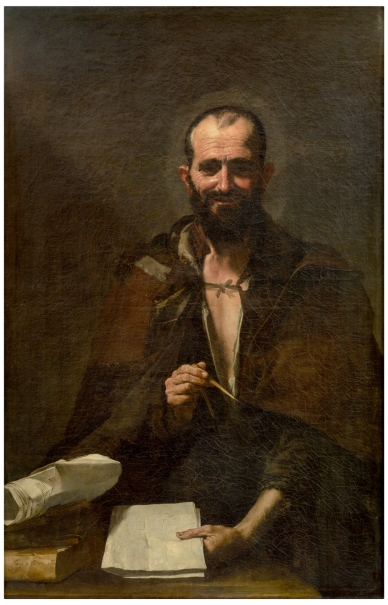
Democritus
Oil on canvas. 1630
The painting is one of the most celebrated of Jusepe de Ribera´s so-called ragged philosophers. Although born in Spain, the artist spent his entire professional life in Italy. He appears to have been largely responsible for the invention of the subject in the mid 1610s, and it enjoyed great success in Italy over the course of the seventeenth century in the hands of artists such as Salvator Rosa and Luca Giordano. The philosopher depicted here was traditionally identified as the ancient Sic
ARTWORK
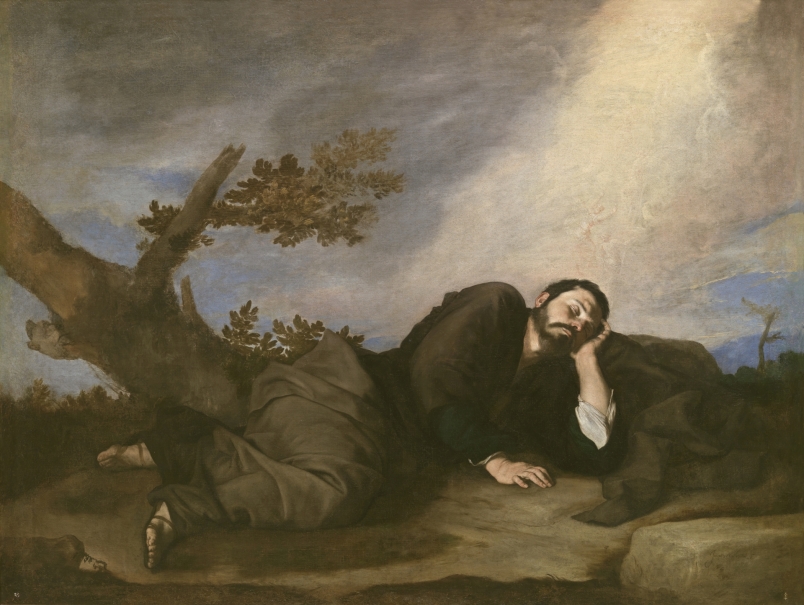
Jacob’s Dream
Oil on canvas. 1639
This painting tells of Jacob the Patriarch´s mysterious dream, as told in Genesis. He appears asleep, lying on his left shoulder with a tree behind him. On the other side is the ladder of light, by which the angels ascend and descend. This subject demonstrates Ribera´s skill at constructing metaphoric discourse. He uses the image of a shepherd resting in the countryside to describe one of the best-known Bible stories. The foreground view of the solidly constructed figure and the scene´s realisti
ARTWORK
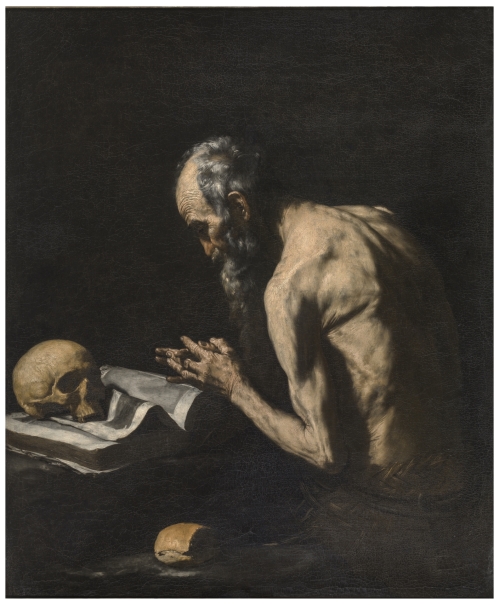
Saint Paul the Hermit
Oil on canvas. 1635 - 1640
The thin naked torso, the cloth made from rushes, the skull and the book suggest that the figure in the painting is a hermit; the bread crust in the foreground tells us that it is Saint Paul, the first hermit, who was brought half a loaf of bread every day by a raven.
ARTWORK
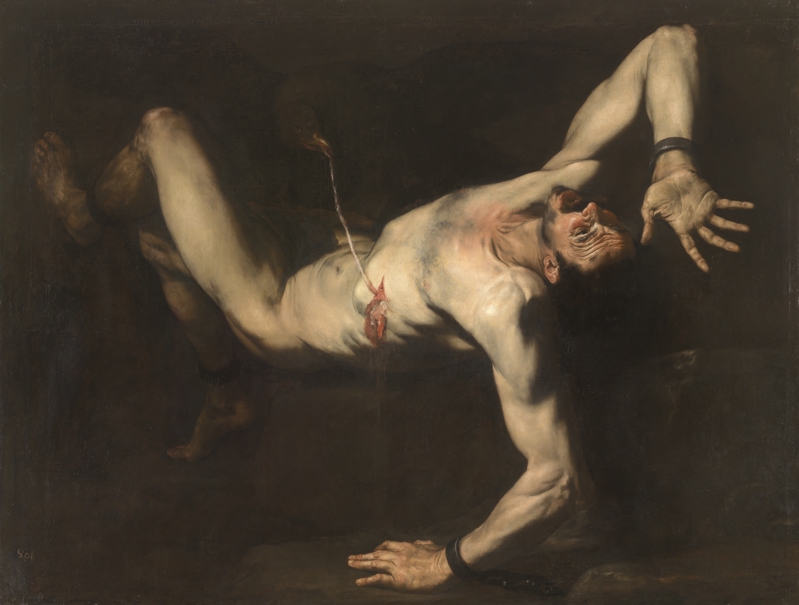
Tityus
Oil on canvas. 1632
Tityus, the son of Jupiter and Elara, appears chained to the boulder in Tartarus while an eagle eternally devours his liver. The Giant received that punishment for attempting to rape one of his father’s lovers with the encouragement of Juno. The subject of the Furies -Tityus, Ixion, Tantalus and Sisyphus- became quite popular in European art of the Modern Age, especially in palace decorations. These figures were interpreted as representing the implacable power of the reigning dynasty in the face
ARTWORK
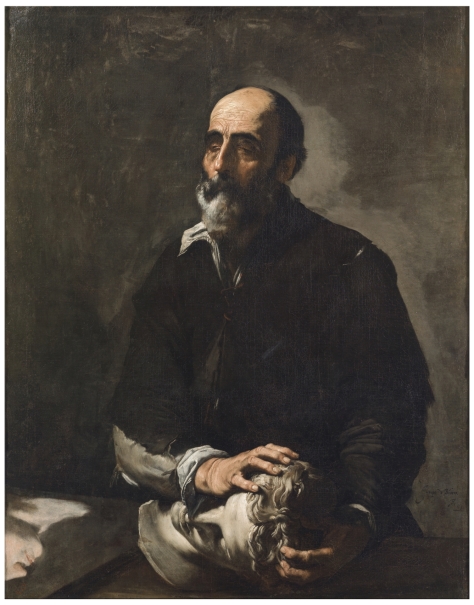
The Sense of Touch
Oil on canvas. 1632
A poorly dressed blind man stands out against a dark background. With his hands, he touches a sculpted bust on a table that also bears a painting of a face. The work was signed by Jusepe de Ribera in 1632, but even without that signature there would be no doubt as to its authorship, as both its style and its subject matter are typical of his work. The figure is quintessentially Riberesque, as are the drawn-out manner of painting and the predominance of earth tones, as well as the highly contrast
ARTWORK
Loading...

Loading...

Up