
Loading...
Probable Position of the Globe Before the Flood
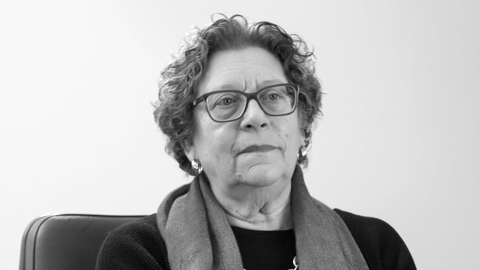
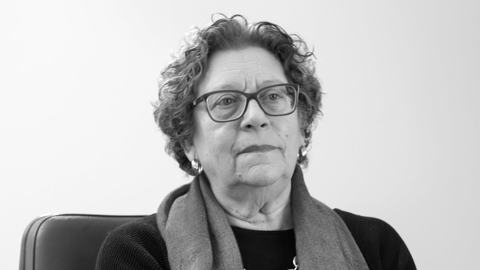
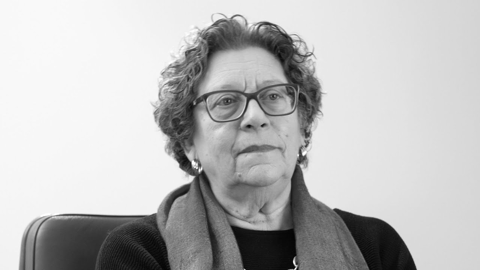
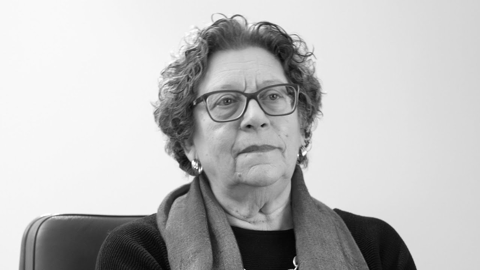
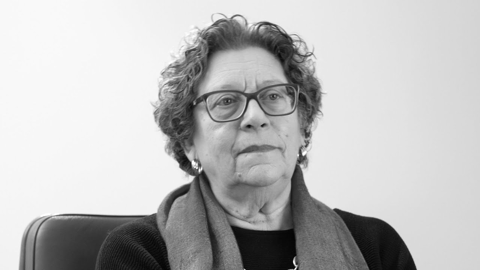
Mercedes Orihuela Maeso, Conservator of the Service of Deposits, 1975-What's onProbable Position of the Globe Before the Flood
Mercedes Orihuela Maeso, Conservator of the Service of Deposits, 1975-What's on
Most of the time you don’t know what you’re looking for. That is to say, there are pictures that were deposited during periods in which photography didn’t exist and we have no references. I like to tell the story of the Polytechnic Institute of Pontevedra, which had a deposited work which bore a reference number, but we didn’t know what it looked like. Its title was Posición probable del Globo antes del diluvio (Probable Position of the Globe Before the Flood). But we had one advantage: the paintings at the Museo del Prado that came from the Modern Art Museum have a painted number on them, either in the lower right-hand corner or the left-hand corner, which is the number of the inventory it comes from. And in cases in which the number is missing, we have to try to identify the work from the reference we have. But in the case of the Probable Position of the Globe Before the Flood we didn’t know what the identifying feature might be. As it turned out, this work by Francisco Díaz Carreño depicts a blonde girl with medium-length hair standing on a stool and sticking her hand into a fish-bowl that her mother has placed on a shelf. Naturally, since she can’t quite reach, she’s stretching, and the bowl is about to fall on her, fish and all. And that’s why the painting is entitled Probable Position of the Globe, which is the fish-bowl, Before the Flood, which refers to the water that is about to fall on the girl. Now isn’t that just something! In the nineteenth century, painters were quite witty and sometimes gave their pictures quite unusual titles.
Conservator of the Museo del Prado since 1982. She began collaborating with the Museum in the 1970's, sorting documents and photographic archives. She documents and visits the depository institutions of works of the Museum, giving rise to the collection known as "Prado disperso" (Scattered Prado).
Interview recorded on April 08, 2018
Interview index
15 / 21-
Coming to this Museum since 1975 -
The First Task I Carried Out Was Quite Useful -
Everything Originated from a Formal Complaint -
The Considerable Challenge of the Prado Disperso -
The 1960’s: The First Exercises in Recovering Deposited Works -
The 1980’s: Working Side by Side with Pérez Sánchez -
Unusual Cases Regarding the Prado Disperso I: La batalla de San Marcial by Julio Aparicio -
Unusual Cases Regarding the Prado Disperso II: A Gift for a Dentist -
Unusual Cases Regarding the Prado Disperso III: At an Auction in London -
Unusual Cases Regarding the Prado Disperso IV: From Madrid to Caracas -
Unusual Cases Regarding the Prado Disperso V: The Independence of Cuba -
Unusual Cases Regarding the Prado Disperso VI: Una huelga de obreros en Vizcaya by Cutanda -
Unusual Cases Regarding the Prado Disperso VII: A Painting in the Open Air -
And We Continue to Come Across Works -
Probable Position of the Globe Before the Flood -
A Favourable Outcome -
A Shared Project -
The Political Vicissitudes of the Country and Management of the Museum -
Total Dedication -
My Current Situation at the Museum -
I’ve Worked a Long Time at This Institution
Theme
--
Voces del Prado