
Loading...
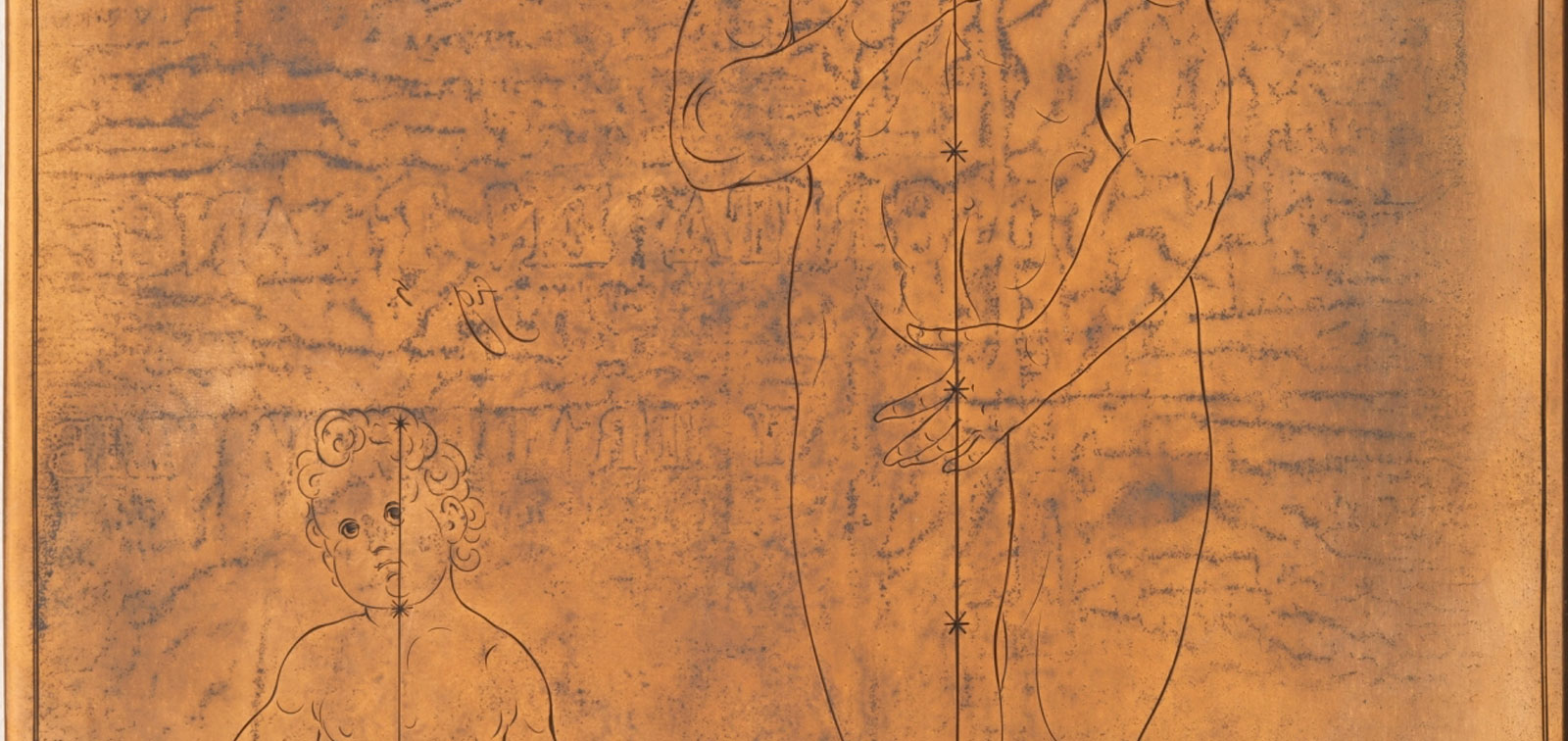
[Detail from] Juan Bernabé Palomino y Fernández de la Vega -Engraver-; Acisclo Antonio Palomino y Velasco -Drafstman-. Geometric study of the female body and of a child, frontal view, 1724. Burin on copperplate, 285 x 200 mm. Museo Nacional del Prado
Cátedra del Prado 2026 Seminar
The Artist as An Art Historian
Maria Stavrinaki
Fridays 6, 13, 20 and 27 November 2026
Academic Chair
Cátedra del Prado 2026 Seminar
Cátedra del Prado 2026 Seminar
The Artist as An Art Historian
Maria Stavrinaki
Fridays 6, 13, 20 and 27 November 2026
The XV Cátedra del Prado program includes four conferences, a colloquium and a seminar which, in turn, transpires over four Friday morning sessions in November. The seminar aims to complete a historiographical analysis of the Cátedra’s subject matter, The Artist as an Art Historian, by means of practical exercises. This is an academic activity of great value; participants, who must necessarily be on-site, will benefit from its intense nature. It is an exceptional learning opportunity for advanced students and young researchers in the field of Art History and comparable disciplines. Students wishing to participate must necessarily apply for a place.
The conferences in this year’s Cátedra concentrate on analyzing the role of the artist as an art historian. The XV Cátedra del Prado, under the guidance of Greek historian Maria Stavrinaki, aims to analyze the modern discourse of artists as art historians, focusing especially on cultural events that came to pass after World War II the effects of which on today’s understanding of art is, even now, notable.
The seminars will address three basic activities in the field of art history: reading, writing, and talking about art — which all converge on “seeing.” Nevertheless, the relationship between these four verbs is not necessarily indisputable. It is the tension among them that, shaping the methods, concretely determines the régimes of historicity that we recognize in the field of the history of art after 1945. Ensuing a conversation focusing on some specific different artists’ cases and after analyzing noteworthy texts, we will visit some of the works housed in the Prado.
This intensive seminar is made available to a select group of students as a teaching complement to the Cátedra del Prado’s four Conferences; please click here to see the program. Seminar participants are invited to prepare joint answers by working together and analyzing visual and written documentation, key texts from the history of art, and works housed in the Museo del Prado. The language of instruction shall be basically English.
- Sponsored by:
-

- Schedule
- Seminars: Fridays 6, 13, 20 and 27 November 2025, from 9.30 a.m. to 2 p.m. (Spanish peninsular time)
- Recipients
- Postgraduate, predoctoral students and postdoctoral students who have obtained their doctoral degree within the last three years (not before 2023).
- Location
- Classroom 1 of the Casón del Buen Retiro (Alfonso XII, 28) and permanent exhibition halls of the Museo Nacional del Prado.
- Direction
- Maria Stavrinaki
- Organization
- Museo Nacional del Prado
- Attendance application
- Contact
- centro.estudios@museodelprado.es
Program
2026
- Nov
- 6
09.30 hReading
We will discuss artists’ libraries to better understand their organizing principles and their function. Libraries are by no means a mere repository of knowledge; they are a model and a part of a work of art. “Flaubert is to libraries what Manet is to museums,” said Michel Foucault. Is it possible to talk about the increasing convergence between these two spheres that results from artistic practices?
- Nov
- 13
09.30 hWriting
We will review different types of writing on the history of art by artists, from notetaking to the publication of finished works, among them catalogues raisonnés, historical and theoretical works, and monographs. We will visit the works in the Prado with Ad Reinhardt’s notes on Spanish paintings in hand.
- Nov
- 20
09.30 hTalking
We will focus on oral transmission, from schoolroom teaching to conferences-performances, highlighting the difficult synch between words and images. How do we view Titian after hearing Robert Morris?
- Nov
- 27
09.30 hWhat are the Art Histories following 1945?
What are the régimes of historicity and methodological experiments carried out by artists when they become historians of art? What are the typical objects they choose upon becoming historians? Up to what point have these historians embarked upon avenues paved by the artists? And, finally, can we talk, today, about historians of art who read, write and speak as artists?
The meta-painting Las Meninas, our final stop, allows us to understand how contemporary artistic practice has contributed to the history of art.
Activity
Maria Stavrinaki
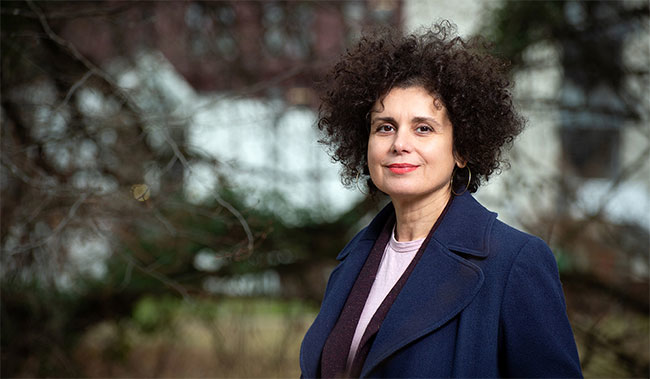
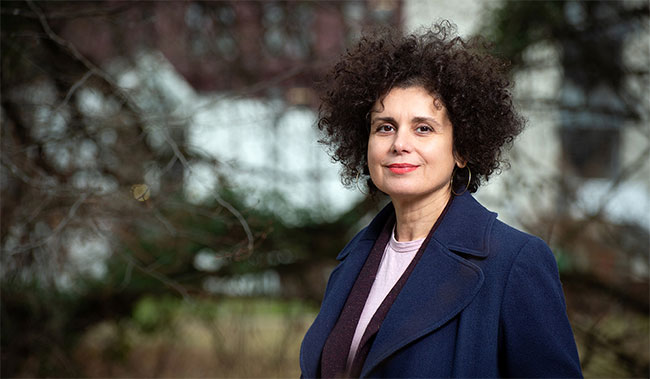
As of 2023, Maria Stavrinaki is professor of History of Contemporary Art at the University of Lausanne in Switzerland, after years of teaching at the Paris 1 Panthéon-Sorbonne University in France. Professor Stavrinaki has also researched and taught, among others, at the Free University of Berlin, at the Princeton Institute for Advanced Study, at the Clark Art Institute, and at Columbia University’s Italian Academy. Her research activities have focused primarily on the historical Avant-Gardes and modernity at large: she analyzes the interrelationships between artistic practices, conceptions of time and history, epistemologies, and political ideologies. She has published, among others, the following works: DadaPresentism.AnEssayonArt andHistory (Stanford University Press, 2016), Contraindreà la liberté. Carl Einstein, lesavant gardes,l’histoire (2018, Mamco), Saisis par lapréhistoire.Enquêtesurl’artet le temps desModernes (Presses du Réel, 1919, translated into English as Transfixed by Prehistory. An Inquiry into Art and Time, Zone Books, 2022, and into Spanish as Atrapados por la prehistoria, soon to be published by Sans Soleil Ediciones). Professor Stavrinaki has codirected two major exhibitions: Préhistoire. Une énigme moderne (Centre Pompidou, Paris, 2019) and L´âge atomique. Les artistes à l’épreuve de l’histoire (MAM, Paris, 2024).