
Loading...
[Detail] Fra Angelico, The Annunciation, around 1426. Photograph, 1965. Museo Nacional del Prado
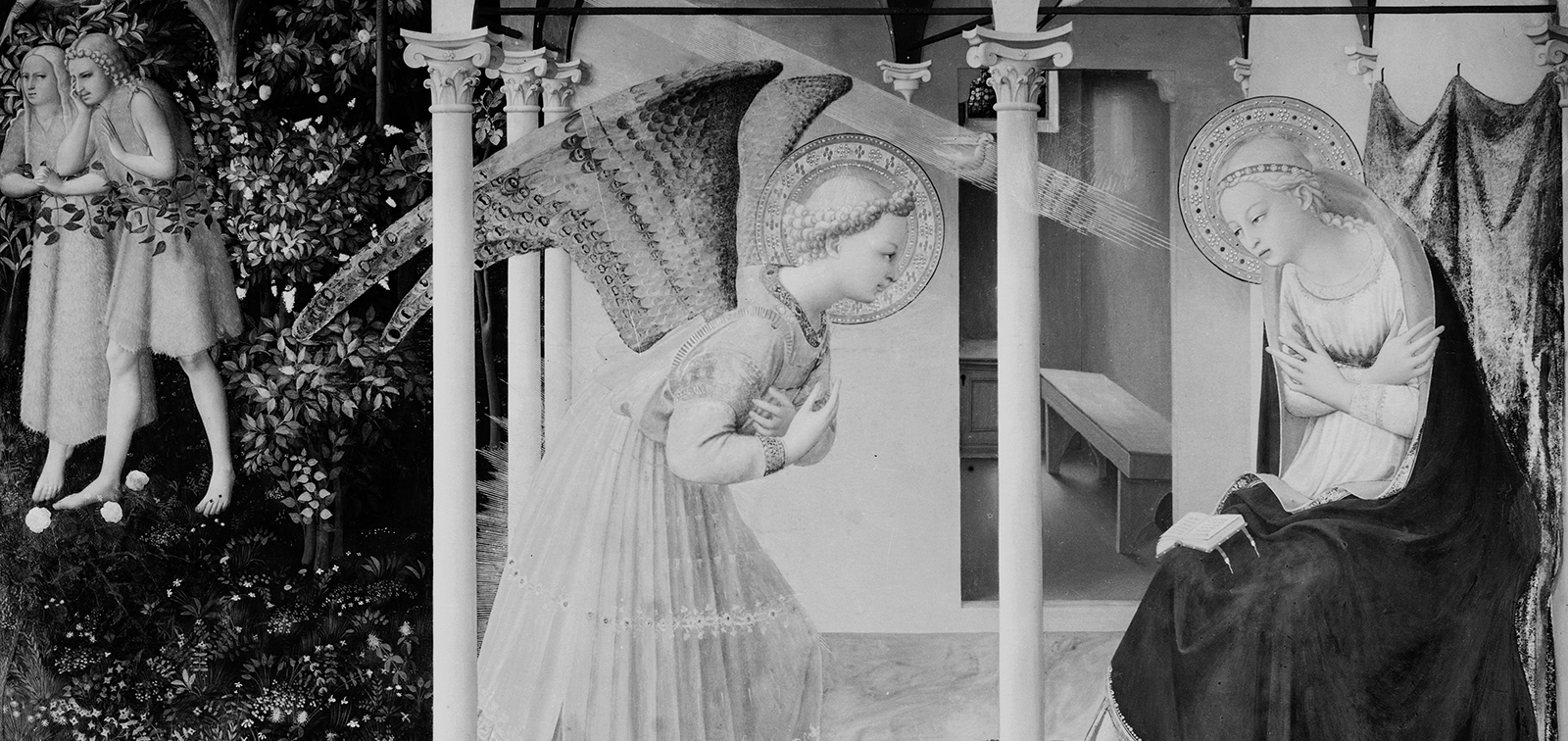
Cátedra del Prado Colloquium. Reflections on Historiographical Studies
Monday November 20, 2023
Academic Chair
Cátedra del Prado Colloquium. Reflections on Historiographical Studies
Monday November 20, 2023
While the main issue that the XI Cátedra del Prado centers its conferences and seminars on is the relationship of scale in European painting, in this colloquium we address broader questions that its director, Alexander Nagel, has already analyzed in some of his publications. The colloquium will allow for a debate in which researchers and students will analyze, throughout the sessions that make up the program, the procedures, interpretative criteria, and approaches to an assessment of the cultural times. Thanks to these exchanges the ensuing conversations, open to all participants, will be enriched and furthered.
- Sponsored by:
-

- Sign up
- Please fill in the online form available on this website between September 19 and November 16, 2023
- Schedule
- The schedule as it appears in the program is in CEST
- Recipients
- University students, researchers, professionals and general public
- Location
- Auditorium, Museo Nacional del Prado
- Price
- Free of charge
- Direction
- Alexander Nagel
- Organization
- Museo Nacional del Prado
- Face-to-face and remote attendance
- Face-to-face attendance is possible subject to available seating. Remote attendance is possible; a Zoom link will be provided to registered attendees. Desired attendance mode must be indicated when registering.
- Language
- Spanish
Program
2023
- Nov
- 20
09.30 hAccreditations
10.15 hWelcome
10.20 hProtracted performances of visual art
Alexander Nagel (University of New York)
Humans preserve material memories even as physical materials deteriorate, yielding the paradox that works have often been partially or wholly replaced in efforts to make them persist. A fundamental form of preservation is more making. Most art in most cultures is made out of older art, either materially by reworking or repainting it, or conceptually in the sense that new works are grounded in the forms or techniques of older artworks. Works of art extend into a sort of protracted performance that creates continuity through the discontinuities of human lives and deaths and larger processes such as displacement or migration. The protracted performance can become the work of whole societies and helps produce societies. It seems you cannot have an imagined community without works of visual art. Ephemeral performance was primary in human development, but an extended phase of community develops when communities come together to preserve and extend material memories, something they did long before the development of writing.
11.00 hQualities of Style. Formal Analysis and Historiographical Contention in the Works of Alexander Nagel
José Riello (Universidad Autónoma de Madrid)
Recent generations of art historians have done their best to decipher, among others, the textual and narrative basis of art works and of some of the issues related to the artist’s agency, or to their patron, or to the institutions and customs that prescribed their activities within determined and determining settings of negotiation, as well as their relationship with the context determining the production of the works in question. Thus, they have focused on issues related to perspective in their studies of gender, colonial policies, global history, the circulation of artistic objects and the transfer and contamination of cultural convention, the anthropological roots of manifestations – more or less artistic – and their temporal dimension. However, their capacity to read and interpret the style of those works of art historically has not been encouraged, nor have they notably developed those skills necessary to disengage themselves from the narrower objectives of “attributionism.” This, I believe, would be an essential topic, even a radical one, for a History of Art that seems, as it were, to be irrevocably doomed to become an ancillary offshoot of a broader cultural history, in view of these historiographical tendencies. For these reasons, this brief address shall focus on the role that works of art play in Alexander Nagel’s historiographical production: they shall be considered to be the objects of study, and additionally, taking center stage, will foster contemplation of conceptual or historical issues of great import.
11.20 hThinking Structurally: Do Works of Art Generate Their Own History?
Gabriel Cabello (Universidad de Granada)
In Introduction à la méthode de Léonard de Vinci, Paul Valéry points out that Leonardo’s secret, the secret of those “in possession of the highest intelligence,” resides in understanding the relationships that exist among things whose law of continuity escapes others. In Anachronic Renaissance, Alexander Nagel and Christopher Wood find in Valéry’s statement the model that was to hold sway over the principle of substitution in place in the 15th and 16th centuries. The works of the past were replaced by works of the present, not by way of repetition but rather through a commutation that made of the preceding work one that was not of the past, but rather of an equally present nature. This “law of continuity” destroyed the principles of the history of art developed by Panofsky, who holds that a work is an index of its time. The temporary fiction based on chronology is split asunder here: the new work is legitimized by the chain that dates back to a “model type,” but, in any case, the chain needs a new work to select it, one that springs from the ruins of the past. As if it were the Ship of Theseus, all original components permanently renewed, the principle of substitution described by Nagel and Wood compels us to “think up structurally” objects that have “doubts” as to their possible historical identities. Hubert Damisch and Aby Warburg – the first, on the basis of the structuralist notion of the “transformation group,” the second on the basis of the updating of the formulas to describe Pathos in Antiquity – also found that works of art abided by a “law of continuity” that destroyed chronological time. With them, thus, and in accordance with Nagel and Wood’s oeuvre, we dare wonder whether and how works of art generate their own history when they configure a constellation in which the present and past fold together.
11.40 hCaesar’s Clock or the Shapes of Anachronism
Daniel Lesmes (Universidad Complutense de Madrid)
It has often been said that historians’ original sin is anachronism. Lucien Febvre so stated by declaring: “Caesar dead by gunshot.” Alexander Nagel and Christopher S. Wood refer to something similar, although less dramatic: the Elizabethan clock that tells time in Shakespeare’s Julius Caesar. This clock surely runs fast, as does the writer who in principle writes about the past posing questions that only now might be formulated. The first might be a mistake; the second is an opportunity to understand the real complexities of history. With the backdrop of Febvre’s statement, which isolates different eras, it was precisely in his time that a concept of history surfaced that allows for thinking that the past is not narrowly at a distance from the present, or even cloistered behind it. But it was not until 1992 that Jacques Rancière tried to explain that porous temporality by means of a direct criticism of Febvre’s work. It was then that the pejorative connotation of the term anachronism would be overturned. As of then, many intellectuals have thus used the word: Georges Didi-Huberman, Nicole Loraux, Mieke Bal, and Alexander Nagel. I would like to dedicate a brief address to Alexander Nagel during the Colloquium organized by the Museo del Prado, with the intent of understanding the nuances he has introduced in the study of the history of art from his special anachronistic perspective.
12.00 h
Activity
Director. Alexander Nagel
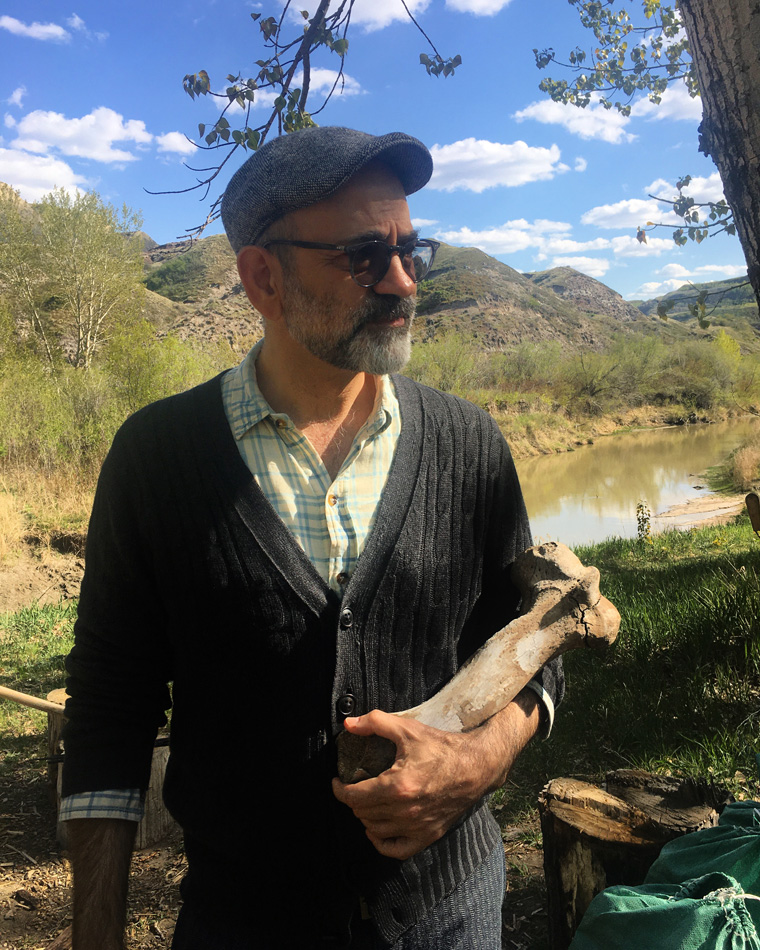
Alexander Nagel
Alexander Nagel is Craig Hugh Smyth Professor of Fine Arts at the Institute of Fine Arts, NYU. He teaches and writes, focusing especially on European Art of the period 1300-1700. He mostly studies how the visual arts allow humans to think through time and find orientation in the world, and what happens when works of visual art and models of art-making cross temporal and geographical boundaries. His work Michelangelo and the Reform of Art, published in 2000, was awarded the Gordan prize by the Renaissance Society of America, and his work The Controversy of Renaissance Art, published in 2011, was awarded the Morey Prize by the College Art Association. Anachronistic Renaissance, co-authored with Christopher Wood, was published in 2010 and was published in Spanish by Akal in 2017 with the title Renacimiento anacronista. Amerasia, a study on European visions of the world in the 16th and 17th centuries, co-authored with Elizabeth Horodowich, will be published in the summer of 2023 by Zone Books. He is, since 2022, editor of the journal I Tatti Studies, published by the The Harvard University Center for Italian Renaissance Studies at the Villa I Tatti.
José Riello
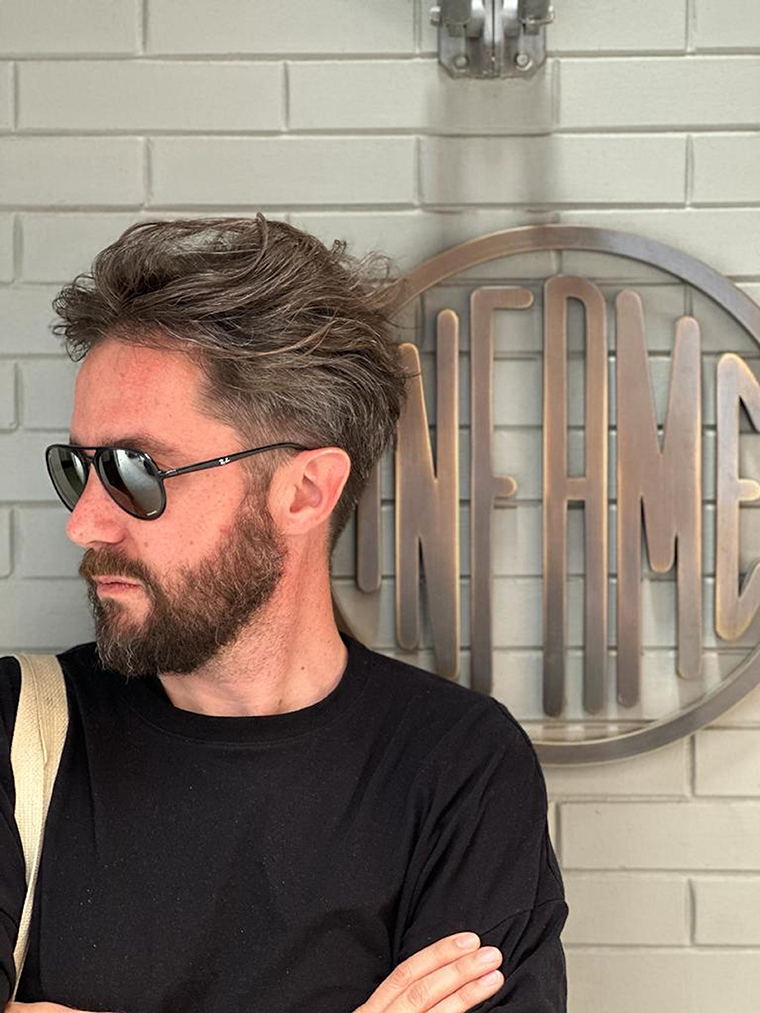
José Riello holds a Ph.D. in History of Art from the Universidad Complutense de Madrid. He has contributed to a number of research projects focusing on 16th and 17th century Spanish artistic culture. His professional activity has been carried out in museums and universities: between 2008 and 2011 he collaborated with the Publications Department of the Museo del Prado, and as of 2010 he is a teacher at the Department of History and Theory of Art at the Universidad Autónoma de Madrid. His most recent books are Antes y después de Antonio Palomino. Historiografía artística e identidad nacional (co-authored with Fernando Marías; Madrid, 2022); La mirada extravagante. Arte, ciencia y religión en la Edad Moderna. Homenaje a Fernando Marías (co-authored with Mª Cruz de Carlos and Felipe Pereda; Madrid, 2020), an Italian-language edition of the writings on art by El Greco (co-authored with Fernando Marías; 2017), that of the writings by Enrique Lafuente Ferrari on Velázquez (Madrid, 2013) and Sacar de la sombra lumbre. La teoría de la pintura en el Siglo de Oro, 1560-1724 (Madrid, 2012). He has published over twenty scientific articles and dozens of pieces of writing in general interest publications. His speaking engagements on history and the theory of Modern Art have taken him to different cities in Spain, in Europe (Oxford, Paris, Grenoble, Castres, Münster, Düsseldorf, Leipzig, Heraclion, Roma, Florence, Vicenza, Bettona, Castres) and in the United States of America (Baltimore, Boston, Washington D.C., Puebla de los Ángeles). Together with Javier Docampo he co-curated the exhibition La biblioteca del Greco (Museo Nacional del Prado, 2014); with Julia Morandeira he co-curated the exhibition ATLAS de las ruinas DE EUROPA (Madrid, CentroCentro, 2016-17),
Gabriel Cabello
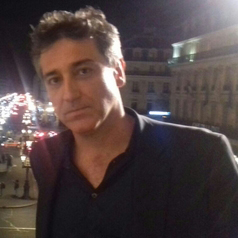
Gabriel Cabello teaches History of Art at the Universidad de Granada and is currently Guest Professor at the Université de Paris Nanterre. He has published works on films (La Vida sin Nombre, La lógica del espectáculo según David Lynch -Biblioteca Nueva, 2005-, “Between real objects and moving images. The imaginary and projection from André Breton’s Le Cendrier Cendrillon to Luis Buñuel’s Viridiana” -34th World Congress of Art History, 2019), contemporary art (“La intimidad vulnerada. Guernica en el Reina Sofía” Claves de Razón Práctica, 2017; José Guerrero. Litoral -Centro José Guerrero, 2019-, “El espesor de intervalo. (Los espacios poéticos de Miguel Ángel Campano” -MNCARS, 2019), and on the historiography of art (Georges Didi-Huberman: imágenes, historia, pensamiento -Anthropos, 2017-, “Descripción histórica y estética filosófica. La historia social del arte entre la reivindicación de los hechos y el anacronismo” -Isegoría, 2015, “Entre el gesto y la constelación. Aby Warburg, Walter Benjamin y la historiografía del arte como tarea crítica” -Anthropos, 2020). He has recently published “Supervivencia de las voces: Guernica y la práctica de las imágenes» (in Guernica. Pervivencia de un mito, Museo Picasso de Málaga/EUGR, 2023).
Daniel Lesmes
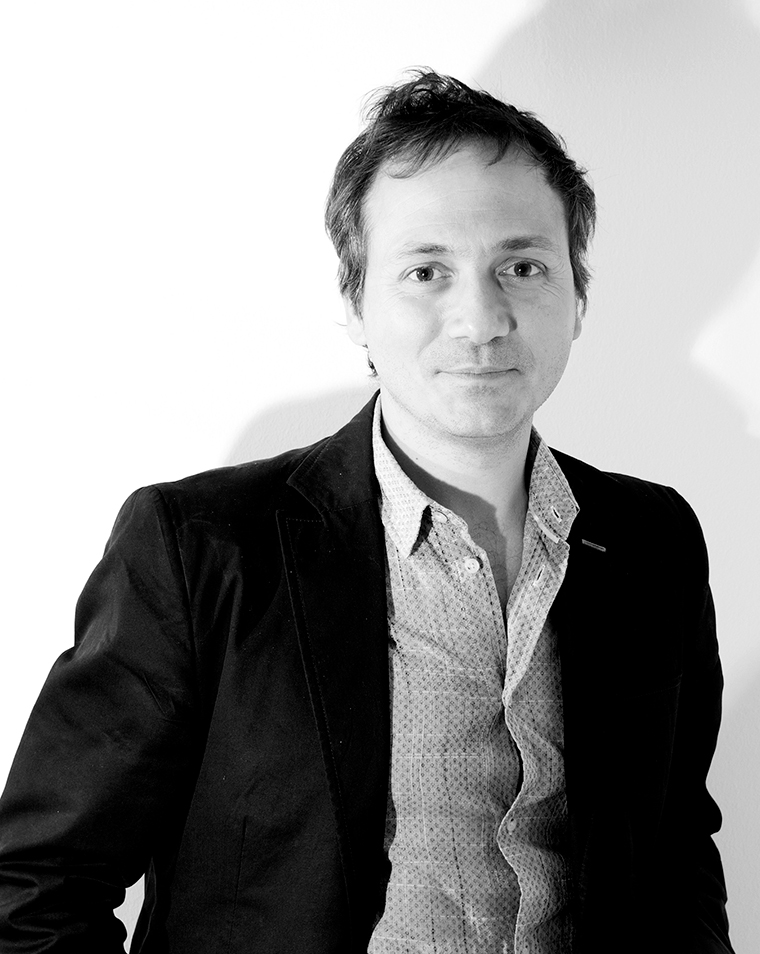
Daniel Lesmes holds a European Ph.D. in Art History and a Ph.D. in Philosophy. A Real Academia de España in Roma scholarship holder, his research focuses on the critical theory of images and emotions. From this perspective he has paid special attention to the existing relationship between and among art, politics and society in multiple publications. His works include Aburrimiento y capitalismo (Pre-Textos, 2018), “Une responsabilité commune: Goya et Didi-Huberman” (L’Europe, 2018) and “Mirar a (un) tiempo” (Peter Lang, 2020). Together with Iñaki Estella he has recently co-edited the book Performance en el museo / el museo como performance (Asimétricas, 2023). Between 2015 and 2019 he was president of Cruce, a leading association of independent artists and theorists in Madrid. He currently teaches History of Art at the Universidad Complutense de Madrid.