
Loading...
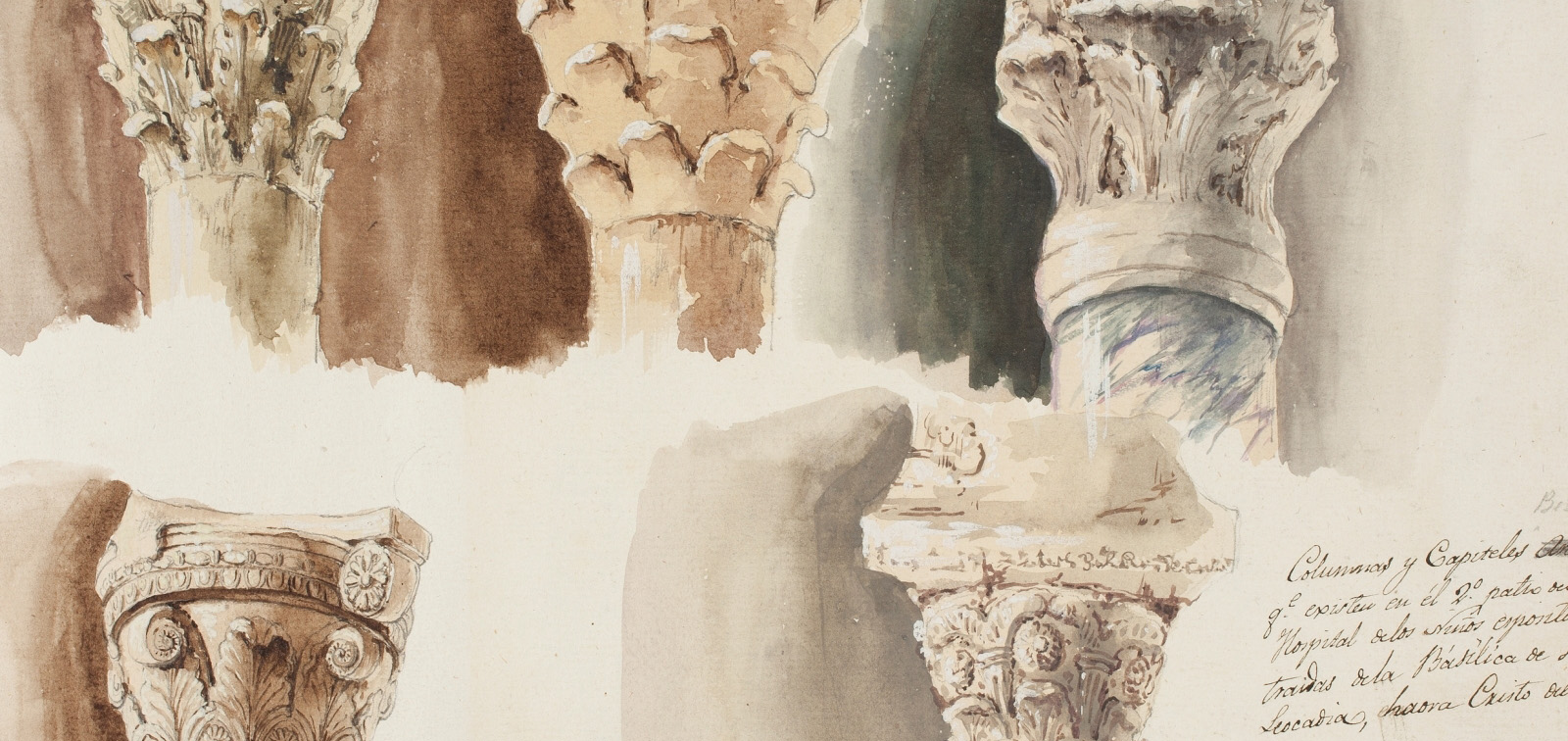
Cecilio Pizarro, Five Byzantine capitals in the second coutyard of the Santa Cruz Hospital, brought from the ancient basílica of Santa Leocadia, Toledo . Museo Nacional del Prado
Cátedra del Prado Colloquium.
The Museum’s Times
Monday November 18, 2024
Academic Chair
Cátedra del Prado Colloquium.
Cátedra del Prado Colloquium.
The Museum’s Times
Monday November 18, 2024
In museums, different times converge: the visitors’ time, the personal time they bring with them; the time of the objects on display; and a third, often hidden time—the time when the museum’s collections were formed. The colloquium explores the theme of temporality in museums and the time that shapes them: from debates over the ownership of antiquities to the performativity of temporary exhibitions of Old Masters and the lasting impact of object translocations.
RDF
- Sponsored by:
-

- Sign up
- Please fill in the online form available on this website between october 16 and November 13, 2024
- Schedule
- The schedule as it appears in the program is in CEST
- Recipients
- University students, researchers, professionals and general public
- Location
- Auditorium, Museo Nacional del Prado
- Price
- Free of charge
- Direction
- Bénédicte Savoy
- Organization
- Museo Nacional del Prado
- Face-to-face and remote attendance
- Face-to-face attendance is possible subject to available seating. Remote attendance is possible; a Zoom link will be provided to registered attendees. Desired attendance mode must be indicated when registering.
- Language
- English and Spanish with simultaneous translation into both languages
Multimedia
Program
2024
- Nov
- 18
15.30 hAccreditations
16.00 hWelcome
16.15 hThe Museum and its Times
Bénédicte Savoy (Technische Universität Berlin)
The opening lecture focuses on the theme of temporality in museums and the aesthetic, political, and cultural interactions between different periods. The talk specifically delves into the hidden time within museums and the contemporary desire to reveal and better comprehend it.
17.00 hAppropriating Antiquity: German-Ottoman Relations and the Relics of the Past, 1898-1918
Sebastian Willert (Leibniz Institute for Jewish History and Culture - Simon Dubnow, Leipzig)
In June 1914, a telegram informed German Emperor Wilhelm II about the Sublime Porte refusing to permit the export of archaeological objects from the ancient site of Ashur to Berlin. Instead of calming the waves, the monarch reacted annoyed, demanding that Istanbul “[…] should hand over our property, which was acquired at great expense! This is not a quarrel! This is theft!” On the eve of the First World War, the German-Ottoman controversy over the translocation of archaeological objects escalated. Ever since Prussian-German archaeological undertakings began exploring and exploiting ancient sites in the Ottoman realm, scholars, diplomats, political and economic actors linked field research to the seizure of antiquities. Simultaneously, Istanbul defined antiquities as state property and opposed foreign archaeological objectives. Disputes simmered over issues such as the control over cultural assets, the dispossession of antiquity collections, the translocation of artifacts, a common understanding for collaborative archaeological activities, and even the protocols for protecting monuments.
Based on archival material from Turkey and Germany, the lecture investigates the construction of cultural property in Istanbul and Berlin, conflicts over the ownership of antiquities and its impact on bilateral relations
17.30 hPerforming Italy. Art Exhibitions in London and Paris between Spectacle and Propaganda (1930-1935)
Matilde Cartolari (Ludwig-Maximilians-Universität/Zentralinstitut für Kunstgeschichte, Munich)
In 1930 and 1935, two major international exhibitions of Italian art took place in London and Paris under the auspices of Italy’s fascist government. By bringing together thousands of artworks and people, these exhibitions functioned as a powerful catalyst for fascist propaganda, while also providing cultural legitimacy to Mussolini’s ambitions in international politics. In the presentation, I will take a close look at these exhibitions starting from their backstage, namely the different phases of preparation (e.g., gathering, restoring, transporting the exhibits) leading up to their final display.
By following the red thread of images, I aim to stress the performative character of exhibitions across an extended temporality that unfolds before, during, and after the exhibition itself. This extended temporality allows us to better understand the political use of exhibitions as an instrument of diplomatic rapprochement and ideological legitimation in the 1930s and beyond.
18.00 hFlemish Primitives, 1939: Evacuation as a Musealization Force
Iñigo Salto Santamaría (Technische Universität Berlin)
The evacuation measures implemented across Europe at the outbreak of World War II to safeguard cultural artifacts marked the first time in centuries that many “immovable” pieces, long embedded in religious or princely institutions, were displaced. In the aftermath of the conflict, some of these artifacts did not return to their original locations, instead becoming part of museum collections and losing their long-established roles. Temporary exhibition loans, changing political regimes, foreign purchase attempts, and outright postwar plunder all contributed in varying degrees to shaping and ultimately altering the museological fate of these pieces at this critical time.
By exploring the safeguarding and circulation trajectories of three Early Netherlandish paintings – The Descent from the Cross (Van der Weyden, Madrid), the Greverade Altarpiece (Memling, Lübeck), and The Last Judgment (Memling, Gdánsk) – I will present wartime evacuations and subsequent returns as pivotal forces in the musealization of cultural artifacts.
18.30 hDiscussion
Activity
Director. Bénédicte Savoy
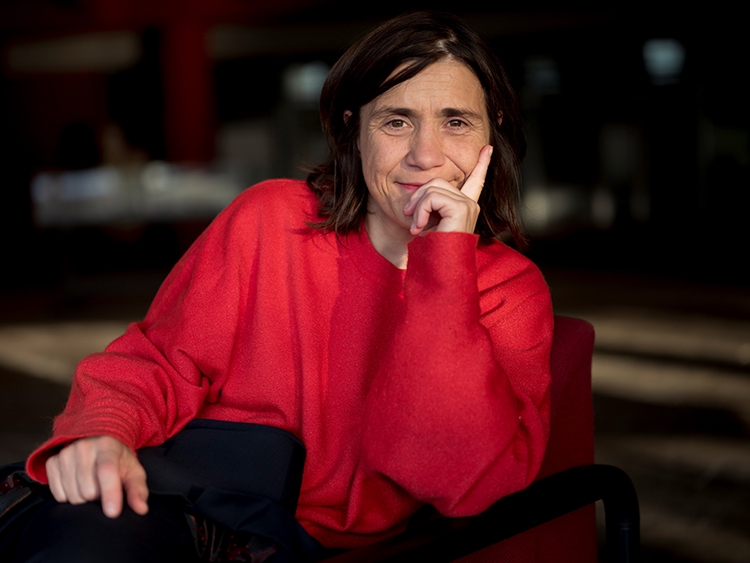
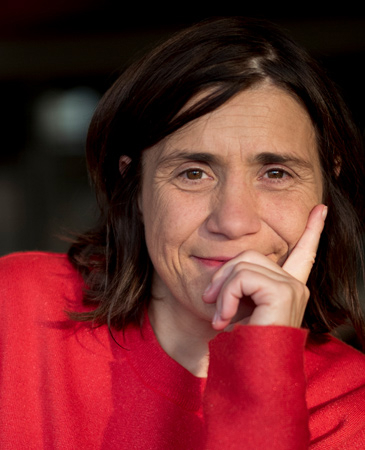
Bénédicte Savoy. Photograph by Maurice Weiss
Bénédicte Savoy is professor for Modern Art History at the Technische Universität Berlin. Between 2016 and 2021 she also held a professorship at the Collège de France in Paris, where she taught the cultural history of artistic heritage in Europe from the 18th century to the 20th century. Her research focuses on museum history, Franco-German cultural transfer, Nazi looted art, and research on postcolonial provenance. In 2018 she wrote the report On the Restitution of African Cultural Heritage together with Senegalese scholar Felwine Sarr. This report was commissioned by Emmanuel Macron, President of France.
She has received numerous awards for her research, academic activities, and teaching, including the 2016 Gottfried Wilhelm Leibniz Prize of the German Research Foundation and, most recently, the Berlin Science Prize. She is a member of the Berlin-Brandenburg Academy of Sciences and Humanities, a Knight of the French Legion of Honor and a member of various other institutions, advisory boards, and committees. Her most recent publications include the book Africa’s Struggle for Its Art: History of a Postcolonial Defeat, which has been translated into several languages, and the joint publication Atlas der Abwesenheit. Kameruns Kulturerbe in Deutschland (Atlas of Absence. Cameroon’s Cultural Heritage in Germany).
Sebastian Willert

Sebastian Willert
Sebastian Willert is a Research Associate at Leibniz-Institut für jüdische Geschichte und Kultur - Simon Dubnow in Leipzig Leibniz. He received his Ph.D. from the Technische Universität Berlin in February 2022. His dissertation Kulturbesitz. Konflikte um archäologische Objekte in der deutsch-osmanischen Politik, 1898–1918 (Cultural Property. Conflicts around archaeological objects in German-Ottoman Politics, 1898–1918) was published by Wallstein Verlag in May 2024. Between 2017 and 2020, he participated in the Ph.D. program Ancient Object(s) and Visual Studies (AOViS) at the Berlin Graduate School of Ancient Studies (BerGSAS) and was a Predoctoral-Fellow in the Research Cluster Translocations. Historical Enquiries into the Displacement of Cultural Assets at the Chair for Modern Art History at Technische Universität Berlin. Sebastian was affiliated with Boğaziçi University’s Department of History in Istanbul and was a Ph.D.-Fellow at the Orient-Institut Istanbul. In 2022, he was a Fellow of the Leibniz Research Alliance Value of the Past at the Leibniz Centre for Contemporary History Potsdam. Since the Fall of 2022, he has been teaching Ancient Art in Berlin: Discovering the Collections of Museum Island at NYU Berlin, focusing on the provenance and translocation histories of archaeological objects to Berlin’s museum collections.
Matilde Cartolari
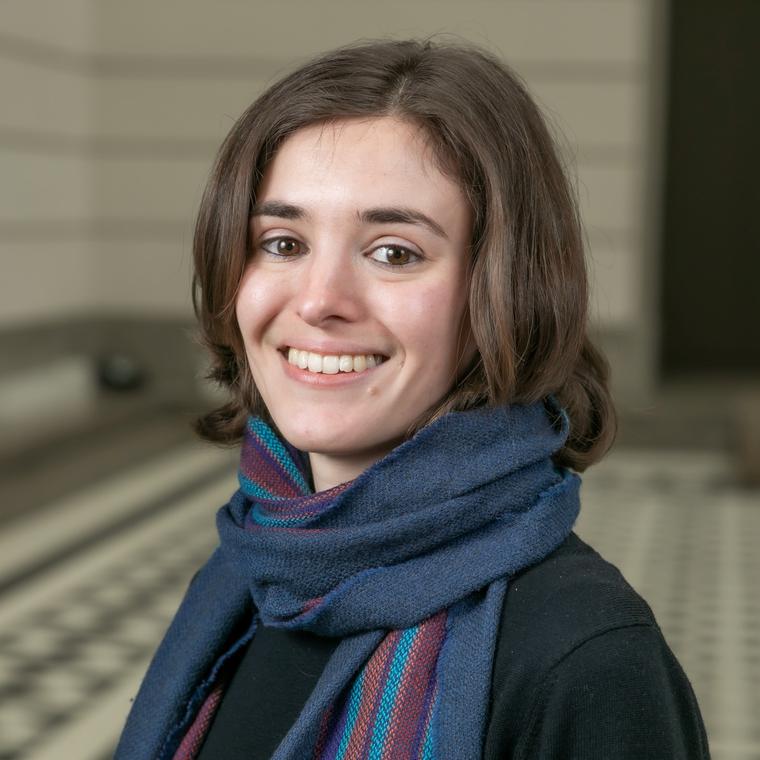
Matilde Cartolari
Matilde Cartolari is a research associate at the Ludwig-Maximilians-Universität and the Zentralinstitut für Kunstgeschichte in Munich. She has previously worked at the Technische Universität of Berlin, where she completed her PhD in 2022, and at the University of Vienna. She has been awarded scholarships by the Studienstiftung des deutschen Volkes (2018-2021), the DAAD (at the Warburg Institute, 2019), and the Getty Research Institute (2024). Between 2017 and 2020, she took part in the international research cluster Translocations. Historical Enquiries into the Displacement of Cultural Assets at TU Berlin, where she coordinates the provenance research blog The Lives of Pictures in cooperation with the Berlin State Museums since 2022. Her research focuses on the interplay between exhibitions, conservation, and the art market in early 20th century Europe and the USA.
Iñigo Salto Santamaría
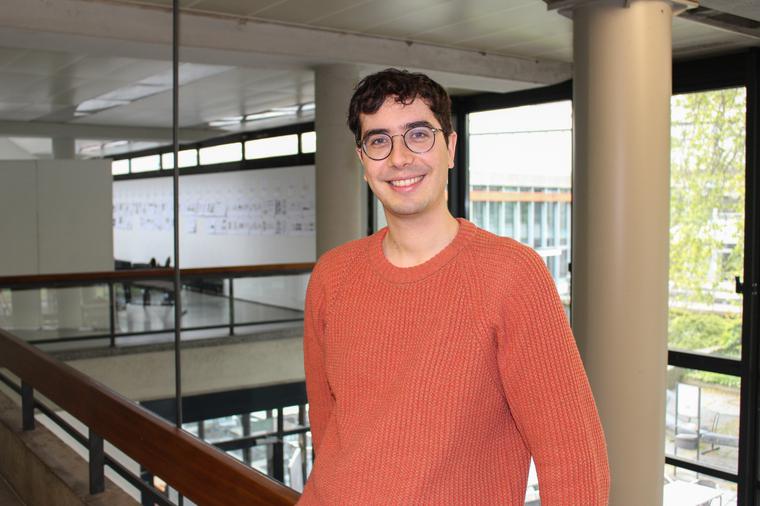
Iñigo Salto Santamaría
Iñigo Salto Santamaría is a research and teaching associate at the Department of Modern Art History at the Technische Universität Berlin, where he defended his dissertation, Ephemeral Museums of Medieval Art, in January 2024. He previously studied art history, museology and Byzantine archaeology at Universität Heidelberg and the École du Louvre. His research focuses on the modern display and provenance of medieval art from a transnational perspective, which has been supported by fellowships at the German Historical Institute in Paris (2019) and the Studienstiftung des deutschen Volkes (2020-2024), as well as a Graduate Internship at the Project for the Study of Collecting and Provenance at the Getty Research Institute (2019-2020). He currently serves as the deputy chair of the Richard Schöne Society for Museum History in Berlin.