formularioRDF
The itinerary <em>TITULORECORRIDO</em> has been successfully created. Now you can add in works from the Collection browser
<em>TITULOOBRA</em> added to <em>TITULORECORRIDO</em> itinerary

Exhibition

1800s: The Century of the Portrait. Collections of the Museo del Prado. From Enlightenment to Modernity

CaixaForum. Palma 11/21/2024 - 3/2/2025

1800s: The Century of the Portrait. Collections of the Museo del Prado. From Enlightenment to Modernity takes an approach to portraiture that is quite novel in Spain, as it includes portraits in every creative medium: paintings, sculptures, medals, miniatures, watercolours, drawings, etchings, lithographs, daguerreotypes and photographs. This is the fifth exhibition co-organised by the "la Caixa" Foundation and the Museo Nacional del Prado to come to CaixaForum Palma—following Velázquez and the Golden Age, Goya. Light and Shade, Captive Beauty. Small Treasures at the Prado Museum, and Art and Myth. Gods in the Prado—in the context of the strategic partnership that has united the two institutions since 2011, with the aim of making part of the rich artistic heritage held at the Prado available to different audiences.

The exhibition is divided into six areas that explore how the public image of people changed over the course of the nineteenth century and invite visitors to travel back, through one of the most important genres in Spanish painting, to a time that witnessed the birth of the economic and social structures which have shaped our contemporary era. Viewing the past—and, by extension, the Prado’s portrait collection—as a resource that can be used to question and rethink the present, the museum has designed three different routes inspired by the featured works and their interactions. Visitors can use QR codes to download the audio guides, each of which examines the exhibition from a different perspective: artistic media, nineteenth-century society and fashion.

Curator:
Javier Barón, Senior Curator of Nineteenth-Century Painting Department at the Museo Nacional del Prado.


RDF

RDF

Co-organized by:
"La Caixa" Foundation

Exhibition

Area I. The Image of Power

Area I. The Image of Power
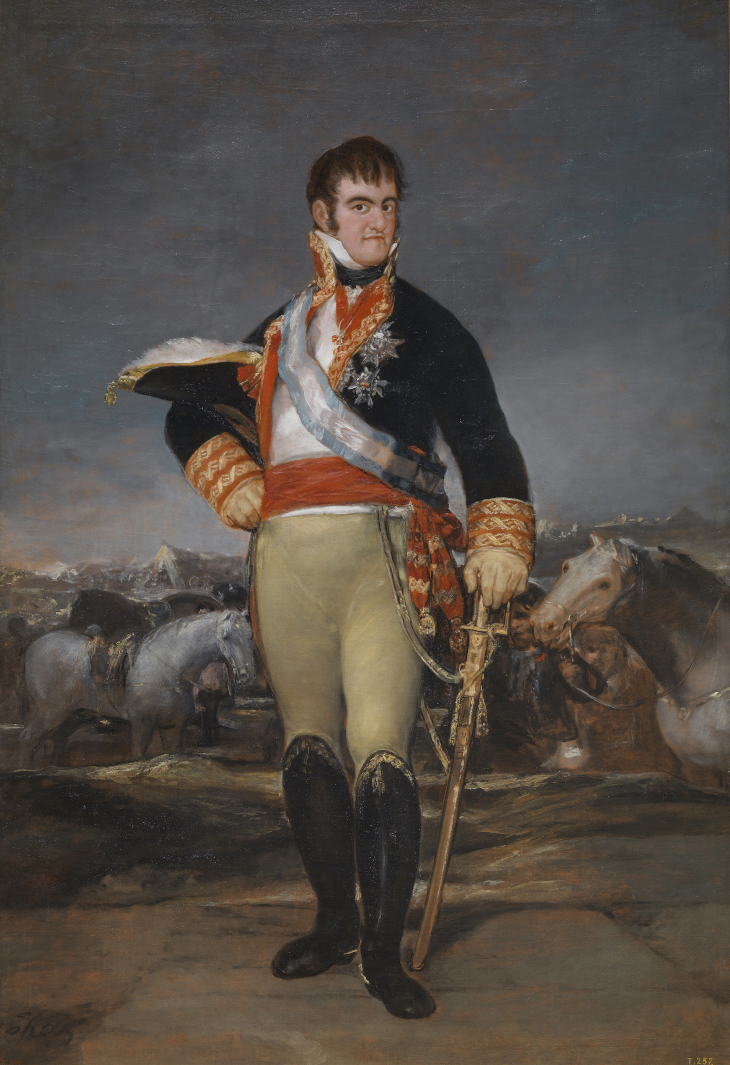
Ferdinand VII at an Encampment
Francisco de Goya y Lucientes
After 1815
Madrid, Museo Nacional del Prado

From the very beginning, portraiture has been linked to individuals eager to display and perpetuate their financial, social or political power. In the 1800s, after the French Revolution, monarchies grew increasingly weak, as evidenced by the gradually declining importance of royal portraits, even though they were just as large and imposing as in centuries past. Consequently, this subgenre is represented in the exhibition by medals, where we can see the unbroken line of Spanish monarchs from Charles IV to Alfonso XIII.

Other powerful people enjoyed being portrayed; for example, the noted writer and politician Jovellanos commissioned various likenesses throughout his career, including Goya’s famous second portrait of him. However, it was Spain’s national government that took the lead in forming new portrait galleries, chief among them the gallery of congressional speakers, which embodied the legitimate power of the people represented by their elected members of parliament. It also made an effort to immortalise Spain’s various ministers, creating a complete series that shaped the different ministerial galleries, some examples of which ended up at the Museo del Prado.

Area II. The Discovery of Childhood

Area II. The Discovery of Childhood
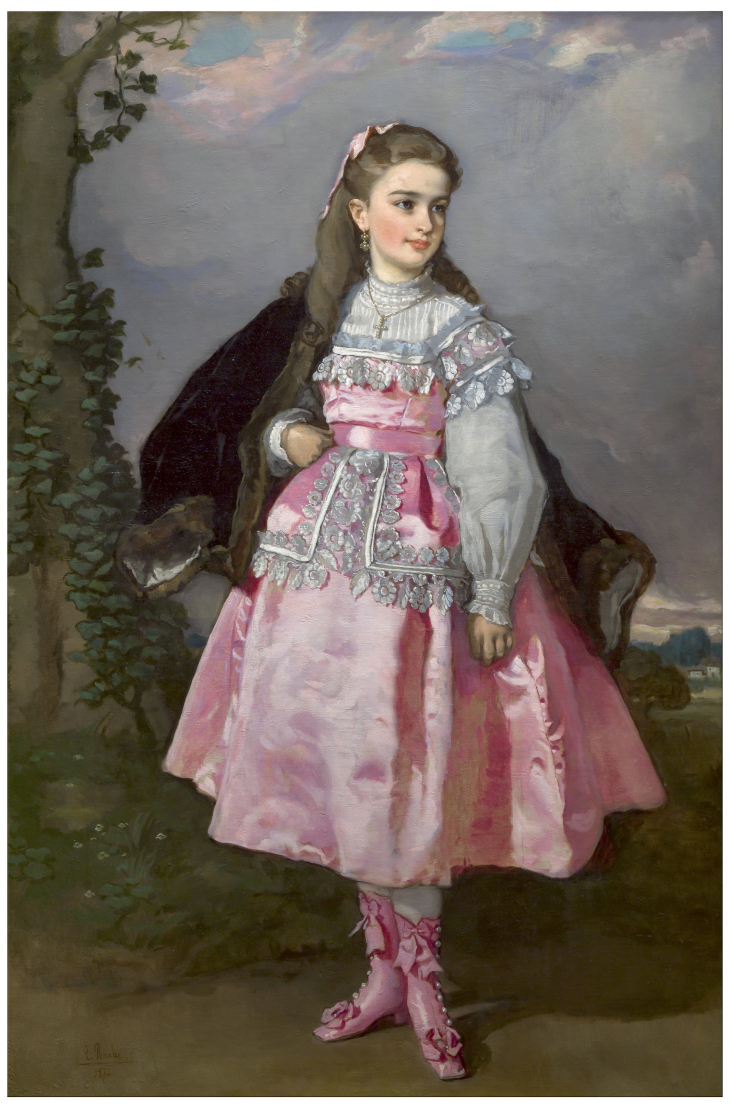
Concepción Serrano, later Countess of Santovenia
Eduardo Rosales Gallinas
1871
Madrid, Museo Nacional del Prado

With the advent of the Enlightenment and, above all, the influence of Jean-Jacques Rousseau, people began to see childhood in a new light. Instead of mere future adults who only acquired true value when they came of age, children came to be considered important in their own right. In fact, once Romanticism took hold, childhood began to be viewed as a privileged moment in people’s lives when spontaneity, grace and innocence shone most brightly—virtues that would be stifled by the negative influence of the world and its customs when they reached adulthood.

Consequently, child portraits became far more numerous, and their subjects were depicted in a novel way that highlighted those qualities. During Romanticism, children were often depicted with parks and gardens in the background to show their close ties to nature. As painting grew increasingly natural and lifelike, portraits made in the final third of the century allowed their young subjects greater freedom and movement. However, there are also portraits (ranging from the Romantic period to the early twentieth century) that prove some parents wanted their children to be depicted in the manner of the great Spanish Golden Age painters, especially Velázquez, who was the epitome of both nobility and naturalness.

Area II. Identities I

Area II. Identities I
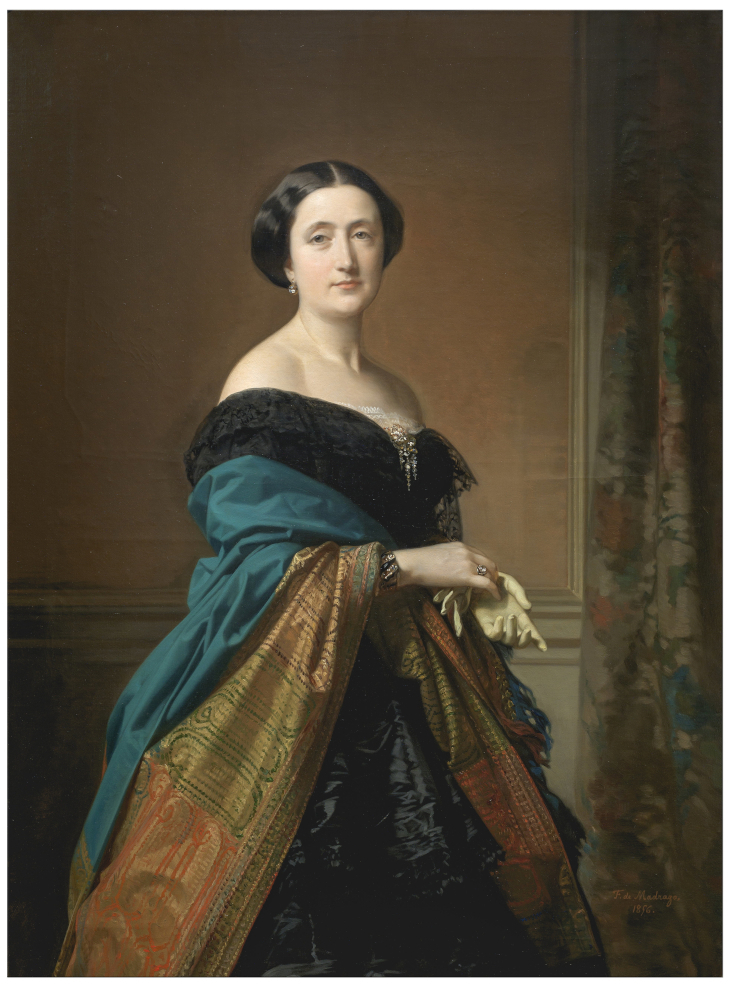
Saturnina Canaleta
Federico de Madrazo y Kuntz
1856
Madrid, Museo Nacional del Prado

In female portraiture, the social standing of the sitter is conveyed by two main elements: clothing and jewellery. It is interesting to note that, in addition to aristocrats and bourgeois ladies, some women were portrayed simply because artists found their appearance attractive or striking. This is the case of the ciociara or Italian peasant woman and, in Spain, the working-class manolas and majas, whose picturesque appeal and comeliness—occasionally idealised and in other cases blatantly sensual—caught many a painter's eye. Additionally, thanks to people’s curiosity about ethnic groups and lands that were deemed exotic at the time, artists often portrayed Roma, Moroccans and Filipinos. In many cases, portraits are tinged by the artist’s (and the viewer’s) fascination with otherness, things foreign to their own civilisation and culture. On occasion, this fascination even inspired bourgeois sitters to dress up as Italian peasants, Andalusian majas or Arab types. In 1859, the introduction of the carte-de-visite (a small card with a photographic portrait) meant that the middle classes were finally able to order and own images of themselves, friends and family members. Portraiture immediately took off among upper-middle-class women eager to distinguish themselves in society. The result was an abundance of grandly ceremonial, full-length portraits of lavishly dressed ladies in ostentatious surroundings.

Area II. Identities II

Area II. Identities II
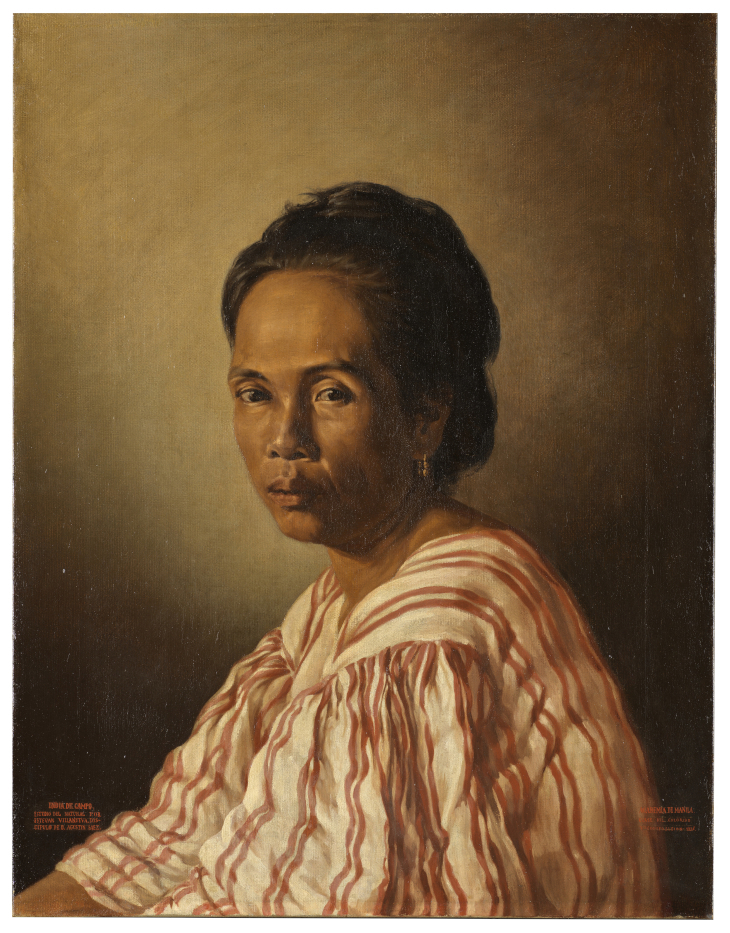
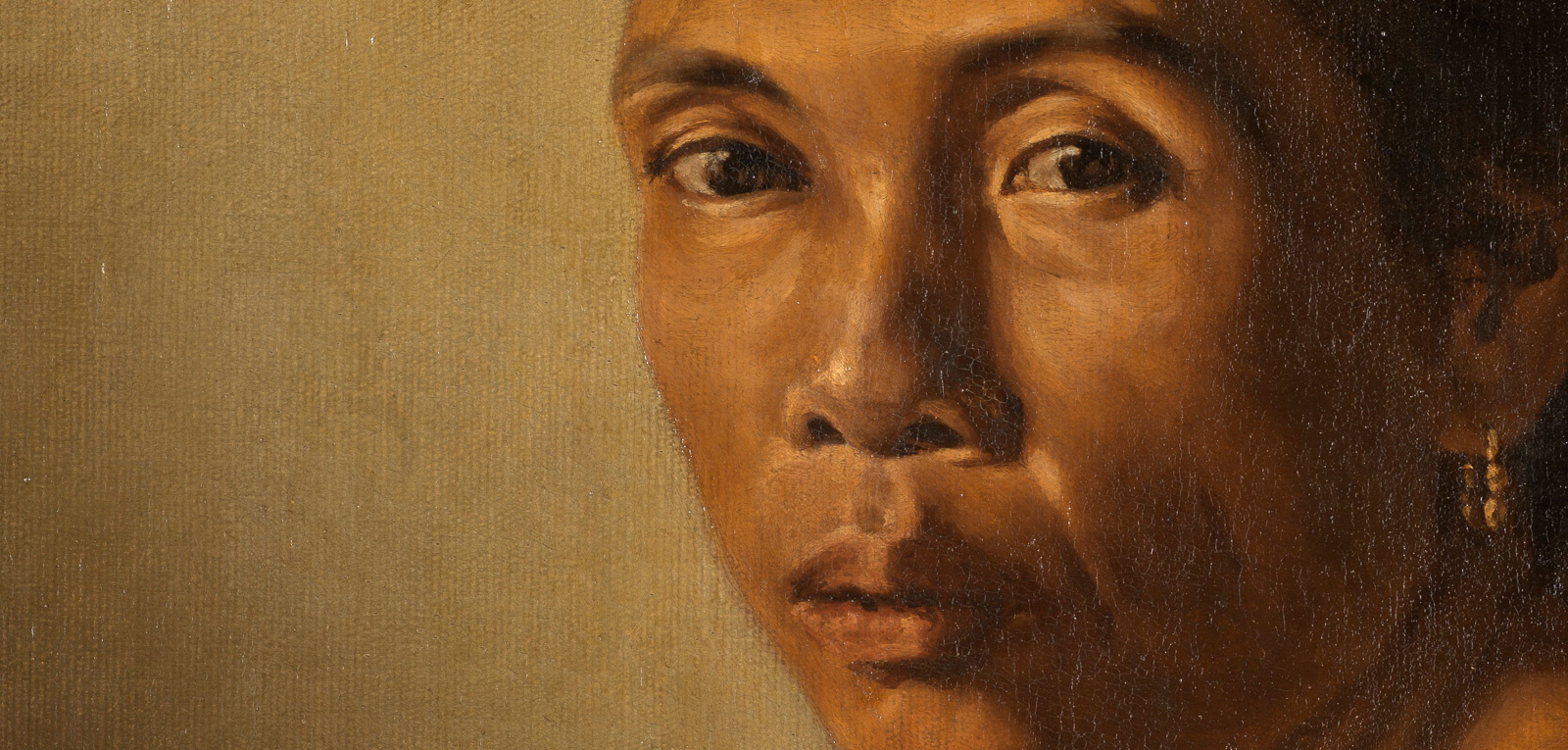
Indian Countrywoman
Esteban Villanueva y Vinarao
1875
Madrid, Museo Nacional del Prado

The modern figure of the bourgeois man came to the fore in the nineteenth century. The standard male attire of trousers, jacket or frock coat, and hat was far simpler and plainer than in previous centuries and has endured to the present day, albeit with some concessions to changing fashions. With this outfit, it became impossible to differentiate between aristocrats and upper-middle-class gentlemen. The severity of men’s clothing, associated with the economic rationality of capitalism, prompted artists to focus on capturing their facial expressions and personality.

The rise of such likenesses coincided with the appearance of notably picturesque ones, motivated by the typically Romantic interest in the individual and the specific values of the common folk. More than generic depictions of popular types, these were genuine painted and photographed portraits of particular individuals from different parts of Spain (especially Andalusia) and the Philippines and other colonies, and of foreigners like Moroccans who represented a world of exotic yet real images.

Family group portraits, though not traditionally abundant, have been important in Spanish painting, particularly pictures commissioned by the monarchy. In the 1800s, the custom spread to the middle classes. Such portraits usually pictured several generations, expressing the continuity and future of the family unit.

Professional group portraits also entered the scene, although in this genre photography proved more popular than painting. It was customary to have photographs taken of factory workers and shop employees. All this confirms the importance of social groups, particularly in the latter half of the century, when the working class became increasingly aware of their power to make demands and change their situation.

Area III. The Image of Death

Portraits lying in repose and wax funerary masks (the ancient Roman forerunners of portraits) of famous people were immensely popular in the 1800s. This was partly due to the cult of genius that flourished during Romanticism, but it was also motivated by a desire to preserve a particular individual’s features by faithfully transposing them in an eloquent physical record.

The mourning portraits of this century were modelled on those of the Spanish Golden Age. The aim was to accurately capture the identifying traits of the deceased, a task often aided by taking a rapid yet detailed deathbed sketch in a matter of minutes. Photography, on the other hand, made it possible to obtain a highly accurate image. Like drawings, paintings focused more on interpreting the dead person's character and, through their clothes, social position. Portraits of artists’ relatives lying in repose are particularly poignant, given the personal connection to their subjects. Likenesses of deceased children, recorded in every art form, occupy a special place. The mourning image, which conveyed the demise and, in a way, the entire life experience of the dead person, remained important throughout the century, which also witnessed the adoption of funerary monuments by the middle classes.

Area IV. Portraits and Self-portraits of Artists

Area IV. Portraits and Self-portraits of Artists
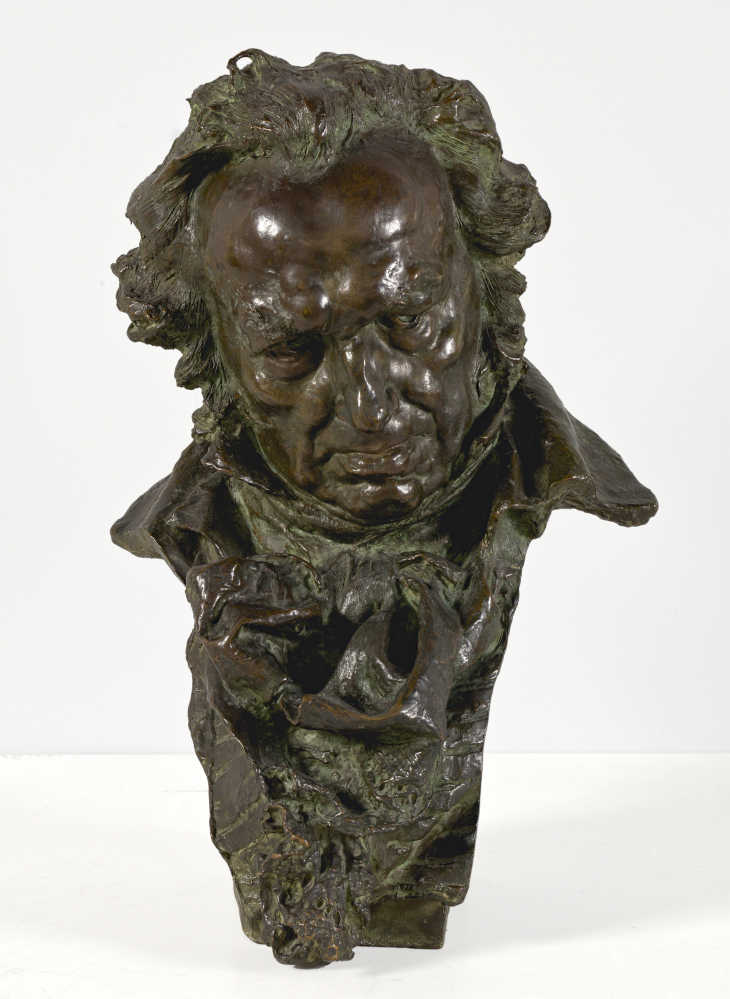
Goya
Mariano Benlliure Gil
Bronce
1911
Madrid, Museo Nacional del Prado

One of the consequences of the growing importance of art after the Age of Enlightenment was that painters and sculptors became aware of their own worth and, in the case of the most talented, their unique role in society. This explains the proliferation of self-portraits, some of which were destined for the artists’ galleries of the different academies. These institutions had been founded on the principles of Enlightenment thought, which allowed artists to go from artisans grouped in guilds to liberal professionals and eventually members of the new bourgeois class.

With the advent of Romanticism, self-portraiture became a means of probing the artist’s own psyche, motivated by a sense of heightened subjectivity, beginning a representative tradition that has endured to the present day.

At the same time, artists became quite fond of portraying other artists as a result of effusive friendships formed in their student or academy days and cemented by shared experiences abroad, like those fortunate enough to receive a grant to work and study in Rome. Such portraits were usually small bust-length likenesses set against a neutral background that focused on the subject’s features and personality, were very natural and lifelike, and denoted mutual esteem and affection. Being intended for fellow practitioners of the arts, who were naturally good judges of artistic quality, these pieces tend to be quite finely made. The Museum of Modern Art, founded in 1971 with the Museo del Prado, planned to create a gallery of artists’ portraits, although it was never actually exhibited as such.

Area V. Effigies Amicorum: Images of Writers, Musicians and Actors

According to Hegel, painting, literature and music—which shone with particular brilliance during Romanticism—were the quintessential modern arts. The three disciplines converged on numerous occasions throughout the nineteenth century. The fact that artists moved in the same circles as writers and musicians led to collaborative endeavours such as illustrating texts and designing sets for plays and operas, but it also inspired a considerable number of portraits of prominent cultivators of those arts as well as theatrical and musical performers. Like the portraits of painters and sculptors, these likenesses were a natural product of the friendships that often sprang up among creative minds and the glorification of a community of artistic ideals, stimulated at institutions like the artistic and literary lyceums, athenaeums, academies and, more informally, at cafés or intellectual gatherings in the homes of amateurs.

These interactions, foreshadowing what would become quite common in the early twentieth-century avant-garde movements, reveal an affinity among the arts. The difficulty of obtaining full recognition from society and an awareness of their own and their friends’ worth forged close bonds of friendship between creative individuals. This promoted the cultivation of such portraits, which have the same simplicity and naturalness as those dedicated to fellow artists, except if the subject was someone who had already found fame and fortune. They were correlated in the literary arena by the rise of the Künstlerroman or ‘artist’s novel’ and, in music, by the plots of certain operas and symphonic poems inspired by the world of painting.

Area VI. The Artist in His Studio

In the nineteenth century, the objective observation of every aspect of daily life, coupled with the tendency of artists to reflect on their immediate surroundings and the circumstances of their own pictorial practice, fuelled a penchant for depicting their places of work—in other words, studios. Such works often included historical or contemporary references that artists felt were worth associating with their painting. It was therefore common for them to depict their own works and those of other artists whom he admired, living or dead, copies made by the painter or engraved or photographed images. The picture-within-a-picture and the desire to show the nobility of the painter’s own art are indicative of the typically modern habit of self-reflection.

Additionally, the presence of work tools—brushes, jars or tubes of paint, palettes, canvases, mahlsticks, easels, mirrors, palette knives, chisels of various sizes, plaster casts or life models, prints and sketches—offers invaluable insight into the material aspects of the artist’s craft. The way the painter is represented is also significant: sometimes he is accompanied by friends who observe his work, but far more often he is alone in his atelier, face to face with himself in his private workspace. The very concept of the studio underwent a radical transformation in the last quarter of the century when artists everywhere began to emulate the noted collector Mariano Fortuny and take pleasure in surrounding themselves with exquisitely beautiful things, which they often included in their paintings. As photography spread, pictures of studio interiors became quite common, often commissioned by the artist himself to publicise his art as well as his workspace, a reflection of his personality.

Print on demand

Print artworks available in our catalogue in high quality and your preferred size and finish.

Image archive

Request artworks available in our catalogue in digital format.

Up