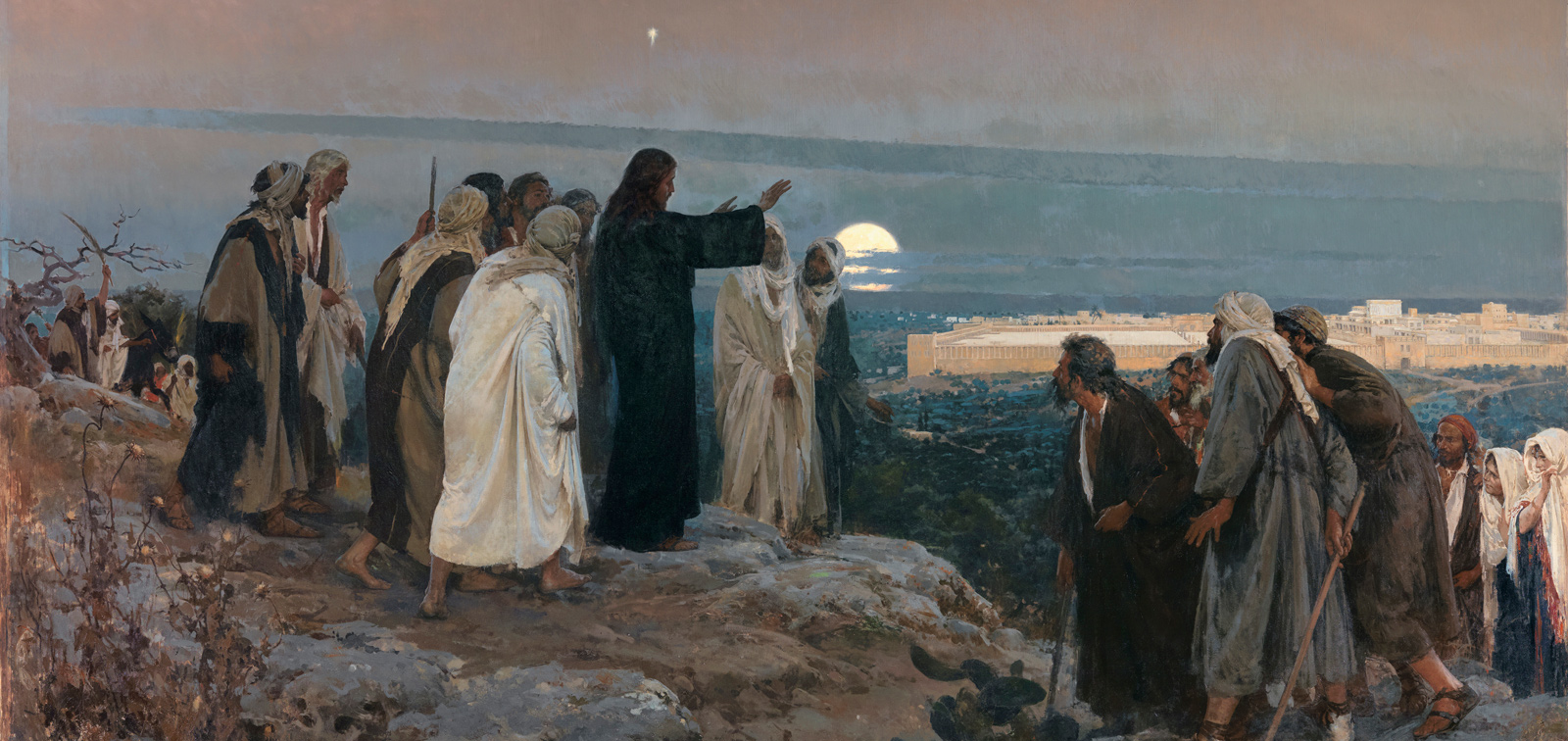
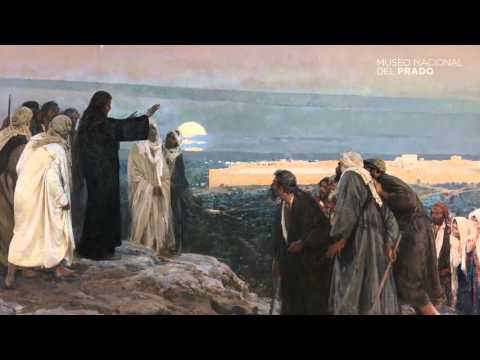
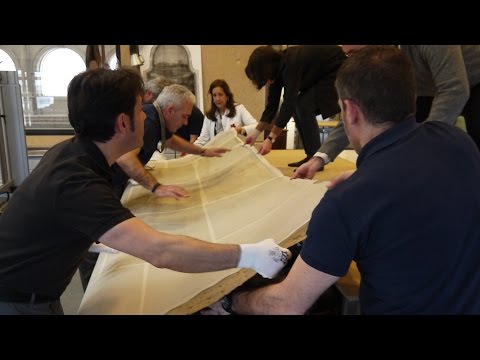
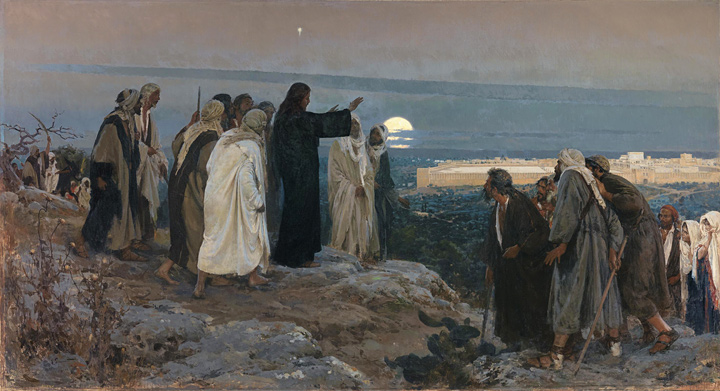
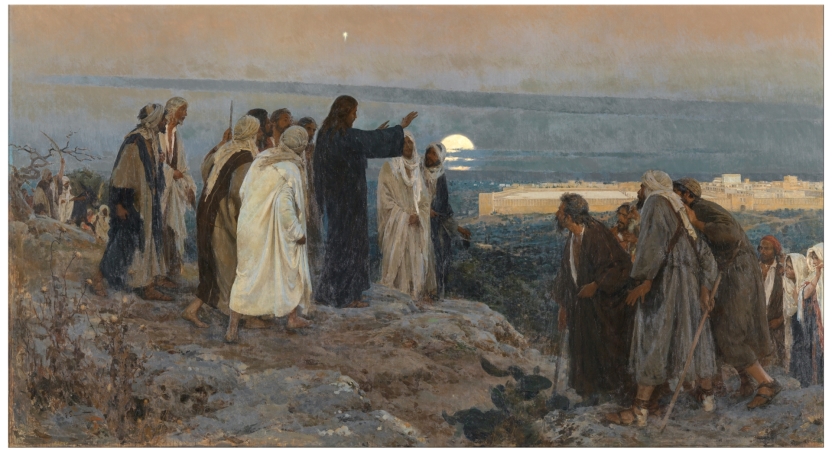
The Museo del Prado is celebrating the 150th anniversary of the birth of Enrique Simonet (Valencia, 1866–Madrid, 1927) with a presentation of selected works recently donated by his relatives and the artist’s most outstanding composition, Flevit super illam, in Room 62 A. This work, made in 1892, is the most significant example of Spanish painting on a religious theme of its time. After being painstakingly, laboriously restored in the Prado workshops, thanks to the support of Fundación Iberdrola, and fitted in a new frame with moulding similar to what it formerly had at the Modern Art Museum, this masterpiece is now presented in pristine condition and in a manner befitting its importance.
Flevit super illam illustrates the artist’s penchant for depicting accurate settings, as he travelled to Palestine to see the scenery and human types for himself. He took his theme from the gospel of Saint Luke (19:41), ‘Videns Jesus civitatem flevit super illam’ (‘And when he drew near and saw the city he wept over it’), a passage that prophesies the destruction of Jerusalem. Simonet paid special attention to the figure of Jesus, motivated by a desire to show Christ’s most profoundly human side. This type of approach was common among European painters at the time, influenced by French author Ernest Renan’s book The Life of Jesus. His composition won the first-place medal at the 1892 International Fine Arts Exhibition in Madrid and was undoubtedly the most widely renowned of all the artist’s works, as well as a source of inspiration for some of his later paintings.
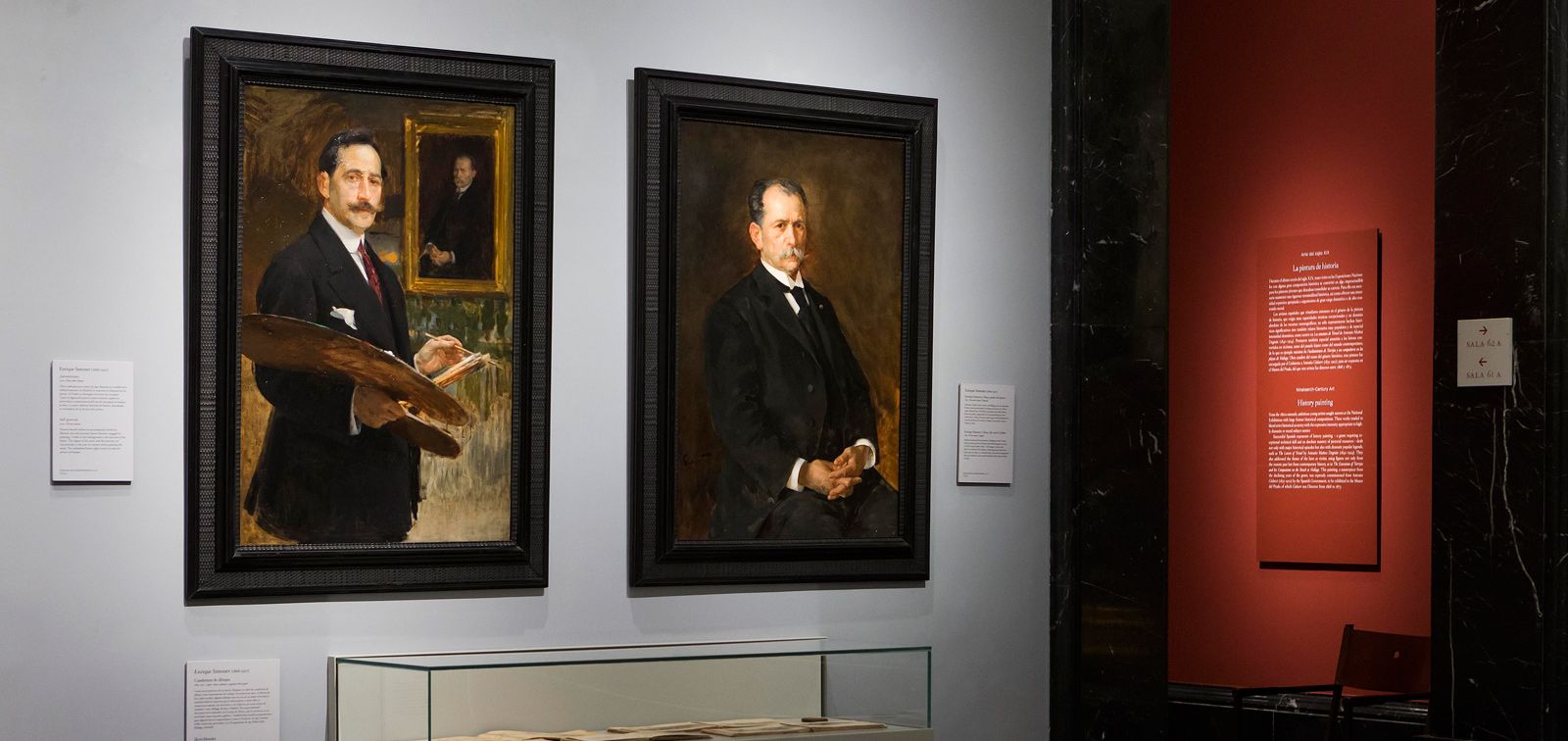
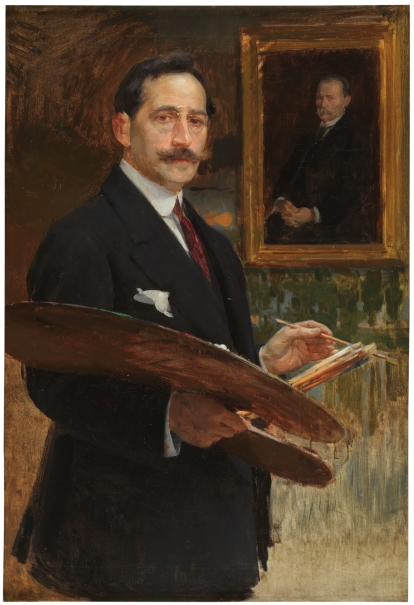
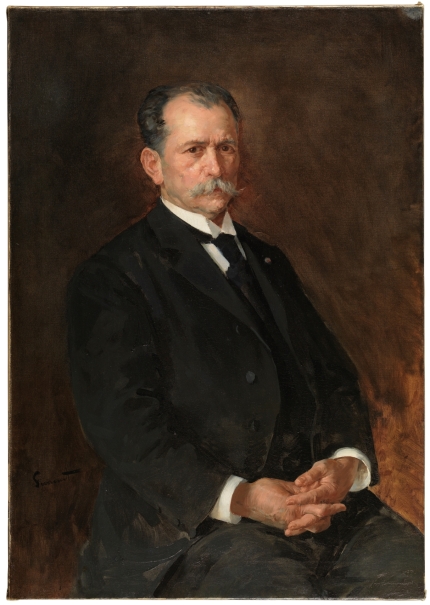
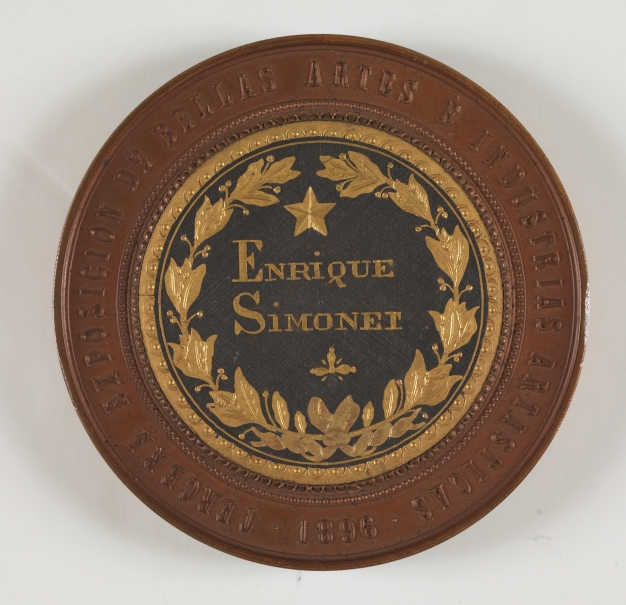
The presentation at the museum includes significant pieces donated by the painter’s family: the portrait of Enrique Simonet y Baca, the Artist’s Father, made in Málaga in 1893 after returning from a subsidised study period in Rome; his 1910 Self-portrait, which shows Simonet prepared to paint with his father’s portrait in the background; the medal awarded to Flevit super illam at the 1896 Exhibition of Fine Arts and Crafts in Barcelona; and five sketchbooks which he used as working tools that reveal the breadth of his artistic interests: figures, interiors, objects and views of Málaga, Madrid and Rome. They also contain preliminary studies for important canvases like The Burial of Saint Lawrence and The Beheading of Saint Paul. The sketches he took in 1893 and 1894 during the First Melillan Campaign, when he was sent to the North African enclave as a graphic reporter for La Ilustración Española y Americana, are particularly eloquent. The Simonet family’s generous gift also includes the oil portrait of Asunción Castro Crespo, the Painter’s Wife, two more sketchbooks, the painter’s palette and a substantial collection of papers, among them several diplomas he received for Flevit super illam.