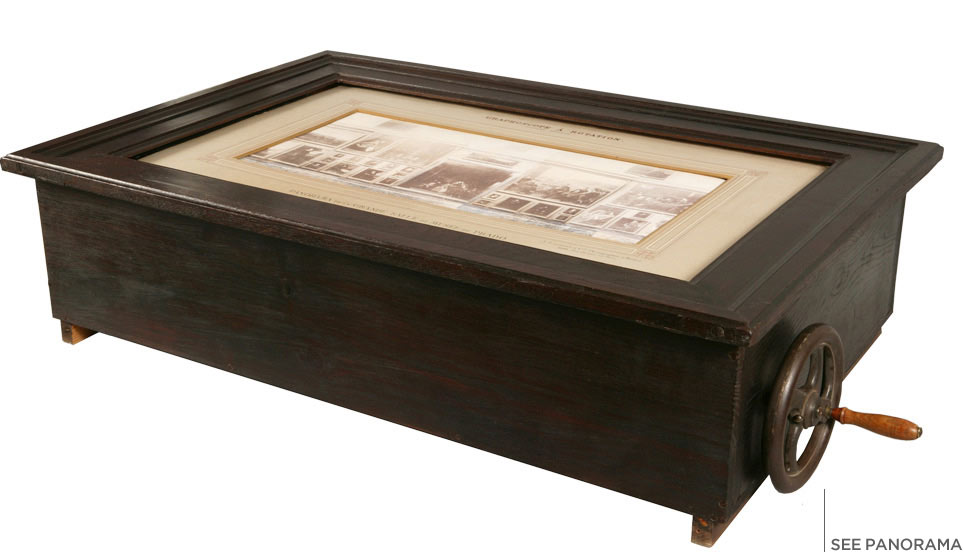
The Graphoscope
Madrid 6/22/2004 - 9/26/2004
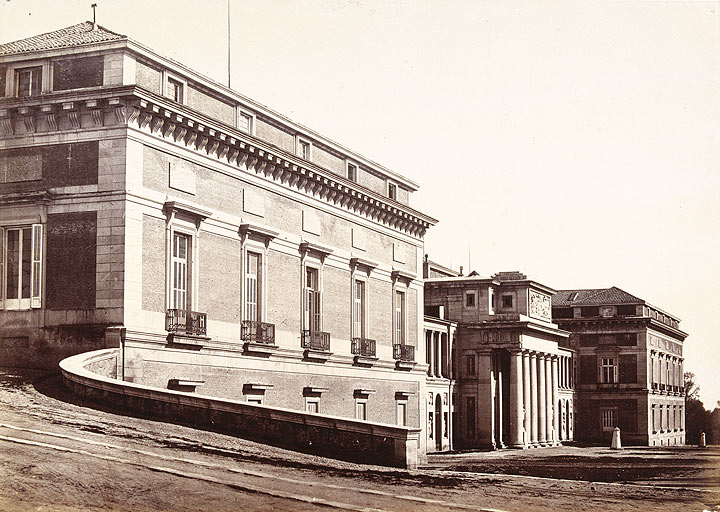
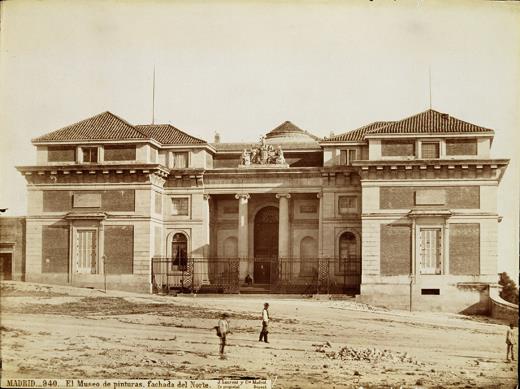
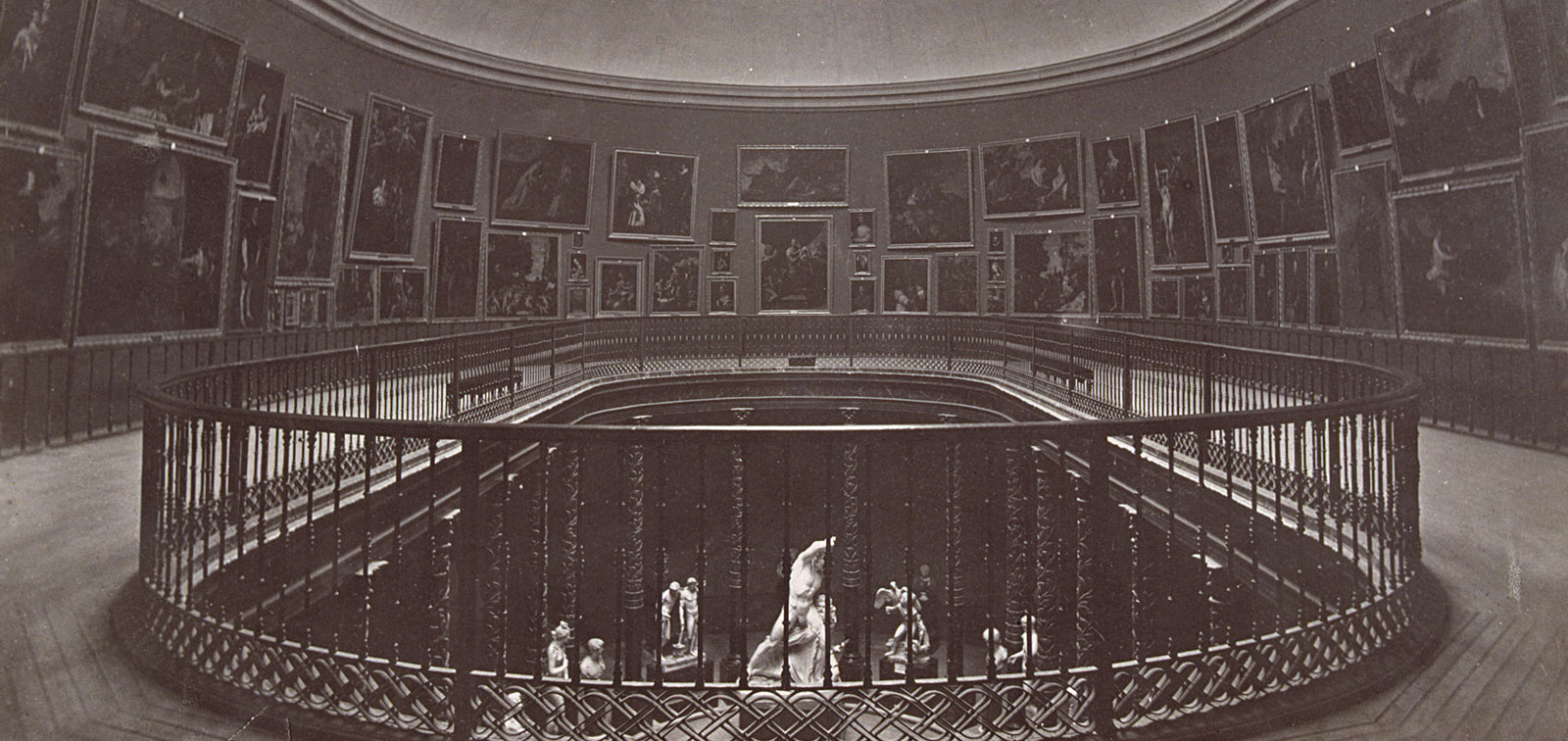
Since the mid-nineteenth century, photography has been a key reference point for our knowledge of the past, including that of the history of the Museo del Prado. The way the Museum has been captured by the camera is the subject of the present exhibition, which presents the Prado's photographic collection for the first time. The photographs on display reveal the changing criteria for the display of works of art from the time of the Museum's opening in 1819 up to the first architectural expansion project which began in 1913 and was completed in 1920. The exhibition also shows how photographs promoted the fame and reputation of the Museum so that it became one of the most important and best known of all picture galleries.
Particularly important contributions were made in this respect by J. Laurent y Cía., the largest photographic company in Spain, whose archive, featuring photographs of Spanish views and monuments, was comparable to the most important European archives of the same type. Jean Laurent is documented in Spain from 1856, and from 1863 he worked under the name of J. Laurent y Cia. Laurent started to take photographs in the Prado in that year, and was its sole photographer between 1879 and 1890. For this reason his catalogues, published in Madrid and Paris, were a crucial element in the study and international dissemination of the Spanish artistic heritage.
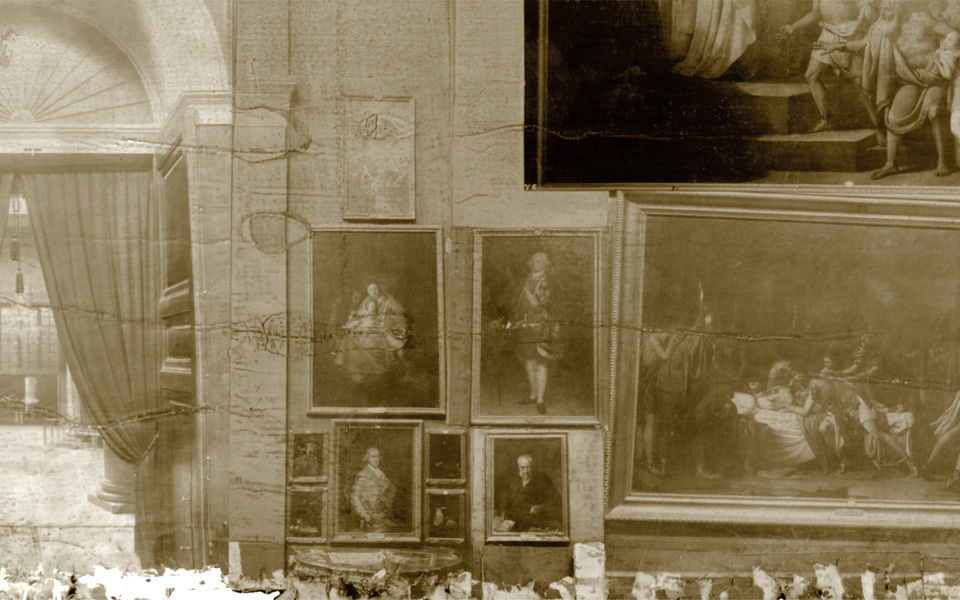
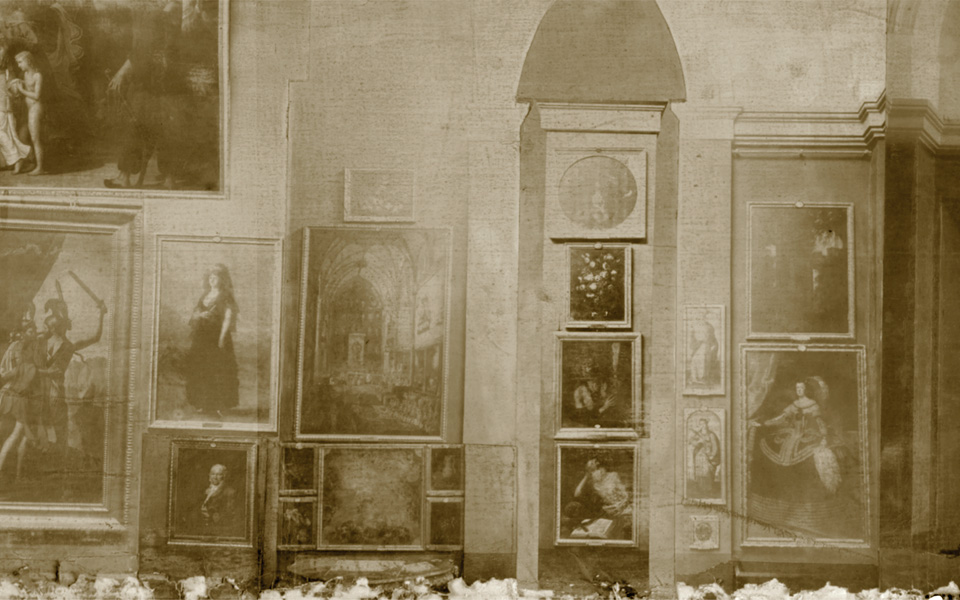
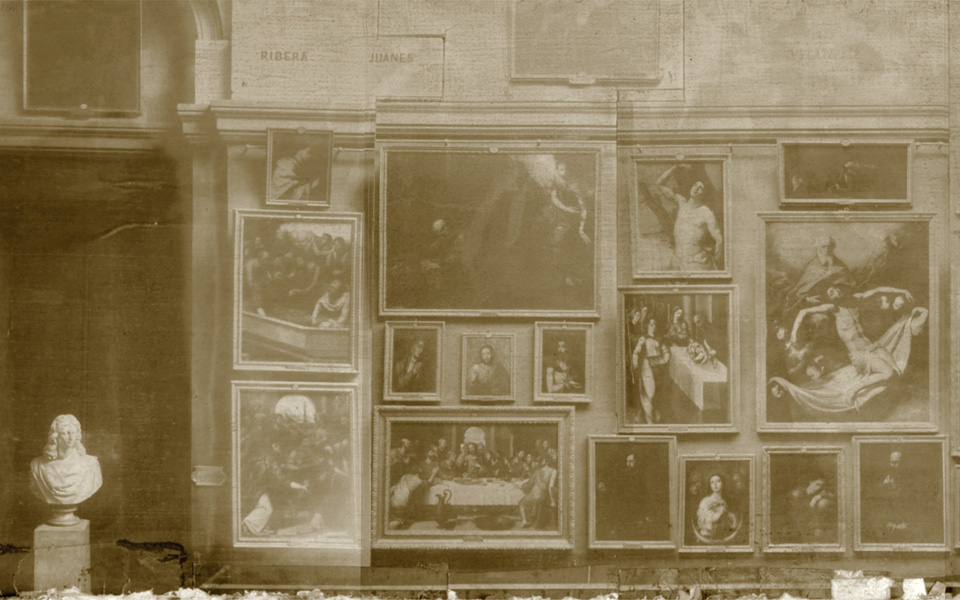
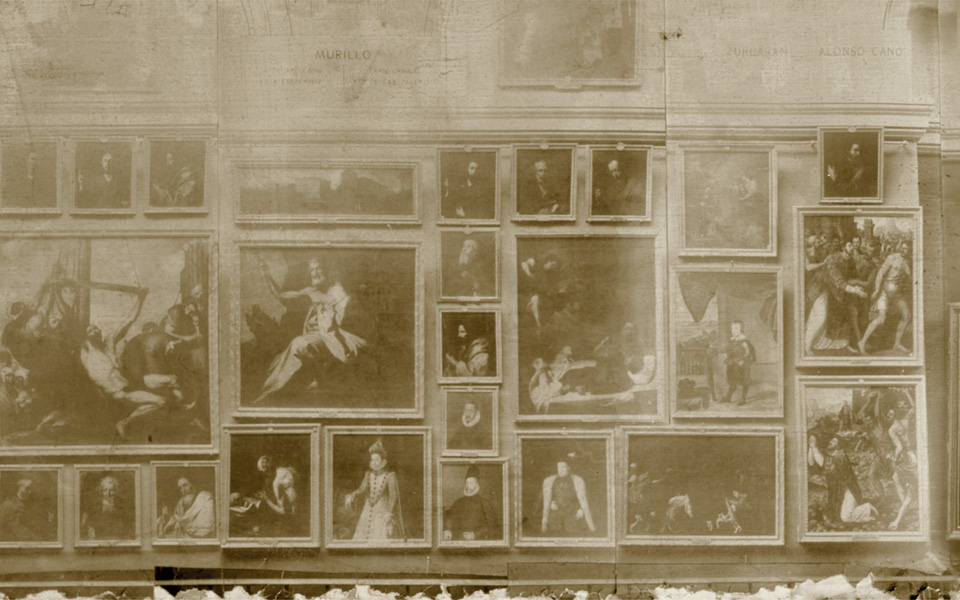
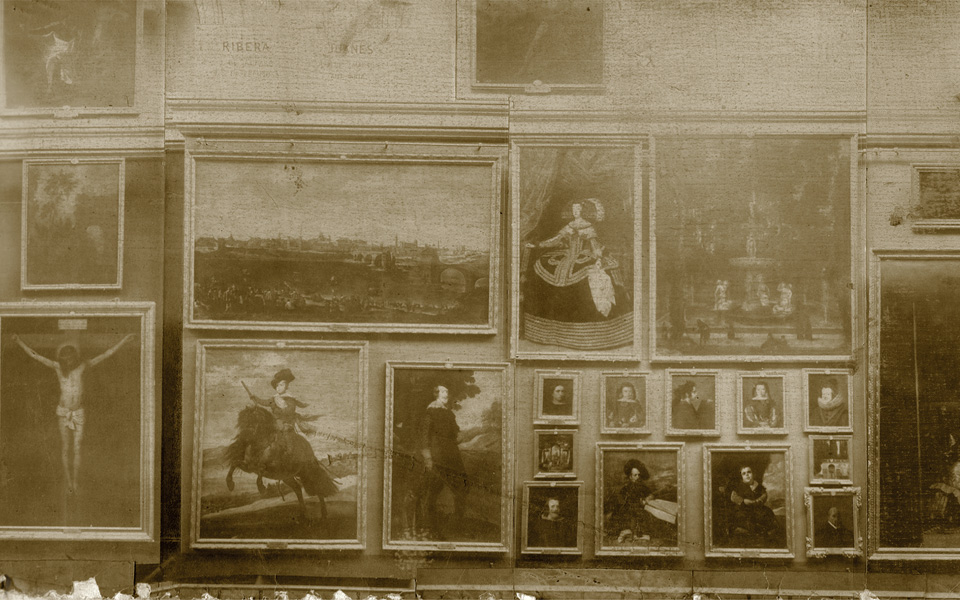
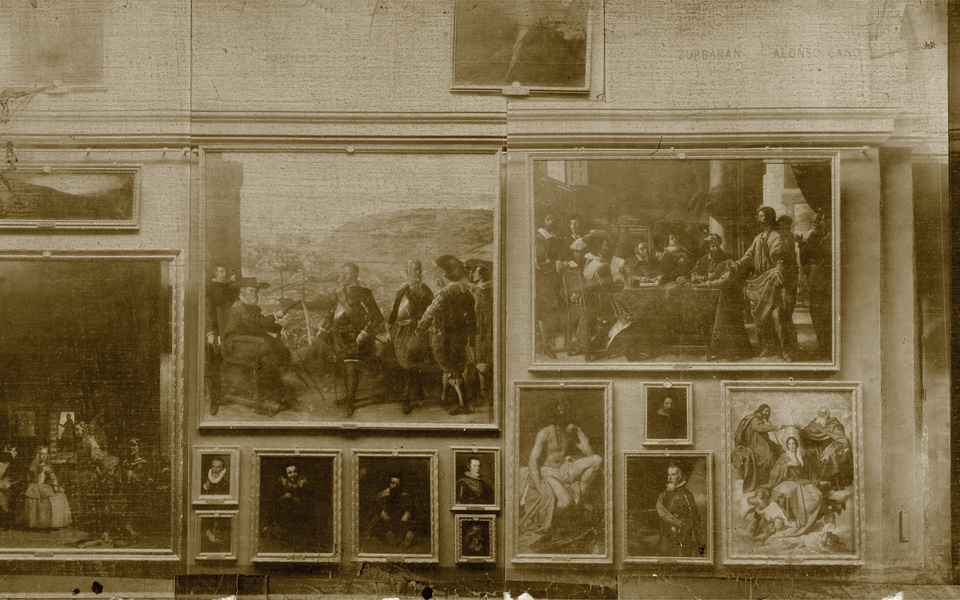
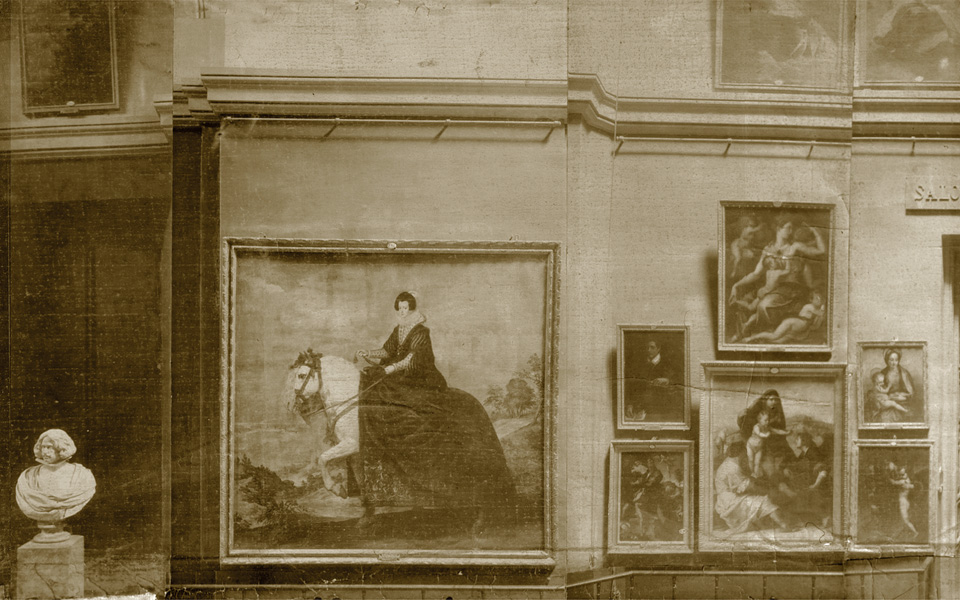
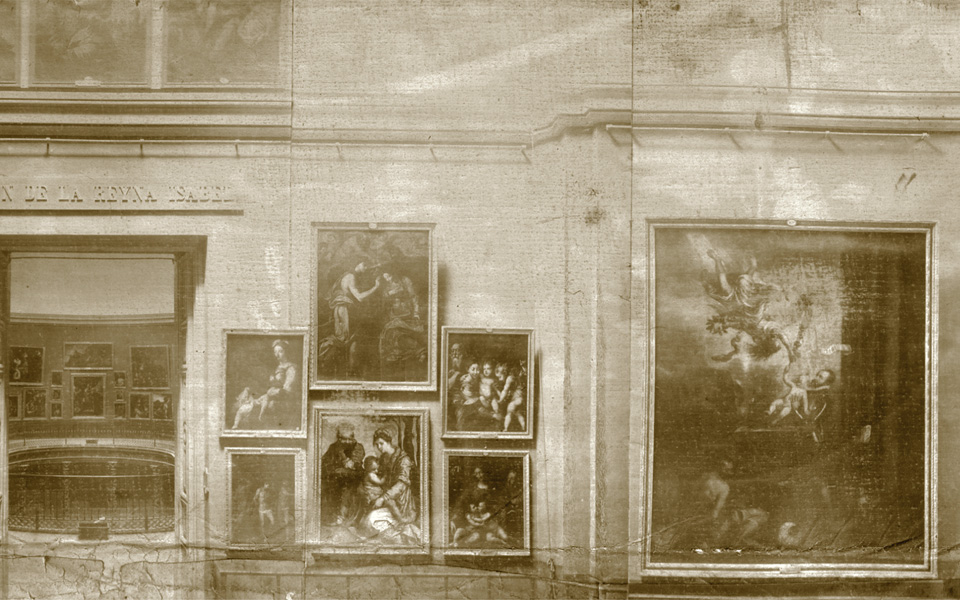
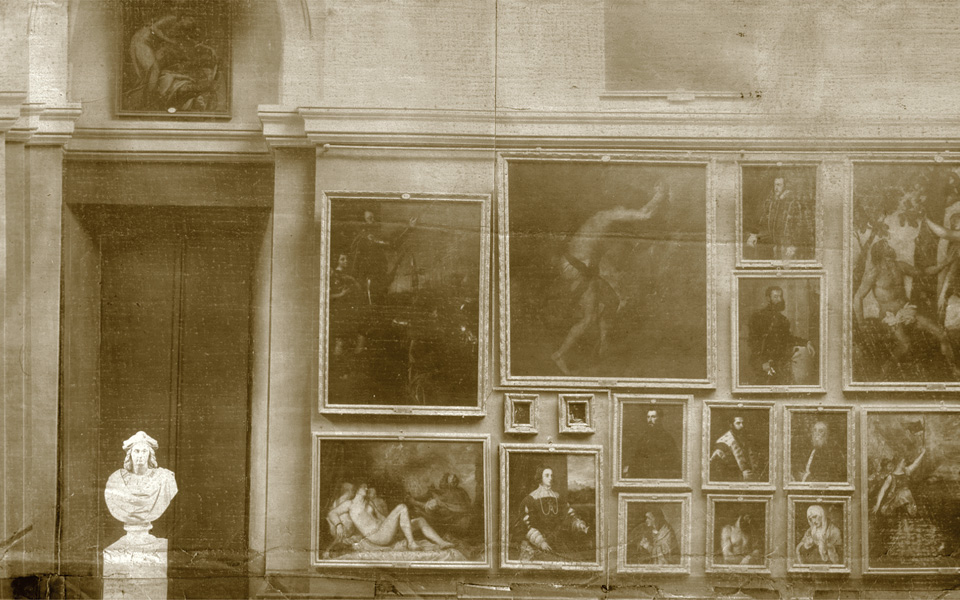
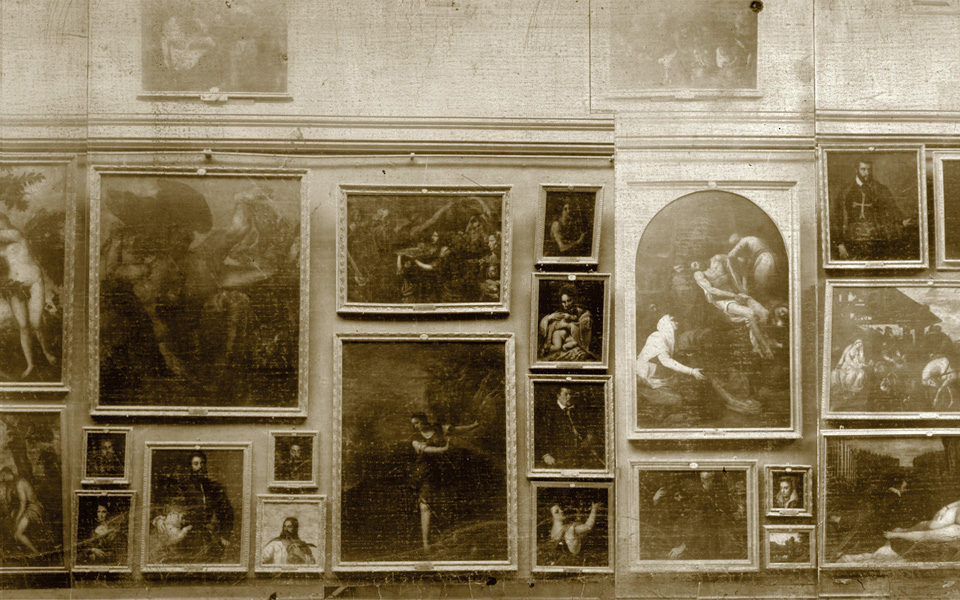
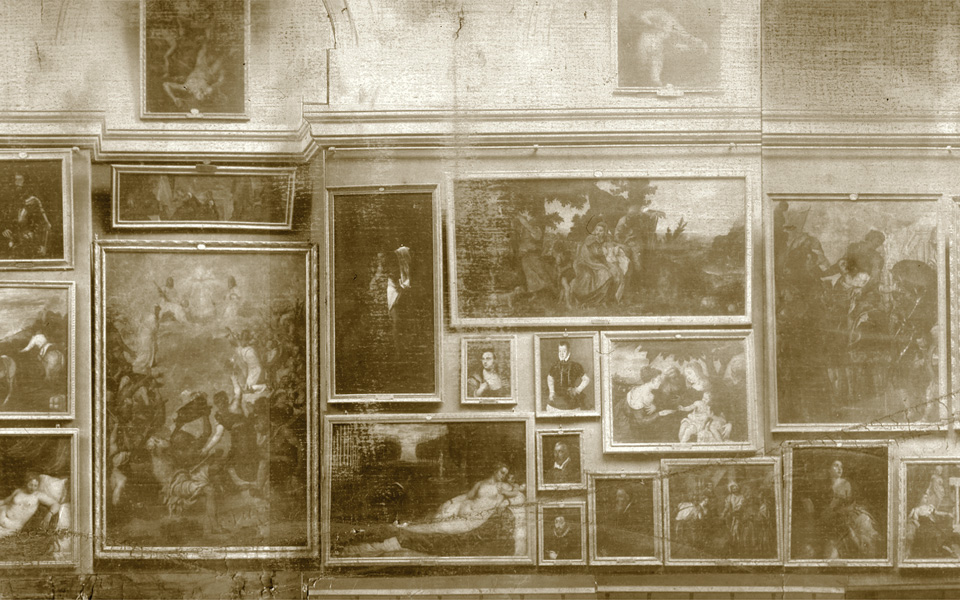
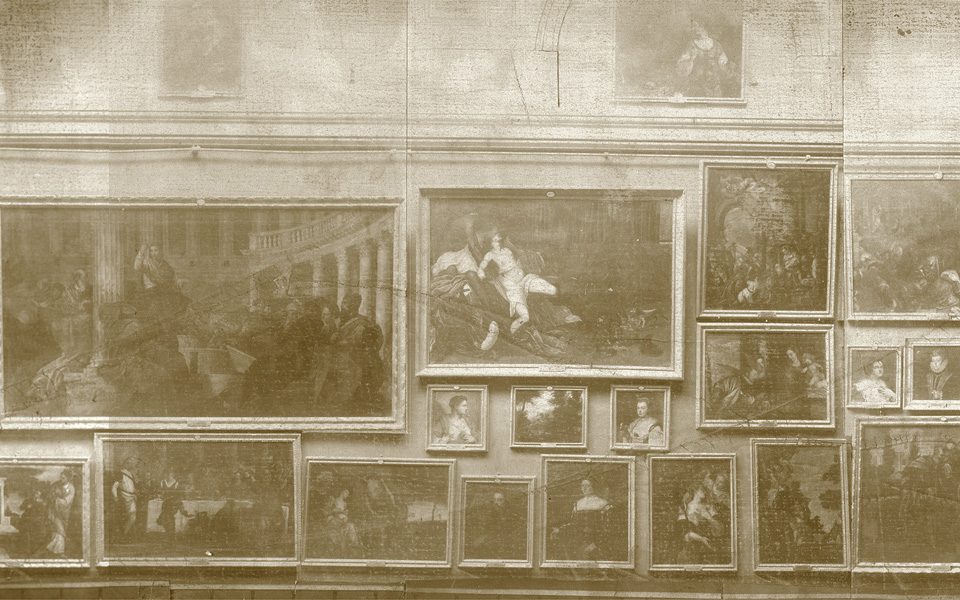
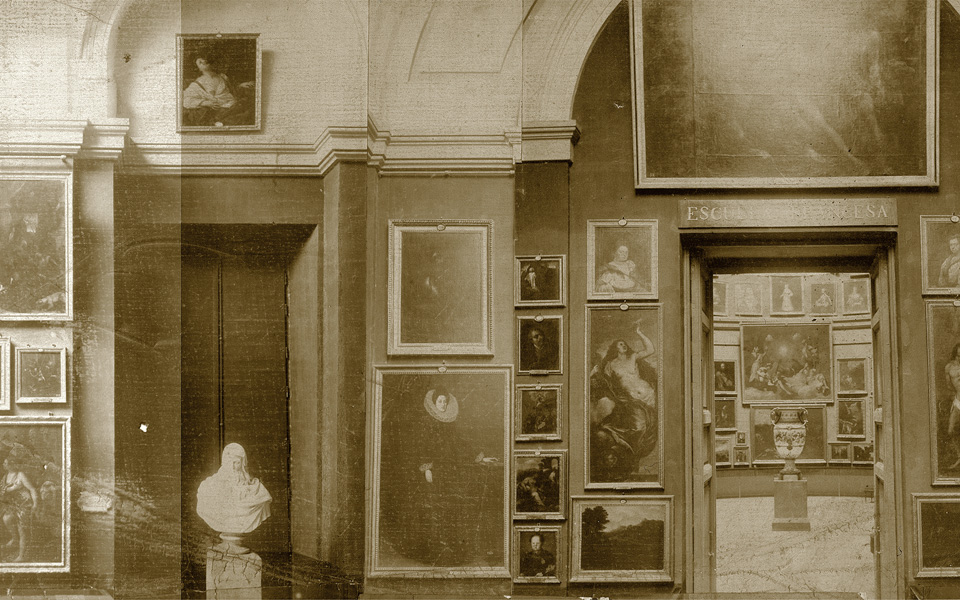
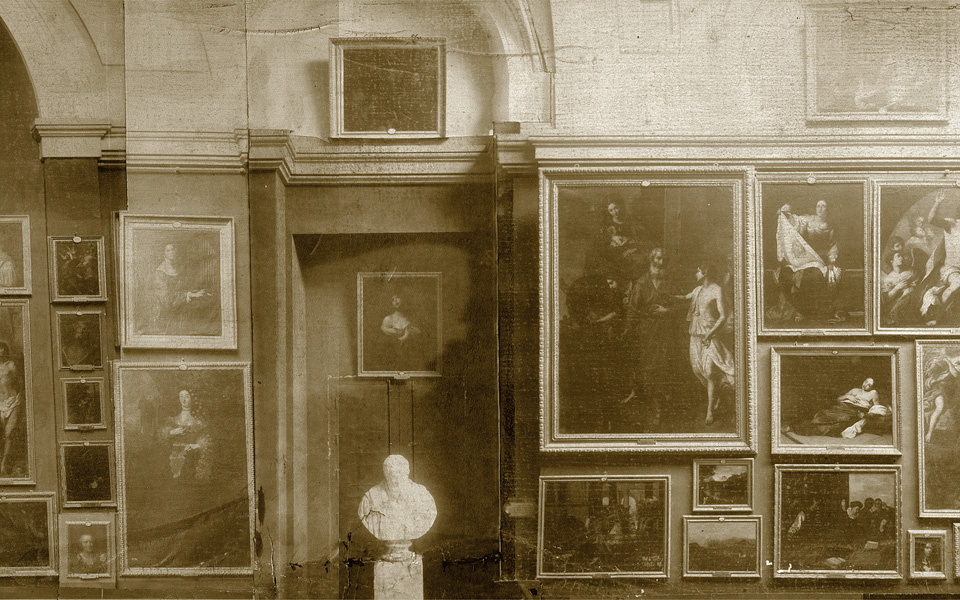
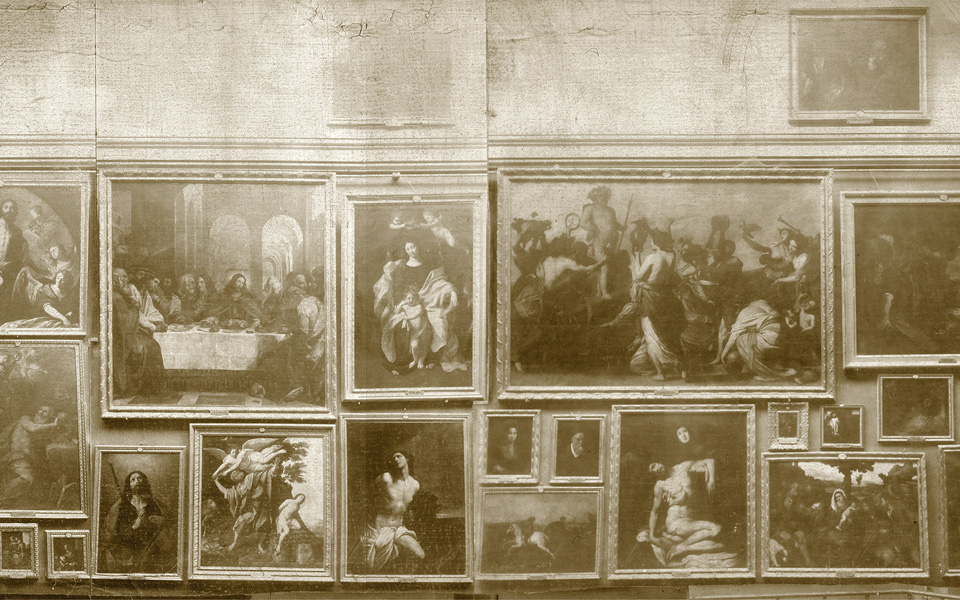
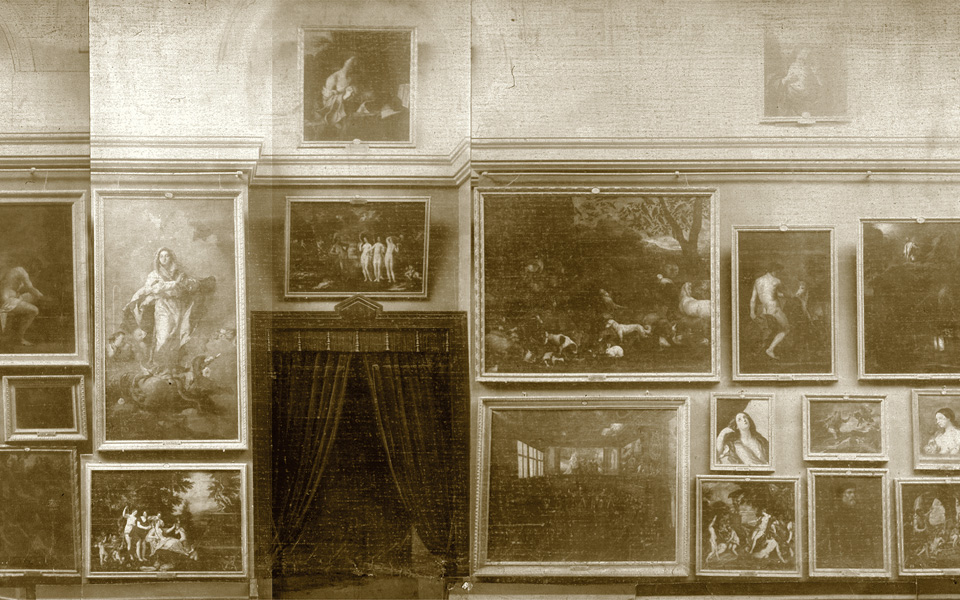
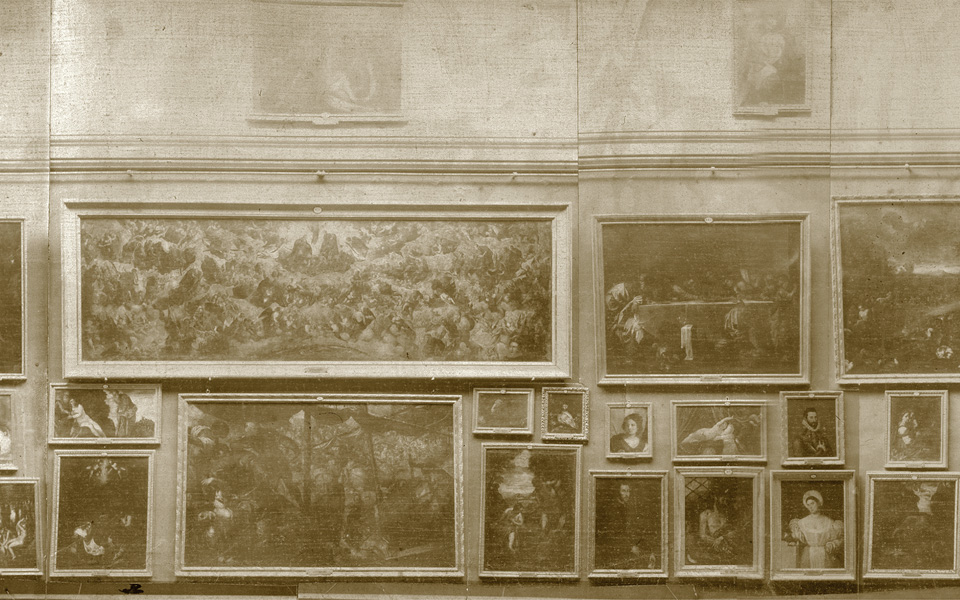
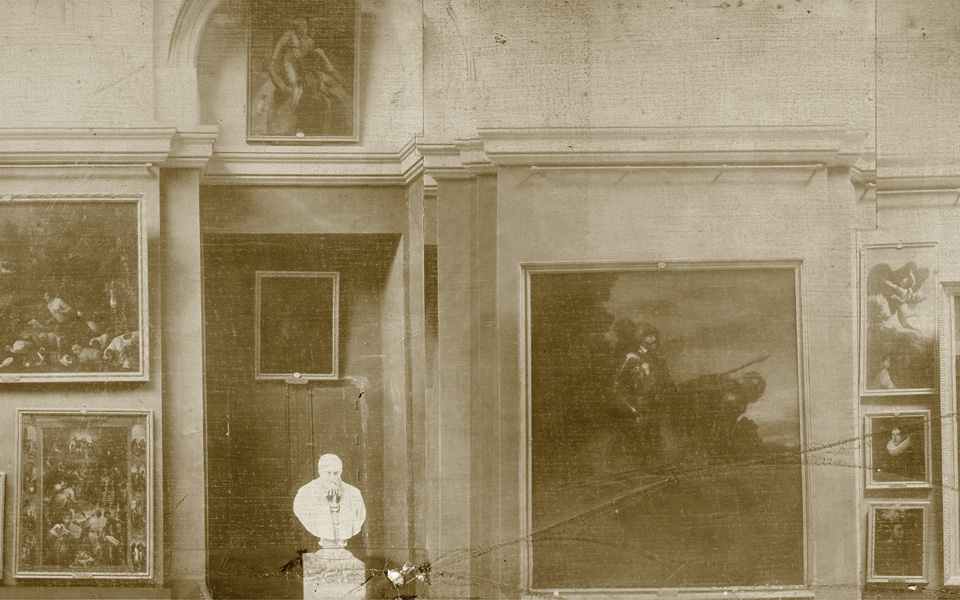
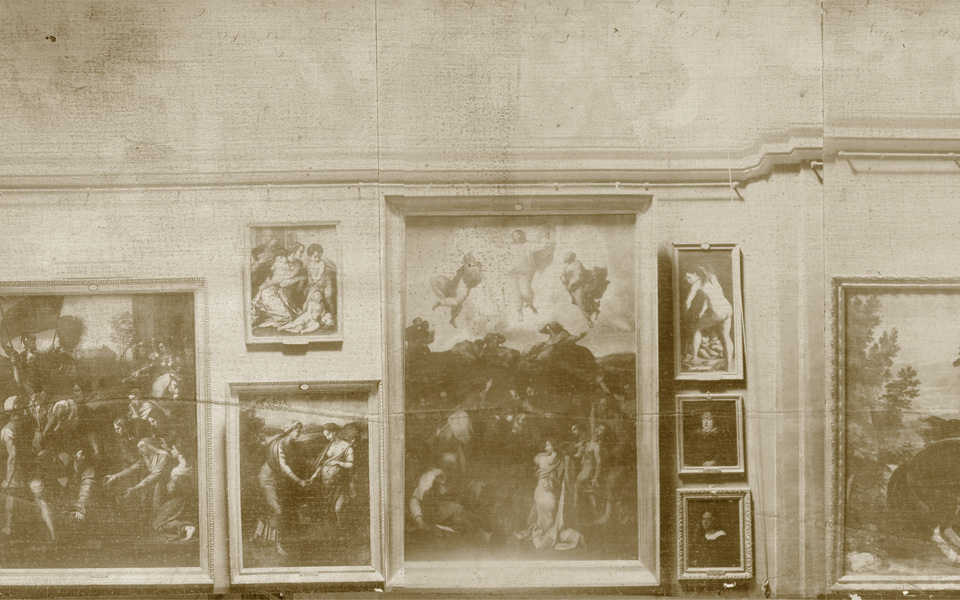
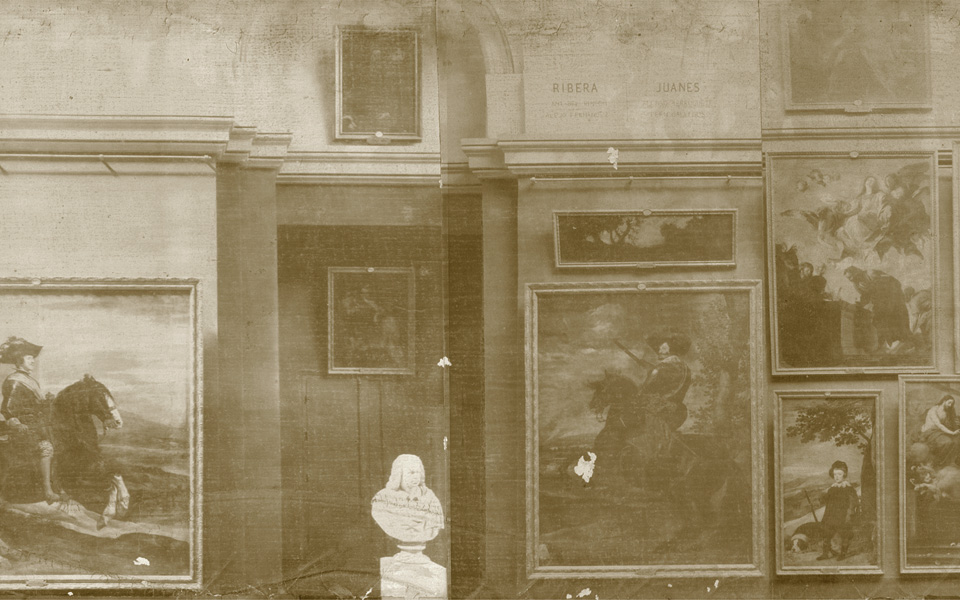
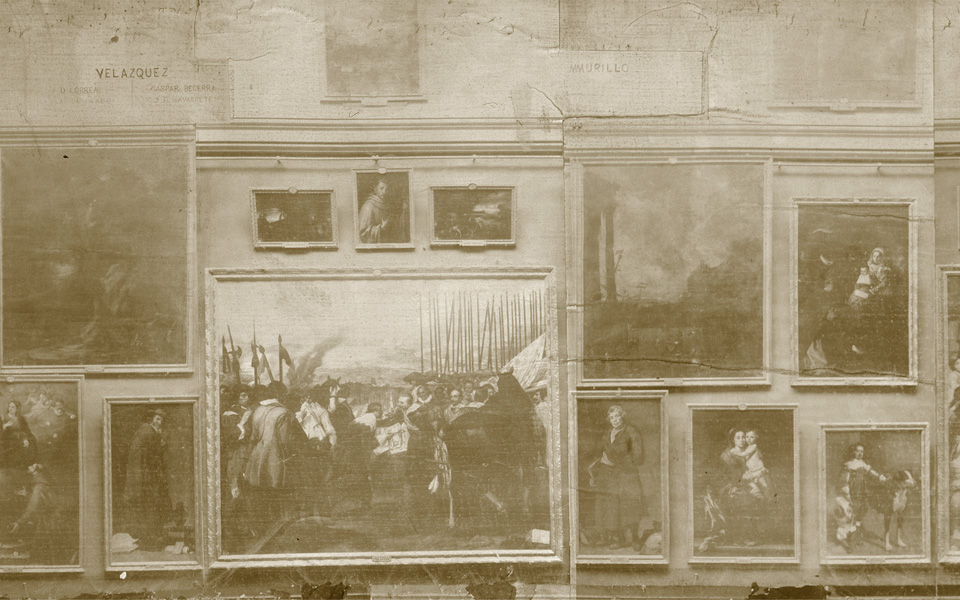
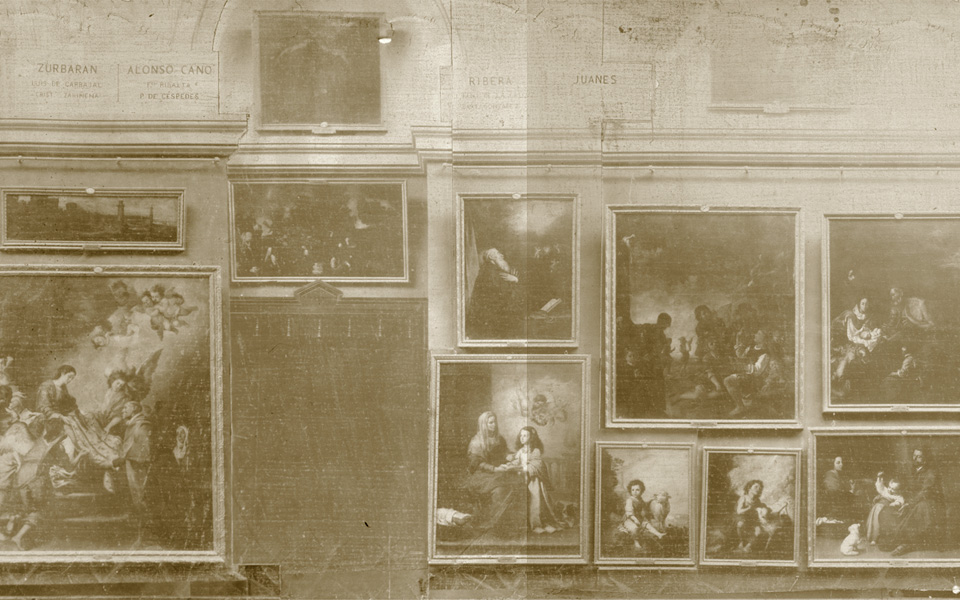
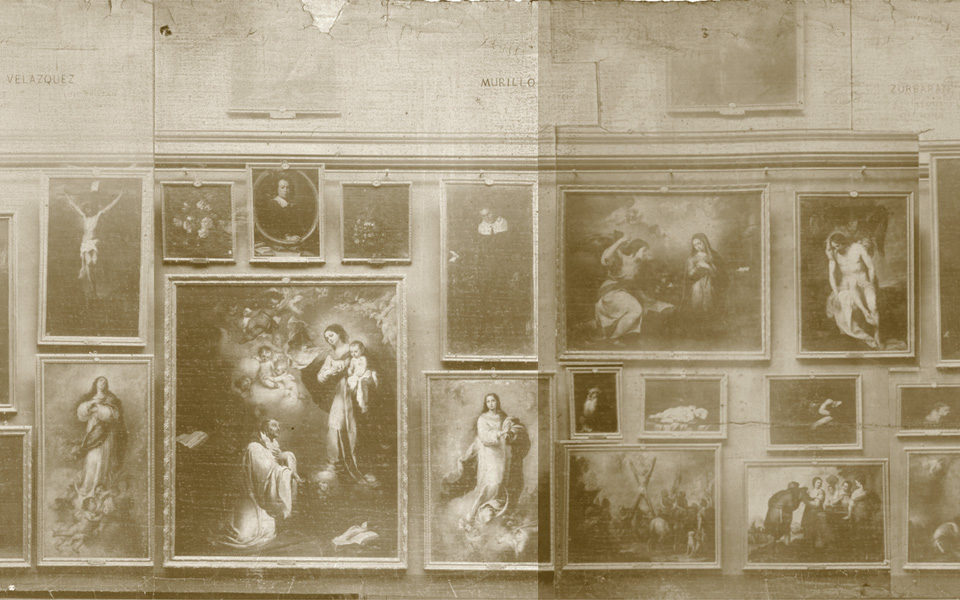
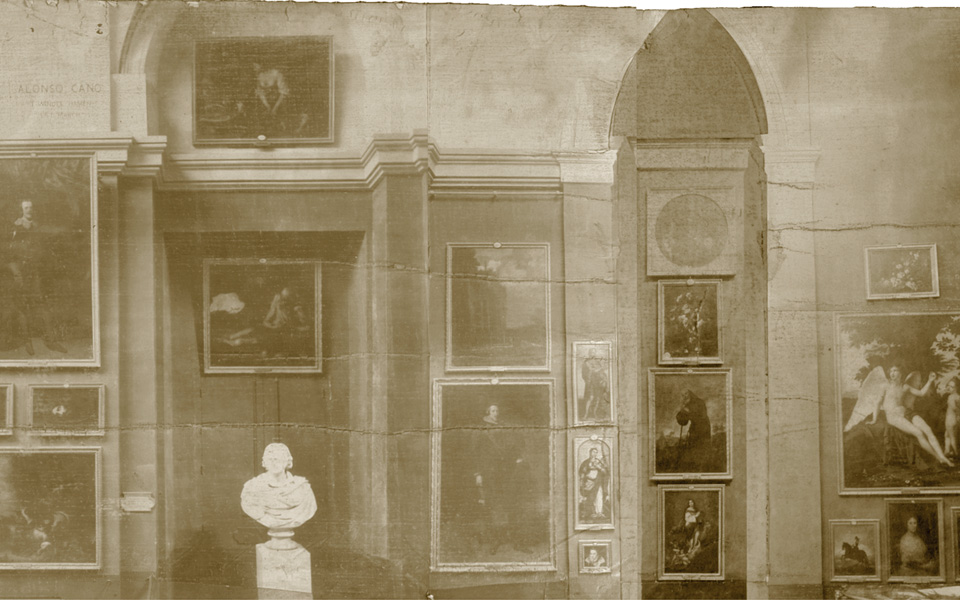
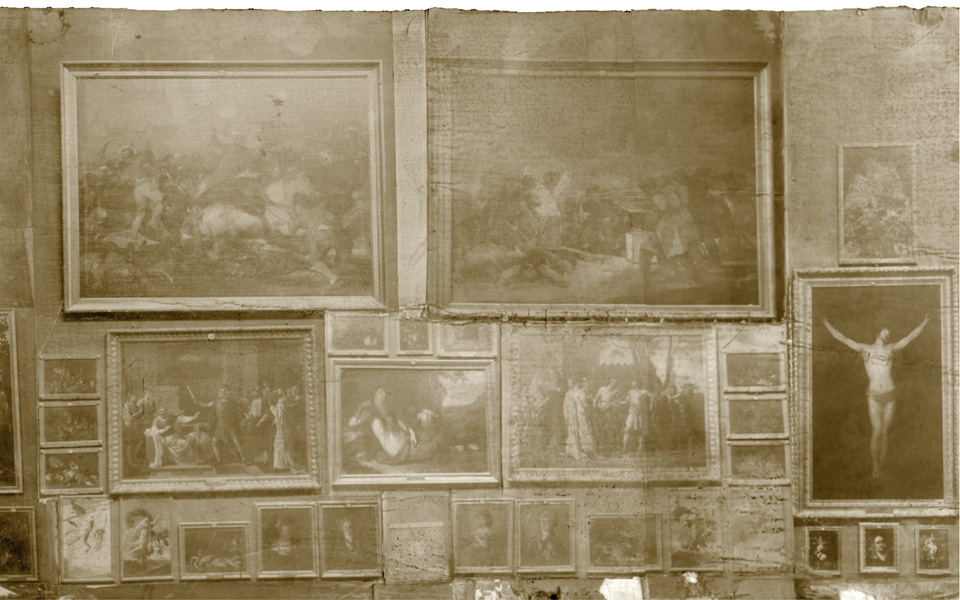
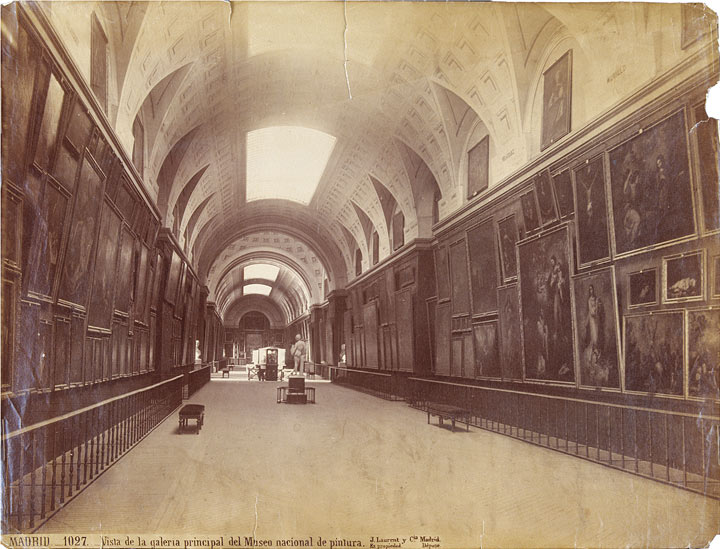
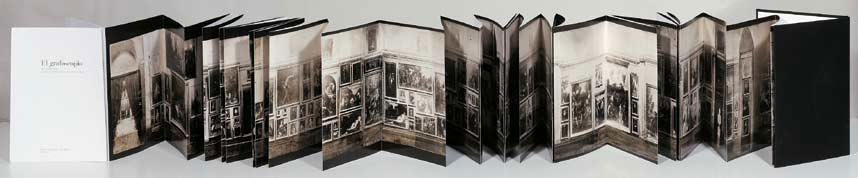
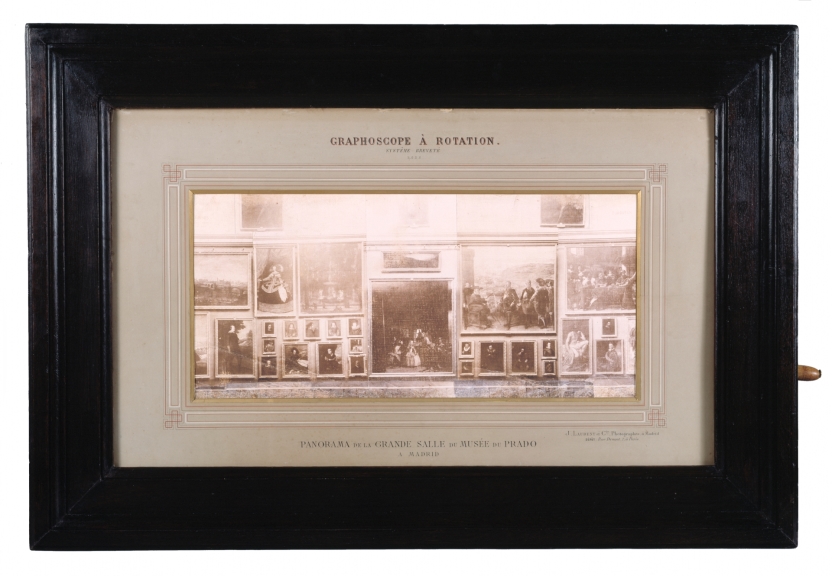
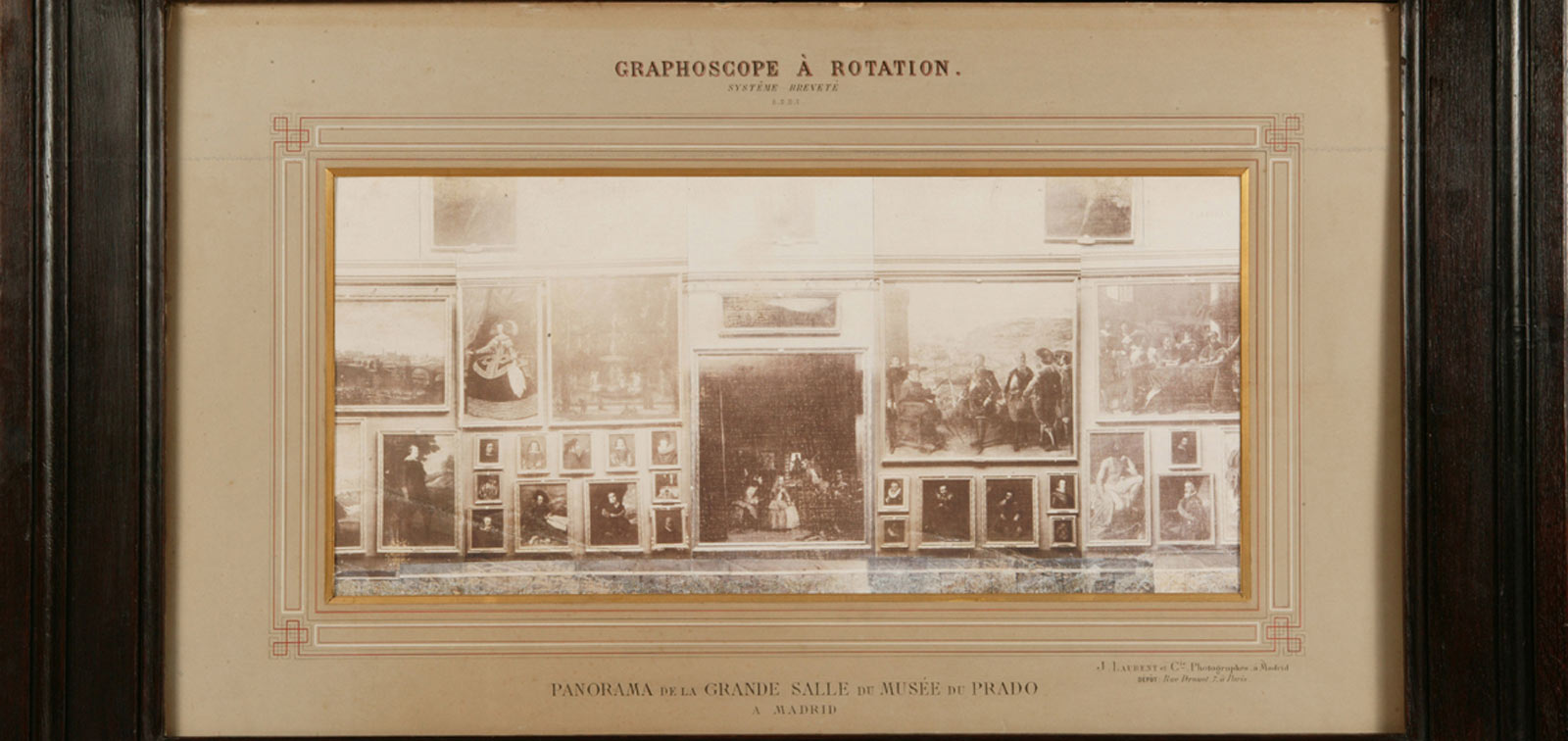
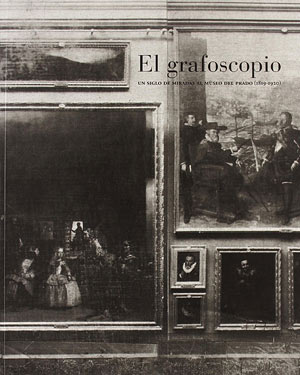
The nucleus of the exhibition is the Graphoscope: a manually rotated mechanism which had a continuous panoramic photograph inside it of the Museum's Central Gallery taken by J. Laurent y Cía., between 1882 and 1883. This example is the only known Graphoscope and can be considered exceptionally important for its artistic and documentary value. The photograph shown inside the mechanism which is 30 cm high and 10m 41.5 cm long comprises 72 numbered shots, printed out on albumen paper and fixed onto a canvas backing.
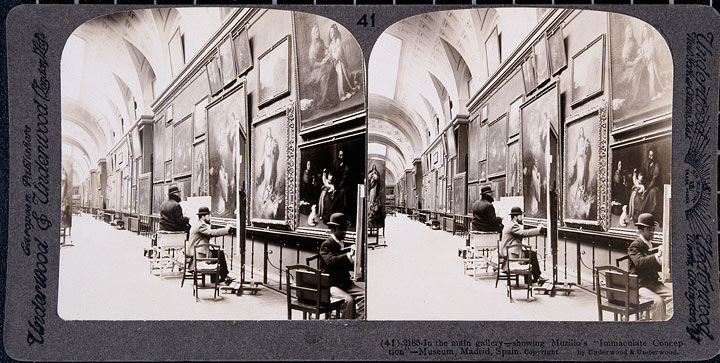
The panorama depicts the Museum's Central Gallery, which displayed the most important paintings of the Spanish and Italian Schools, apart from those shown in the Sala de la Reina Isabel which housed a selection of the Museum's masterpieces. The paintings covered the walls completely, from the dado to the upper cornice, and some even hung above this. The works were arranged according to the two great national schools but was not sub-divided by regions, nor did it follow strict chronological criteria. It was therefore common to find a mixture of paintings completely filling the walls, with the gaps between the large and important works filled by smaller paintings, and most groupings made simply for reasons of symmetry. The Central Gallery was reached from a room known as the Sala de los Contemporáneos, which displayed the most important paintings by Goya, together with works by other eighteenth- and nineteenth-century Spanish painters. The first section of the Gallery was devoted to sixteenth- and seventeenth-century Spanish painters, notably works by Ribera, Murillo, and Velázquez, who occupied the area closest to the Sala de la Reina Isabel. The second section was taken up by Italian paintings, with the main area hung with works by Raphael and between them a group of canvases by Titian and other Venetian painters. Next came a mixed group of Italian paintings, mainly Bolognese.