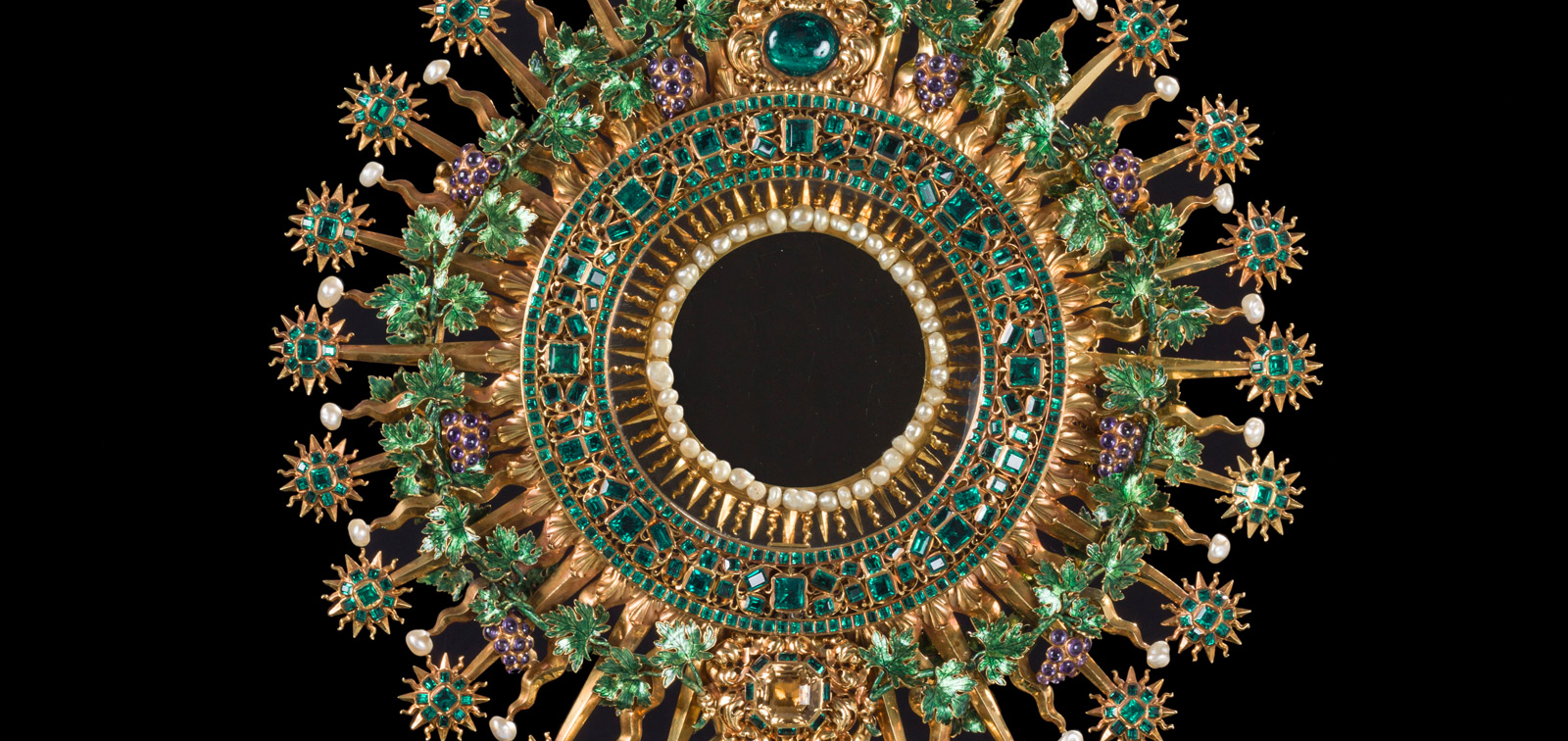
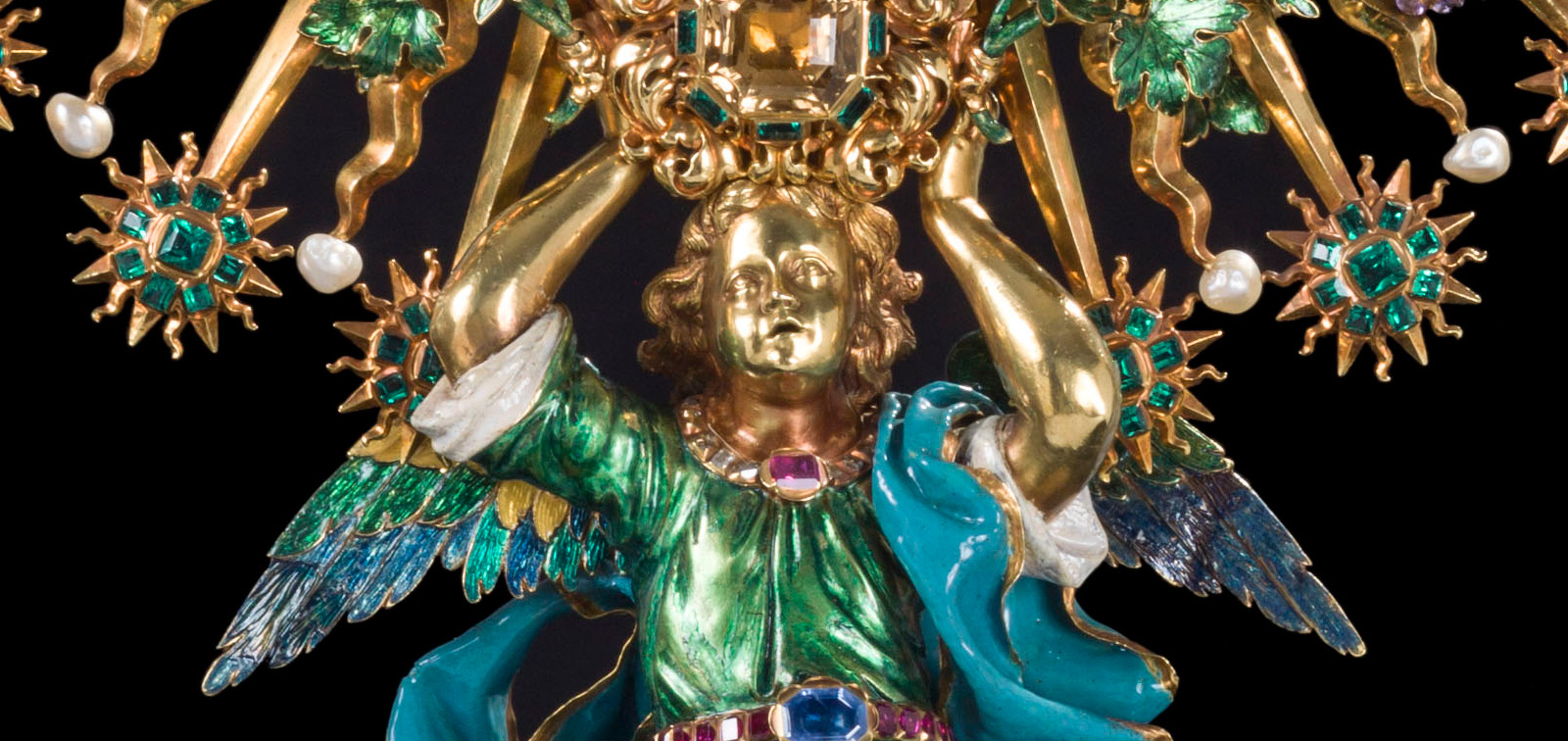
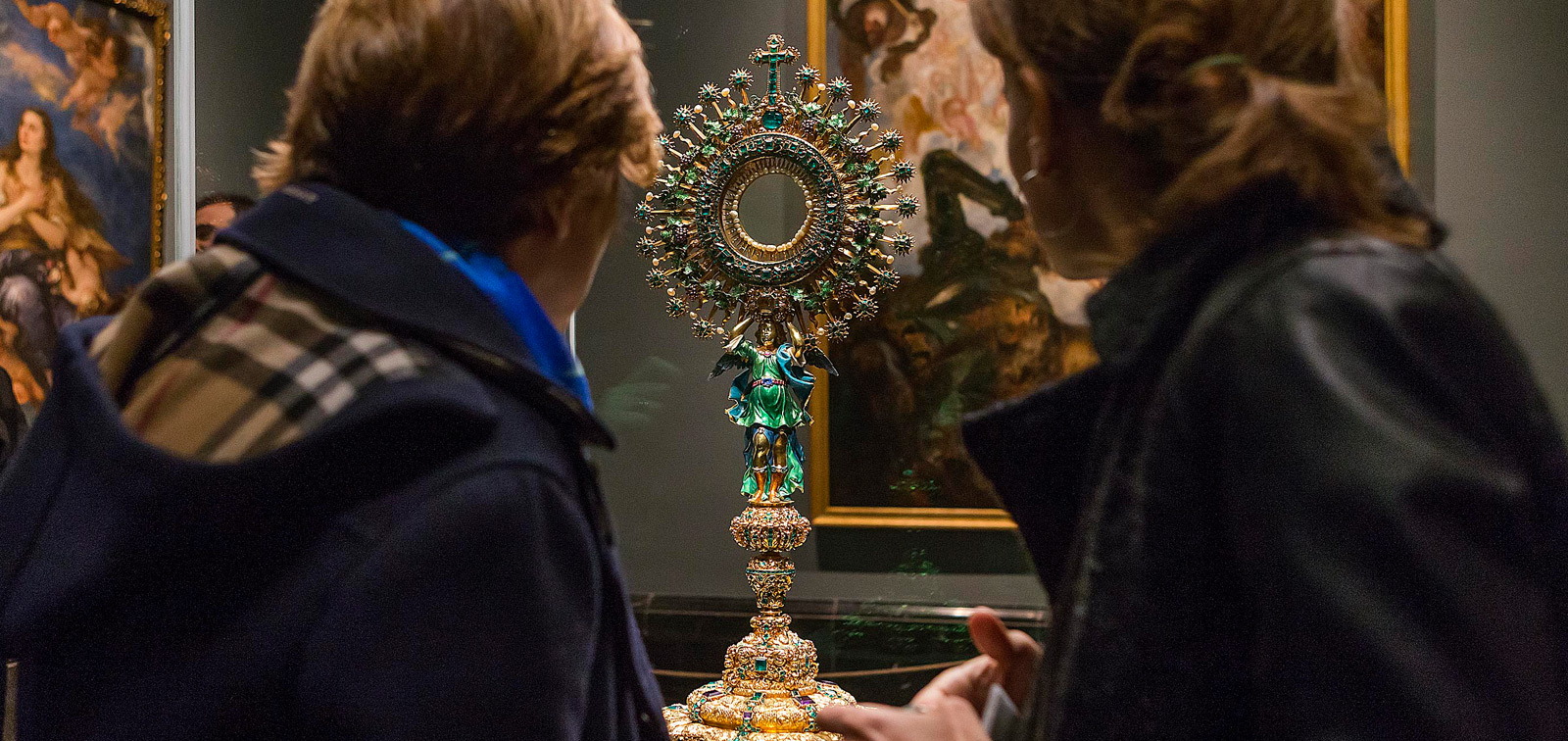
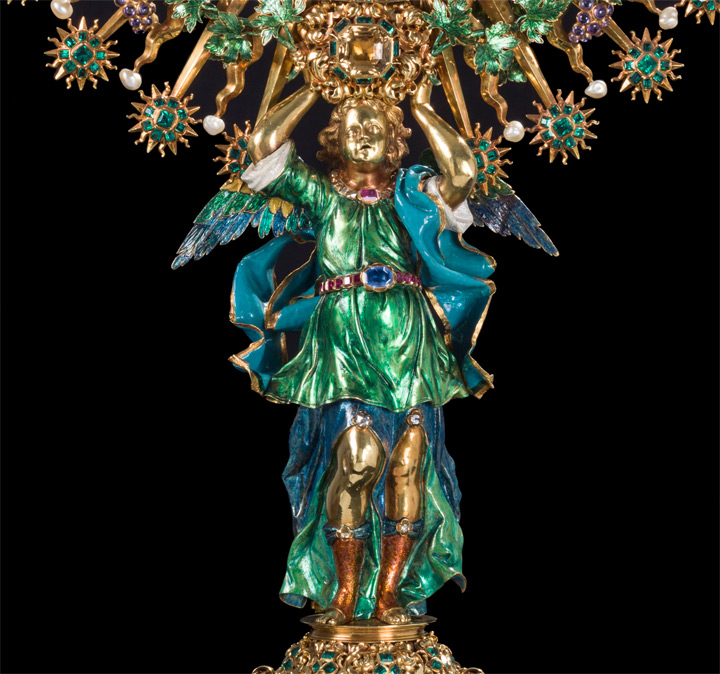
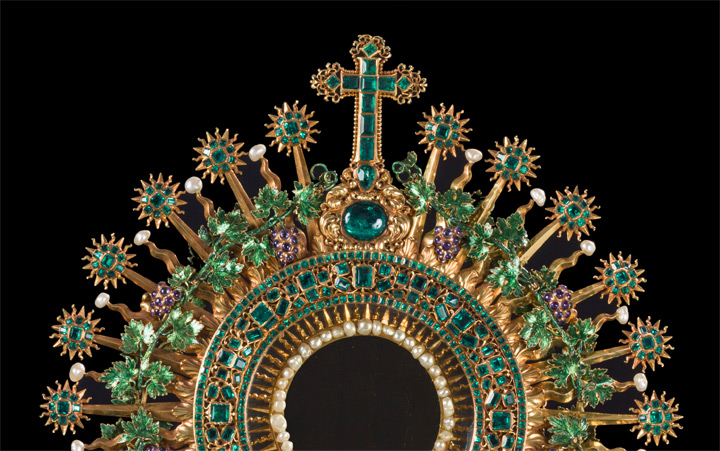
In the area corresponding to modern-day Colombia, metals such as gold and silver were known, exploited and worked by the different indigenous communities. The production of functional and ceremonial objects, including pectoral crosses, tiaras, jewels and votive figures, many of them encrusted with precious stones such as emeralds, reveals the extremely high quality of indigenous goldsmithing and the knowledge of different casting, soldering and alloying techniques, as well as the deployment of repoussé, hammering and metal casting with the lost wax process. The use of these precious metals was related to the indigenous communities’ religious practices, which attracted the interest of the Spanish conquistadors from the time of the first encounters.
While the indigenous peoples had an important tradition of goldsmith’s work, as revealed in the magnificent objects that have survived to the present day and which demonstrate the quality of Pre-Hispanic work made by communities living in the area of modern-day Colombia, it is known that from the start of the Spanish colonisation of Nueva Granada they were no longer allowed to work with precious stones and metals as the Spanish imposed rigorous controls over indigenous workers. However, in regions such as present-day Bolivia this control was less strict and the names of various goldsmiths of indigenous origin are known.
From the outset, the conquest of South America was motivated by the quest for precious metals and the desire to acquire status and power. Large mines were discovered in the Nuevo Reino de Granada, which began to be exploited in the 16th century. Aware from the outset of the abundance of precious metals in South America, the Spanish Crown passed various laws and established institutions in order to control its supply. In 1504 the “quinto real” tax was introduced, through which the monarchy received 20% of the gold and silver mined. However, this rule was often overlooked and the majority of those who discovered gold and silver did not hand over this fifth part in order not to reduce their profits. A large amount of metal left Nueva Granada for Spain: gold from the mines at Antioquia, Chocó and Cauca, gold found in rivers and even ingots made from melted down indigenous objects.
Another key institution for the control of precious metals in the New World was the Mints, which had the principal function of producing gold and silver coins. The Mint in Santafé, for example, was founded in 1621 and as a result of the large gold reserves found in the region of Antioquia, was the first in South America to produce gold coins. The Spanish Crown also set out to control the handling of metals through the silversmiths’ guild. News rapidly spread when deposits of gold, silver and precious stones were discovered, attracting numerous expert craftsmen to South America. The silversmiths’ guild was soon founded and workshops with masters, assistants and apprentices were established, producing large numbers of objects that combined Spanish and South American stylistic tendencies.
While the high quality of the Pre-Hispanic indigenous communities’ work in modern-day Colombia is known, it is unlikely that they worked in silversmiths’ workshops as it was forbidden to hire indigenous people, despite the fact that they were employed as workers in the gold mines and in the extraction of gold from rivers. They may have worked as apprentices, carrying out the humblest tasks, but never occupied the principal role of head of a workshop.