formularioRDF
The itinerary <em>TITULORECORRIDO</em> has been successfully created. Now you can add in works from the Collection browser
<em>TITULOOBRA</em> added to <em>TITULORECORRIDO</em> itinerary

Charon crossing the Styx. Patinir

Charon crossing the Styx is painting by Joachim Patinir,  a Flemish painter. Flanders is a region of Belgium.

The painting was created between 1520 and 1524. 

ETR (Easy to Read) icon
© Easy-to-read european logo: Inclusion Europe. More information at: Easy-to-read

What is the subject of the painting?

This painting shows a scene from Greek and Roman mythology.

It depicts the moment when the souls of the dead cross the River Styx to go to heaven or hell.

Mythology is a collection of stories about gods, heroes and traditions specific to nations or cultures.

According to mythology, ancient Greeks and Romans believed that the dead had to cross a river called the Styx.

Charon, a boatman, was responsible for transporting them across the river to their destination.

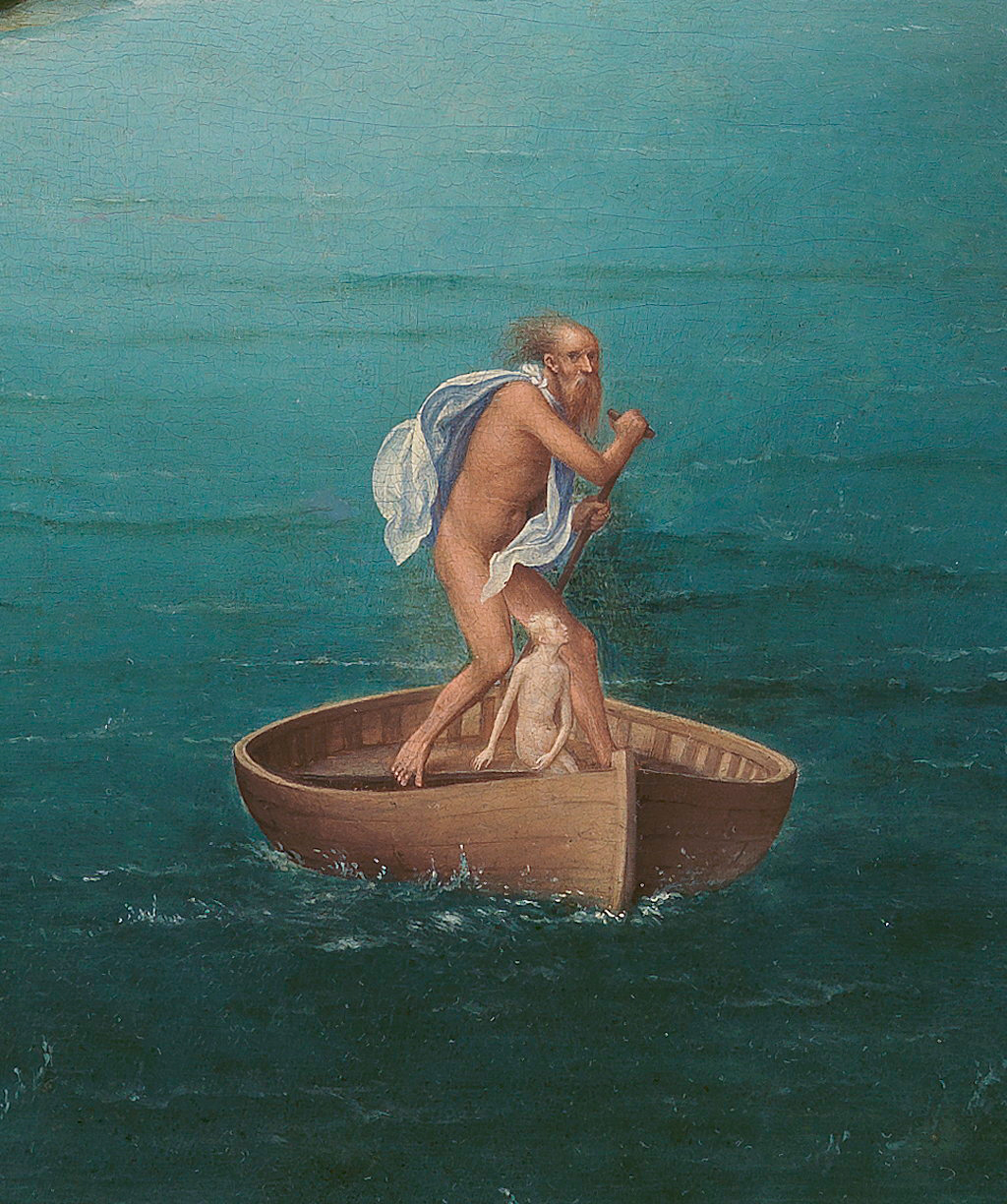
In the painting, the small and naked figure in the boat represents the soul of the deceased.

Charon is the older man standing and rowing on the wooden boat.

On each side of the river, we can see the possible destination.

On the left is heaven, where angels accompany the souls, and we can see a distant glass building.

The river leading to heaven is narrow and difficult to navigate.

On the right is hell, hidden behind a forest and an easily transited wide river.

Patinir depicts hell with a round tower and a background fire.

At the entrance waits Cerberus, a dog with 3 heads.

Cerberus was the guardian of hell.

The soul in the boat with Charon must choose its destiny.

In the painting, the soul chooses its destiny because it turns and looks towards the side of hell.
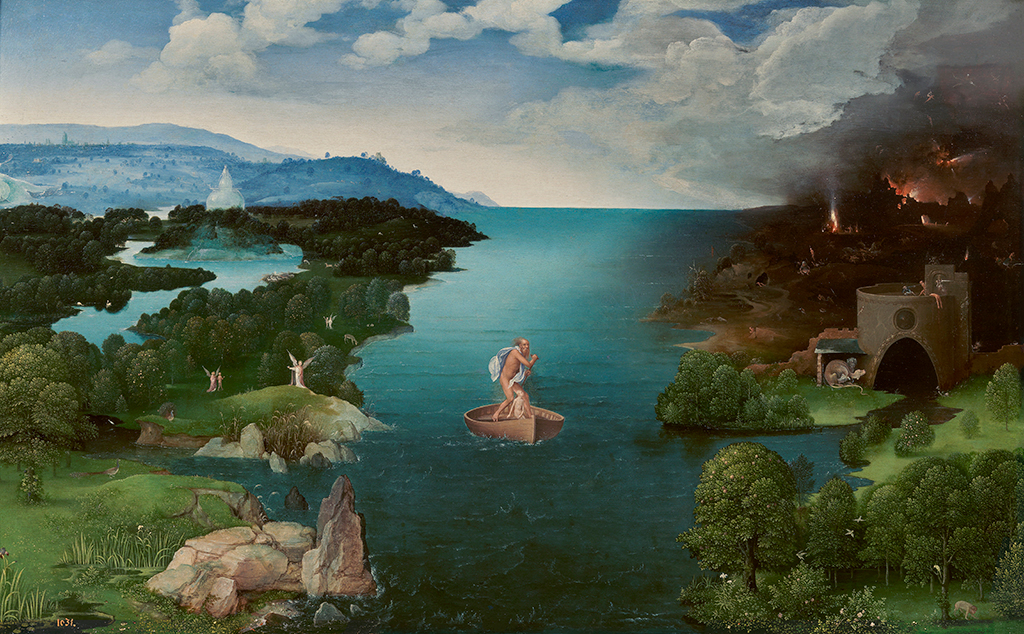
Charon crossing the Styx
Charon crossing the Styx by Patinir

The painter

Patinir was the first European painter to specialise in landscapes.

Experts consider him the pioneer of paintings on this subject.

His works stand out because they combine realism and fantasy.

Patinir can also show the beauty and immensity of nature, such as rivers and lakes.

In this painting, the open and bright landscape draws attention.

The way he paints the sky, using colour and light, is also interesting.

It is a typical characteristic of Patinir.

The representation of paradise and hell reminds us of the style of Bosch, another painter from Flanders of the same era.

This painting depicts a mythological scene that addresses a religious subject.

Patinir suggests that humans should prepare for death.

When that moment arrives, they must choose the narrow path, which is more difficult but leads to heaven.

If they choose the easy path, they will be deceived by a false heaven because behind it lies hell.

Detail Charon
Detail of Charon

This work belongs to the following tours:

Easy-to-read content of Museo del Prado
Funded by the European Union - NextGenerationEU Government of Spain - Ministry of Culture Recovery, Transformation and Resiliency Plan Museo Nacional del Prado

Funded with the National Recovery and Resilience Plan (NRPP) , Spain’s Next Generation EU financing and according to the initiatives within the component C.24.I3 Digitization and valorization of major cultural services. The project is part of Campus Prado within Accessibility and Signage: Revitalization of the Urban Environment action line and as a universal accessibility activity.

Up