formularioRDF
The itinerary <em>TITULORECORRIDO</em> has been successfully created. Now you can add in works from the Collection browser
<em>TITULOOBRA</em> added to <em>TITULORECORRIDO</em> itinerary

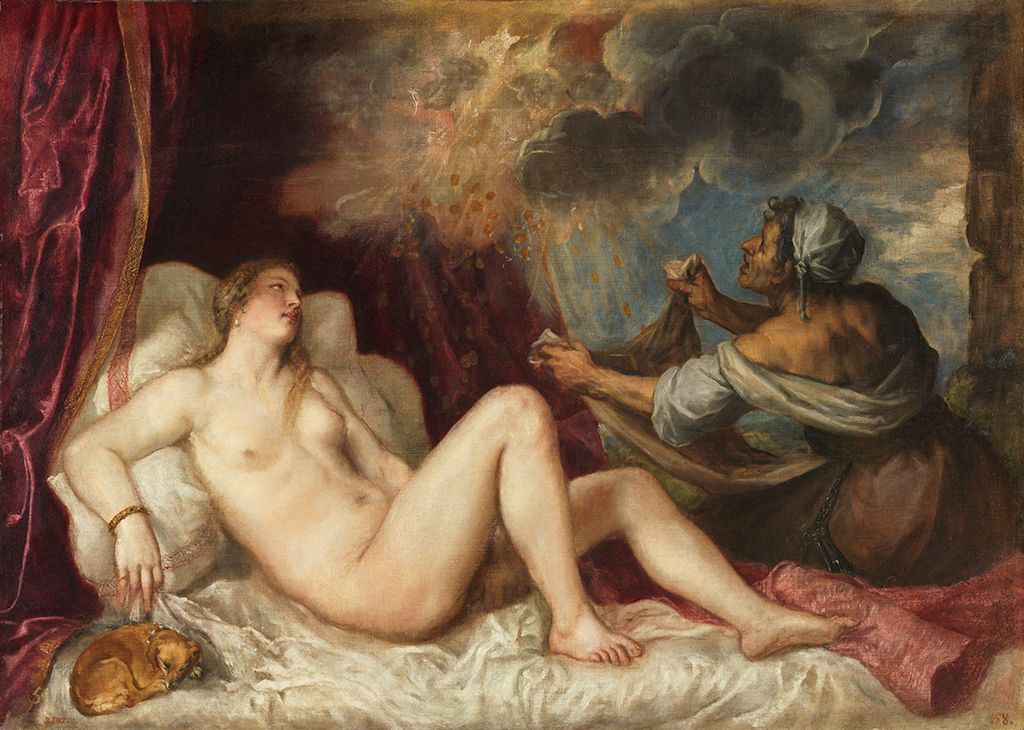
Danaë and the Shower of Gold. Titian

Danaë and the Shower of Gold is a painting by Titian, an Italian painter.

The painting is from 1565.

ETR (Easy to Read) icon
© Easy-to-read european logo: Inclusion Europe. More information at: Easy-to-read

What is the artist depicting?

This painting depicts a scene from the Danaë myth.

A myth is a story with protagonists who are gods or heroes of ancient Greece and Rome.

Danaë is the naked woman lying in bed, receiving a shower of gold that falls from the clouds like a storm.

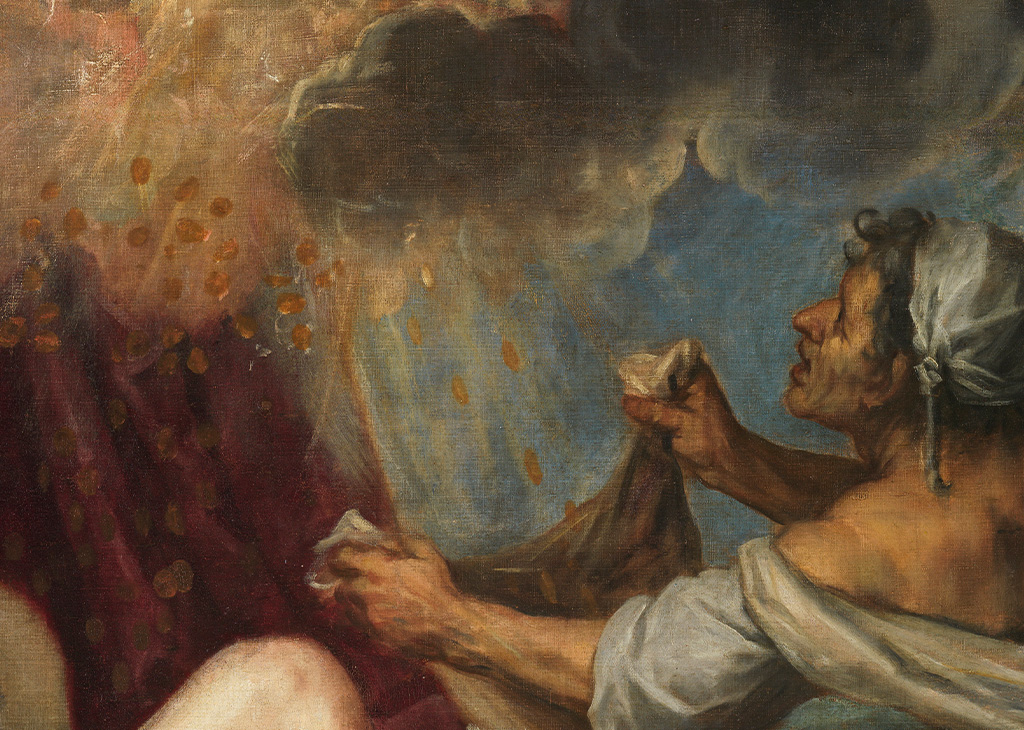
On the right of the painting there is an older woman with her back turned. She collects the golden coins on her apron.

King Acrisius was the father of Danaë. Acrisius believed that if Danaë had a son, that son would murder him when he grew up.

So, Acrisius locked Danaë in a tower so she would not see anyone and could not become pregnant and have children.

But the god Zeus was charmed with Danaë and decided to turn himself into a shower of gold to enter the tower where Danaë was closed.

Zeus, en forma de lluvia de oro, y Dánae tuvieron relaciones sexuales, ella se quedó embarazada y tuvo un hijo llamado Perseo.

Danaë and Zeus, in the form of golden rain, had sexual relations.

Danaë became pregnant and had a son named Perseus.

There are many paintings depicting Danaë and this myth of the golden rain.

Titian painted this picture in 1565 and wanted to contrast the youth and beauty of Danaë with the old age and ugly appearance of the older woman.

Titian also wanted to show that he could paint human figures from different perspectives.

For example, the older woman turns her back, and Danaë faces the viewer.
Danaë
Danaë and the Shower of Gold by Titian

The painter

Titian was born in Italy and learned from important Italian painters.

Titian later worked for Emperor Charles the Fifth in Spain and his son Philip the Second.

This painting is part of a series called "Poesie".

Titian called the series poesie because he invented scenes from texts by poets, such as Metamorphoses by Ovid.

Titian painted that series for Philip the Second.

Detailwoman
Detail of the older woman
Funded by the European Union - NextGenerationEU Government of Spain - Ministry of Culture Recovery, Transformation and Resiliency Plan Museo Nacional del Prado

Funded with the National Recovery and Resilience Plan (NRPP) , Spain’s Next Generation EU financing and according to the initiatives within the component C.24.I3 Digitization and valorization of major cultural services. The project is part of Campus Prado within Accessibility and Signage: Revitalization of the Urban Environment action line and as a universal accessibility activity.

Up