Parnassus was the mountain where Apollo, the god of the sun, arts, and poetry, lived according to Greek and Roman mythology.
Mythology is a collection of stories about gods, heroes and traditions specific to nations or cultures.
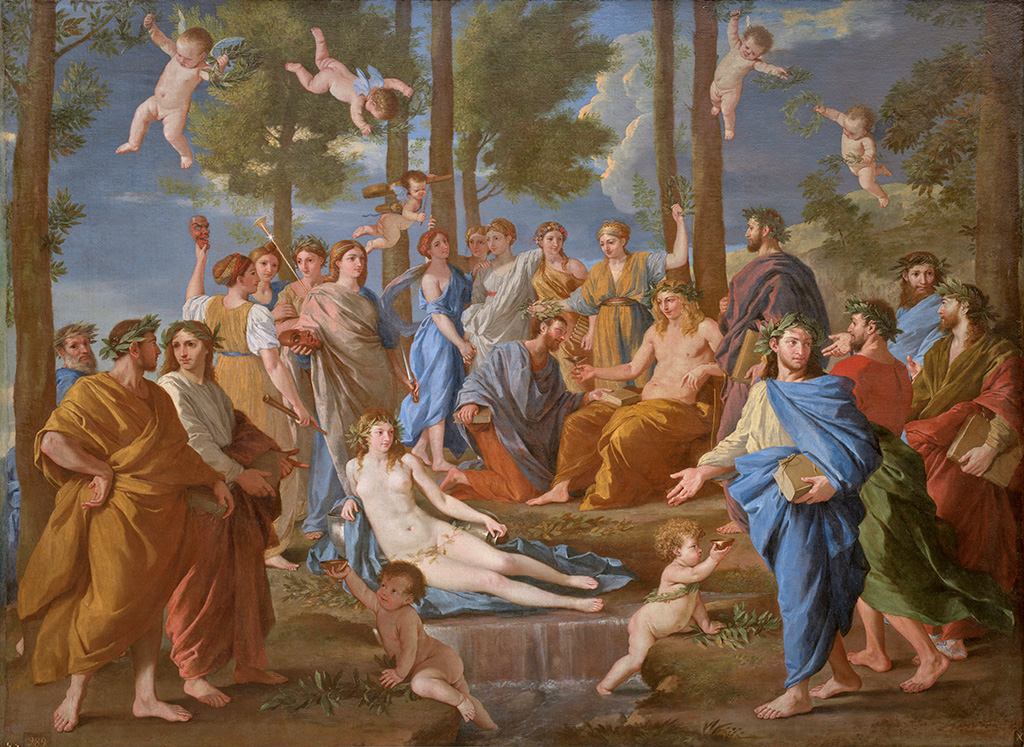
This painting represents the mythological place where Apollo lived with the 9 Muses.
The Muses were goddesses, daughters of Zeus.
Zeus was the most powerful of all Greek gods.
The Muses protected sciences and arts and inspired artists in their work.
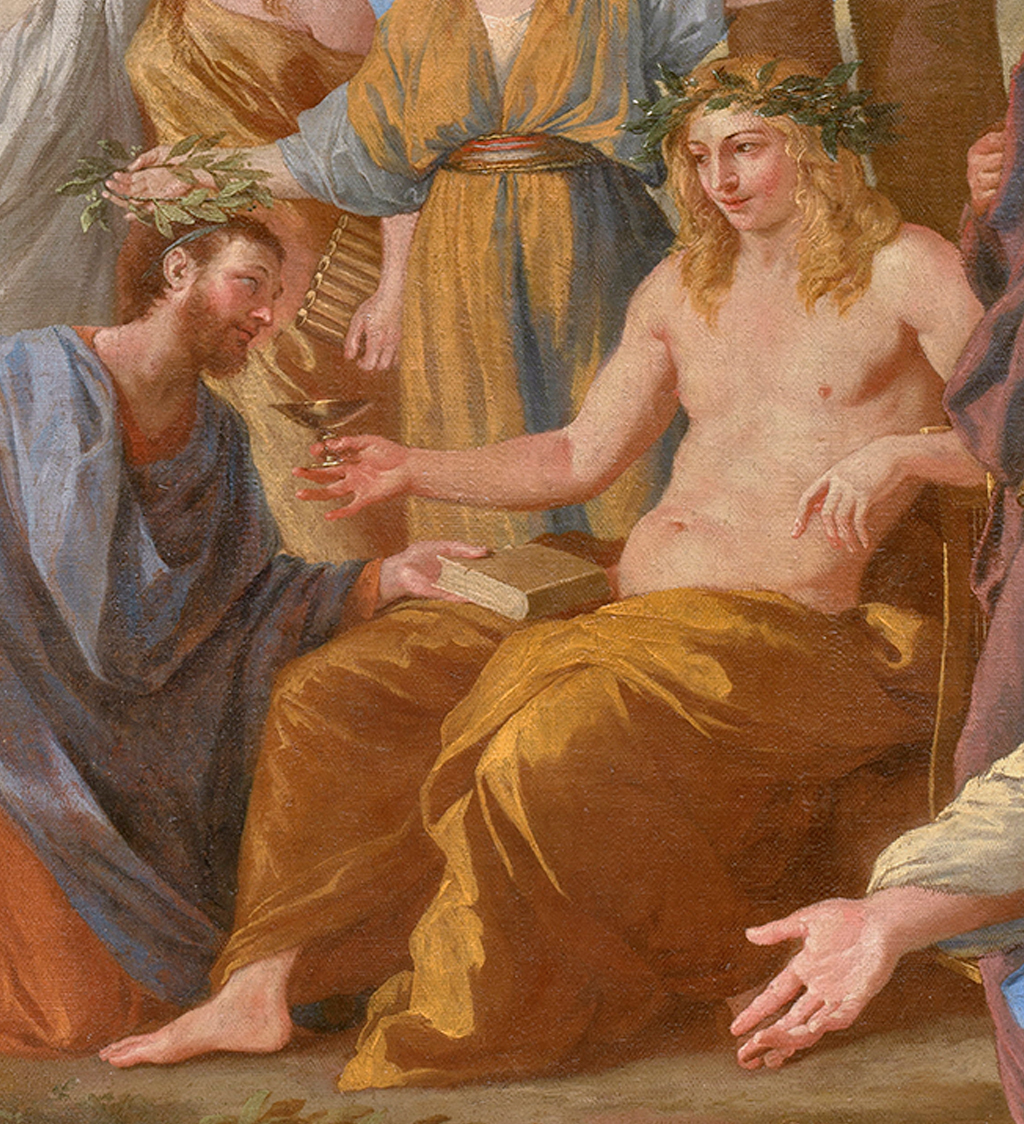
A young blond man with long hair in the centre represents Apollo.
He wears a laurel wreath on his head and has his chest uncovered.
In one hand, Apollo holds a cup of nectar, the sacred drink of the gods.
Apollo offers it to a kneeling poet who receives a laurel wreath from the Muse Calliope.
Calliope inspired for epic poetry. Epic poetry is about heroes.
The kneeling figure before Apollo may be the Greek poet Homer, author of the Iliad and the Odyssey, which describes the Greek heroes Achilles and Odysseus.
Next to Apollo and Muse Calliope are the other 8 Muses, inspiring the remaining arts.
The young naked woman lying on a blue cloth symbolises the spring of Castalia on Mount Parnassus.
Poussin portrays the woman as the origin of the flowing water.
She is depicted with her hands on metallic pitchers.
Artists and poets used the water from this spring to purify themselves before entering the temple of Apollo.
This water helped inspire them in their work.
The other figures on the left and right of the painting are poets and philosophers from antiquity.
They all carry their works to offer to Apollo.
The children with the wings are cupids.
Some cupids fly around the scene, and others offer nectar to the artists.