formularioRDF
The itinerary <em>TITULORECORRIDO</em> has been successfully created. Now you can add in works from the Collection browser
<em>TITULOOBRA</em> added to <em>TITULORECORRIDO</em> itinerary

The Drinkers or The Triumph of Bacchus. Velázquez

The Drinkers or The Triumph of Bacchus is a painting by Diego Velázquez, a Spanish painter.

The painting is from 1629.

ETR (Easy to Read) icon
© Easy-to-read european logo: Inclusion Europe. More information at: Easy-to-read

What is the subject?

The painting portrays Bacchus, the Roman god of wine, wearing a crown of vine leaves.

Bacchus is the half-naked young man sitting on a barrel in the centre of the painting, surrounded by a group of men drinking wine. 

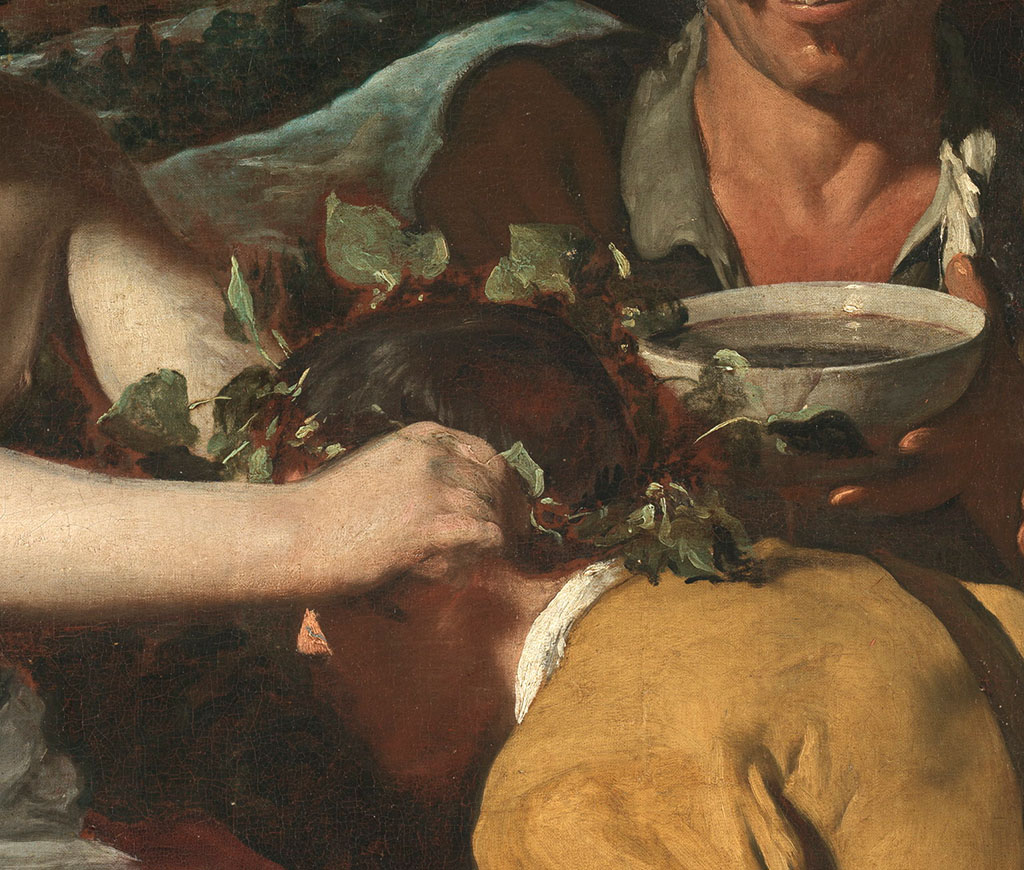
Bacchus places a crown of ivy leaves on the head of a kneeling young man. 

In the painting, there is a satyr behind Bacchus.

The satyr holds a crystal glass in his hand.

In mythology, a satyr was a creature with the body of a human and the legs of a goat.

Satyrs were the companions and servants of the god of wine.

These half-man, half-goat creatures represented the passions and desires.

Next to Bacchus and the satyr, the other men wear dark, humble clothes and have joyful faces because of the wine they drank. 

One of the men holds a bowl of wine and looks at the viewer.
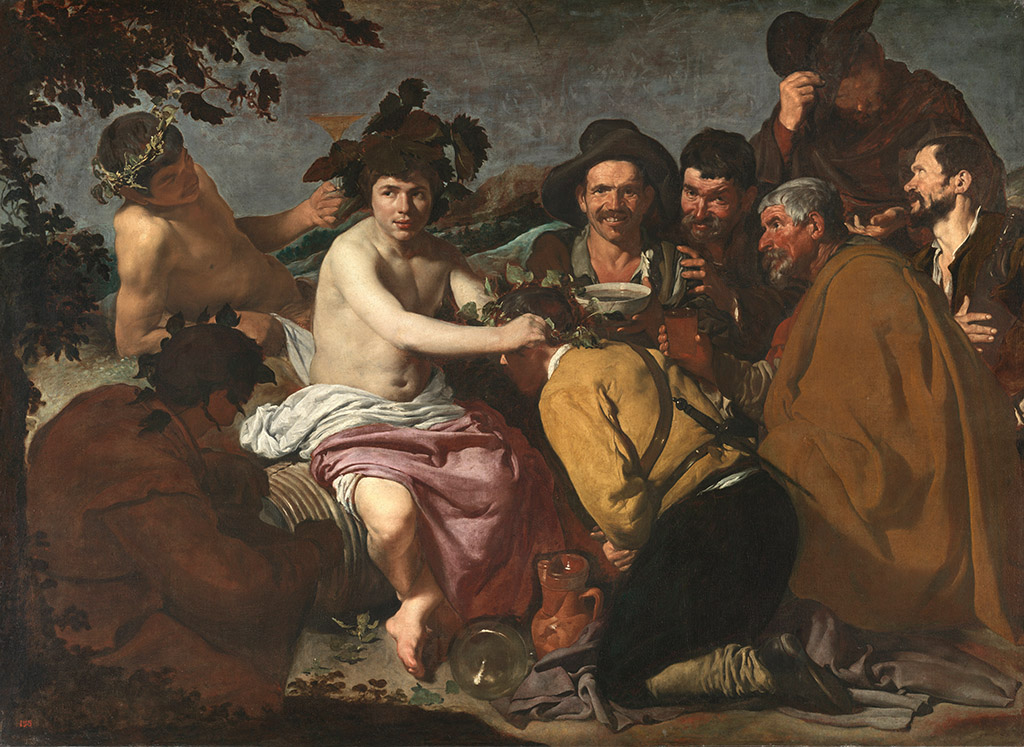
Picture of The Drinkers by Velázquez

Velázquez and Mythology

“The Drinkers” is the first painting by Velázquez on mythology. 

Mythology is the collection of stories about the gods, heroes and traditions specific to nations or cultures. 

Velázquez worked for King Philip the Fourth for 5 years.

Before that, Velázquez painted portraits, history paintings, and religious paintings.

After painting “The Drinkers”, Velázquez started to create mythological paintings as well.

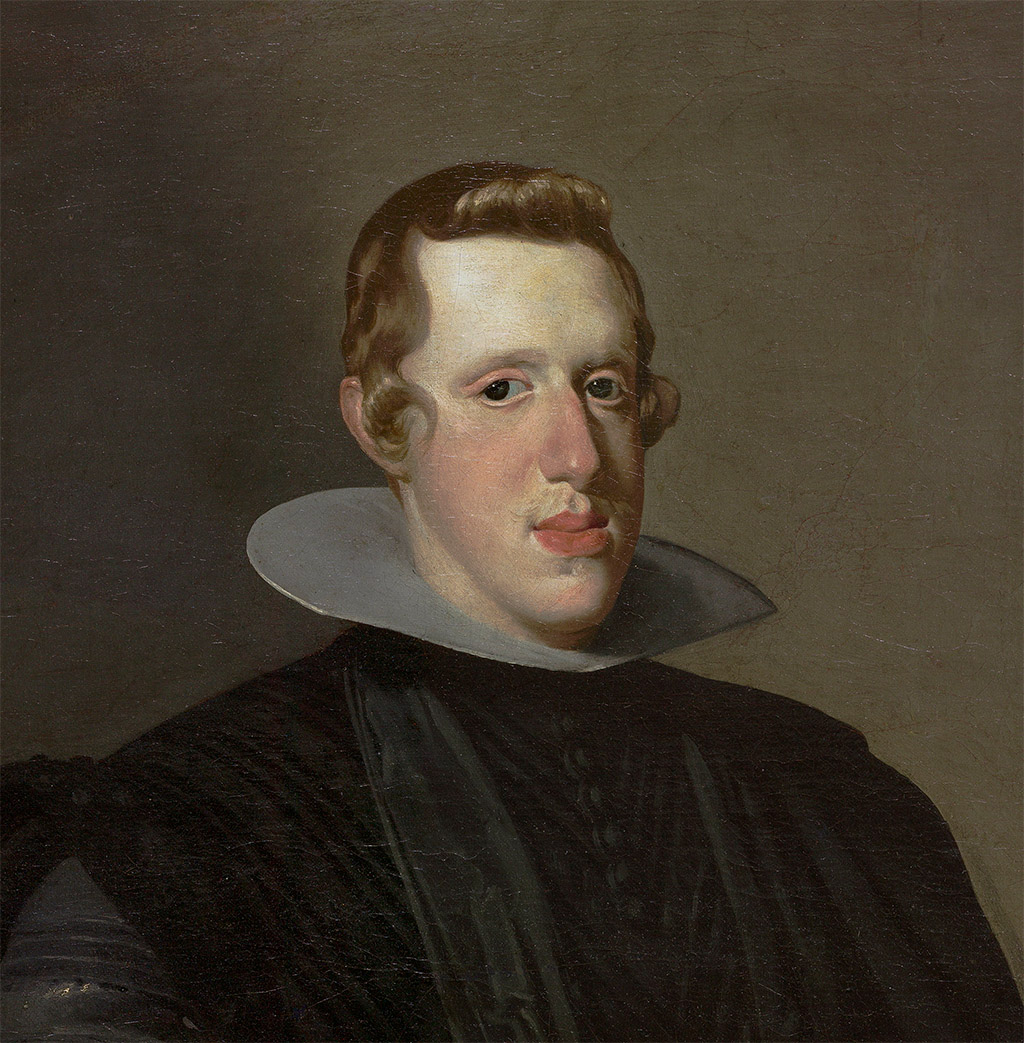
Detail of Velázquez’s portrait of Philip the Fourth

Relevant features of the painting

The figure of Bacchus is one of the first male nudes painted by Velázquez.

Velázquez also portrays the figures of the drunken men with extraordinary realism.

The faces of the men in the painting were probably based on real people that Velázquez saw in the streets and taverns of Madrid at the time.  

Experts debate the meaning of the painting.

Some experts believe the painting is a mockery of mythology and antiquity because Velázquez depicts a Roman god with a group of drunken men. 

Other experts think that the painting is a tale about the importance of wine.

Bacchus descends from Olympus, where the gods live, to give wine to men.

Wine comforts men from the sorrows of everyday life.

Other experts also say that the painting relates to poetry.

In the painting, Bacchus crowns a young man with an ivy crown.

The ivy plant represents poets, so this scene could suggest that wine helps poets write their poems.

Detail of the ivy crown
Funded by the European Union - NextGenerationEU Government of Spain - Ministry of Culture Recovery, Transformation and Resiliency Plan Museo Nacional del Prado

Funded with the National Recovery and Resilience Plan (NRPP) , Spain’s Next Generation EU financing and according to the initiatives within the component C.24.I3 Digitization and valorization of major cultural services. The project is part of Campus Prado within Accessibility and Signage: Revitalization of the Urban Environment action line and as a universal accessibility activity.

Up