formularioRDF
The itinerary <em>TITULORECORRIDO</em> has been successfully created. Now you can add in works from the Collection browser
<em>TITULOOBRA</em> added to <em>TITULORECORRIDO</em> itinerary

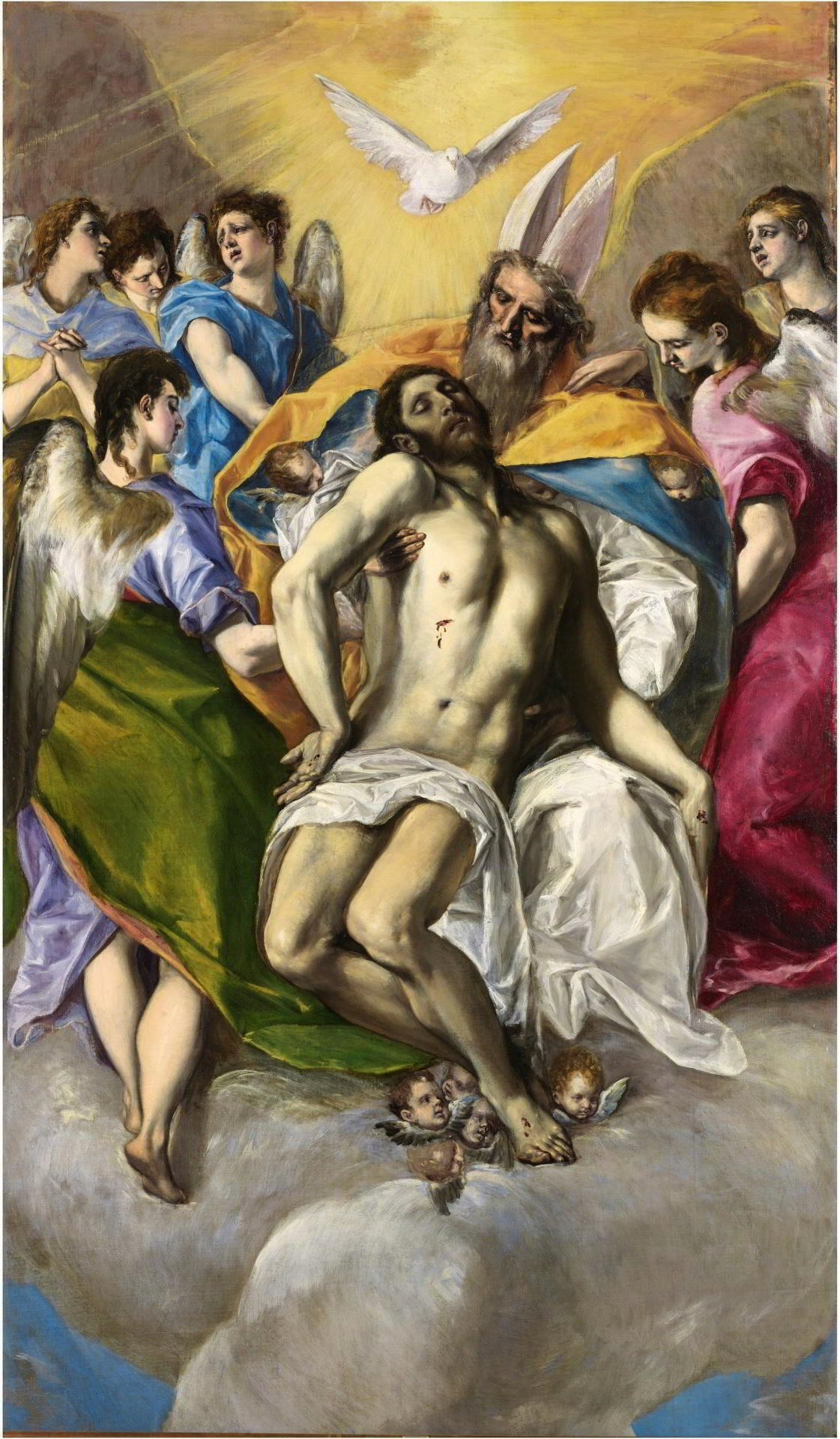
The Holy Trinity. El Greco

The Holy Trinity is a painting by Greco, a Greek painter who lived in Spain.

The painting is from 1579.

ETR (Easy to Read) icon
© Easy-to-read european logo: Inclusion Europe. More information at: Easy-to-read

What is the subject?

This painting portrays the Holy Trinity.

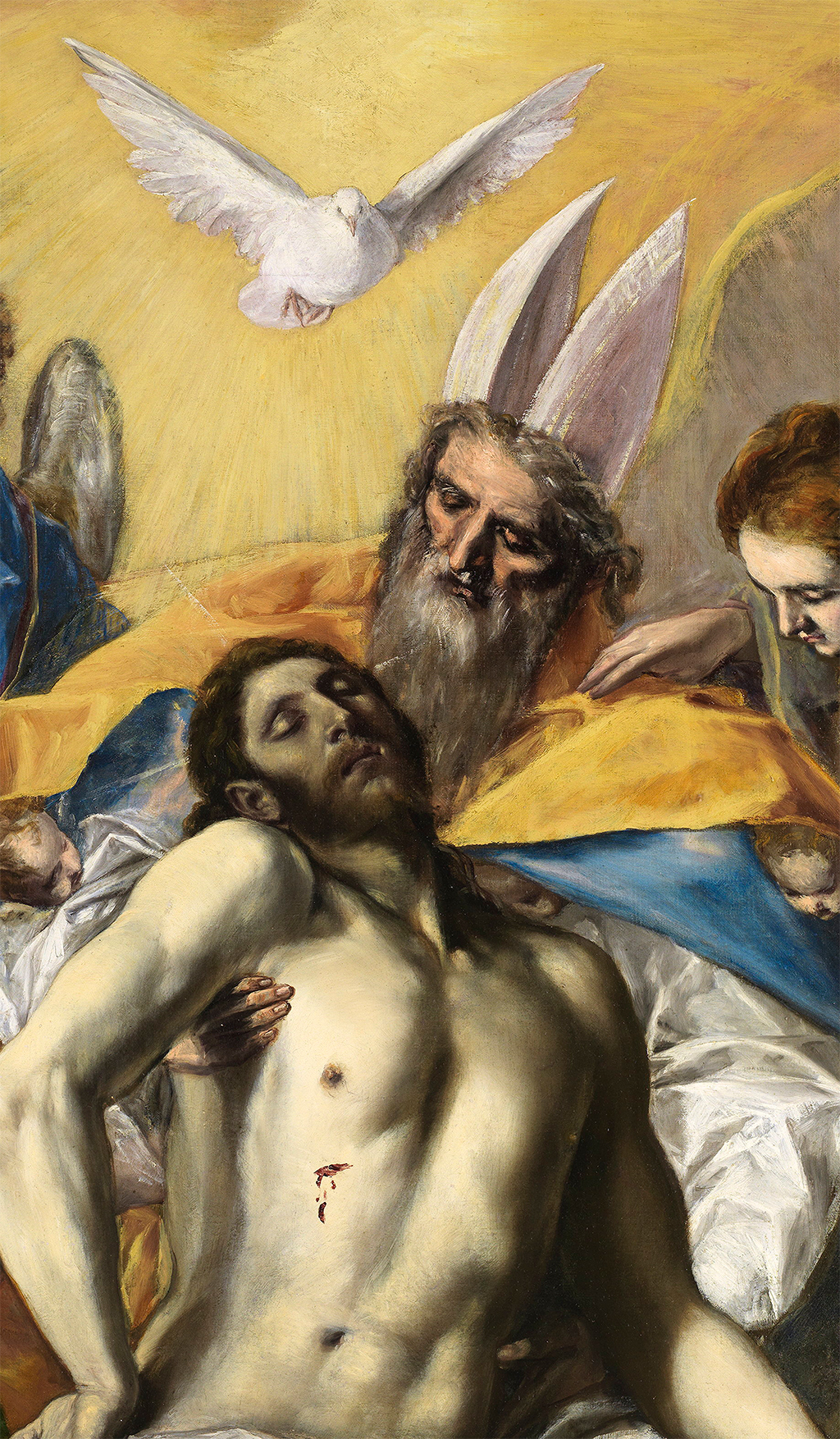
God the Father holds on his lap the body of his dead Son, Jesus Christ.

The Son appears painted in brown colours.

These colours are like the colours of the earth.

The facial expression of both is serene and calm.

The dove, which symbolises the Holy Spirit, flies above the Father.

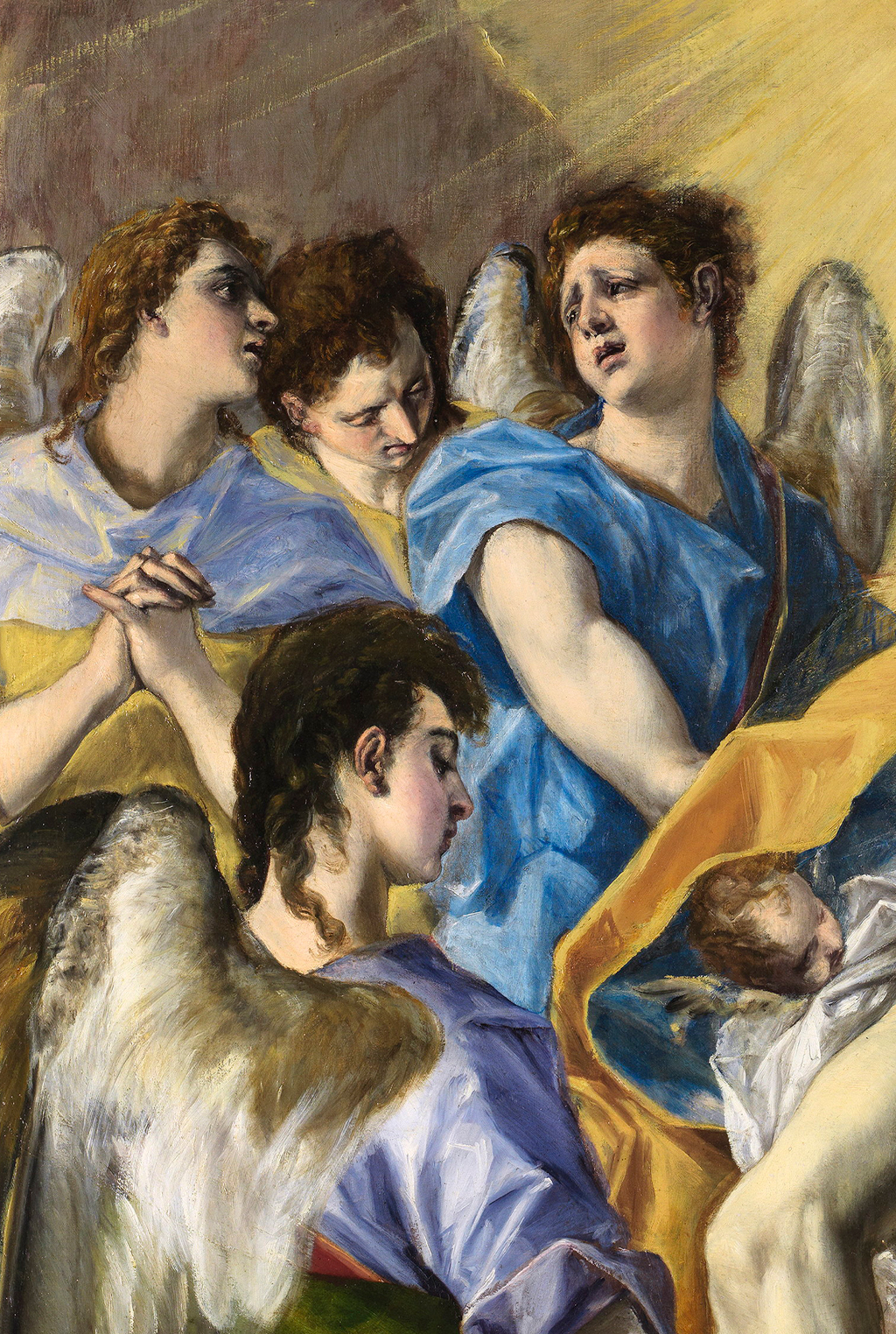
The angels that surround the Father and the Son express sorrow and sadness.

Father, Son and Holy Spirit are the 3 persons in God who make up the Trinity.

The Trinity is a fundamental belief of Christians.
The Holy Trinity
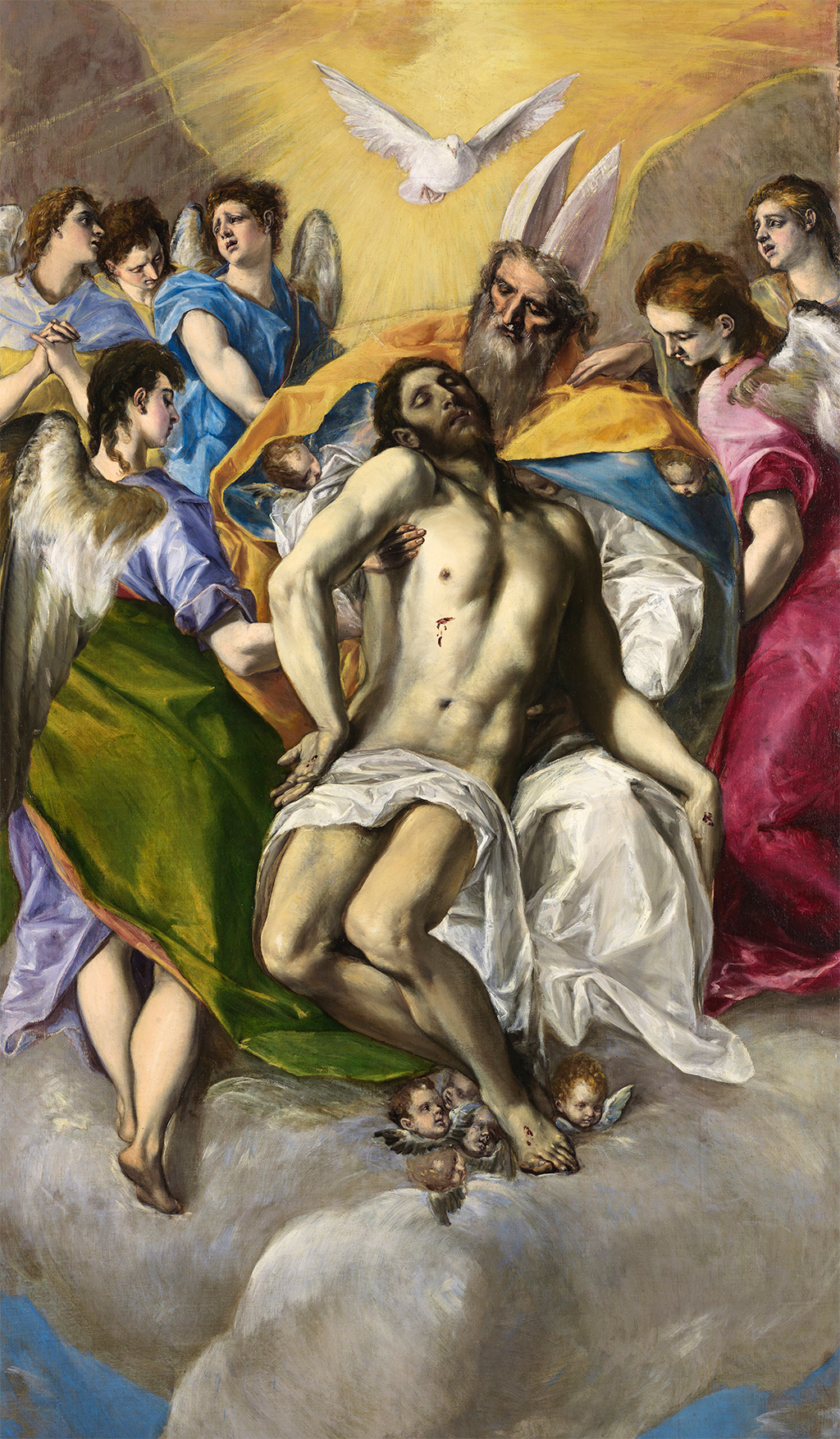
The Holy Trinity by Greco

What was the purpose of the painting?

Greco created this painting for the main altarpiece in the convent of Santo Domingo el Antiguo in Toledo.

An altarpiece is a structure behind the altar in churches.

The altarpiece usually contains paintings or sculptures of religious scenes, such as episodes from the Bible or from the life of the Virgin Mary and saints.

This painting was at the top of the altarpiece, high above the ground.

Greco painted the figures so that the faithful in the church could see them from below.

That is the reason for the position of the figures in the painting, their monumental size and their sculpture-like forms.

Detail Holy Trinity
Detail Holy Trinity

The painter and his style

The shapes of the figures and the colours that Greco used in this painting reflect what he learned in Italy.

For example, the colour El Greco used for Jesus Christ comes from the style of the Venetian painter Tintoretto.

The large size of the body of Jesus Christ was an inspiration from the artist Michelangelo.

For the composition and arrangement of the figures, El Greco used a similar painting of this scene by the German artist Dürer.

Greco received the request for this painting from the convent when he arrived in Spain after a few years in Italy.

After this first painting, he received another request to paint 3 other altarpieces for the same convent.

Detail of the angels

This work belongs to the following tours:

Easy-to-read content of Museo del Prado
Funded by the European Union - NextGenerationEU Government of Spain - Ministry of Culture Recovery, Transformation and Resiliency Plan Museo Nacional del Prado

Funded with the National Recovery and Resilience Plan (NRPP) , Spain’s Next Generation EU financing and according to the initiatives within the component C.24.I3 Digitization and valorization of major cultural services. The project is part of Campus Prado within Accessibility and Signage: Revitalization of the Urban Environment action line and as a universal accessibility activity.

Up