El Greco arrived in Spain when he was 34 years old. He came to work in the monastery built by King Philip the Second in El Escorial.
Yet, he had more work opportunities in Madrid, especially in Toledo, where he lived until his death.
El Greco painted many pictures for churches, sometimes even entire altarpieces.
Altarpieces are wooden structures behind the altar that contain sculptures and paintings.
El Greco had a workshop where he worked with his son Jorge Manuel and other assistants.
In his religious paintings, El Greco painted elongated figures so believers could see them well from below and always direct their gaze towards the sky.
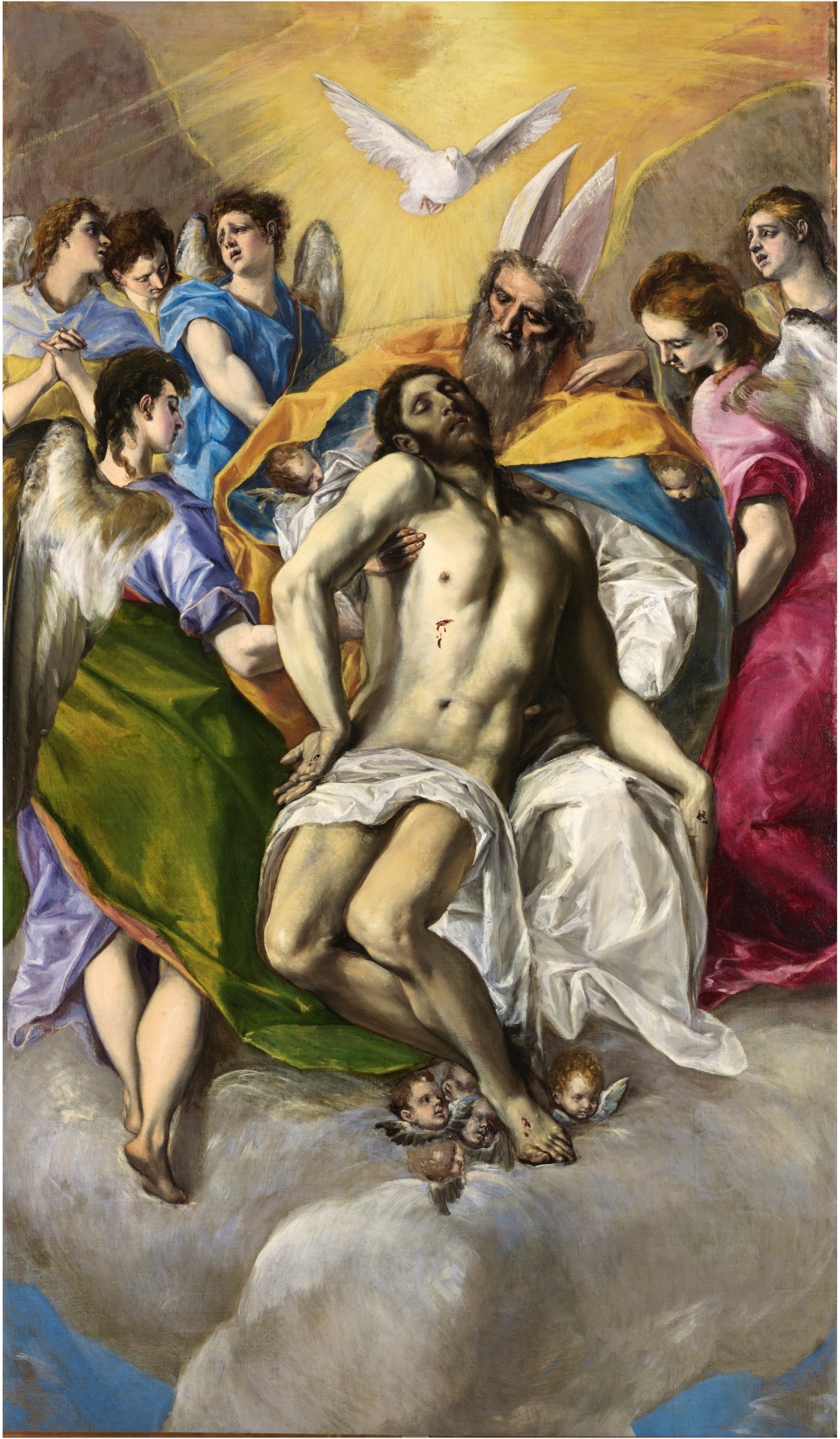
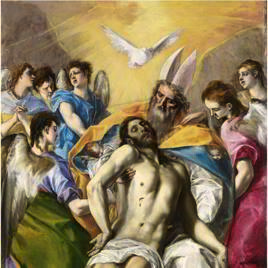
In 1579, El Greco was commissioned to paint 3 altarpieces for the Monastery of Santo Domingo el Antiguo.
One of the paintings he created for the main altarpiece was “The Holy Trinity”.
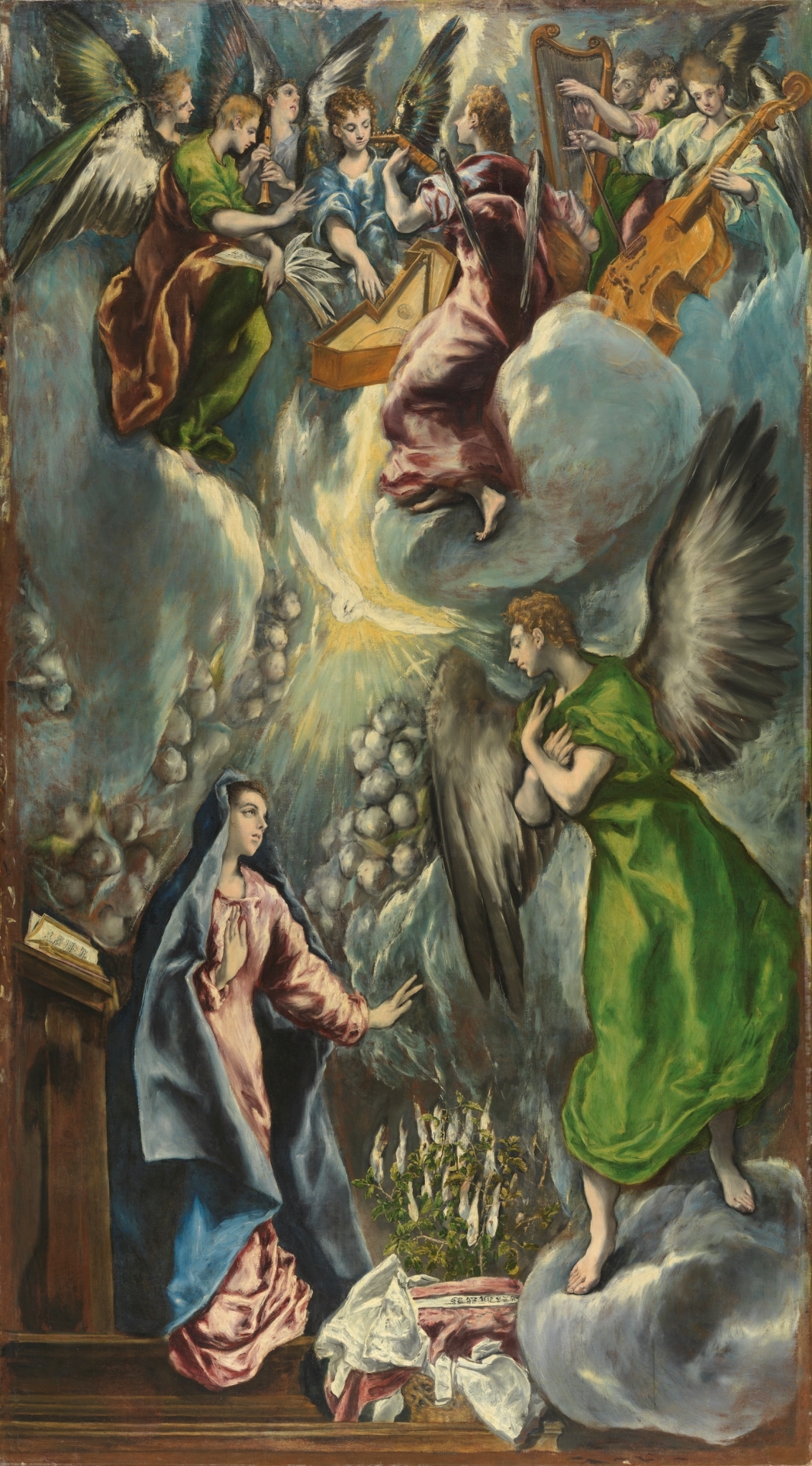
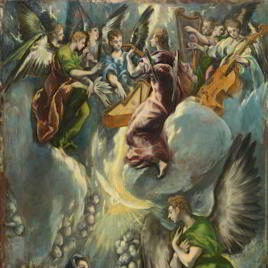
Another important commission was the altarpiece for the Colegio de Doña María de Aragón in Madrid.
He painted “The Annunciation” and 6 other paintings for this altarpiece.
4 of these paintings are now in the Prado Museum.
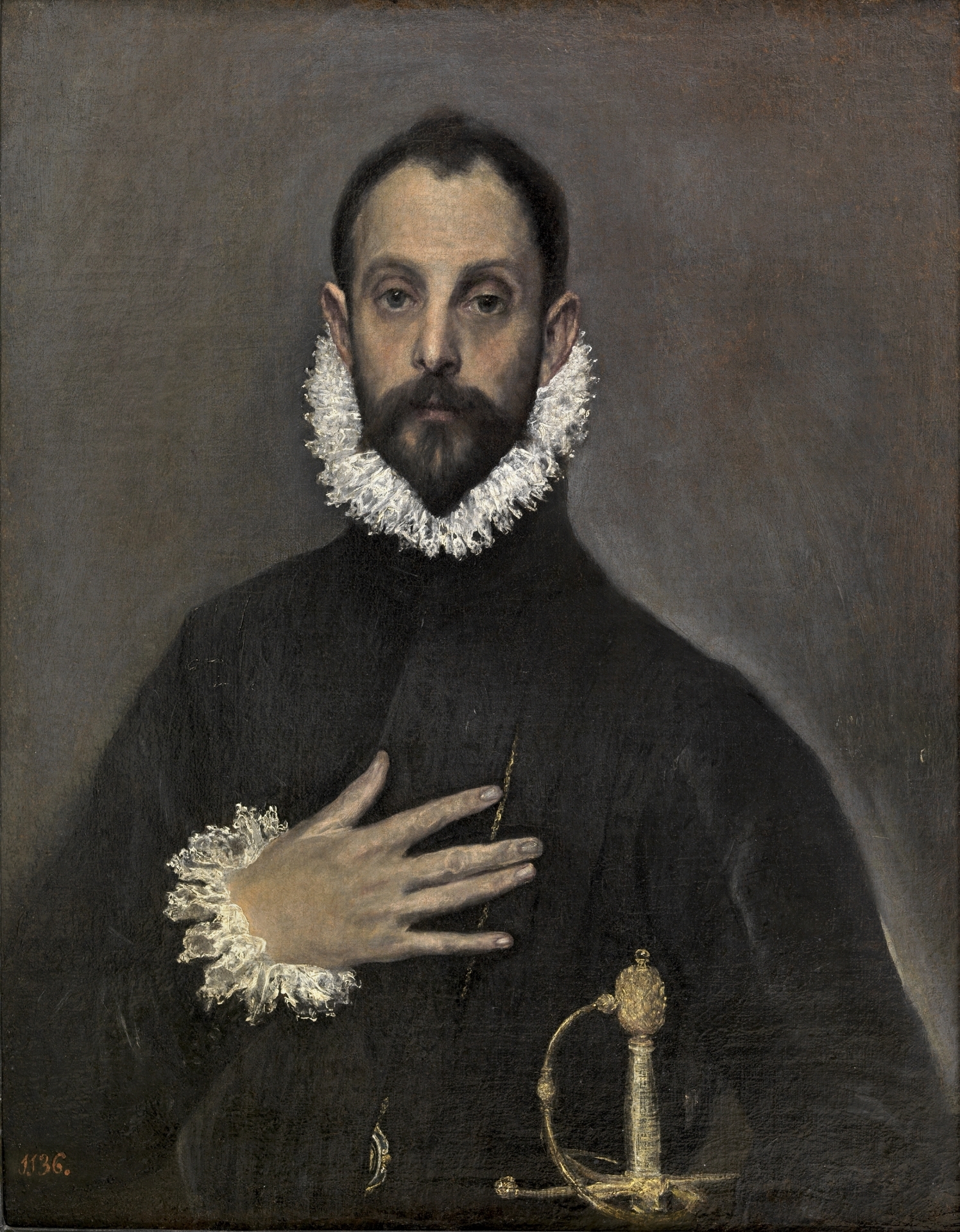
In Toledo, El Greco also dedicated himself to painting portraits.
In his portraits, he did not elongate the figures as much as in religious paintings.
El Greco represented his models in a simple and expressive way.
He used a few colours and elements to identify the portrayed person.
El Greco was particularly interested in painting the facial features of his figures.
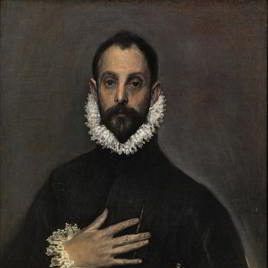
One of the most famous portraits by El Greco is “The Gentleman with his Hand on his Chest”.
We do not know who the portrayed gentleman is, but this painting shows how Spanish gentlemen looked in the 16 century.
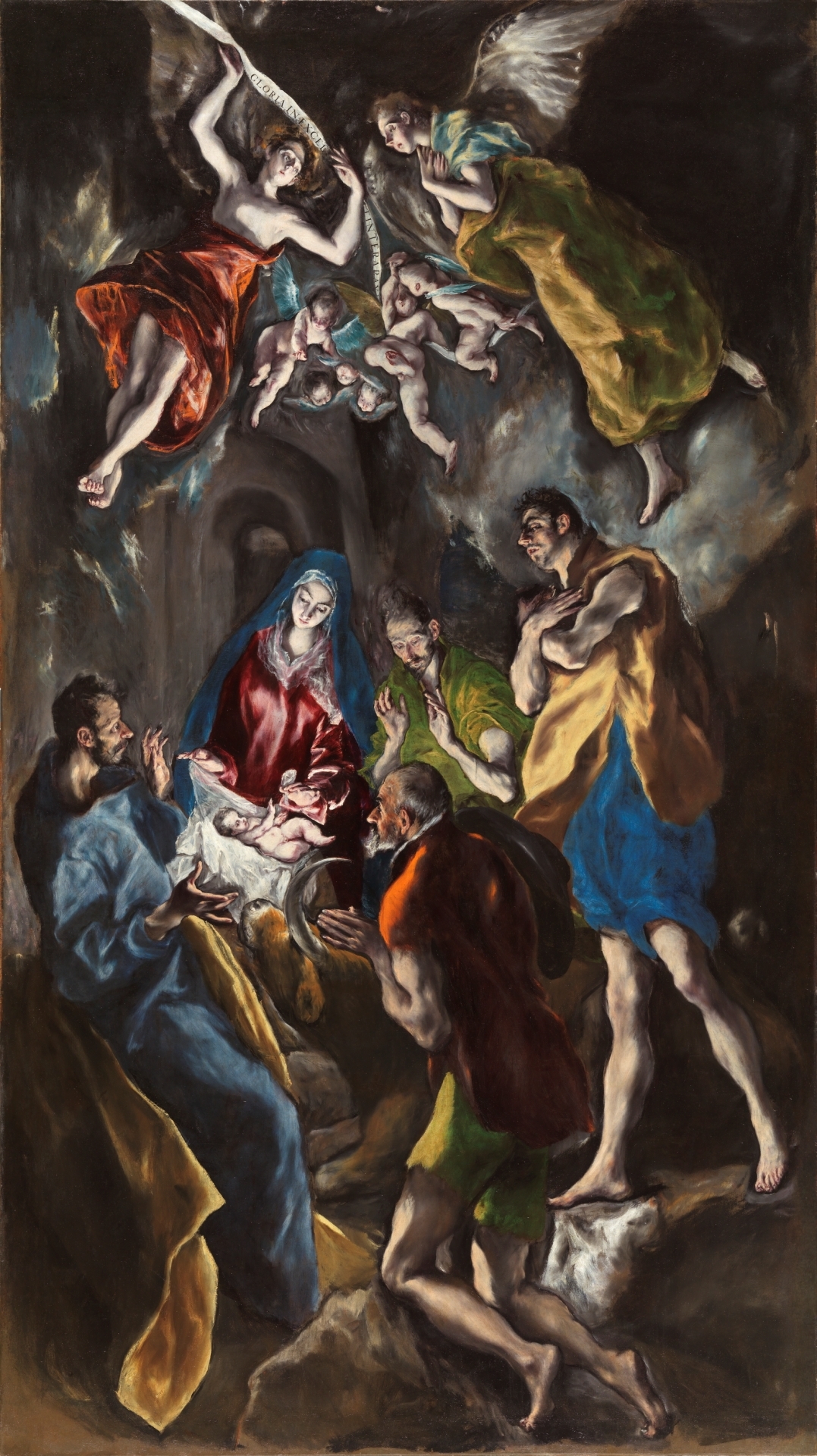
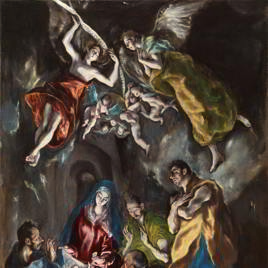
Before his death, El Greco painted “The Adoration of the Shepherds”.
This painting is considered one of the most significant works by El Greco because of several elements characteristic of his style.
For example, the figures in the painting are elongated, and the colours are vibrant.
The painting also depicts an atmosphere that reminds us of heaven.
Still, it does not include elements that indicate where the figures are in reality.
The painting also portrays Baby Jesus as a symbol of divinity, with an illuminating aura around him.
El Greco created this painting for his own funeral chapel in the Monastery of Santo Domingo el Antiguo.
He died in 1614 in Toledo.