formularioRDF
The itinerary <em>TITULORECORRIDO</em> has been successfully created. Now you can add in works from the Collection browser
<em>TITULOOBRA</em> added to <em>TITULORECORRIDO</em> itinerary

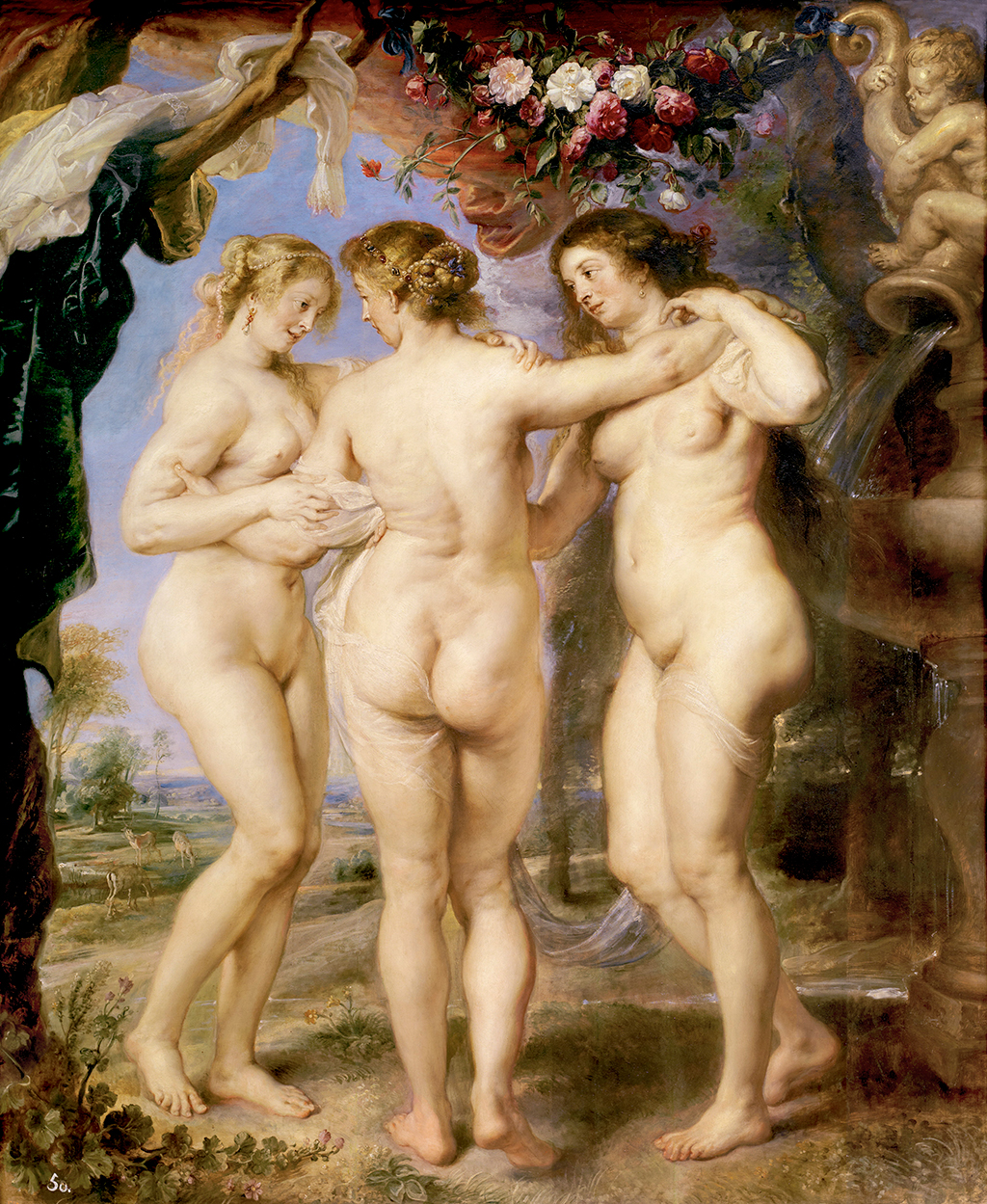
The Three Graces. Peter Paul Rubens

The Three Graces is a painting by Rubens, a Flemish painter.

The painting is from 1635.

ETR (Easy to Read) icon
© Easy-to-read european logo: Inclusion Europe. More information at: Easy-to-read

What is the subject of the painting?

This painting is a scene from the mythology of ancient Greece and Rome.

Mythology is a collection of stories about gods, heroes and traditions specific to nations or cultures.

The 3 Graces are 3 goddesses who were daughters of Zeus,vthe most important Greek god.

Their names were Aglaea, Euphrosyne, and Thalia.

They served Aphrodite, the goddess of love and beauty.

The 3 Graces represent various ideas like kindness, sympathy, and delicacy.

They were also associated with love, beauty, or sexuality.

Rubens depicted the 3 Graces in a circular position as they embraced each other.

The position of their feet indicated that they were dancing slowly.

The bodies of the women had numerous curves, and their skin was rosy, which was considered the standard of beauty for women during that period.

In the painting, various figures represent love, such as the 2 deer in the background on the left, the garland of roses above the 3 Graces, and the fountain with the figure of the god Cupid on the right.

Cupid embraces the water mouth of the fountain, shaped like a horn.

This horn is called a cornucopia and symbolises abundance and wealth.

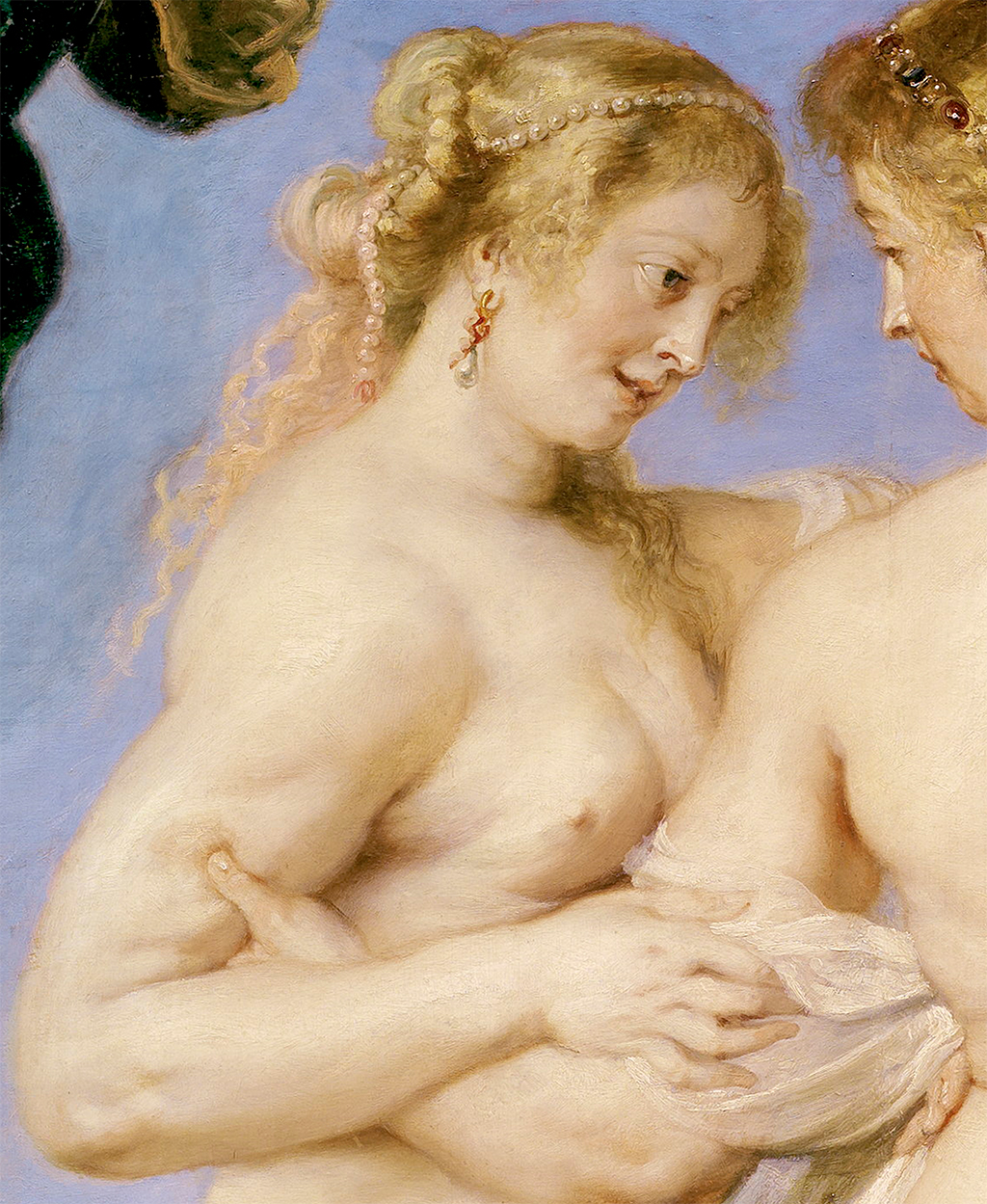
The woman on the left is Helena Fourment, the second wife of Rubens.

When they married, Rubens was over 50 years old, and she was 16 years old.

Experts believe that Rubens reflects in the painting the feelings of love, happiness, and pleasure he experienced after his second marriage.

They also think that Rubens painted this artwork for his personal collection and not as a commission from a client.
The 3 Graces
The 3 Graces by Rubens

The history of the painting

When Rubens passed away, his properties were auctioned, and King Philip the Fourth of Spain bought this painting for his collection.

The painting was in the Alcazar of Madrid, the former royal palace.

About 150 years later, King Charles the Third of Spain declared the painting indecent because of the nudity of the 3 women.

As a result, he ordered it to be burned, but it was saved as it was stored with other nude paintings in a room at the Real Academia de Bellas Artes (Royal Academy of Fine Arts).

Rubens created this masterpiece in the later years of his career.

He was a highly influential painter in European art during the 17 century.

Rubens received an excellent education and was known for his kind, deeply religious, and energetic personality.

Rubens achieved great success and painted for Spanish, French, and English kings.

Detail Helena Fourment
Detail of Helena Fourment
Funded by the European Union - NextGenerationEU Government of Spain - Ministry of Culture Recovery, Transformation and Resiliency Plan Museo Nacional del Prado

Funded with the National Recovery and Resilience Plan (NRPP) , Spain’s Next Generation EU financing and according to the initiatives within the component C.24.I3 Digitization and valorization of major cultural services. The project is part of Campus Prado within Accessibility and Signage: Revitalization of the Urban Environment action line and as a universal accessibility activity.

Up