This sculpture is the head of a horse.
The author of the sculpture is unknown.
Experts believe that sculptors from the Attica workshop sculpted it in the 6 century before Christ.
Attica was the area of Greece near the region of Athens.
Head of a Horse is a sculpture by an unknown author from a workshop in Attica, Greece.
The sculpture is from the year 515 before Christ.

This sculpture is the head of a horse.
The author of the sculpture is unknown.
Experts believe that sculptors from the Attica workshop sculpted it in the 6 century before Christ.
Attica was the area of Greece near the region of Athens.
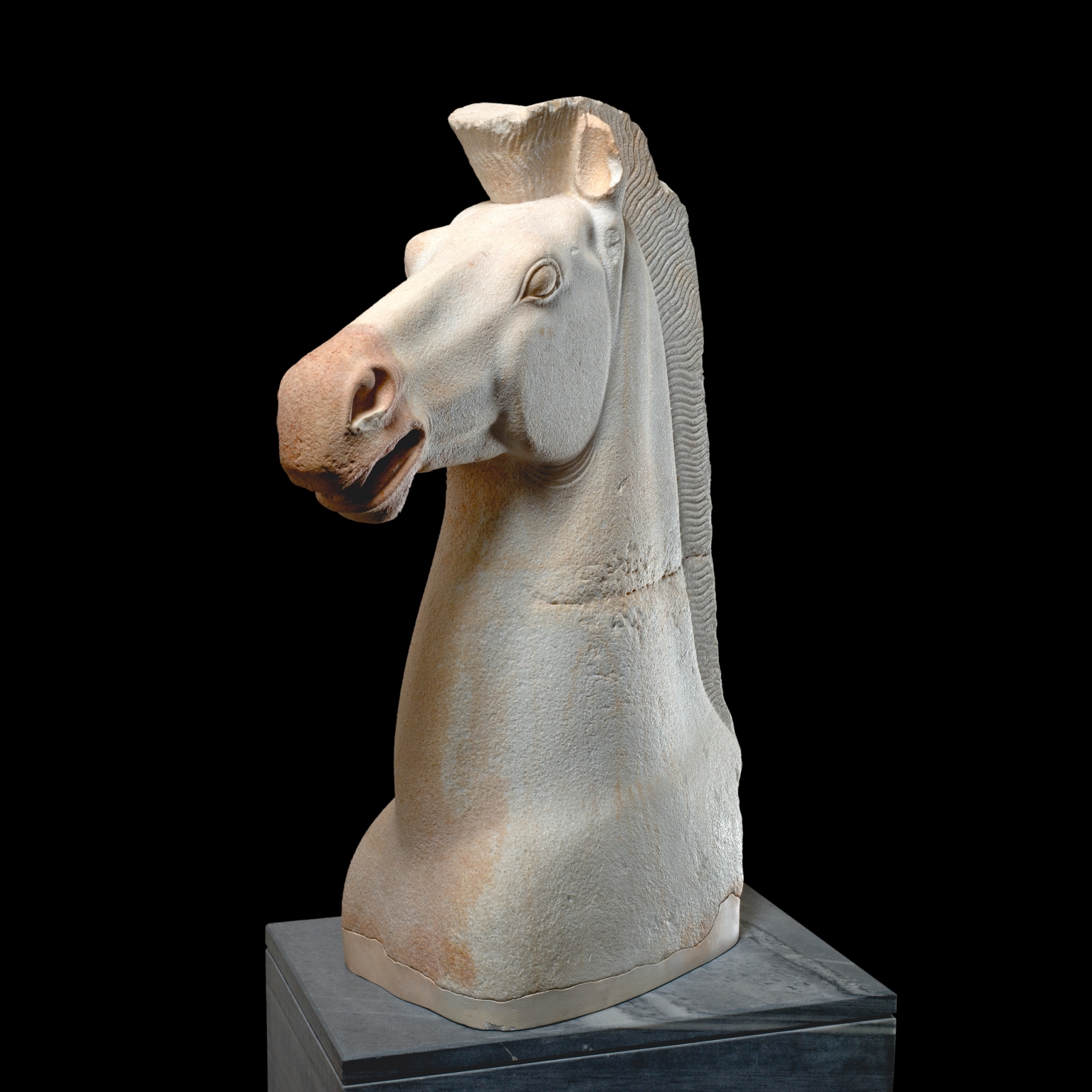
When you look at the head of the horse from the front, the head looks quite thin and turns towards the left.
When you look at the head from the side, you can see the broad neck with strong, sculpted muscles.
The sculpture has some traces of the original painting.
The sculpture shows a life-size horse head.
Experts believe that the head was part of a large sculpture of a complete horse.
The head measurements show that the horse was more than 2 meters long.
Experts also believe that this horse sculpture was on the pediment of a Greek temple.
The pediment is the part above the main columns at the entrance of a temple.
The ancient Greeks decorated pediments with sculptures of animals and people.
Experts also believe that the pediment was adorned with sculptures of a quadriga.
The quadriga was a chariot pulled by 4 horses.
The horse has a groove on the left side of its neck.
The groove was from a metal rein.
That rein is now lost.
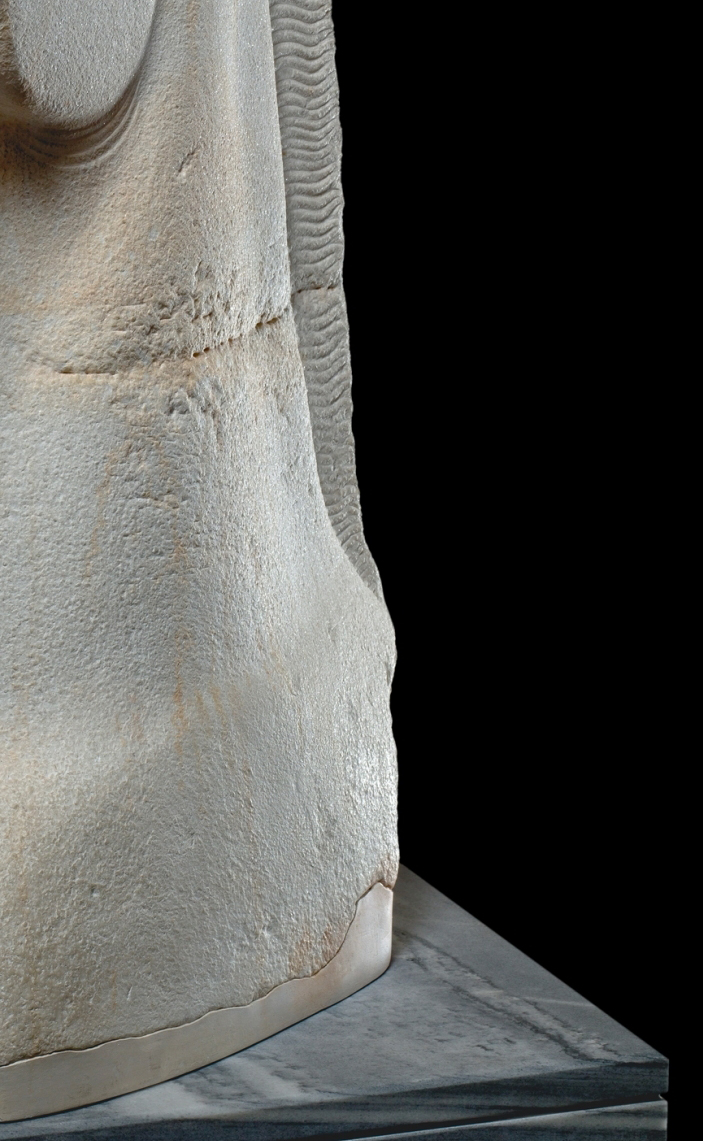
Below the neck, the horse has another mark.
This mark indicates that the horse was attached to another sculpture of a horse standing next to it.
The head of the horse has a hole also on the top.
Experts believe that this hole was to insert a metal spike.
The spike prevented birds from landing on the horse and damaging the sculpture.
These marks, grooves and holes are important because they confirm that the head of the horse is an authentic Ancient Greek work.




Funded with the National Recovery and Resilience Plan (NRPP) , Spain’s Next Generation EU financing and according to the initiatives within the component C.24.I3 Digitization and valorization of major cultural services. The project is part of Campus Prado within Accessibility and Signage: Revitalization of the Urban Environment action line and as a universal accessibility activity.