formularioRDF
The itinerary <em>TITULORECORRIDO</em> has been successfully created. Now you can add in works from the Collection browser
<em>TITULOOBRA</em> added to <em>TITULORECORRIDO</em> itinerary

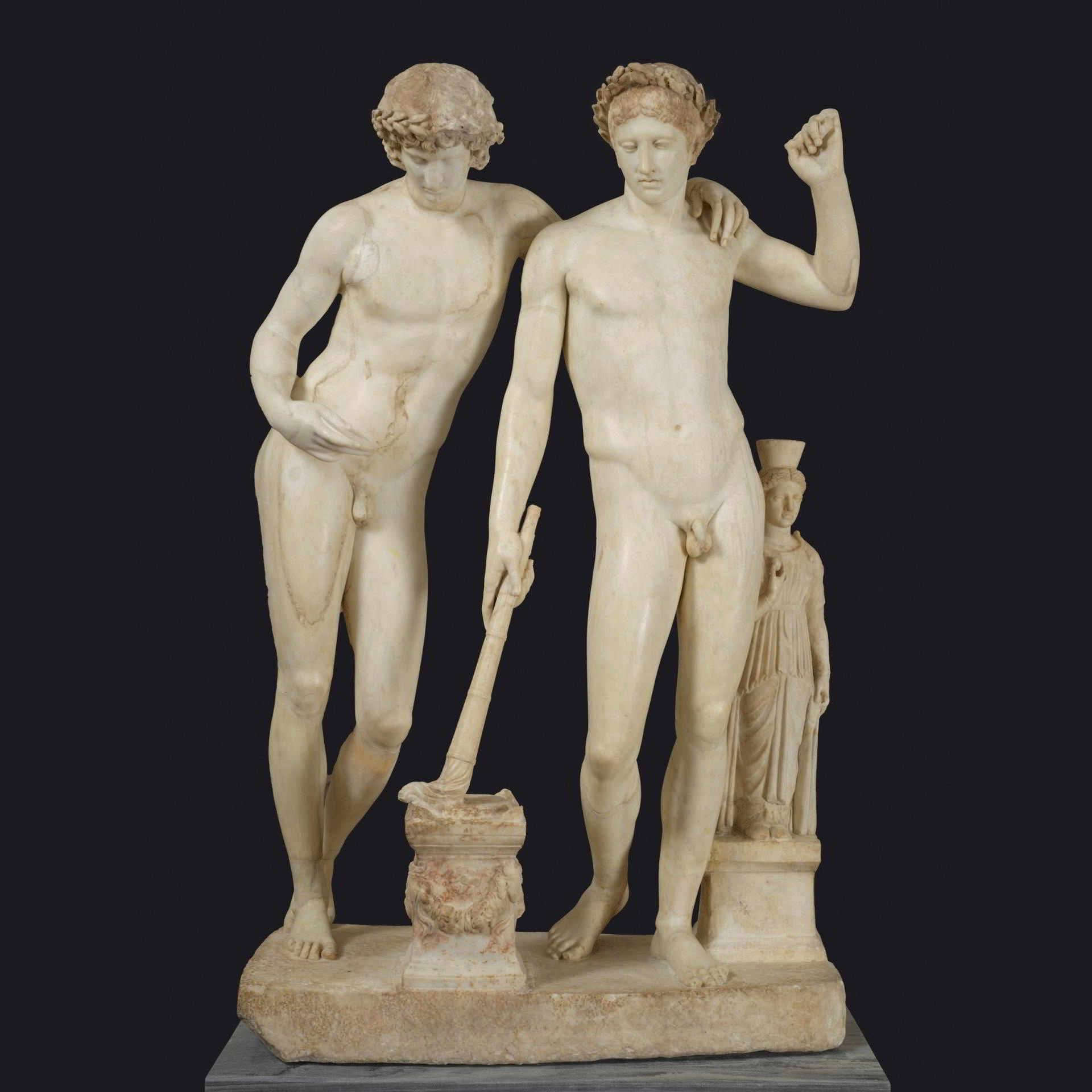
Orestes and Pylades or The San Ildefonso Group. School of Pasiteles

The San Ildefonso Group, also titled Orestes and Pylades, is a sculpture by artists of the School of Pasiteles.

The sculpture is from the year 10 before Christ.

ETR (Easy to Read) icon
© Easy-to-read european logo: Inclusion Europe. More information at: Easy-to-read

What is the subject?

This sculpture shows 2 men called Orestes and Pylades.

The sculpture is also named the Group of San Ildefonso after its exhibition site in La Granja de San Ildefonso in Segovia.

Orestes and Pylades are the protagonists of a story from Greek mythology.

Mythology is the collection of stories about the gods, heroes and traditions specific to nations or cultures.

Orestes was the son Agamemnon.

Agamemnon was the king of Mycenae.

When Agamemnon returned to Mycenae from the Trojan War, his wife and her lover murdered him.

Orestes lived in the house of his friend Pylades, far from Mycenae.

When Orestes heard of murdering his father, he decided to take revenge and kill his mother and her lover.

Orestes was punished for killing his mother and her lover.

The god Apollo ordered him to find a statue of Artemis and to take it to Athens.

Pylades accompanied Orestes on this journey, but they were captured before completing their task.

One of them had to sacrifice himself to save the other.

But two friends offered to sacrifice themselves.

They became an example of true friendship.

The sculpture represents 2 naked figures facing the viewer.

One of the men has his arm around the neck of the other.

Their bodies lean because each man rests his total weight on one leg.

This inclination allows the viewer to see a triangle gap between the 2 men.

In the middle, we can see the arm of one of the men with a torch pointing to a small altar.

On the right side of the figures, there is a small statue of the goddess Artemis.

This is the sculpture Apollo had ordered Orestes and Pylades to find.
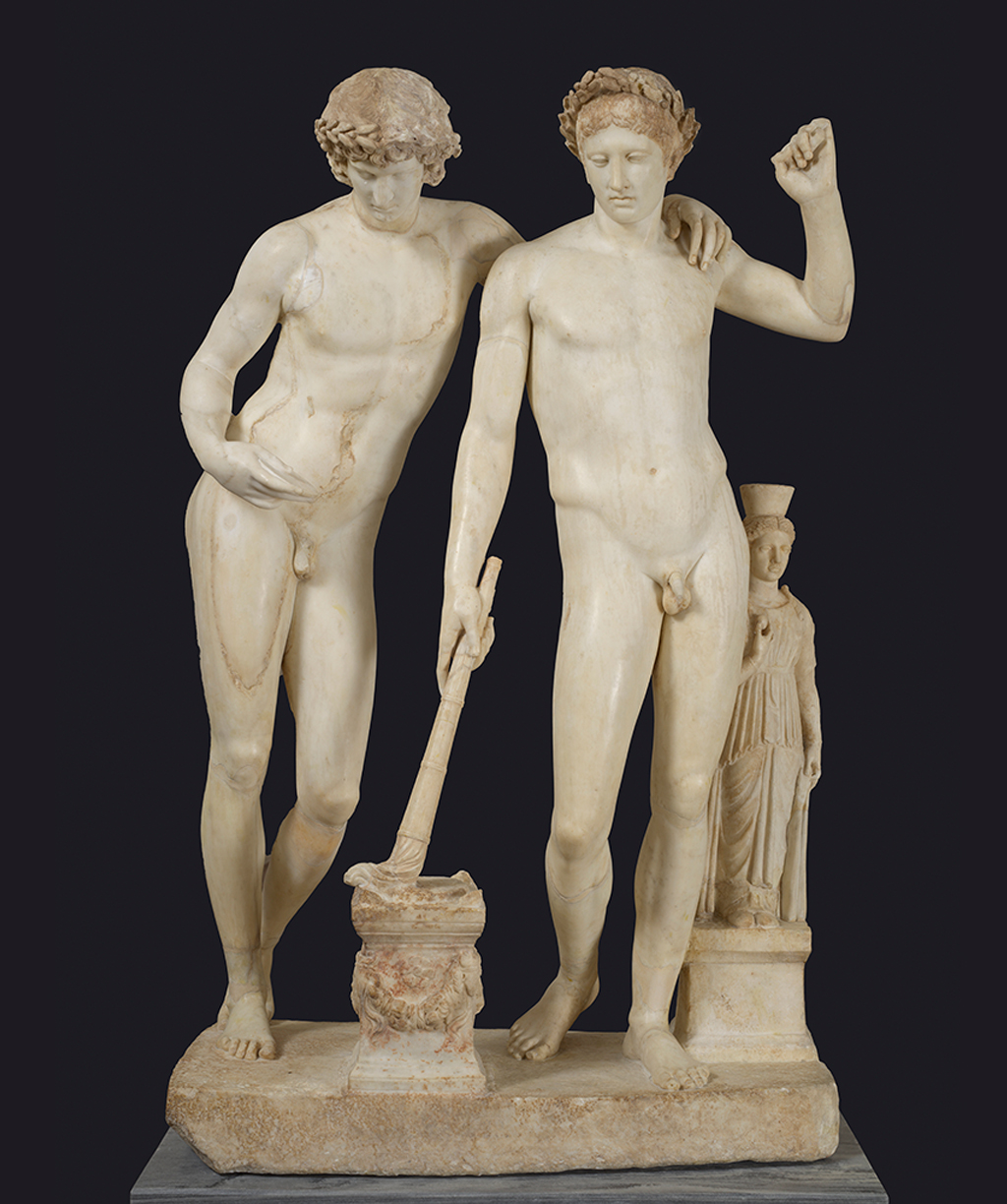
Orestes and Pylades or The San Ildefonso Group
Orestes and Pylades or The San Ildefonso Group by the School of Pasiteles

How did the sculpture get to the Museo del Prado?

A sculptor of the School of Pasiteles created the sculpture.

Pasiteles was a sculptor of the Ancient Roman period.

This sculpture was created in the year 10 before Christ, under the reign of Augustus, the first Roman emperor.

This sculpture decorated the Granja Palace until the Prado Museum included it in its collection.

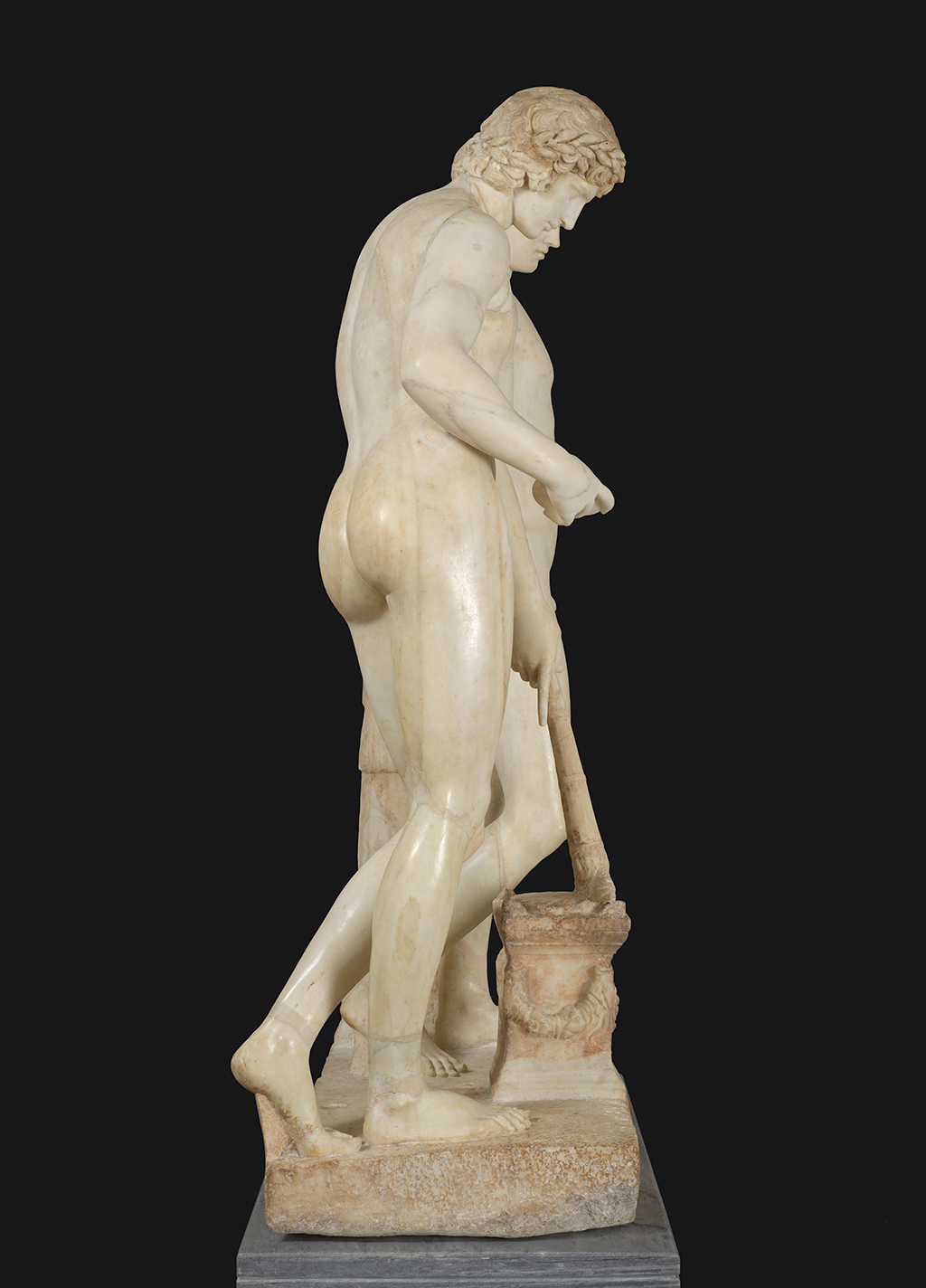
Detail side view
Side view
Funded by the European Union - NextGenerationEU Government of Spain - Ministry of Culture Recovery, Transformation and Resiliency Plan Museo Nacional del Prado

Funded with the National Recovery and Resilience Plan (NRPP) , Spain’s Next Generation EU financing and according to the initiatives within the component C.24.I3 Digitization and valorization of major cultural services. The project is part of Campus Prado within Accessibility and Signage: Revitalization of the Urban Environment action line and as a universal accessibility activity.

Up