formularioRDF
The itinerary <em>TITULORECORRIDO</em> has been successfully created. Now you can add in works from the Collection browser
<em>TITULOOBRA</em> added to <em>TITULORECORRIDO</em> itinerary

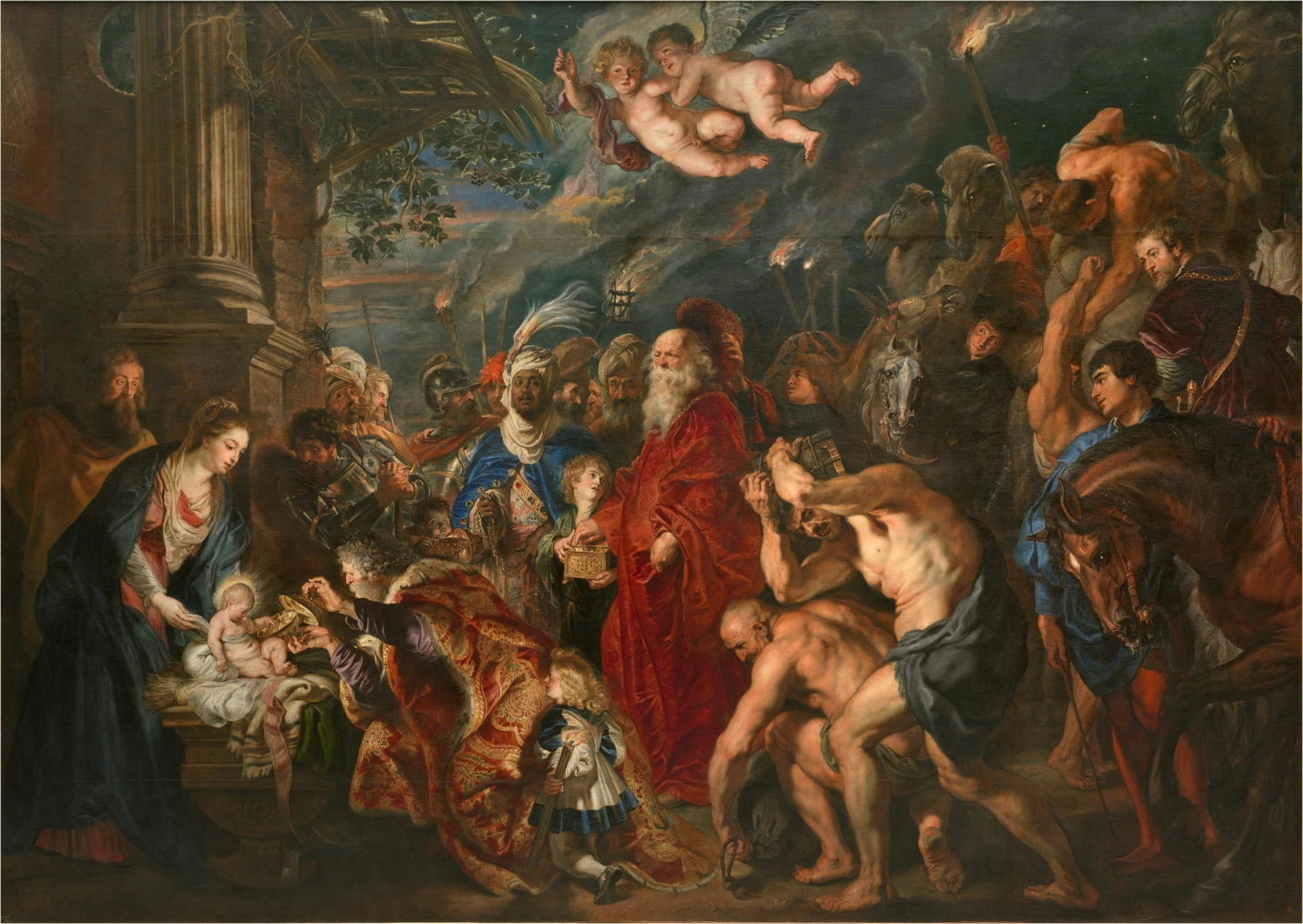
The Adoration of the Magi. Rubens

The Adoration of the Magi is a painting by Rubens, a Flemish painter.

Flanders is a region of Belgium.

The painting is from 1609.

ETR (Easy to Read) icon
© Easy-to-read european logo: Inclusion Europe. More information at: Easy-to-read

What is the subject?

This painting shows the visit of the Magi to Baby Jesus, a story from the Gospel.

The Gospel is the book of the Bible that describes the life and teachings of Jesus Christ.

On the left, the Virgin Mary holds Baby Jesus.

The light illuminates the head of the baby.

This light illuminates the entire scene in the night.

Behind them is Saint Joseph, looking at the kings.

Jesus plays with the gift from King Gaspar, who kneels in front of him.

Melchior wears a large red robe, and Balthazar wears a blue cloak and a long scarf called a turban, wrapped around his head.

The Magi wear very bright and luxurious clothes with precious stone decorations.

Rubens paints many figures, and all of them look towards Baby Jesus.

Rubens painted this artwork at 2 different times.

The first was in 1609 when the Flemish city of Antwerp commissioned this painting to decorate the Council Chamber of the City Hall.

In this chamber, the provinces of Belgium and Holland signed a truce in their war against Spain.

In other words, they agreed to stop fighting for a while.

The gifts of the Magi to Baby Jesus symbolise the desire for economic improvement that the city had during the time of peace.

For this reason, the painting adorned the City Hall during that period.

The second moment was 20 years later.

Rubens added the top part with angels and the right side with the companions of the Magi, including horses and camels.

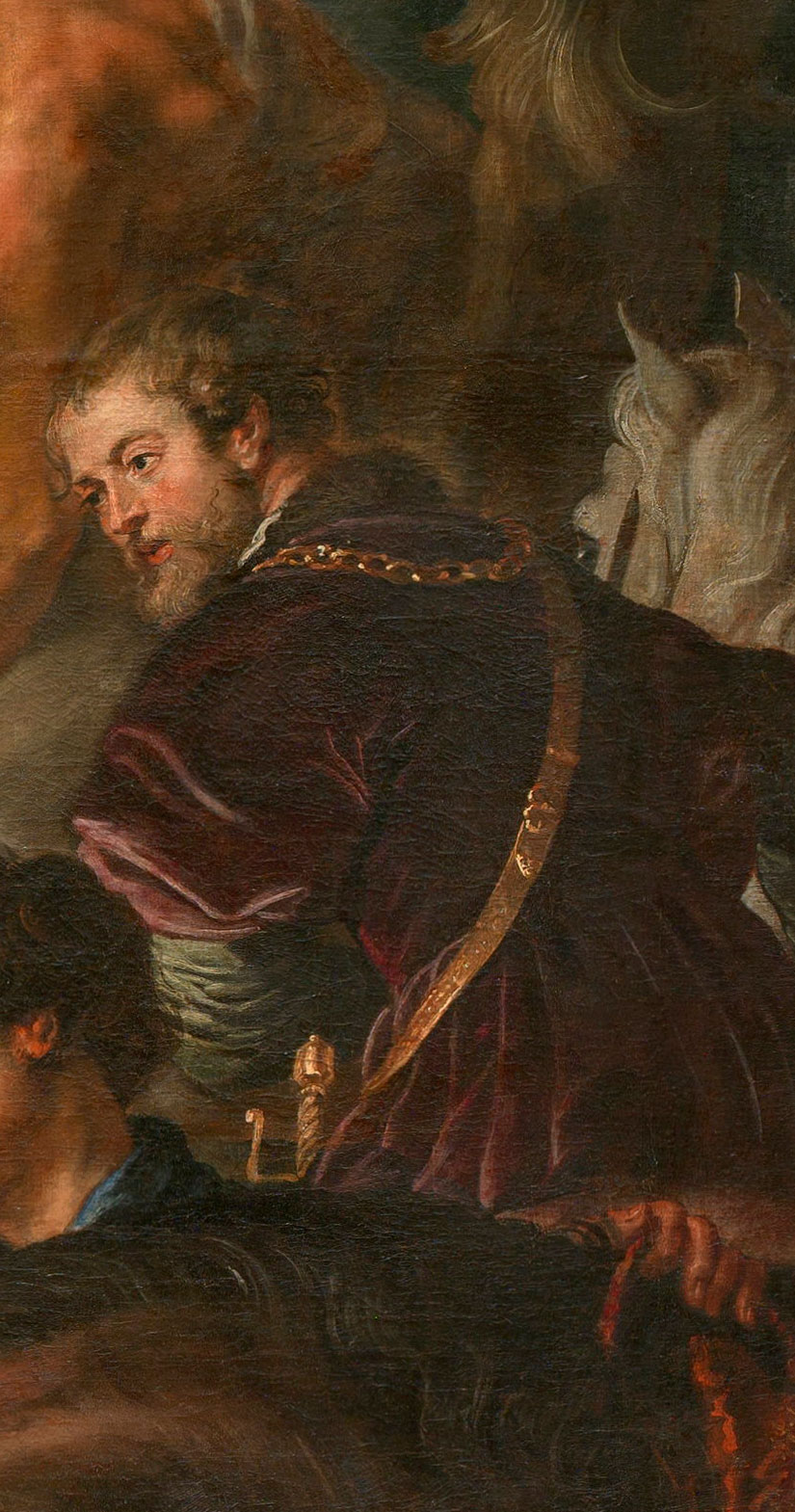
Also, Rubens painted himself as a mature man with a beard, riding a horse and adorned with luxury to show his nobility.
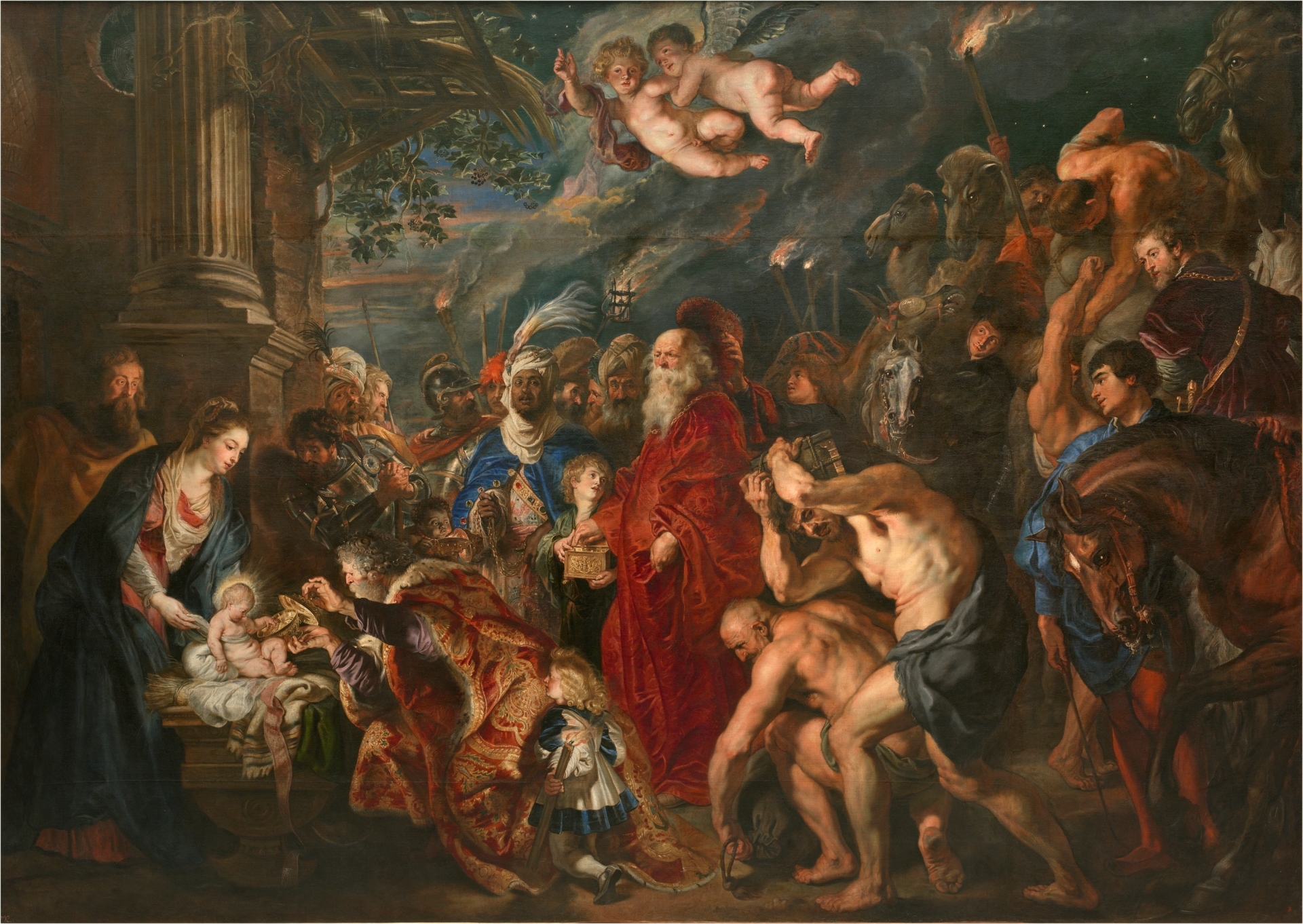
The Adoration of the Magi by Rubens.

Relevant features

The characters are arranged diagonally from left to right, giving rhythm to the painting.

This painting reflects the skills Rubens learned from Italian painters.

For example, the shape of the bodies is influenced by Michelangelo, the use of light and shadows is typical of Caravaggio, and painters from the Venetian school inspired the colour.

Rubens is the most important painter of the Flemish school of the 17 century.

He was educated and very successful both in his personal and professional life.

His style is Baroque, a type of painting that emphasises theatrical effects.

Detail of self-portrait by Rubens in The Adoration of the Magi.

This work belongs to the following tours:

Easy-to-read content of Museo del Prado
Funded by the European Union - NextGenerationEU Government of Spain - Ministry of Culture Recovery, Transformation and Resiliency Plan Museo Nacional del Prado

Funded with the National Recovery and Resilience Plan (NRPP) , Spain’s Next Generation EU financing and according to the initiatives within the component C.24.I3 Digitization and valorization of major cultural services. The project is part of Campus Prado within Accessibility and Signage: Revitalization of the Urban Environment action line and as a universal accessibility activity.

Up