formularioRDF
The itinerary <em>TITULORECORRIDO</em> has been successfully created. Now you can add in works from the Collection browser
<em>TITULOOBRA</em> added to <em>TITULORECORRIDO</em> itinerary

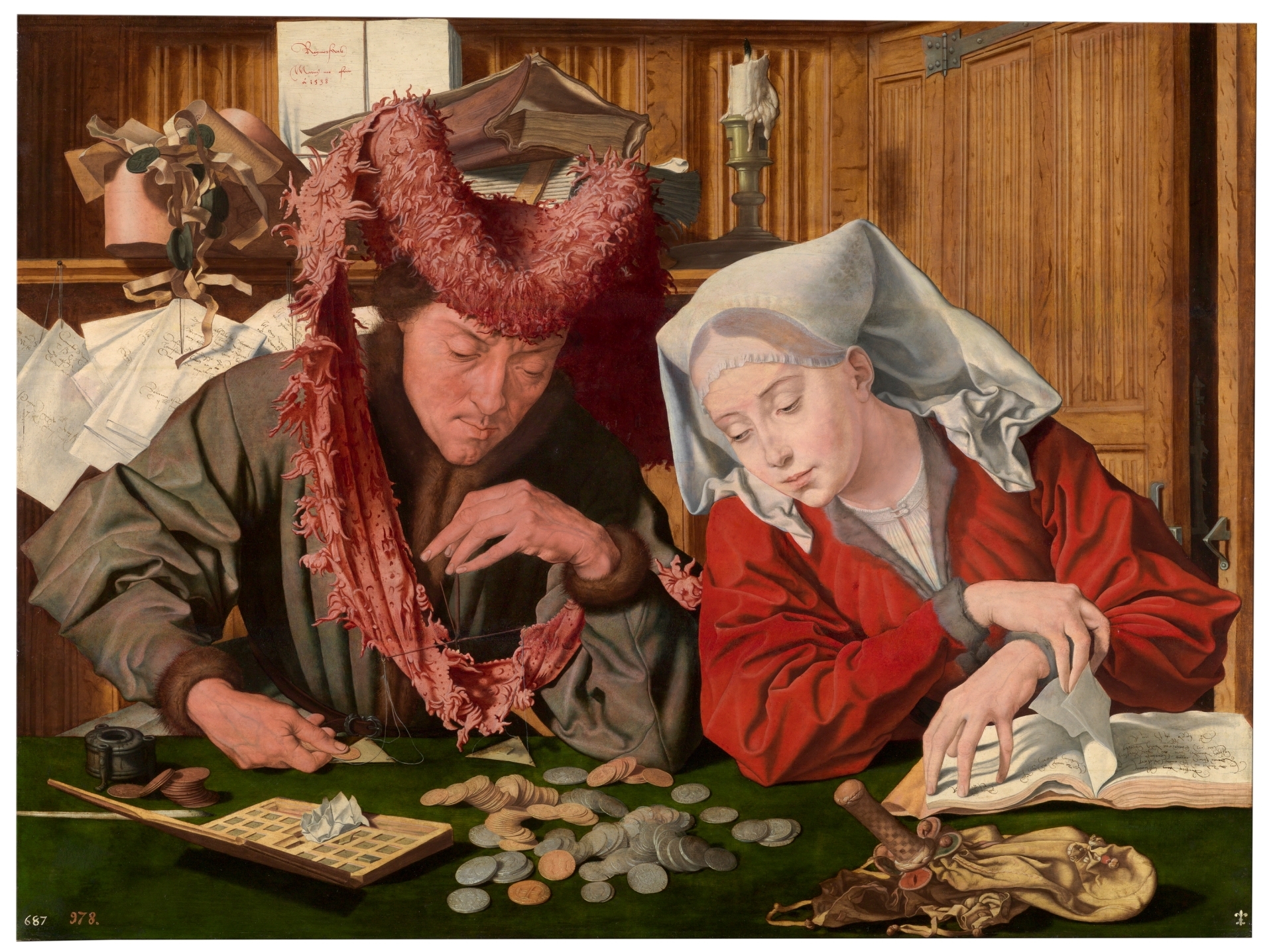
The City Treasurer and his Wife. Marinus van Reymerswale.

Accessible visit / Easy-to-read content of Museo del Prado / The City Treasurer and his Wife. Marinus van Reymerswale.

The City Treasurer and his Wife is a painting by Marinus, a Flemish painter. Flanders is a region of Belgium.

The painting is from 1539.

ETR (Easy to Read) icon
© Easy-to-read european logo: Inclusion Europe. More information at: Easy-to-read

What is the subject?

This painting shows the workplace of a couple of money changers from Flanders.

Money changers were like old-time bankers who lent money.

In the scene, the man weighs a coin with a scale, and the woman waits for the result.

She rests her fingers on the ledger.

She records all the money coming in and going out in this ledger.

The table is covered with coins, and the shelves contain scattered papers.

The painter wrote the date and signature on the sheet over the shoulder of the money changer.

Marinus portrays the everyday life of these people but also criticises them.

The painter shows the man and the woman as people eager to accumulate wealth and enjoy profits.

Also, their luxurious and exaggerated clothing shows their desire to appear wealthy.
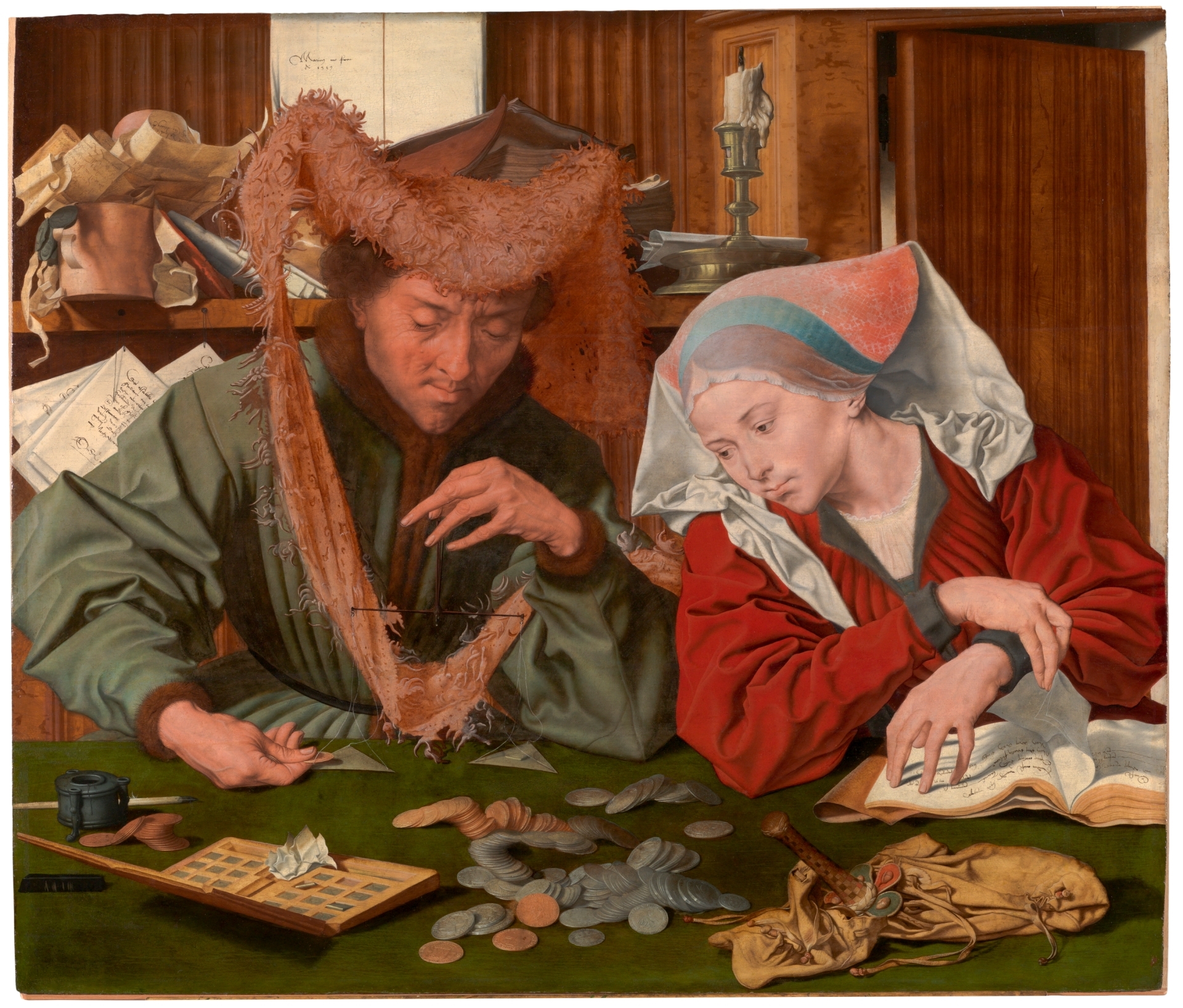
The City Treasurer and his Wife by Marinus van Reymerswale.

The painter

Marinus was a painter in the city of Antwerp, which was an artistic and commercial centre at that time.

He learned to paint from Flemish masters but was also influenced by Italian painters.

He was known for his portraits of painters, money changers, and tax collectors.

Marinus created several versions of this painting.

Today, 5 versions are preserved in various museums across Europe.

All 5 versions are different.

Marinus always included some details that made the paintings different.

During his time, Flanders was a rich and modern region.

A lot of money circulated in this region, and bankers and money changers opened their businesses.

Some of them wanted to get rich, and people started criticising them.

People criticised them for lending money and asking for high interest in return.

Interest is the amount of money the banker earns for lending money for a certain period.

This form of lending, called usury, was considered a sin.

For this reason, painters portrayed money changers with their wealth and criticised their actions.

Another version of The City Treasurer and his Wife by Marinus van Reymerswale.

This work belongs to the following tours:

Easy-to-read content of Museo del Prado
Funded by the European Union - NextGenerationEU Government of Spain - Ministry of Culture Recovery, Transformation and Resiliency Plan Museo Nacional del Prado

Funded with the National Recovery and Resilience Plan (NRPP) , Spain’s Next Generation EU financing and according to the initiatives within the component C.24.I3 Digitization and valorization of major cultural services. The project is part of Campus Prado within Accessibility and Signage: Revitalization of the Urban Environment action line and as a universal accessibility activity.

Up