Bibliography +
Winckelmann, Johann Joachim, Monumenti antichi inediti spiegati ed illustrati, Carlo Mordacchini, Roma, 1767, pp. 21.
Preller, Ludwig, Ro¨mische mythologie, Weidmannsche buchhandlung, Berlin, 1858, pp. 6: Diana.
Hübner, Emil, Die Antiken Bildwerke in Madrid, Druck Und Verlag Von Georg Reimer, Berlín, 1862, pp. 73 ss., n.º 67.
Bernoulli, J. J, Aphrodite, 1873, pp. 64, n.º 2.
Tubino, Francisco María, Museo Español de Antigüedades, IX, José Gil Dorregaray, Madrid, 1878, pp. 217 ss.
Friederichs, Karl; Wolters, Paul Heinrich August, Die gipsabgüsse antiker bildwerke in historischer folge erklärt. Bausteine zur geschichte der griechisch-romischen plastik, W. Spemann, Berlin, 1885, pp. 673 ss., n.º 1665.
Furtwängler, Adolf, Meisterwerke der griechischen plastik, Geisecke and Devrient, Leipzig, 1893, pp. 463 s., fig. 76.
Bethe, E, Notizen aus spanischen Museen, Archäologischer Anzeiger, 1893, pp. 8 s.
Klein, Wilhelm, Praxiteles, Veit & Comp., 1898, pp. 132.
Mahler, Arthur, Polyklet und seine Schule: ein Beitrag zur Geschichte der griechischen Plastik, W. Barth, Athen, 1902, pp. 134 s.
Barrón, Eduardo, Catálogo de la escultura. Museo Nacional de Pintura y Escultura, Imprenta y fototipia J. Lacoste, Madrid, 1908, pp. 41-43, lám. XV, n.º 28.
Collignon, Maxime, Les Statues Funeraires Dans L'Art Grec, Ernest Leroux, Paris, 1911, pp. 336 ss., fig. 215.
Noack, F, Allgemeines Lexikon der bildenden Kunstler von der Antike bis zur Gegenwart / editado por Thieme, Becker, V, W. Engelmann, Leipzig, 1911, pp. 313, s. v. I. Buzzi.
Arndt, P.; Amelung, W, Photographische Einzelaufnahmen antiker Skulpturen, Múnich, 1912, pp. 1588-1592.
Riaño, Juan Francisco; Mélida, Juan Ramón, Catálogo del Museo de Reproducciones Artísticas, I, Madrid, 1912, pp. 380 ss., n.º 224.
Lippold, G., Zur Arbeitsweise römischer Kopisten, Mitteilungen Des Deutschen Archäologischen Instituts, Römische abteilung, Bulletino dell’Instituto Archeologico Germanico, 32, 1917, pp. 103, nota 3.
Marconi, P, Antinoo. Saggio sull'arte dell'età adrianea, Monumenti antichi, 29, 1923, pp. 204, n.º 114.
Lippold, G, Kopien und umbildungen griechischer statuen, C. H. Becksche, München, 1923, pp. 37 s.
Ricard, Robert, Marbres Antiques du Musée du Prado à Madrid, Féret & Fils, Burdeos, 1923, pp. 44.
Speier, H., Zweifiguren-Gruppen im fünften und vierten Jahrhundert vor Christus, Mitteilungen Des Deutschen Archäologischen Instituts, Römische abteilung, Bulletino dell’Instituto Archeologico Germanico, 47, 1932, pp. 87.
Technau, W., Die statuarische Gruppe in der griechischen Kunst, Die Antike. Zeitschrift für Kunst und Kultur des Klassischen Altertums, 15, 1939, pp. 302 ss., figs. 23-24.
Picard, Charles, Manuel d'archéologie grecque: la sculpture, III (2), Editions A. et J. Picard et Cie., Paris, 1948, pp. 544, nota 1.
Tormo y Monzó, Elías, Homenaje Español a la Memoria de Emil Hubner, El Fundador de la Moderna Arqueologia Hispanica., Imprenta y Editorial Maestre, Madrid, 1948, pp. 61.
Muthmann, Fritz, Statuenstützen und dekoratives Beiwerk an griechischen und römischen Bildwerken, C. Winter, Heidelberg, 1951, pp. 19 s., con nota 69; 209.
Borda, Maurizio, La scuola di Prasiteles, Adriatica editrice, Bari, 1953, pp. 70 ss., fig. 15.
Blanco Freijeiro, Antonio, Catálogo de la escultura. Museo del Prado, Museo Nacional del Prado, Madrid, 1957, pp. 30.
Harrison, E. B, Archaic and Archaistic Sculpture, XI, The Americal School of Classical Studies at Athens, Princeton, New Jersey, 1965, pp. 86 ss., lám. 33 ss.
Clairmont, Christoph W., Die Bildnisse des Antinous, Schweizerisches Institut in Roman, Suiza, 1966, pp. 52, n.º 40, lám. 29.
Lauter, Hans, Zur Chronologie römischer Kopien nach Originalen des V. Jahrhunderts, Hogl, 1966, pp. 64, n.º 4; 66 s.
Sichtermann, H, Das Römische Weltreich. Propyläen Kunstgeschichte / editado por Theodor Kraus, II, Propylën verlag, 1967, pp. lám. 259.
Sichtermann, H., Das römische Weltreich / editado por Th. Kraus, Propyläen Kunstgeschichte, 2, 1967, pp. lám. 259.
Ridgway, Brunilde Sismondo, The severe style in greek sculpture, Princeton University Press, Princeton, 1970, pp. 69, nota 16; 136, nota 7.
Steuben, H. v., Der Knabe von Tralles. Hellenistisches und Klassizistiches, Istanbuler Mitteilungen, 22, 1972, pp. 137, nota 10.
Schneider-Herrmann, G., Kultstatue im Tempel auf italischen Vasenbildern, Bulletin Antieke Beschaving te’s-Gravenhage, 47, 1972, pp. 42, fig. 13.
Zanker, Paul, Klassizistiche Statuen, Philipp von Zabern, Mainz, 1974, pp. 28 s., n.º 26, láms. 30 y 31,3.
Wollin, Nils G., The marbles in the Royal Park of Drottningholm and their origins, Saxon & Lindstro¨ms Fo¨rlag, Stockholm, 1975, pp. 25 ss., lám. 81.
Iwas, Walter, Das Kompositionsschema der Gruppe Ildefonso als Beispiel römischer Gruppenbildung, Wissenschaftliche Zeitschrift der Humboldt – Universität zu Berlin, 25, 1976, pp. 485-488.
Schindler, W, Das griechische Menanderbildnis in der Sicht römischer Kopisten. Eine neue Replik im Privatbesitz eines DDR-Bürgers, Wissenschaftliche Zeitschrift der Humboldt – Universität zu Berlin, 25, 1976, pp. 461 s.
Berger, E, Zum von Plinius (N.H. 34, 55) überlieferten “Nudus Talo Incessens” des Polyklet, Antike Kunst, 21, 1978, pp. 61, fig. 4.
Graf, F., Das Götterbild aus dem Taurerland, Antike Welt, 1979, pp. cuaderno 4, 33 ss.
Blanco, Antonio; Lorente, Manuel, Catálogo de la escultura. Museo del Prado (2ª ed.), Patronato Nacional de Museos, Madrid, 1981.
Haskell, F.; Penny, N, Taste and the Antique. The Lure of Classical Sculpture 1500-1900, Yale University Press, Londres, 1982, pp. 173 ss., n.º 19, fig. 90.
Fittschen, Klaus; Zanker, Paul, Katalog der Römischen Porträts in den Capitolinischen Museen und den anderen kommunalen Sammlungen der Stadt Rom, Philipp Von Zabern, Mainz am Rhein, 1983-1985, pp. 60, nota 7.
Palma, B, Museo Nazionale Romano, Le sculture / editado por A. Giuliano, I (4), De Luca Editore, Roma, 1983, pp. 1 ss., 302, n.º 339c, figs. 59, 89.
Simon, E, Lexicon Iconographicum Mythologiae Classicae, II, 1984, pp. n.º 45-48, lám. 597, s.v. Artemis/Diana.
Kahil, L.; Icard, N, Lexicon Iconographicum Mythologiae Classicae, II, 1984, pp. n.º 540-544, lám. 489, s. v. Artemis.
Palma, B, Museo Nazionale Romano, Le sculture / editado por A. Giuliano, I (6), De Luca Editore, Roma, 1986, pp. 88 ss., n.º III, 1.
Simon, Erika, Augustus: Kunst und Leben in Rom um die Zeitenwende, Hirmer, Munich, 1986, pp. 110 ss., figs. 144-146.
Hermary, A.; Cassimatis, H, Lexicon Iconographicum Mythologiae Classicae, III, 1986, pp. 930 ss., n.º 972 ss., lám. 663 ss., s.v. Eros.
Zanker, Paul, Augustus und die Macht der Bilder, C. H. Beck, 1987, pp. 248 ss.
Simon, E., Kriterien zur Deutung pasitelischer Gruppen, Jahrbuch des Deutschen Archäeologischen Instituts, 102, 1987, pp. 292 ss., 304, figs. 1-3.
Simon, E, Uriterien zur Deutung ‘pasitelischer’ Gruppen, Jahrbuch des Deutschen Archäeologischen Instituts, 102, 1987, pp. 293.
Travlos, J, Bidlexikon zur Topographie des antiken Attika, Wasmuth, Tübingen, 1988, pp. 211 ss., s. v. Loutsa (Halai Araphenides).
Kell, Klaus, Formuntersuchungen zu spät- und nachhellenistischen Gruppen, Saarbrücker Druckerei und Verlag edition, 1988, pp. 98 ss., fig. 21.
Zagdoun, M. A, La sculpture archaïsante dans l'art hellénistique, Bibliothèque des Ecoles françaises d'Athènes et de Rome, 269, 1989, pp. 81; 241, n.º 268.
Fittschen, K, Verzeichnis der Gipsabgüsse des Archäologischen Instituts der Universität Göttingen, Göttingen, 1990, pp. 116, n.º A 480.
Linfert, Andreas, Polyklet der Bildhauerder griechischen Klassik / editado por Herbert Beck, Mainz am Rhein, P. von Zabern, Frankfurt, 1990, pp. 245.
Maderna-Lauter, C, Polyklet der Bildhauerder griechischen Klassik / editado por Herbert Beck, Mainz am Rhein, P.von Zabern, Frankfurt, 1990, pp. 358 s., fig. 222.
Kreikenbom, Detlev, Bildwerke nach Polyklet, Gebrüder Mann, Berlín, 1990, pp. 91 s., 179, cat. III, 62, lám. 202b.
Meyer, H, Antinoos. Die archäologischen Denkmäler unter Einbeziehung des numismatischen und epigraphischen Materials sowie der literarischen Nachrichten, Münich, 1991, pp. 53 s., n.º I 33, lám. 35 y 36.
Kleiner, Diana E. E., Roman sculpture, Yale University Press, London, 1992, pp. 31, fig. 8.
Schröder, Stephan F, Catálogo de la escultura clásica: Museo del Prado I, Museo Nacional del Prado, Madrid, 1993, pp. 206-208.
Vorster, Christiane, Museo Gregoriano Profano. Katalog der Skulpturen, Von Zabern, Mainz am Rhein, 1993, pp. 47, nota 14; 102, nota 11; 112, nota 5.
Walker, Stefanie, The sculpture Gallery of Prince Livio Odescalchi, Journal of the history of collections, VI, 1994, pp. 208, n.º 92.
Machaira, V., Lexicon Iconographicum Mythologiae Classicae, VII, 1994, pp. 602, n.º 2, lám. 486, s. v. Pylades.
Söldner, Magdalene, Das Wrack: der antike Schiffsfund von Mahdia, en: Kataloge des Rheinischen Landesmuseums Bonn, Rheinland-Verlag, Köln, 1994, pp. 420 s., con nota 108.
Dräger, O, Religionem Significare, Mitteilungen Des Deutschen Archäologischen Instituts, Römische abteilung, Bulletino dell’Instituto Archeologico Germanico, 33 (cuad. supl.), 1994, pp. 62, nota 295.
Sichtermann, H., Wirkungen der Gruppe von San Ildefonso, Madrider Mitteilungen, 36, 1995, pp. 298 ss., láms. 32-33.
Dostert, A, Standorte, Standpunkte: Staatliche Museen zu Berlin / editado por K. Stemmer, Ars Nicolai, Berlin, 1995, pp. 413 ss., n.º D9.
Geppert, Stefan, Castor und Pollux. Untersuchung zu den Darstellungen der Dioskuren in der ro¨mischen Kaiserzeit, Lit, Münster, 1996, pp. 137 ss., 166, n.º P70, figs. 116-117.
Alvarez Cabanas, A., Roger Van Der Weyden en el Museo del Prado, Imp.Helenica, Madrid, 1996, pp. 213.
Luzón Nogué, José María, Obras maestras del Museo del Prado, Fundación Amigos del Museo del Prado, Electa, Madrid, 1996, pp. 213 ss.
Cacciotti, Beatrice, Collezionista di Antichitá / editado por Camillo Massimo, En: Xenia Antiqua, Monographie, 1997, pp. 221 s., fig. 42.
Moltesen, Mette (ed.), I Dianas hellige lund: fund fra en helligdom i Nemi, Ny Carlsberg Glyptotek, Copenhague, 1997, pp. 191 s., con nota 158.
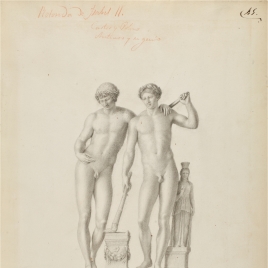
Elvira Barba, Miguel Ángel, El Cuaderno de Ajello y las esculturas del Museo del Prado, Museo del Prado, Madrid, 1998, pp. 142 ss., lám. 45, fig. 45a.
Elvira Barba, Miguel Angel - Schröder, Stephan, Escultura clásica. Guía. Museo Nacional del Prado, Fundación Marcelino Botín - Museo del Prado, Santander, 1999, pp. 144.
Spannagel, Martin, Exemplaria Principis : Untersuchungen zu Entstehung und Ausstattung des Augustusforums, Archäologie und Geschichte, Heidelberg, 1999, pp. 212, nota 829.
Storch de Gracia, J. J., El Real Sitio de la Granja de San Ildefonso. Retrato y escena del Rey: la Granja de San Ildefonso, Segovia, del 23 de junio al 17 de septiembre de 2000 / editado por Delfín Rodríguez Ruiz, Patrimonio Nacional, Segovia, 2000, pp. 445 ss., n.º 6, 12.
El Real Sitio de La Granja de San Ildefonso: retrato y escena del rey, Patrimonio Nacional; El Viso, Madrid, 2000, pp. 455.
Herrero Sanz, Maria Jesús, 'Recorrido de la escultura clásica en el palacio de San Ildefonso a través de los inventarios reales', El Coleccionismo de Escultura Clasica en España. Actas del Simposio 21-22 de Mayo 2001, Madrid, 2001, pp. 239-258.
Schröder, Stephan F, Catálogo de la escultura clásica: Museo del Prado. II, Museo Nacional del Prado, Madrid, 2004, pp. 367-374.
Museo Nacional del Prado, Enciclopedia del Museo del Prado, IV, T.F. Editores: Fundación Amigos, Madrid, 2006, pp. 1239-1241.
Schröder, S. y Elvira Barba, M. A., "Eutichio Ajello (1711-1793) y su descripción de la célebre Real Galería de San Idelfonso", Boletín del Museo del Prado, XXIV, 2006, pp. 40-88.
Museo Nacional del Prado, La Guía del Prado, Museo Nacional del Prado, Madrid, 2008, pp. 447.
Museo Nacional del Prado, El Museo del Prado: la colección de escultura, artes decorativas y dibujos, Museo Nacional del Prado, 2009.
Corona y arqueología en el Siglo de las Luces, Patrimonio Nacional, 2010, pp. 34-46,85-93.
Beaven, Lisa, An ardent patron. Cardinal Camillo Massimo and his antiquarian and artisctic circle: Giovanni Pietro Bellori,Claude Lorrain,Nicolas Poussin, Diego Velázquez., P.Holberton-C.Estd.Europa Hispánica, Londres Madrid, 2010, pp. 267-273 [271].
Herrero Sanz, Mª J., El grupo de S. Ildefonso o la ofrenda de Orestes y Pílades: de Roma a Madrid, Reales Sitios, XLVII, 2010, pp. 30-41.
Rupprecht Goette, H. Nagy, A.M, Zum schlachrsarkofag im Museum der Bildenden Künste, Budapest - Nachantike überarbeitingen antiker sarkophage, Bulletin du Musée hongrois des beaux-arts, 118, 2013, pp. 91-94 [75-99].
Schmitz, Brigitte, 'Abbild leibild-die Ildefonso-Gruppe in der deutschen kunst' En:, El legado de Johann Joachim Winckelmann en España. Actas congreso internacional 20-21 Oct.2011, 2014, pp. 207-215.
Rügler, Axel, 'Die Ildefonso gruppe in Winckelmanns monumenti antichi inediti' En:, El legado de Johann Joachim Winckelmann en España. Actas congreso internacional 20-21 Oct.2011, 2014, pp. 193-202.
Pierguidi, Stefano, Monnot, Livio Odescalchi e il gladiatore dei Musei Capitolini, Bollettino dei Musei Comunali di Roma, XXVIII, 2014, pp. 53-60 [59].
G. Navarro, C.; Perdices, A., La mirada del otro: escenarios para la diferencia, Museo Nacional del Prado, Madrid, 2017, pp. 35 n.1.
García Pérez, Noelia, El Prado en femenino II. Promotoras artísticas de las colección del Museo (1602-1700)., Museo Nacional del Prado, Madrid, 2024, pp. 127-128 nº 32.
García Pérez, Noelia, The female perspective II. Women art patrons of the Museo del Prado (1602-1700), Museo Nacional del Prado, Madrid, 2024, pp. 127-128 nº32.
García Pérez, Noelia, El Prado en femenino III. La reina Isabel de Farnesio (1692-1766), Museo Nacional del Prado, Madrid, 2025, pp. 122-131; 145 n.44.
García Pérez, Noelia, The female perspective III. Queen Isabella Farnese (1692-1766), Museo Nacional del Prado, Madrid, 2025, pp. 122-131; 145 n.44.