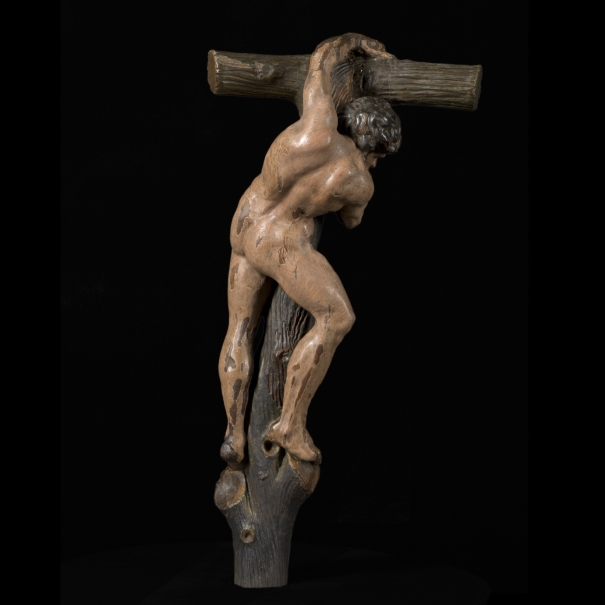
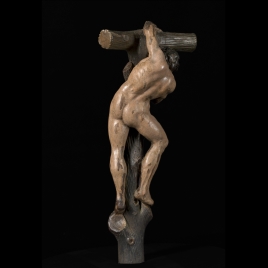
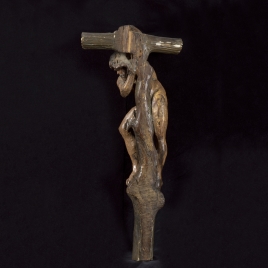
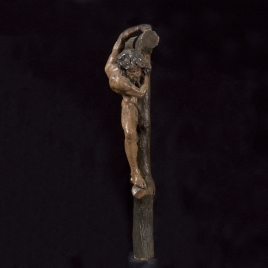
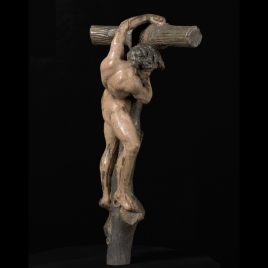
The Bad Thief
Second third of the XVI century. Wood.Room C
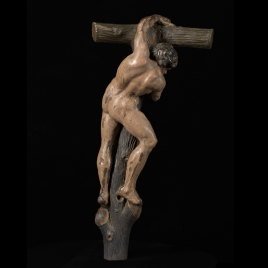
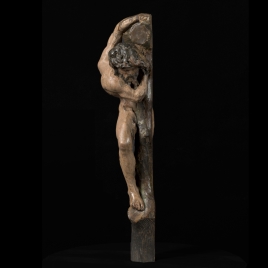
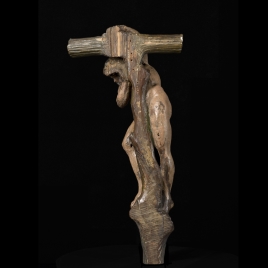
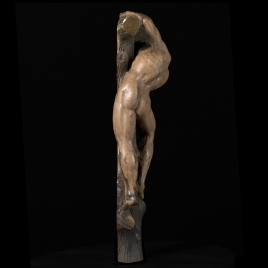
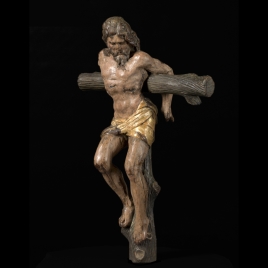
Although in many small works the wood was left unpainted, almost as if to display the sculptor’s technical prowess, the fact that a good many were destined for domestic oratories led to their being coloured to make them more attractive and lifelike. Two thieves from a Crucifixion scene, now in the Museodel Prado (E001050, E001054), attributed to Berruguete, were coloured but have unfortunately lost most of their original polychromy, of which only a few details remain. The appearance of the skin plays an essential role in the case of Gestas, the impenitent thief, who is viewed from behind to stress his rejection of Christ, displaying a back that can only have been based on classical pieces such as the Belvedere Torso; without any cloth to it allows for an unusual and complete contemplation of the nude.
Arias Martínez, Manuel, Darse la mano. Escultura y color en el Siglo de Oro, Madrid, Museo Nacional del Prado, 2024, p.107, il. 2.10