formularioRDF
The itinerary <em>TITULORECORRIDO</em> has been successfully created. Now you can add in works from the Collection browser
<em>TITULOOBRA</em> added to <em>TITULORECORRIDO</em> itinerary

Exhibition

Hand in Hand. Sculpture and colour in the Spanish Golden Age

Museo Nacional del Prado. Madrid 11/19/2024 - 3/2/2025

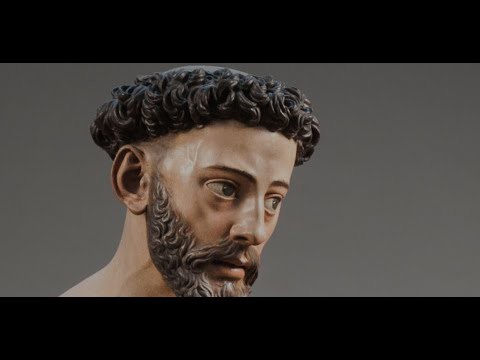
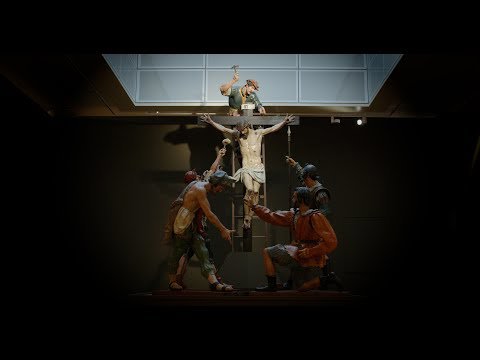
On display until 2 March 2025 in Rooms A and B of the Jerónimos Building, the Museo del Prado and Fundación AXA are presenting Hand in hand. Sculpture and Colour in the Spanish Golden Age, an exhibition that focuses on the success of Baroque polychrome sculpture and its close relationship with painting. It achieves this aim through a spectacular installation of almost one hundred sculptures by masters of the stature of Gaspar Becerra, Alonso Berruguete, Gregorio Fernández, Damián Forment, Juan de Juni, Francisco Salzillo, Juan Martínez Montañés and Luisa Roldán. Displayed alongside these works are paintings and engravings which emulate or reproduce them in the manner of mirror images, in addition to classical works that demonstrate the importance of colour in sculpture since Antiquity.

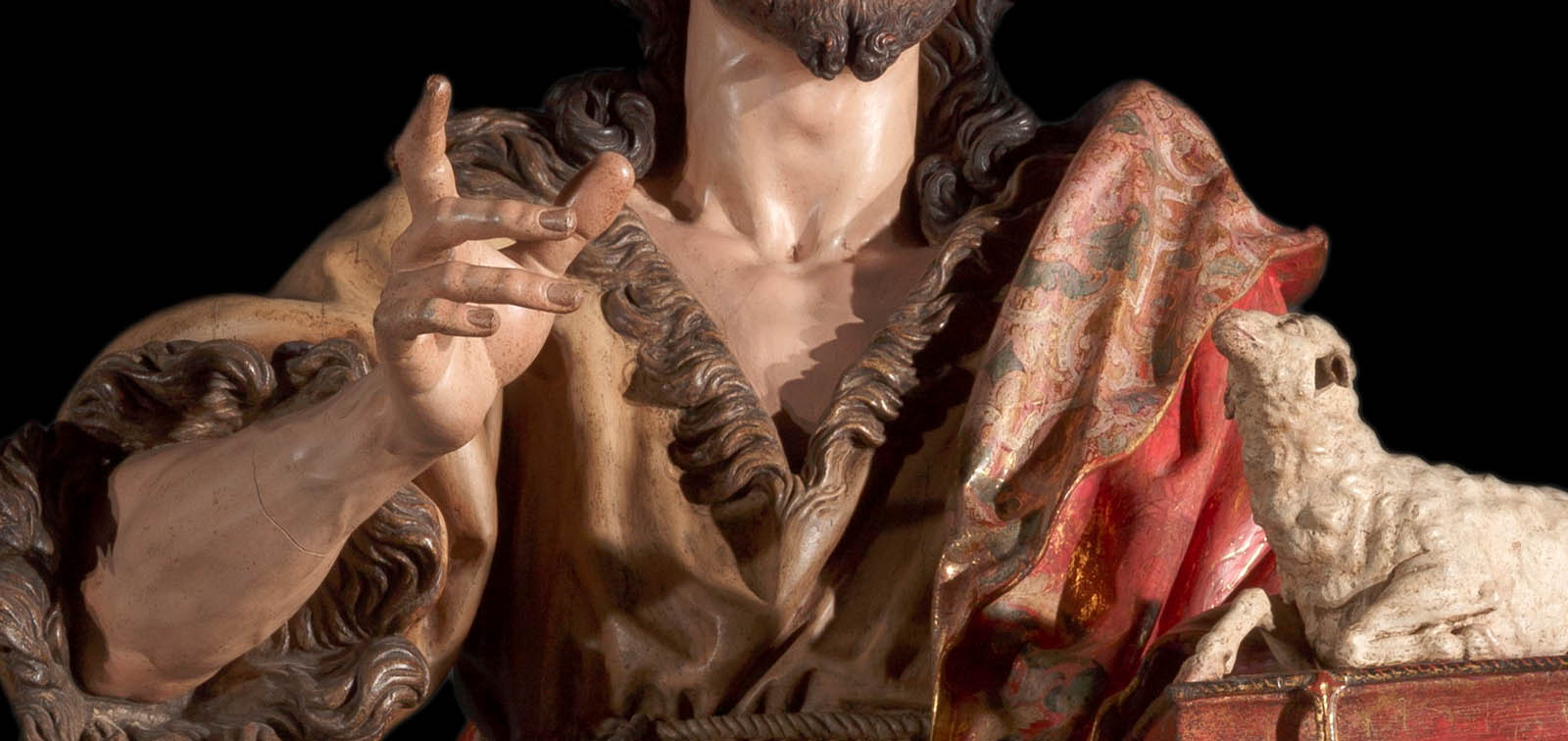
Curated by Manuel Arias Martínez, Head of the Department of Sculpture at the Museo Nacional del Prado, the exhibition defends the importance of polychrome sculpture for a comprehensive understanding of Spanish art while also exhibiting for the first time five important works recently acquired by the Museum: The GoodThief and The Bad Thief by Alonso Berruguete, Saint John the Baptist by Juan de Mesa, and Joseph of Arimathea and Nicodemus which were part of a late medieval, Castilian Descent from the Cross.

Curator:
Manuel Arias Martínez, Head of the Department of Sculpture at the Museo Nacional del Prado.

Access

Room A and B . Jerónimos Building

RDF

RDF

Sponsored by:

Multimedia

Exhibition

Section I. Gods and Humans in Volume and Colour

Section I. Gods and Humans in Volume and Colour
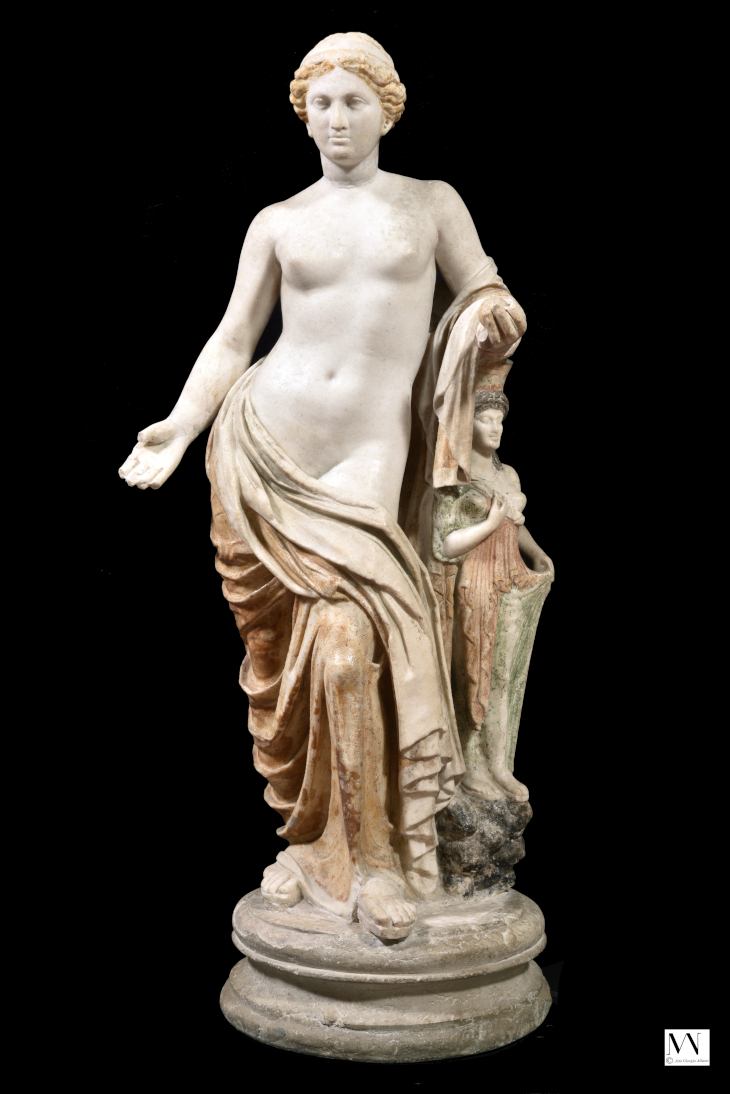
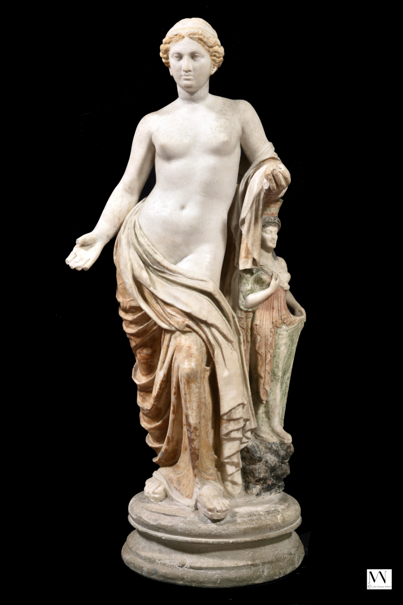
Venus Lovatelli with Small Idol

Pompeian workshop

Pharos marble and remains of polychromy

1st century AD

Naples, Museo Archeologico Nazionale di Napoli

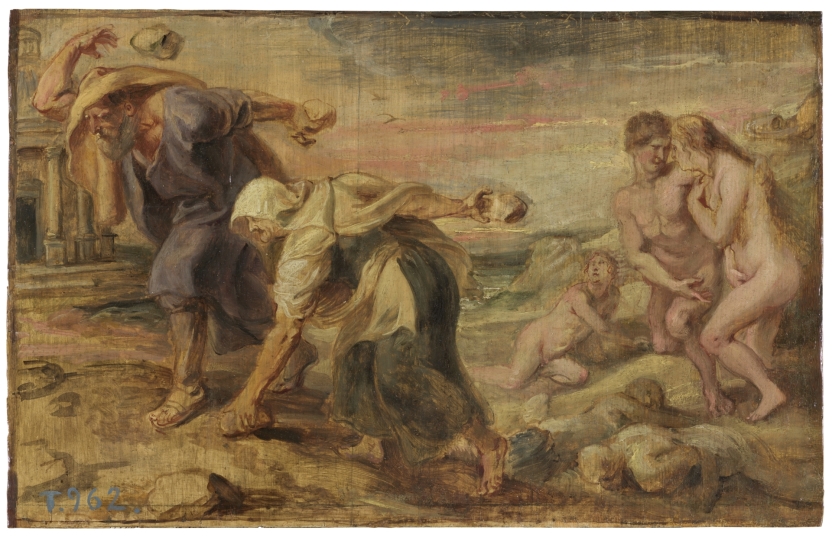
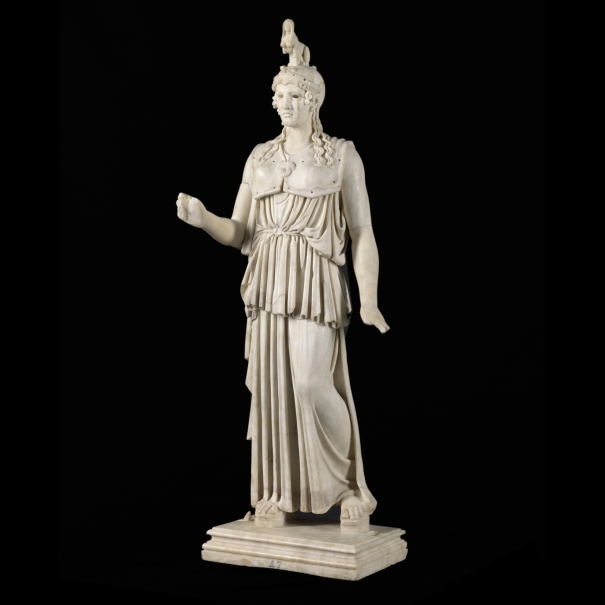
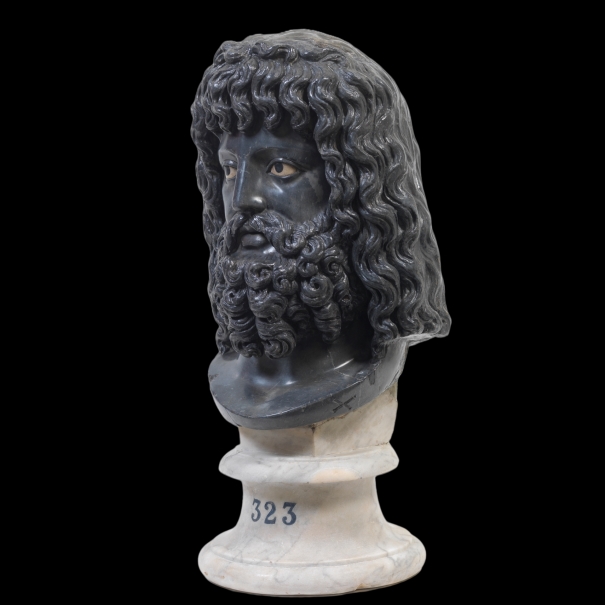
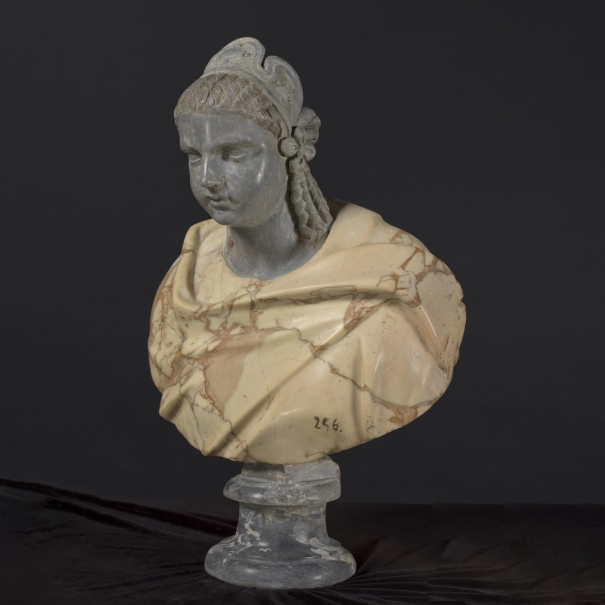
There are references to the art of sculpture and its first materials, such as clay, stone and bone, in the earliest accounts of the creation of human beings, starting with the Greek myths – the first man modelled by Prometheus or the stones that Deucalion and Pyrrha threw behind them after the flood – and continuing with the biblical story of Adam and Eve. Emulating humans through sculpture was soon considered necessary and natural. Represented in this form, the divinity also took on a more earthly and protective appearance, which was rendered more lifelike by colouring, an essential attribute of life as opposed to the pallor of death.

Colour was added to volume from Antiquity onwards both by using materials of varying hues and by applying pigments directly to the surfaces. Both possibilities coexisted in the Hispanic world of the Early Modern Age, where wood was the main material, enhanced with other media and refined polychrome work. The combination of sculpture and colour not only achieved excellent results in that period but also increased the persuasive and emotive power of devotional images, boosting their efficacy.

Section II. Sculpture as a Form of Persuasion

Section II. Sculpture as a Form of Persuasion
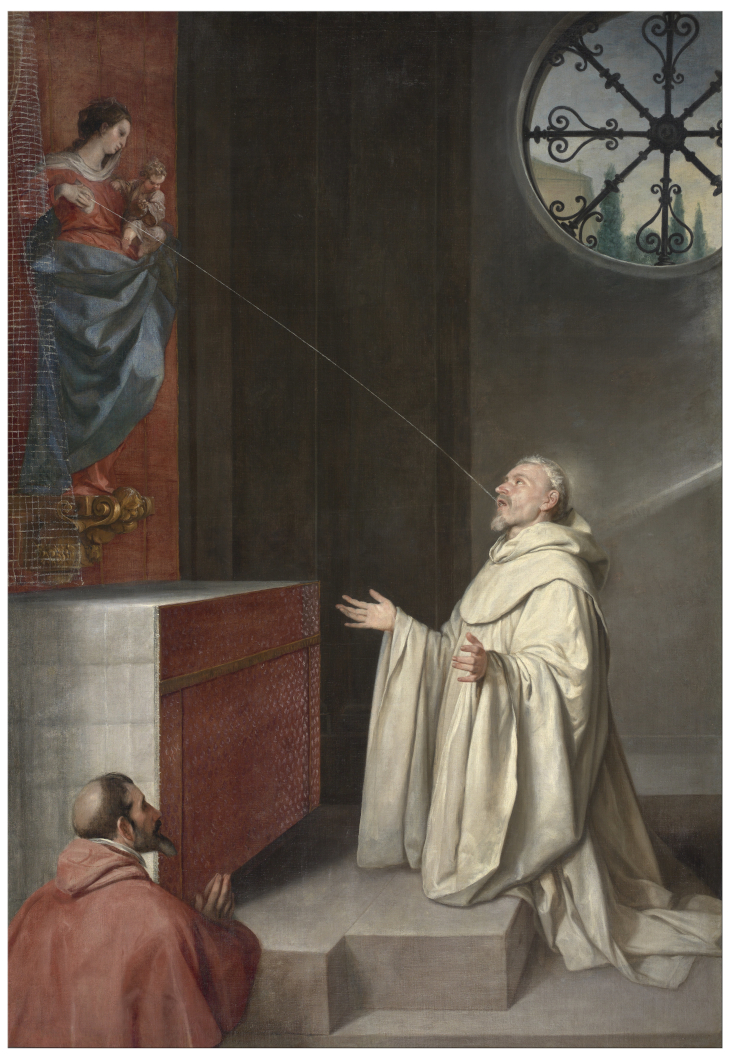
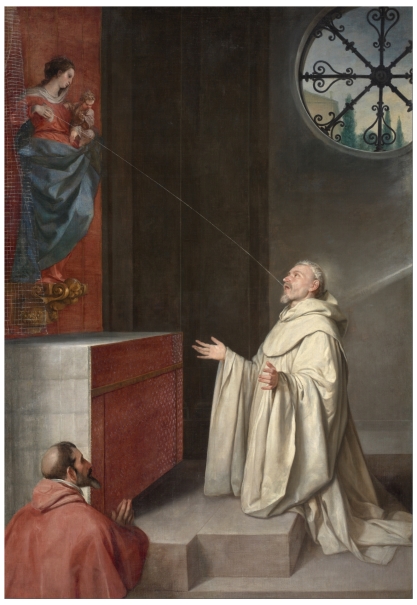
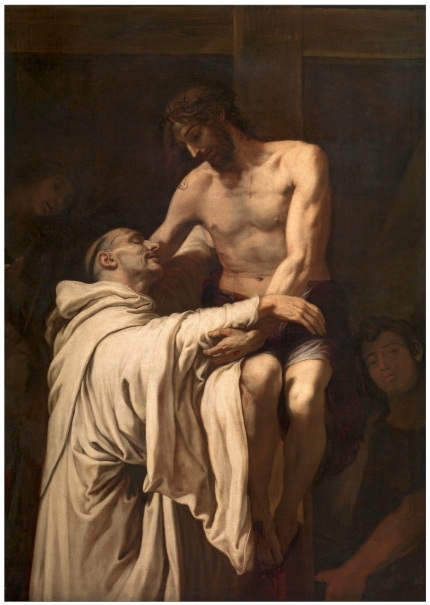
The Lactation of Saint Bernard

Alonso Cano

Oil on canvas

1645–52 and 1657–60

Madrid, Museo Nacional del Prado

The corporeality of sculpture contributed to its direct and natural correspondence with reality, besides providing the divine with a tangible and human appearance that was made more credible by gestures. Devotional literature had the most famous images speak, move, change colour, grieve and weep – that is, engage directly with the faithful, as if they were truly alive.

Theologians and preachers encouraged these wondrous stories and many defended the palpable truthfulness of sculpture as opposed to the illusionism of painting, whose beauty was visible but ungraspable. However, painting’s greater narrative potential made it a useful means of recording miraculous events, helping to fix in viewers’ memories stories that blurred the boundaries between the natural and the supernatural.

Prints also played a key role in disseminating the main devotional sculptures. Thanks to the lightness and accessibility of paper, news of their miracle-working and healing properties spread through time and space.

Section III. Divine and Human Craftsmen and Intermediaries

Section III. Divine and Human Craftsmen and Intermediaries
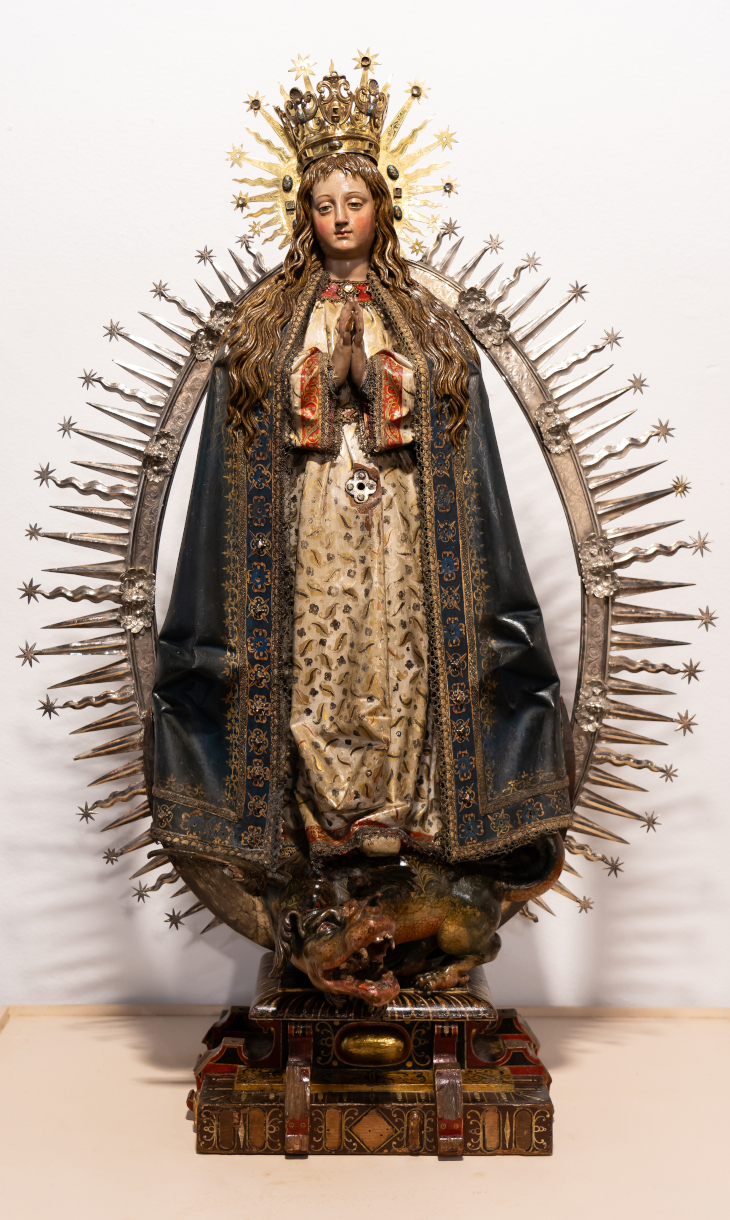
Virgin of the Immaculate Conception

Gregorio Fernández

Polychrome wood and silver enhanced by other media

c. 1630

Monforte de Lemos (Lugo), monasterio de Santa Clara

The singularity and prestige of some devotional sculptures stemmed from legends that attributed their creation to angels’ workshops or biblical characters such as Nicodemus or Saint Luke. However, conventional sculptors of sacred figures also needed to be virtuous, because their task was more than simply an artistic exercise.

The cult of Saint Joseph and his carpenter’s profession gained particular importance. The workshop where Christ spent his childhood served as a metaphor for his subsequent martyrdom on the cross, while the sculptor’s painstaking work with wood became an image of Christian life as an exercise in deprivation and renunciation aimed at attaining eternity.

Along with the very common idea of God as a painter, sermons also used the image of the supreme sculptor. It was to him that humans owed their primary form, but it was up to each person, through their actions, to ‘polychrome’ the divine creation with greater or lesser success. Sculpture and painting thus formed a perfect partnership for telling sacred stories.

Section IV. Volume and Polychromy

Section IV. Volume and Polychromy
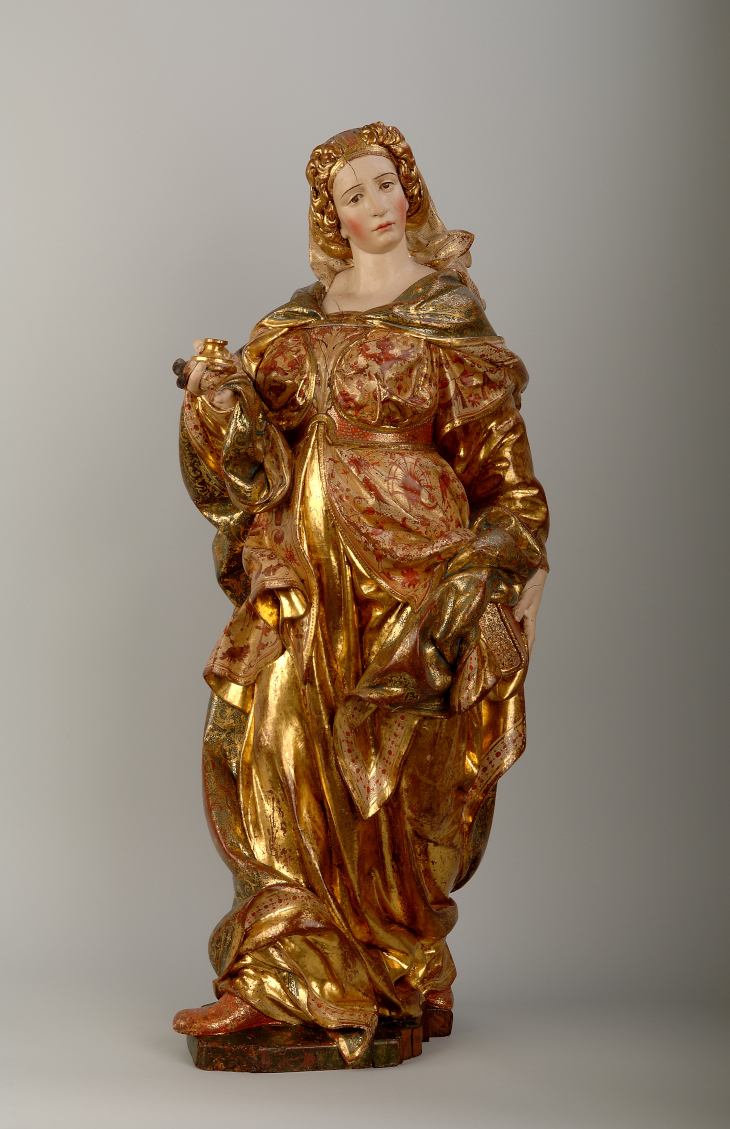
Mary Magdalene

Juan de Juni (sculptor) and Juan Tomás Celma (polychrome artist)

Polychrome wood

1551–70

Valladolid, Museo Nacional de Escultura

The combined action of sculpture and painting was aimed at achieving a lifelike portrayal of both anatomies and their textile coverings. The third dimension made saints’ humanity more credible, but its effect was only complete when colour was added. ‘Every figure, however perfect it may be in sculpture, is a corpse,’ wrote the Benedictine friar Gregorio de Argaiz in 1677, adding: ‘It is given life, and soul, and spirit, by the brush which represents the affects of the soul. Sculpture shapes tangible and palpable man with regard to all the limbs and parts that pertain to his corporeality; but painting gives him life’.

Owing to its low cost and deep-rooted tradition, wood became the quintessential material for sculpture. It could be coloured to imitate skin and also dressed with garments that could be adapted to the fashions of the time. Polychromy, whether applied by the maker of the carving or by a specialised artist, attained an impressive degree of technical sophistication and was highly regarded. The result could be enhanced with glued-on or real fabrics, as well as with jewels, ivory, glass or real hair. All this was done to create familiar and lifelike representations with which the faithful could readily identify.

Section V. Black Mourning Dress in a Play of Mirrors

Section V. Black Mourning Dress in a Play of Mirrors
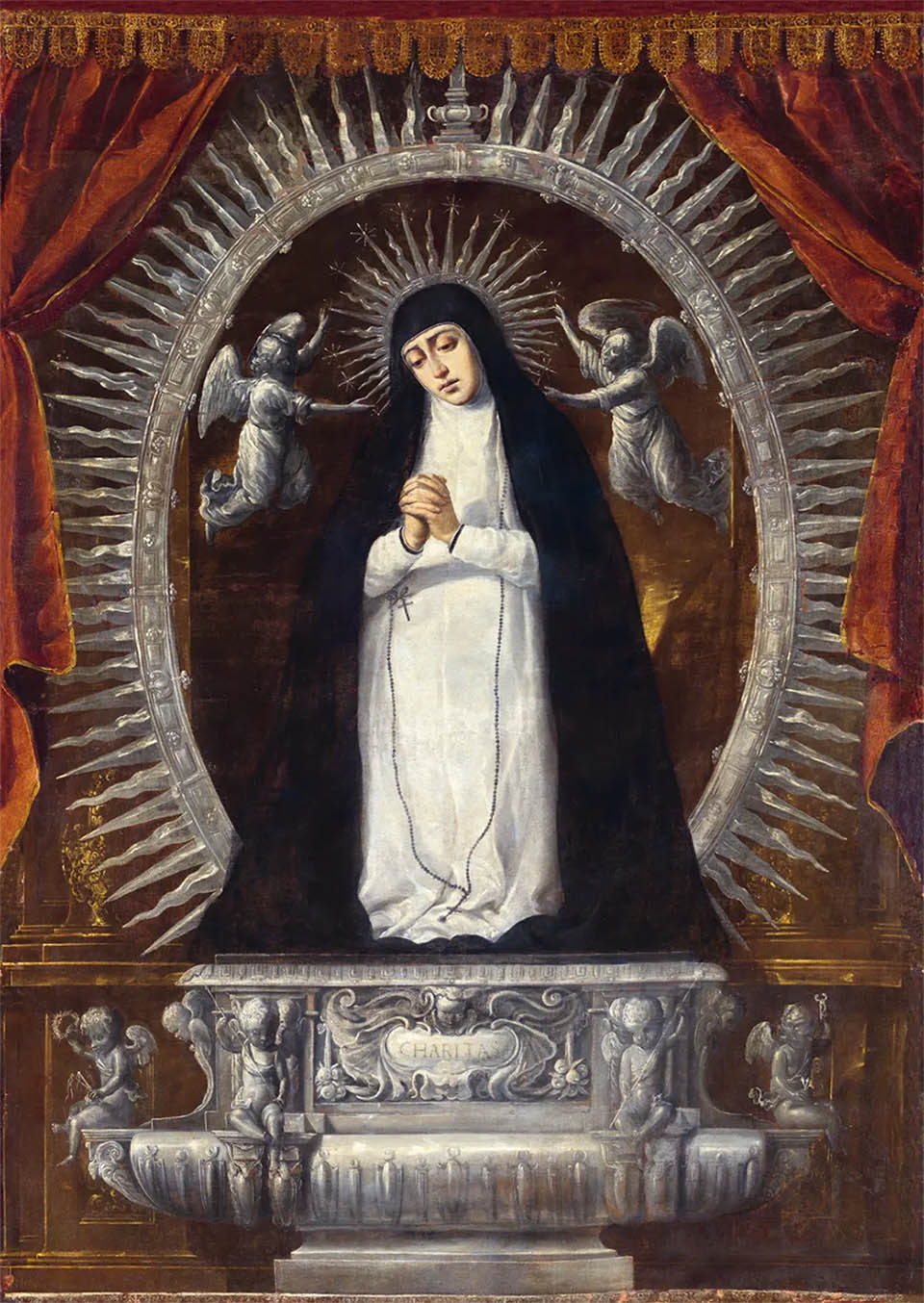
Virgin of Solitude

Attributed to Sebastián Herrera Barnuevo

Oil on canvas

c. 1665

Madrid, Museo Nacional del Prado

The image of the Virgin of Solitude, which was venerated in the convent of La Victoria in Madrid from 1568 and perished in a fire in 1936, is a paradigm of the interrelationship between painting and sculpture. Created in a Tridentine courtly context as the emblem of a penitential confraternity under the patronage of Queen Elisabeth of Valois, it was designed for a purpose that gave it added value: to be paraded in processions.

Its uniqueness also stemmed from its miraculous crafting. Legend had it that its creator, Gaspar Becerra, was a sort of medium in contact with the divinity, which gave him instructions for creating the iconic work: a dressable sculpture in simple black and white mourning attire. Here we find a new connection with Antiquity, where black was an established visual expression of grief and death.

The Virgin of Solitude also exemplifies the potential of the interaction between sculpture, painting and printmaking. Reproduced and copied endlessly, and recreated and reinterpreted by the most famous artists and in all media as in a play of mirrors, it became one of the most distinctly Hispanic objects of devotion, spreading from the Philippines to New Spain and from Sicily to Flanders.

Section VI. Sculpture, Theatre and Processions

Section VI. Sculpture, Theatre and Processions
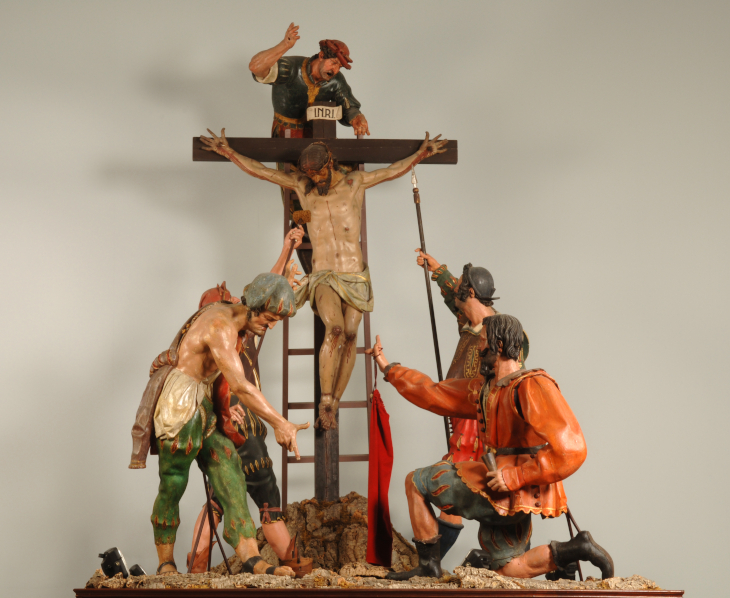
I thirst

Gregorio Fernández

Polychrome wood enhanced by other media

1612–16

Valladolid, Museo Nacional de Escultura

Animated by the life-giving power of colour, wooden sculptures gave impetus to the phenomenon of processions, and this in turn granted them a new power: the conquest of urban space. Processional floats, whether consisting of individual figures or groups, like frozen scenes, intensified their dramatic potential through contrasting attitudes, vivid colours and dynamic compositions. Their expressiveness and ability to engage with viewers also stemmed from the appeal of watching them in motion. Some figures were even articulated to heighten their effect and influence on the faithful.

These forms of popular religiosity were questioned by Enlightenment thinkers. One of them, father Isla, went so far as to describe these images and their theatrical displays as ‘spiritual puppets’.

Polychromy also played a fundamental role in this pursuit of verisimilitude, in both clothing and anatomy. Skin tone followed very specific codes to distinguish the origin or temperament of the different characters represented, and ultimately to indoctrinate spectators.

Section VII. Coming Full Circle: From Designs to Trompe l’Oeil Portrayals of Sacred Figures

Section VII. Coming Full Circle: From Designs to Trompe l’Oeil Portrayals of Sacred Figures
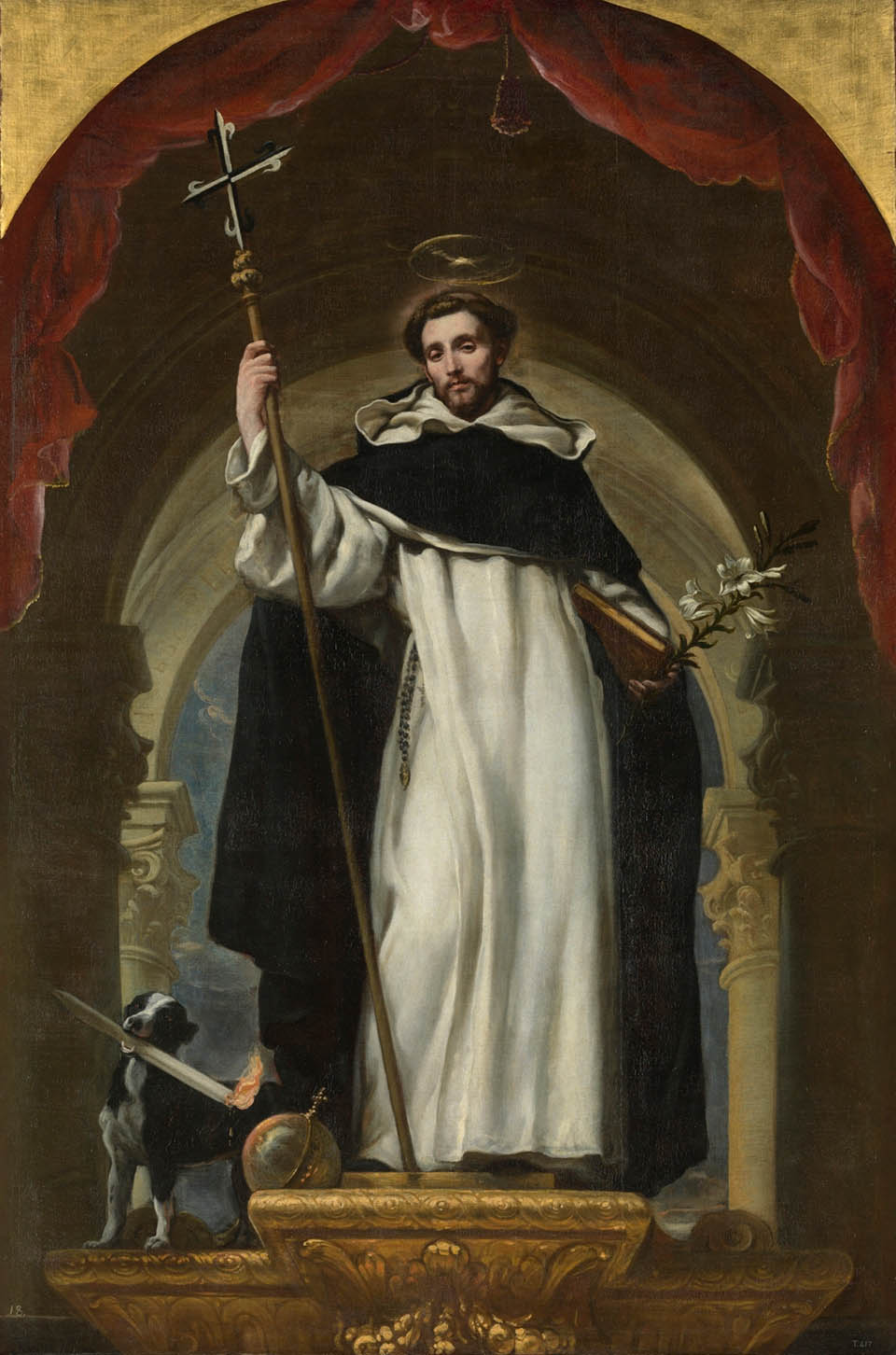
Saint Dominic of Guzmán

Claudio Coello

Oil on canvas

c. 1685

Madrid, Museo Nacional del Prado

The preliminary designs of altars and altarpieces are some of the most interesting expressions of the interrelationship between sculpture and painting. During religious services, words and music merged with these spectacular structures to create a total work, like a grand-scale opera.

Coverings were devised for special occasions, such as the Holy Week Lenten veils: large curtains depicting the altarpieces they concealed in pale, deathly tones. These paintings imitating three-dimensional sculptures and architectural structures gave them a new appearance in a suggestive play of flatness and volume.

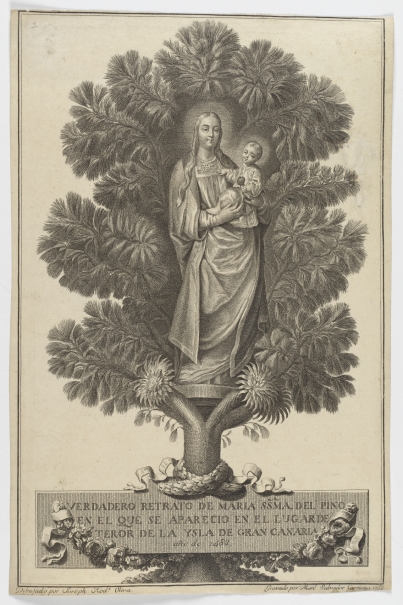
The ‘true portraits’ painted of devotional sculptures with a particularly large following were based on a similar idea. These trompe l’oeil pictures of sacred figures showed them on their own altars, often flanked by curtains which, although usually kept closed in real life to conceal the mystery, were always drawn back in the paintings. This made it possible to view them more intimately and closely, because ‘painting and sculpture, taking each other by the hand, are a wondrous sight’.

Artworks

Venus Lovatelli with Small Idol
1
Venus Lovatelli with Small Idol

Pompeian workshop

Pharos marble and remains of polychromy

1st century AD

Naples, Museo Archeologico Nazionale di Napoli

2
Painted Sculptures of Diana and Apollo

Pompeian workshop

Fresco

1st century BC

Naples, Museo Archeologico Nazionale di Napoli

5
Daedalus fashioning a Cow for Pasiphae

Jean Lemaire

Oil on canvas

c. 1642

Paris, Musée du Louvre, on long-term loan to Agen, Musée des Beaux-Arts d’Agen

8
Pygmalion enamoured of his Statue

Jean Raoux

Oil on canvas

1717

Paris, Musée du Louvre, on long-term loan to Montpellier, Musée Fabre

9
Sleeping Putto

Tommaso Fedele

Red porphyry and fiorito and broccatello alabaster

c. 1640

Rome, Fondazione Dino ed Ernesta Santarelli

10
Meleager

Roman workshop and Giovanni Battista di Bianchi

Red marble from Rhodes

1st century AD and 1581 (head enhanced by other media)

Naples, Museo Archeologico Nazionale di Napoli, Collezione Farnese

12
Cardinal Belluga’s Crucified Christ

Sicilian workshop

Coloured marble with remains of polychromy enhanced by other media

Early 18th century

Murcia, parroquia de Santa Eulalia

13
Virgin of Valvanera

Castilian workshop

Polychrome wood and silver enhanced by other media

1702

Astorga (León), catedral de Astorga

14
Virgin of Valvanera

Anonymous Spanish artist 

Oil on canvas

1700–1730

BBVA Collection

15
The Miracle of Córdoba

Francesco Maffei

Oil on canvas

1655

Vicenza, Diocesi di Vicenza, Santa Maria ai Servi, oratorio di San Nicola

16
The Miracle of the Christ ransomed in Algiers

Jerónimo Jacinto de Espinosa

Oil on canvas

1623

Valencia, Patronos de la Fundación del Cristo del Rescate

17
Christ of El Grao in Valencia

Andrés Marzo 

Pencil, pen and brown and grey ink, with brown and grey ink wash 

c. 1650

Madrid, Museo Nacional del Prado

18
Sister Francisca Dorotea

Bartolomé Esteban Murillo

Oil on canvas 

c. 1674

Catedral de Sevilla

21
The Virgin of the Sagrario embracing her Image in Toledo Cathedral

Eugenio Cajés

Red chalk, blending stump and red chalk wash

c. 1615

Madrid, Biblioteca Nacional de España

29
Virgin of the Immaculate Conception

Gregorio Fernández 

Polychrome wood and silver enhanced by other media

c. 1630

Monforte de Lemos (Lugo), monasterio de Santa Clara

30
Holy Christ of Burgos

Mateo Cerezo the Elder

Oil on canvas

1626-75

Valladolid, Museo Nacional de Escultura, on long-term loan to the Museo de Burgos

31
Christ at the Column

Gregorio Fernández

Polychrome wood enhanced by other media

c. 1619

Patrimonio Nacional, Colecciones Reales. Madrid, Real Monasterio de la Encarnación

32
Saint Joseph and the Infant Jesus

Alonso Cano (sculptor and polychrome artist) and Pedro de Mena y Medrano (sculptor?)

Polychrome wood enhanced by other media

1653–57

Granada, Museo de Bellas Artes

33
Saint Joseph and the Infant Jesus

Alonso Cano 

Oil on canvas

c. 1645

Masaveu Collection

37
True Portrait of Jesus of Nazareth in the Hospital de Jesús Nazareno in Mexico

Attributed to Nicolás Guzmán 

Oil on canvas with gilded applications

1665–1700

Carteia Fine Arts

42
Saint Luke the Evangelist

Damián Forment (sculptor) and Andrés de Melgar (polychrome artist)

Polychrome wood

1537–41

Catedral de Santo Domingo de la Calzada (La Rioja), main altarpiece

45
Saint John the Baptist and the Banker Diego de la Haya

Alonso Berruguete 

Polychrome wood

1537

Valladolid, iglesia parroquial de Santiago Apóstol, altarpiece of the Epiphany

46
Saint John the Baptist

Juan de Juni (sculptor) and Juan Tomás Celma (polychrome artist)

Polychrome wood

1551–70

Valladolid, Museo Nacional de Escultura

47
Mary Magdalene

Juan de Juni (sculptor) and Juan Tomás Celma (polychrome artist)

Polychrome wood

1551–70

Valladolid, Museo Nacional de Escultura

48
Saint Thomas

Gaspar Becerra) (sculptor), Gaspar de Hoyos and Gaspar de Palencia (polychrome artists)

Polychrome wood

1558–62 (sculpture) and 1570–79 (polychromy)

Catedral de Astorga (León), main altarpiece

49
Saint Jude Thaddeus (?)

Gaspar Becerra (sculptor), Gaspar de Hoyos and Gaspar de Palencia (polychrome artists)

Polychrome wood

1558–62 (sculpture) and 1570–75 (polychromy)

Catedral de Astorga (León), main altarpiece

50
The Holy Family

Gregorio Fernández (sculptor) and Diego Valentín Díaz (polychrome artist?)

Polychrome wood enhanced by other media

c. 1615

San Bernardo, Valbuena de Duero (Valladolid), parroquia Asunción de Nuestra Señora

51
Saint Dominic of Guzmán

Juan Martínez Montañés (sculptor) and Francisco Pacheco (polychrome artist)

Polychrome wood

1605–9

Seville, Museo de Bellas Artes

52
Christ Man of Sorrows

Jerónimo Francisco and Miguel Jerónimo García 

Polychrome terracota enhanced by other media

1600–30

Granada, Archidiócesis de Granada, iglesia de los Santos Justo y Pastor

53
Virgin of Bethlehem

Pedro de Mena

Polychrome wood enhanced by other media

c. 1675

Madrid, Granados Collection

54
The Transverberation of Saint Teresa

Giacomo Colombo

Polychrome wood enhanced by other media

1726

Madrid, convento de las Trinitarias Descalzas 

55
Crucifixion

Guatemalan workshop

Polychrome wood enhanced by other media

1730–60

Berlanga de Duero (Soria), Obispado de Osma-Soria, colegiata de Santa María del Mercado

56
The First Steps of Jesus

Luisa Roldán, known as La Roldana

Polychrome terracota 

c. 1692–1706

Museo de Guadalajara

57
Mater Dolorosa

Cristóbal Ramos

Wood, polychrome and glued fabrics enhanced by other media

c. 1764

Valladolid, Museo Nacional de Escultura

59
Christ on the Cross

Juan Sánchez Cotán

Oil on canvas

1603–5

Granada, Museo de Bellas Artes

60
Ceres

Roman workshop

Pharos marble and basanite

AD 90–110

Florence, Gallerie degli Uffizi

63
The Virgin of Solitude in her Retable

Matías de Irala

Etching and burin

1726

Madrid, Biblioteca Nacional de España

64
The Virgin of Solitude on her Litter

Matías de Irala

Etching and burin

1753 (?)

Madrid, Biblioteca Nacional de España

67
Virgin of Solitude

Alonso Cano 

Oil on canvas

c. 1650

Catedral Metropolitana de Granada

68
Virgin of Solitude

Luis Salvador Carmona

Polychrome wood and fabrics enhanced by other media

1745-50

Real Sitio de San Ildefonso (Segovia), Hermandad de la Real Esclavitud del Santísimo Cristo del Perdón y de la Virgen de la Soledad, iglesia de Nuestra Señora del Rosario

69
The Virgin of Solitude and the Christian Soul

Anonymous Castilian artist

Oil on canvas 

1704

Zamora, Madres Clarisas, convento del Corpus Christi

72
Procession of Flagellants

Francisco de Goya 

Oil on panel

1808–12

Madrid, Museo de la Real Academia de Bellas Artes de San Fernando

73
Processional Banner with Nativity Scene

Neri di Bicci 

Tempera and gold leaf on panel

1452–92

Barcelona, Museu Nacional d’Art de Catalunya. Francesc Cambó Bequest, 1949

74
Christ of the Panel

Spanish workshop

Polychrome wood and oil on panel

c. 1550 (Christ) and c. 1680–1700 (cross)

Montilla (Córdoba), Diócesis de Córdoba, parroquia de Santiago Apóstol

75
Design for the Flagellation of Christ Processional Float

Alejandro Carnicero

Pen and grey and brown ink, with grey ink wash

1716

Madrid, Biblioteca Nacional de España

77
I thirst

Gregorio Fernández

Polychrome wood enhanced by other media

1612–16

Valladolid, Museo Nacional de Escultura

78
Scene from the Lives of Saints Justa and Rufina

Roman Mannerism-influenced workshop

Polychrome wood

c. 1600

Madrid, private collection

79
Saint Ferdinand

Pedro Roldán (sculptor) and Luisa de Valdés (polychrome artist)

Polychrome wood enhanced by other media

c. 1671

Catedral de Sevilla

80
Saint John the Evangelist

Francisco Salzillo

Polychrome wood enhanced by other media

1756

Murcia, Real y Muy Ilustre Cofradía de Nuestro Padre Jesús Nazareno

91
Virgin and Child with Donors

Pedro Atanasio Bocanegra

Oil on canvas 

1650–89

Bilbao, Museo de Bellas Artes. Gift of Doña Blanca, Doña Begoña and Doña Aránzazu Alzola de la Sota, 2002

92
Christ of Ocaña

Luca Giordano

Oil on canvas

c. 1699

Patrimonio Nacional, Colecciones Reales. San Lorenzo de El Escorial (Madrid), Real Monasterio

94
Christ of Victory

Sebastián de Herrera Barnuevo

Oil on canvas

c. 1650

Alba de Tormes (Salamanca), Museo Carmus ‘Santa Teresa de Jesús en Alba de Tormes’. Monasterio de la Anunciación de Nuestra Señora del Carmen, sepulchre of Saint Teresa of Jesus

95
Christ of Forgiveness

Luis Salvador Carmona

Polychrome wood enhanced by other media

1756

Nava del Rey (Valladolid), Clarisas Capuchinas

96
Christ of Forgiveness with God the Father and the Holy Spirit

Francisco Camilo

Oil on canvas

c. 1650

Madrid, Granados Collection

Print on demand

Print artworks available in our catalogue in high quality and your preferred size and finish.

Image archive

Request artworks available in our catalogue in digital format.

Up