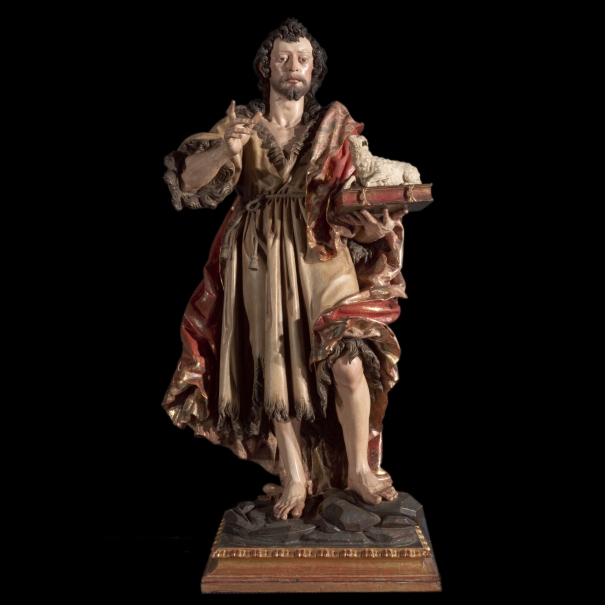
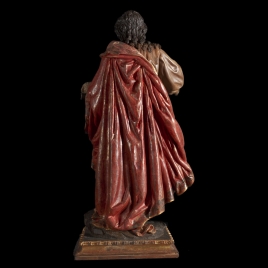
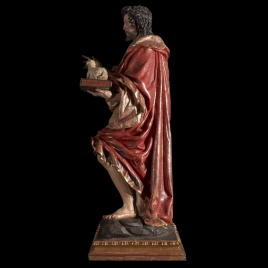
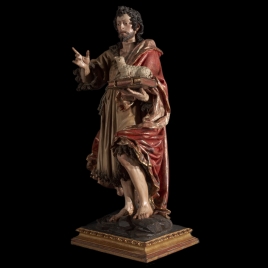
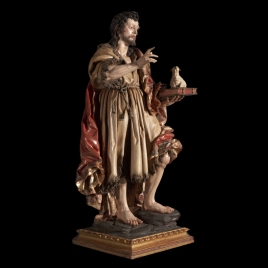
Saint John the Baptist
1623 - 1627. Wood.Room C
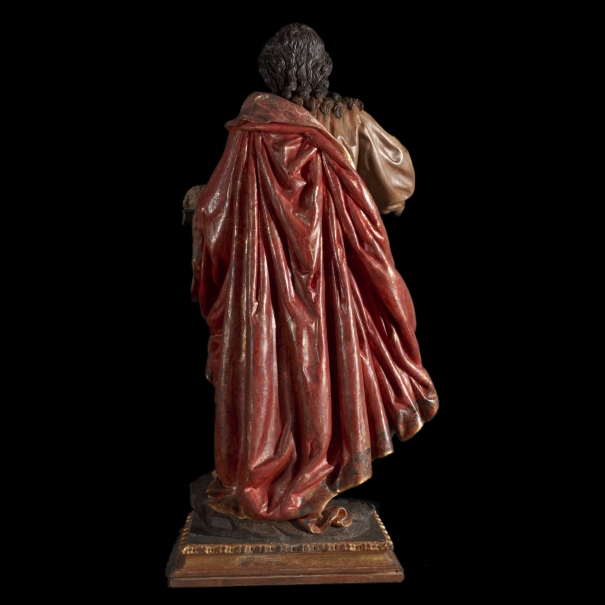
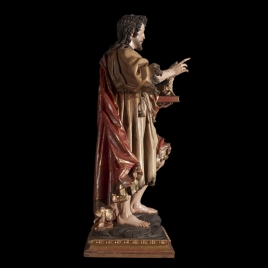
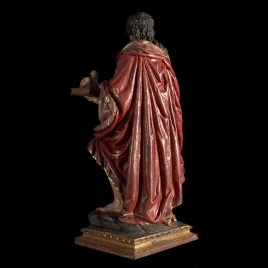
Mesa can undoubtedly be credited with the standing Saint John the Baptist belonging to the Museo del Prado’s collections. Carved in the round out ofwood and olychromed, it has an elegant poise based on a highly successful type of figure whose solemnity seems to derive from classical statuary – almost a reflection of the declamatory imperial attitude of the adlocutio. The rhythm of the raised arm is balanced by the slightly elevated left leg. The figure is corpulent and the degree of detail is extreme in the painstaking carving of the hair and in the folds of the cloak covering its back, which is enriched with estofado decoration (paint etched through to reveal the underlying gold) of gold patterns on a crimson ground with abundant plant motifs that are accentuated in the border. This abundance in terms of both volume and colour indicates that the image was designed to be viewed from all angles and was most likely taken outside on occasions, carried on a platform. This fact highlights the extent of the phenomenon of processions, which were not limited to Passion celebrations but enjoyed prominence throughout the liturgical calendar.
Arias Martínez, Manuel, Darse la mano. Escultura y color en el Siglo de Oro, Madrid, Museo Nacional del Prado, 2024, p.293, il. 8.5