Bibliography +
Barcia y Pavón, Angel María de, Catálogo de la colección de dibujos originales de la Biblioteca Nacional, Rev. de Arch. Bibl. y Museos, Madrid, 1906, pp. nº 2862.
Derozier, C., La Guerre d'Independance espagnole a travers l'estampe (1808-1814), I, Universidad, Lille, 1976, pp. 429-430.
Museo Municipal de Madrid, Catálogo del Gabinete de Estampas del Museo Municipal de Madrid. Estampas extranjeras, 1, Ayuntamiento de Madrid, Madrid, 1989, pp. nº 37-1.
Pérez Sánchez, Alfonso E., Museo Municipal. Catálogo de las Pinturas, Ayuntamiento de Madrid, Madrid, 1990, pp. 149-150 / nº3063.
Origen de la litografía en España: el Real Establecimiento Litográfico, Fábrica Nacional de Moneda y Timbre, Madrid, 1990, pp. nº285.
Calcografía Nacional (España), Calcografia Nacional: Catálogo General, I y II, Academia de Bellas Artes de San Fernando, Madrid, 2004, pp. nº4023.
Hernández Guardiola, L, Un discípulo de la Academia de S.Carlos, José Aparicio Inglada (1770-1838) pintor neoclásico español, Archivo de arte valenciano, 2007, pp. 319-332.
Crespo, Daniel, «Los aplausos del pueblo». Público y exposición de El año del hambre en Madrid, en: El cuadro del hambre, Museo Nacional del Prado, Madrid, 2026, pp. 74.
G. Navarro, Carlos, Madrid fue Numancia. El viaje crítico del cuadro del hambre, El cuadro del hambre, Museo Nacional del Prado, Madrid, 2026, pp. 89-113 [104 fg.15].
Guilarte Calderón de la Barca, Celia, 'Un museo para un cuadro. Historia de una pintura para el Museo del Prado', El cuadro del hambre, Museo Nacional del Prado, Madrid, 2026, pp. 115-134 [132 fg.15].
Inscriptions +
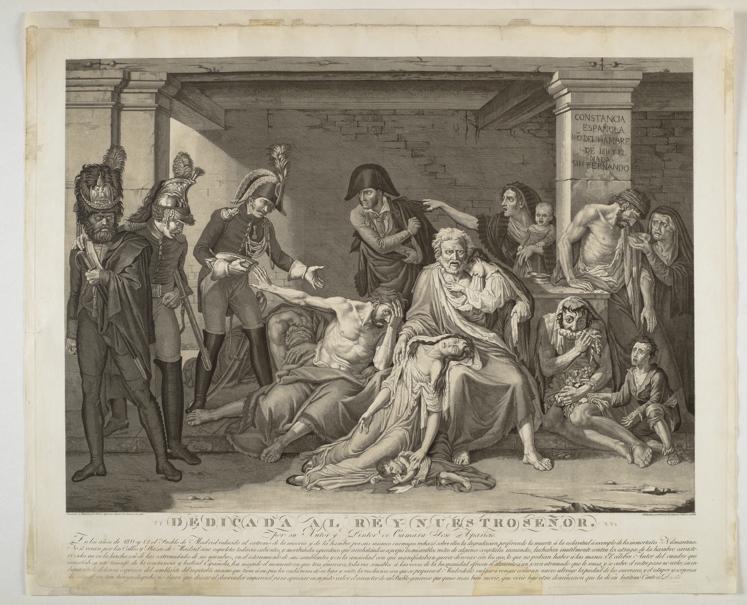
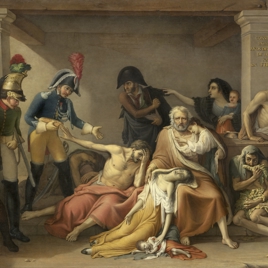
CONSTANCIA / ESPAÑOLA / AÑOS DEL HAMBRE / DE 1811 Y 12. / NADA / SIN FERNANDO // Inventado y Pintado por D. José Aparicio Pintor de Cámara de S.M.C. -- Dibujado y grabado por D. Antonio Calliano en 1820. // DEDICADA AL REY NUESTRO SEÑOR. / por su Autor y Pintor de Cámara José Aparicio. // En los años de 1811 y 12 el Pueblo de Madrid reducido al extremo de la miseria y de la hambre por sus mismos enemigos rechazó sobre ellos la degradacion, prefiriendo la muerte á la esclavitud á exemplo de los inmortales Numantinos. / No se veian por las Calles y Plazas de Madrid sino esqueletos todavia calientes, y moribundos espantosos que arrebatándose a porfia los miserables restos de algunos vegetales inmundos, luchaban inútilmente contra los estragos de la hambre caracte- / rizados ya en la hinchazón de las extremidades de sus miembros, en el estiramiento de sus semblantes y en la ansiedad con que manifestaban querer devorar con los ojos, lo que no podian haber á las manos. El célebre Autor del cuadro que / inmortaliza este triunfo de la constancia y lealtad Española, ha escogido el momento en que tres guerreros, todavia sensibles á las voces de la humanidad que ofrecen el alimento á un joven estenuado que le reusa, y se cubre el rostro para no verlos; su in- / dignacion, la dolorosa expresion del semblante del respetable anciano que tiene á sus pies los cadáveres de su hija y nieto, la resolucion con que se prepara el Madrileño vulgar á vengar como un nuevo ultrage la piedad de los guerreros, y el estupor y sorpresa / de esto al ver tan heroyco despecho, no dejan que desear el observador imparcial para apreciar en su justo valor el caracter de un Pueblo generoso que quiso mas bien morir, que vivir bajo otra dominacion que la de su legítimo Cautivo Dueño.
Lettered in the plate.
Front
Transcription +
CONSTANCIA / ESPAÑOLA / AÑOS DEL HAMBRE / DE 1811 Y 12. / NADA / SIN FERNANDO // Inventado y Pintado por D. José Aparicio Pintor de Cámara de S.M.C. Dibujado y grabado por D. Antonio Calliano en 1820. // DEDICADA AL REY NUESTRO SEÑOR. // por su Autor y Pintor de Cámara Jose Aparicio. // En los años de 1811 y 12 el Pueblo de Madrid reducido al extremo de la miseria y de la hambre por sus mismos enemigos rechazó sobre ellos la degradacion, prefiriendo la muerte á la esclavitud á exemplo de los inmortales Numantinos. // No se veian por las Calles y Plazas de Madrid sino esqueletos todavia calientes, y moribundos espantosos que arrebatándose a porfia los miserables restos de algunos vegetales inmundos, luchaban inutilmente contra los estragos de la hambre caracte- / rizados ya en la hinchazon de las extremidades de sus miembros, en el estiramiento de sus semblantes y en la ansiedad con que manifestaban querer devorar con los ojos, lo que no podian haber á las manos. El célebre Autor del cuadro que / inmortaliza este triunfo de la constancia y lealtad Española, ha escogido el momento en que tres guerreros, todavia sensibles á las voces de la humanidad ofrecen el alimento á un joven estenuado que le reusa, y se cubre el rostro para no verlos, su in- / dignacion, la dolorosa expresion del semblante del respetable anciano que tiene á sus pies los cadáveres de su hija y nieto, la resolucion con que se prepara el Madrideño vulgar á vengar como un nuevo ultrage la piedad de los guerreros, y el estupor y sorpresa / de estos al ver tan heroyco despecho, no dejan que desear al observador imparcial para apreciar en su justo valor el caracter de un Pueblo generoso que quiso mas bien morir, que vivir bajo otra dominacion que la de su legítimo Cautivo Dueño.