formularioRDF
The itinerary <em>TITULORECORRIDO</em> has been successfully created. Now you can add in works from the Collection browser
<em>TITULOOBRA</em> added to <em>TITULORECORRIDO</em> itinerary

Exhibition - A work, a story

The Famine Painting

Museo Nacional del Prado. Madrid 4/27/2026 - 9/13/2026

Calendar Add to the calendar

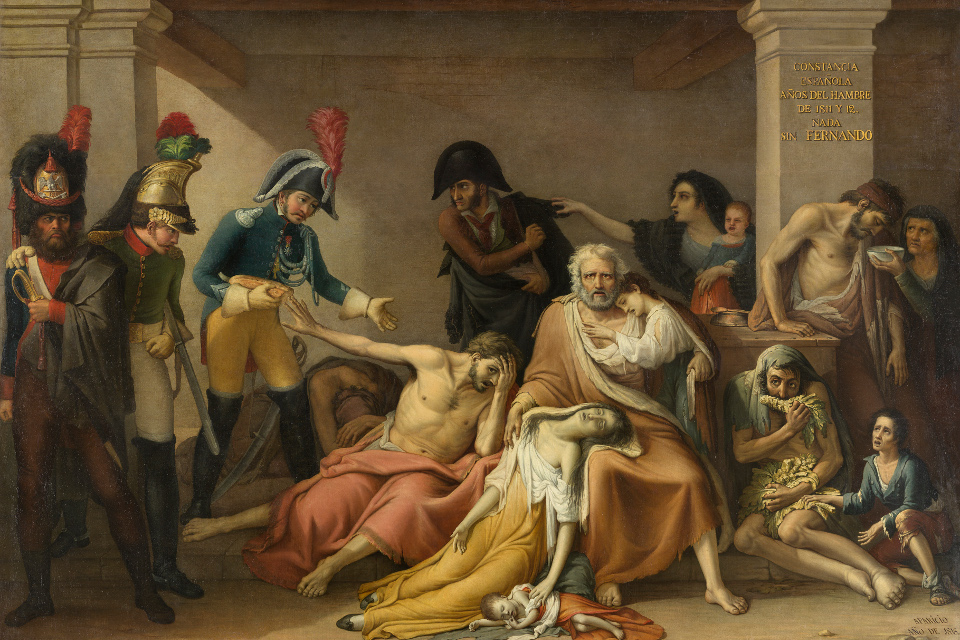
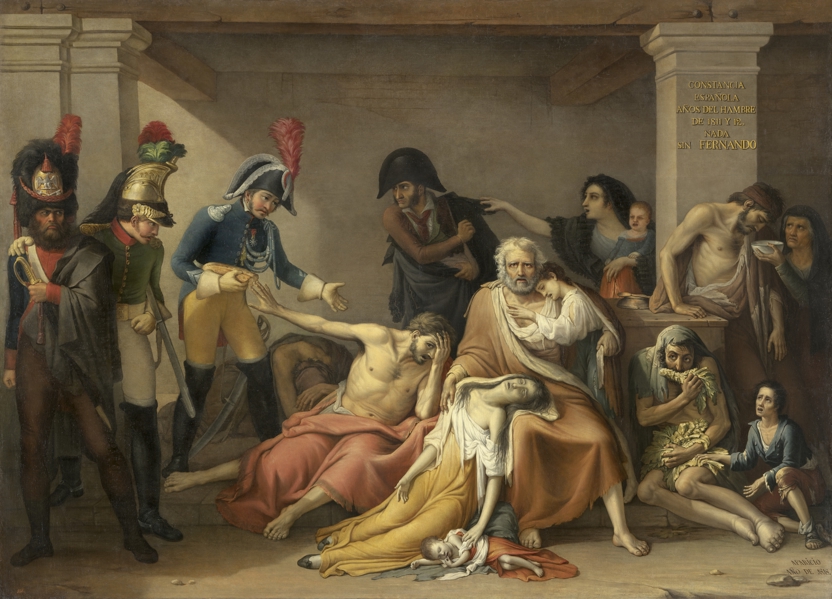
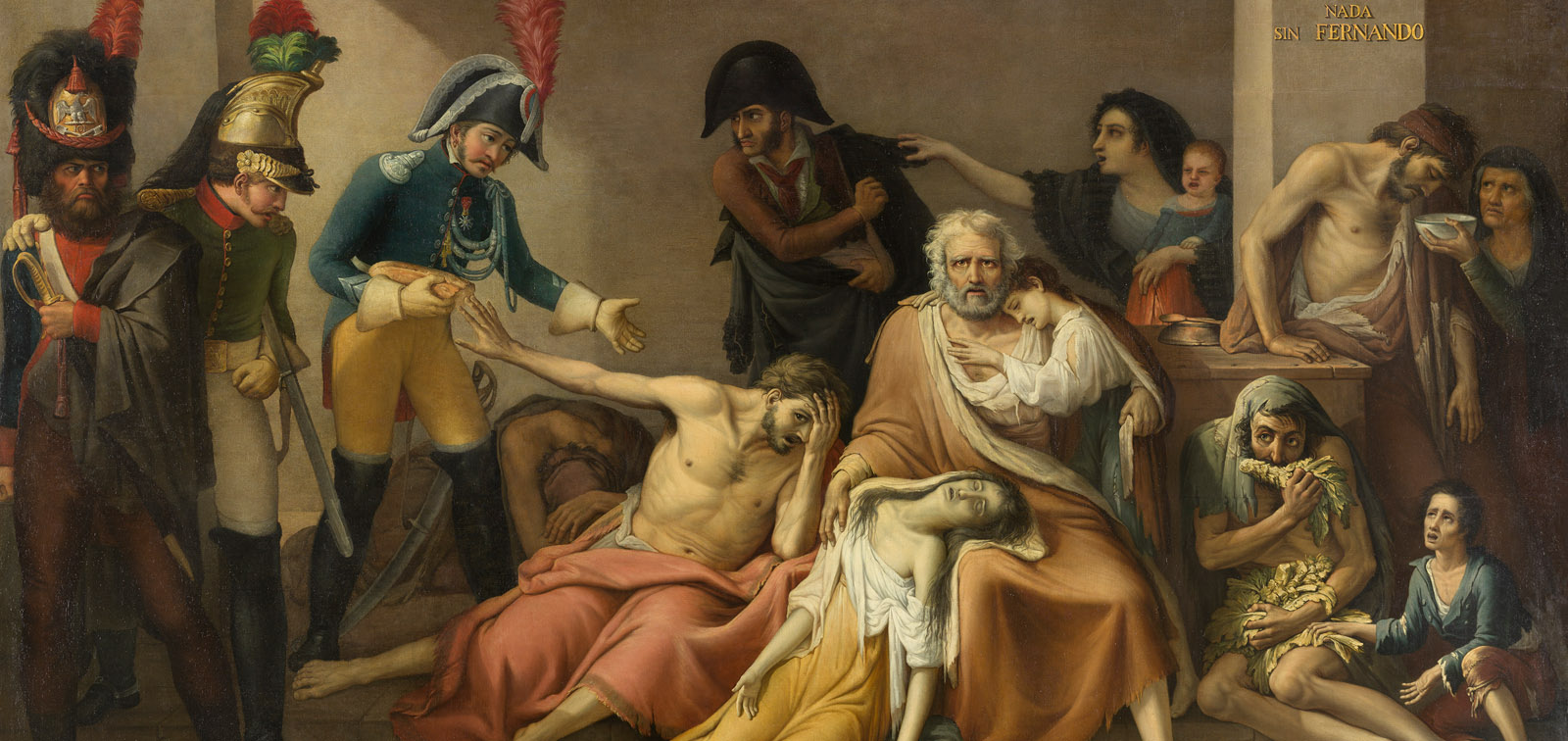
This oversized painting (315 x 437 cm), now largely unknown to the general public, was once the centre of attention at the Museum, even eclipsing works by Francisco de Goya and José de Madrazo during the reign of Ferdinand VII.

“Our aim is to encourage the viewer to look at a work which, aside from its aesthetic merits, helps us to reflect on aspects of art history that often go unnoticed,” in the words of Miguel Falomir, director of the Prado.

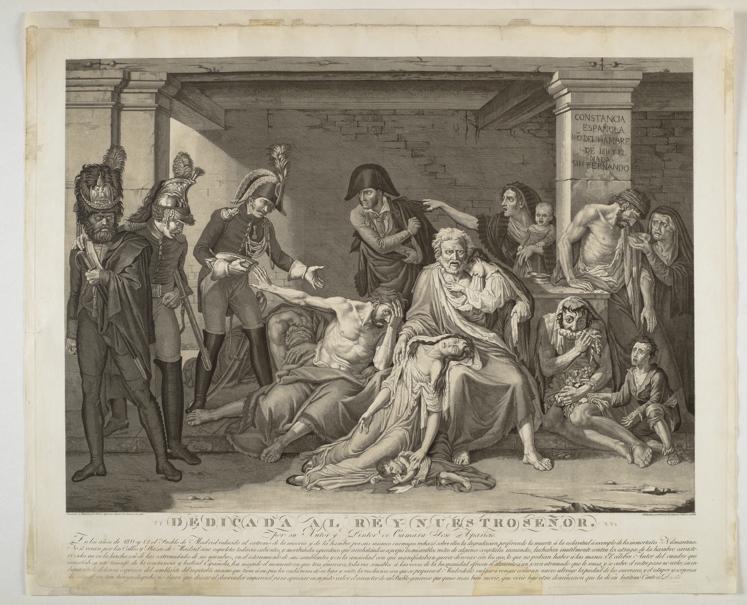
Hailed as a major artistic milestone of its day, lauded in the press, reproduced in prints and celebrated in songs and poems, Aparicio’s history painting also served as a political tool. The reconstruction of its original location at the Museo del Prado in 1819, where it became one of the institution’s principal icons, ahead even of works now considered indisputable such as Las Meninas, reveals the ideological toll imposed by Ferdinand VII’s absolutism.

The exhibition analyses the rise and fall of a national icon, from its status as the most powerful visual metaphor for 19th-century Spain to that of a depiction of a merely local anecdote. By displaying the painting in this way, the Prado is encouraging a reflection on the vicissitudes of art and criticism, propaganda, the invention of taste and the role of museums.

Curators:
Celia Guilarte, Museum Curator, and Carlos G. Navarro, 19th-century Painting Collection

Access

Room 66 . Villanueva Building

RDF

RDF

Multimedia

Exhibition

The exhibition

The exhibition
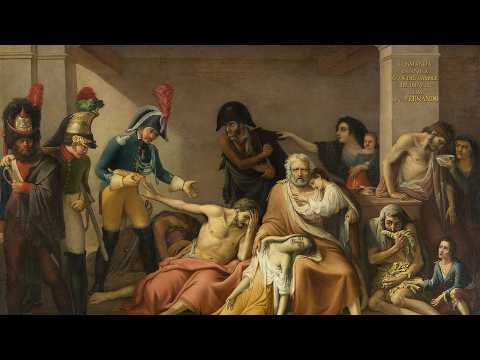
The Year of Famine in Madrid

José Aparicio

Oil on canvas, 315 x 437 cm

1818

Madrid, Museo Nacional del Prado, on deposit in the Museo de Historia in Madrid

The writer Umberto Eco imagined an ideal museum dedicated to a single work of art: a space where stories would accumulate around it, culminating, as the ultimate exercise, in the public's contemplation and understanding. This vision resonates powerfully in the Museo del Prado's new exhibition format "A work, a story", a concept ideally suited to The Year of Hunger in Madrid by José Aparicio (1818). In the words of Miguel Falomir, director of the Museo del Prado, the aim of the exhibition is “to encourage the viewer to look at a work which, aside from its aesthetic merits, helps us to reflect on aspects of art history that often go unnoticed."

This canvas, one of the most acclaimed and controversial in the collection of the Museo del Prado since it first opened in 1819, is filled with events and figures that demonstrate how a single work can reconstruct the complexity of a past world without losing its contemporary relevance. The return to the Museum, albeit on a temporary basis, of what was known in its day as the “hunger painting” offers the opportunity to contemplate with today’s eyes what was once one of the most celebrated works in Ferdinand VII’s Spain; no other painting generated more discussion in the decades following the museum's inauguration in 1819.

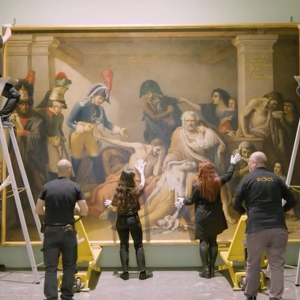
The Year of Hunger in Madrid returns to the Prado charged with the full weight of its significations: the memory of a catastrophe, the political ambition with which it was conceived, the misunderstandings surrounding its reception, and the erosion of its prestige. In addition, on this occasion its critical reassessment has been accompanied by an ambitious restoration programme which has improved the work’s stability and legibility.

The Rise

The Rise
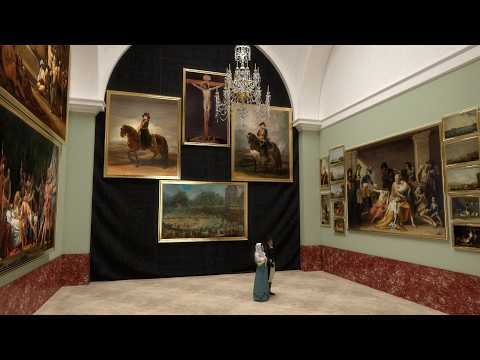
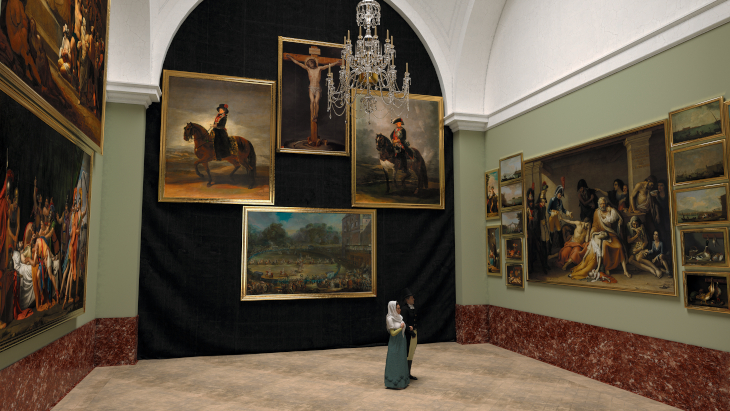
Recreation of the «third room» in the Museo del Prado in 1819

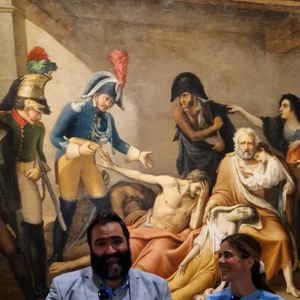
This oversized canvas (315 x 437 cm) was created in the context of a recent and tragic memory: the Madrid famine of 1811-12, which those who first saw the painting in the museum in 1819 had experienced at first hand. In Aparicio’s scene a group of starving figures heroically rejects bread offered by French soldiers. This action is presented as an allegory of "Spanish resoluteness" and a narrative of unconditional loyalty to the absolutism reestablished by Ferdinand VII after his return from exile in France. The inscription "NADA SIN FERNANDO” [Nothing without Fernando] carved into one of the pillars in the scene reinforces this propagandistic message, transforming a recent calamity into an instrument of legitimacy for the monarch.

In 1819 the Royal Museum of Painting and Sculpture (as the Museo del Prado was initially named) opened to the public with 311 works on display. A notable aspect is the prominent presence of José Aparicio, a history painter, courtier and cleric, and his work The Year of Hunger in Madrid (1818) in comparison to Goya, who was limited in the initial selection of works to his role as court portraitist with Charles IV on Horseback (1799-1800). The press functioned to transmit the enormous popularity gained by what was then known as the “hunger painting”, which transcended the art world and acquired visibility in political and social spheres. Through the use of an academic language rooted in Neoclassicism, Aparicio’s work offered the best visual metaphor to attack or condemn “the other”—an invader, a king, a government—who was blamed for a lack of responsibility and the negative consequences of its effects.

This history painting also served as a political artifact: the reconstruction of its original location at the Museo del Prado, undertaken in collaboration with the Universidad Complutense de Madrid, has focused on this “pilot episode” in the Prado’s history, about which very little is known, revealing the ideological toll imposed by the monarch on that space, which was royal property at the time.

The enormous popularity which the painting came to enjoy ultimately acquired greater ambiguity with the emergence of other sensibilities that mistrusted an image that was too eloquent, too famous and too effective.

The Fall

The fame of the painting, although not of its creator, remained constant until 1872, when a crucial episode occurred in the history of the collections of the newly nationalised Museo de Pintura y Escultura: the annexation by Royal Decree of the Museo de la Trinidad. This resulted in the disruption of the ordering of the galleries, obliging decisions to be made in the space of just a few years regarding what would remain in the Villanueva building and what would necessarily have to be removed from it. This process took with it the “hunger painting”, by now incompatible with the liberal discourse following the 1868 Revolution, and confirmed Goya as one of the emblems of the consolidation of Spanish painting at the Prado.

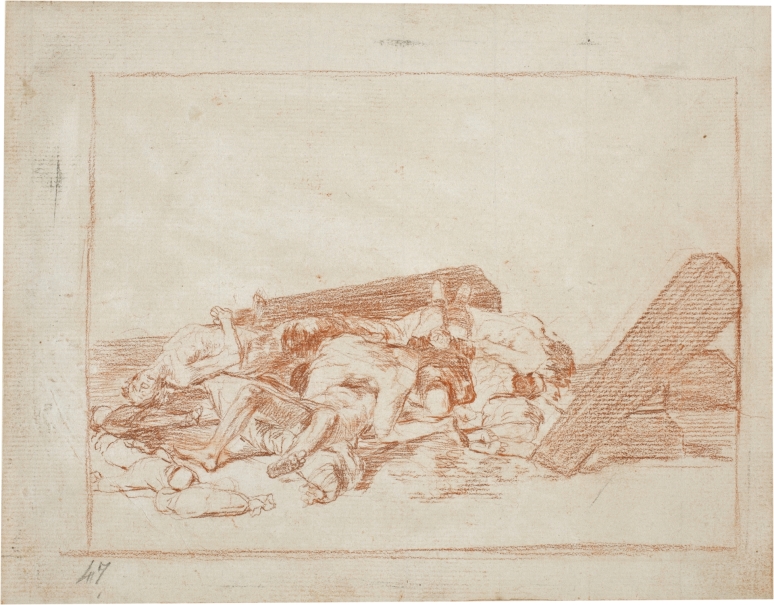
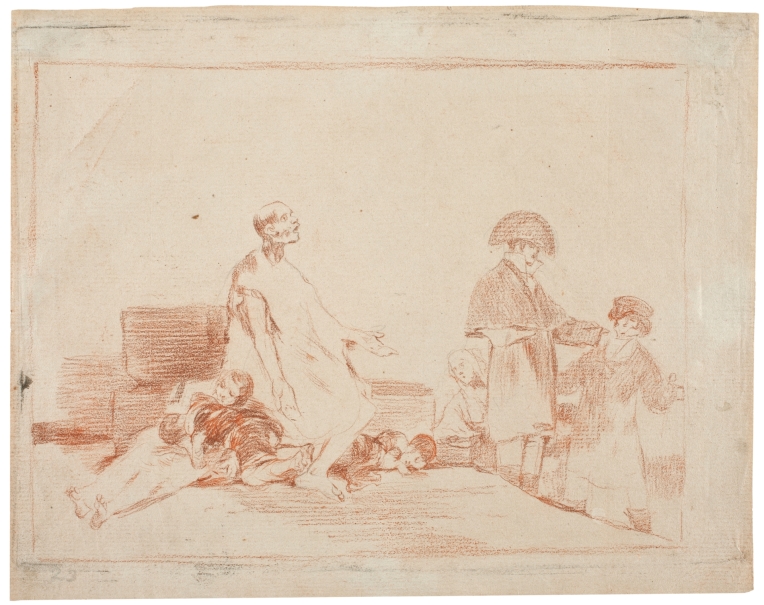
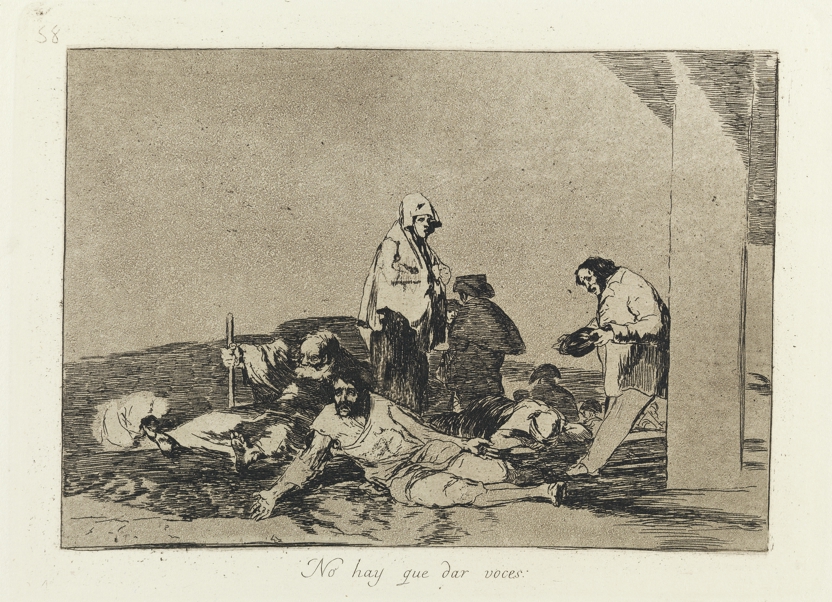
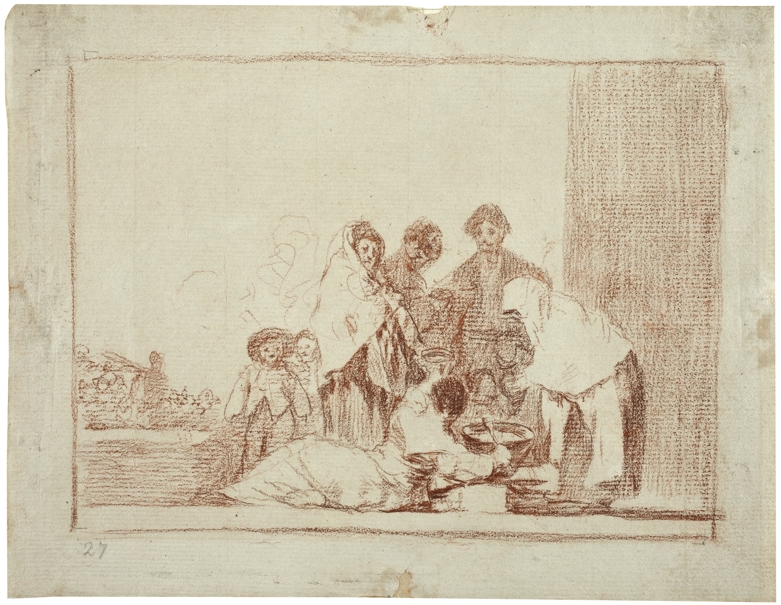
While Aparicio had opted for academic rhetoric and a static heroism to glorify a regime, Goya captured the starkness and universality of violence, and it was his vision that eventually prevailed, relegating Aparicio to the canonical margins. This political genealogy headed by Goya would find its continuation, again at the Prado, in the work of Antonio Gisbert with his painting The Execution by Firing Squad of Torrijos and his Companions on the Beach at Malaga and would culminate a century later with Picasso’s Guernica.

With its transfer to the Ministry of Public Works in 1874 Hunger became not only the first painting lent on deposit by the Prado in its new manifestation as a national museum but also the first to be tinged with ideological arguments. The creation of the Museo de Arte Moderno in 1898, with Federico de Madrazo as director, initiated a new chapter in the odyssey of Aparicio's work, highlighting the role played by the academic painters who were in charge of museum institutions at that period, who shaped the history of art according to their criteria and rivalries. Another section of the exhibition focuses on what it is that leads us today to think of Goya as a modern artist and Aparicio and Madrazo as classical, conservative and traditional, with the aim of re-examining the meaning of those concepts and the reversal of roles in relation to their own time.

The arrival of Aparicio’s painting at the Museo de Historia in Madrid in 1927, following a period when it was housed in the Senate, and its permanent link with the Museo del Prado through the format of the long-term loan or deposit allows for an emphasis on the ongoing relevance of the “Extended Prado” programme.

Artworks

Print on demand

Print artworks available in our catalogue in high quality and your preferred size and finish.

Image archive

Request artworks available in our catalogue in digital format.

Up