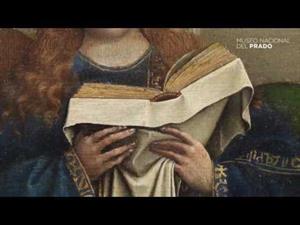
Master of Flémalle
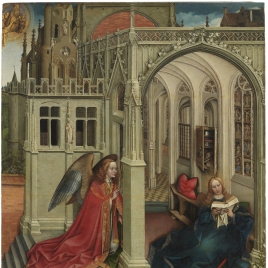
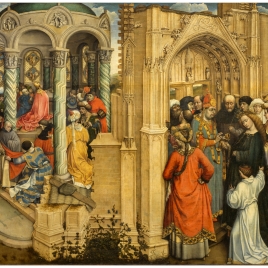
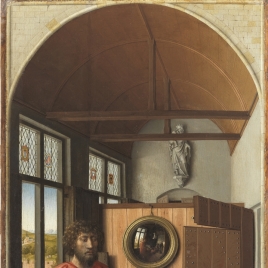
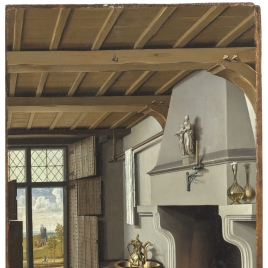
The name ‘Master of Flémalle’ was coined in 1898 by Hugo von Tschudi based on three panels displaying a Saint Veronica with the Veil, a Virgin nursing the Child and a Trinity now in Frankfurt (Städel Museum, inv. 939, 939a and 939b) and originally believed to have come from a supposed abbey of Flémalle near Liège. Other pictures executed in a similar style, which display major progress in the rendering of spatial illusionism and express various artistic and intellectual concerns, were added to this group and came to be regarded as key works in the aesthetic renewal of Netherlandish painting of the early fifteenth century. The corpus that was accordingly built up around this master is comparable in importance to the output of artists such as Hubert van Eyck († 1426) and Jan van Eyck, and bears evident similarities to the paintings securely attributed to Rogier van der Weyden and Jacques Daret (1401/3–1468/88). This collection is currently heterogeneous, the result of artificially grouping together paintings by several artists such as the Master of Merode and countless anonymous followers who continued his style. Its main works are almost unanimously accepted as being the Dijon Nativity (Musée des Beaux-Arts, inv. CA 150), the Bad Thief also in Frankfurt (Städel Museum, inv. 886), the London Seilern Triptych, also called the Entombment (Courtauld Institute, Samuel Courtauld Trust), and the Betrothal of the Virgin in the Museo del Prado.
The key importance of this output in burgeoning Netherlandish art led scholars to seek a specific identification for its maker. These works have sometimes been considered early paintings by Rogier van der Weyden on the grounds of their strong formal resemblances to this artist’s oeuvre. Later on, when Van der Weyden and Daret were documented as serving in the workshop of the Tournai painter Robert Campin in 1427, attempts were made to equate the Master of Flémalle with the latter. Campin, who was born around 1370 and based in Tournai until his death in 1444, is relatively well documented. However, there appears to be no sound basis for this identification, which has been over-generalised. There are no known panels that can be attributed to Campin with certainty, offering a reliable gauge with which to compare other works associated with the Flémalle group. In addition, this corpus is highly diverse, with stylistic connotations so varied that it is difficult to believe they are the work of a single artist. Campin’s documented oeuvre encompasses activities such as the polychroming of sculptures and the painting of banners and murals, for instance the remains of an Annunciation from St-Brice now in the Musée d’Archéologie in Tournai, too badly deteriorated to be compared to Flémalle’s production.
The possible identification of Campin as the Master of Flémalle, which was not accepted at the Museo del Prado until 1985, does not clarify all the doubts raised by the corpus of painting attributed to this master and his followers. Indeed, in the light of current art historical practices, it should be regarded with caution (J.J. Pérez Preciado, "Fifteenth-century netherlandish painting at the Museo Nacional del Prado. Catalogue raisonné", Museo del Prado, 2024, p. 173).