formularioRDF
The itinerary <em>TITULORECORRIDO</em> has been successfully created. Now you can add in works from the Collection browser
<em>TITULOOBRA</em> added to <em>TITULORECORRIDO</em> itinerary

Metabuscador

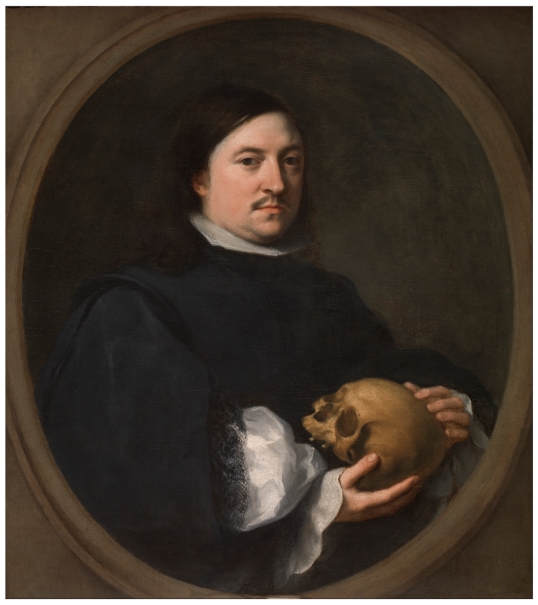
Nicolás Omazur
Oil on canvas. 1672
Born in Antwerp in 1641, Omazur was a friend and admirer of Murillo’s. He established himself as a merchant in Seville where he wrote poetry and collected painting. The austerity of the image links it to the Spanish and Flemish traditions, while the presence of the skull transforms it into a “Vanitas”, inviting us to reflect on the transience of worldly glory. Adquirido en
ARTWORK
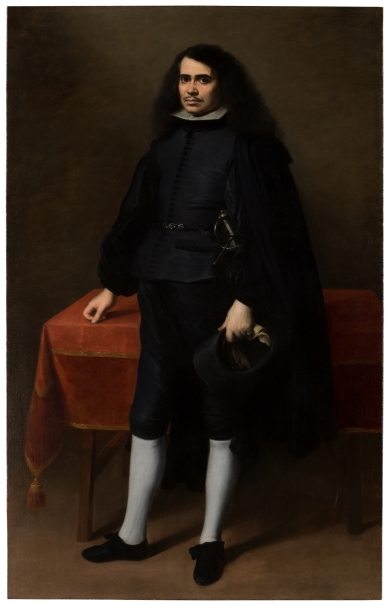
Portrait of a Man
Oil on canvas. Ca. 1660
A gentleman dressed in black stands before a side table covered with a red cloth. The fact that he has long hair allows this portrait to be dated to the second half of the seventeenth century. Both the composition and style of this work indicate that it dates from a relatively early date within the career of Murillo, the most important Spanish portraitist of the day working outside the Court.
ARTWORK
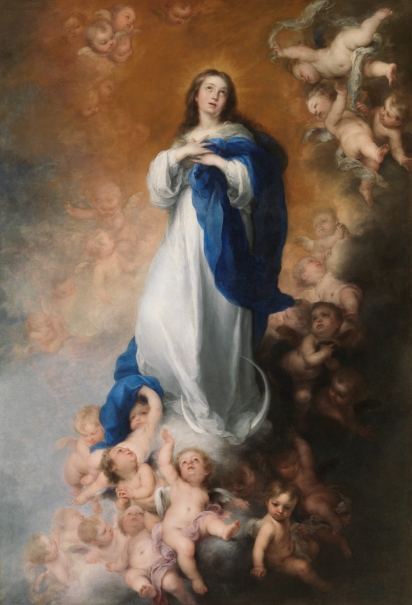
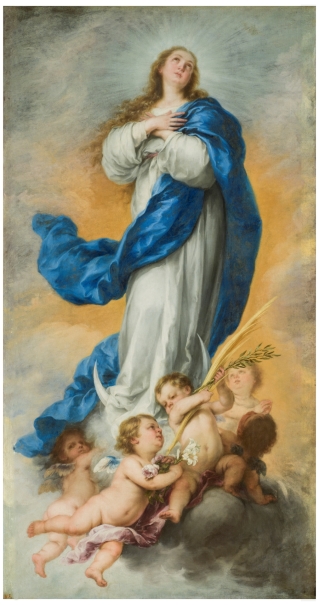
The Immaculate Conception of Los Venerables
Oil on canvas. 1660 - 1665
Murillo created a highly successful formula for representing the Immaculate Conception, with the Virgin dressed in blue and white, her hands crossed over her bosom and her gaze directed at the heavens as she stands on the moon. He presents her with a clearly upward impulse that situates her in a celestial space filled with light, clouds and angels. That was the artist’s manner of combining two different iconographic traditions: the Immaculate Conception and the Assumption. One of the finest exam
ARTWORK
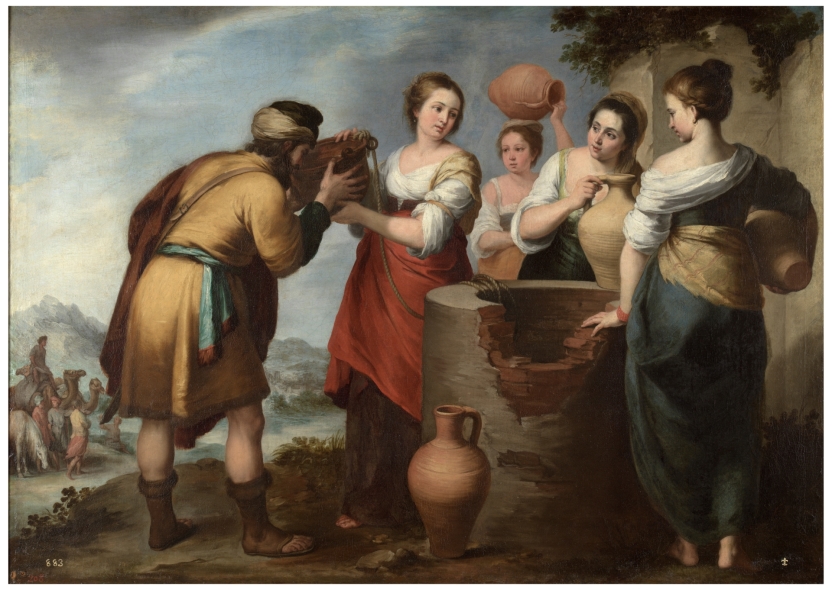
Rebecca and Eliezer
Oil on canvas. Ca. 1660
In his search for a wife for his master, Isaac, Eliezer encountered Rebecca, who offered him water from her pitcher by the well. The biblical account offered Murillo the perfect pretext for depicting an everyday scene typical of any Andalusian town square, with four women about to fill their pitchers.
ARTWORK
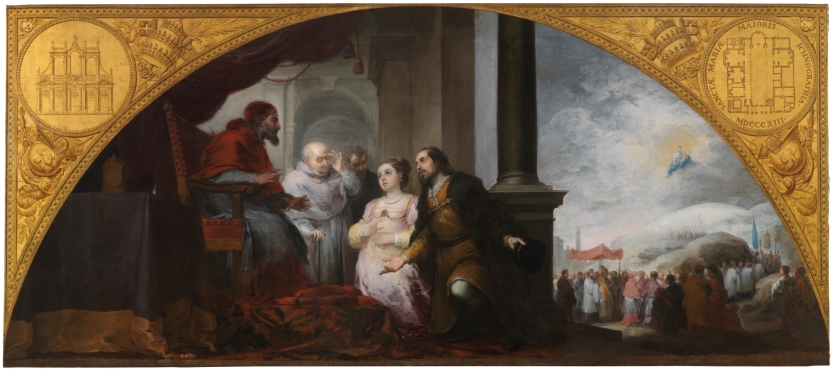
The Foundation of Santa Maria Maggiore in Rome. The Patrician recounts his Dream to the Pope
Oil on canvas. 1664 - 1665
This painting and its companion, The Patrician’s Dream (P994), are among Murillo’s most renowned works. The two arched works were intended to hang beneath a small dome in the recently remodeled Sevillian church of Santa María la Blanca in 1665, and they narrate the story of the founding of the Roman basilica of Santa Maria Maggiore as succinctly set out in the Roman Breviary’s information about the feast of Sancta Mariae ad Nives, held on August 5 (lectio 5, 6 and 7). We know this from a
ARTWORK
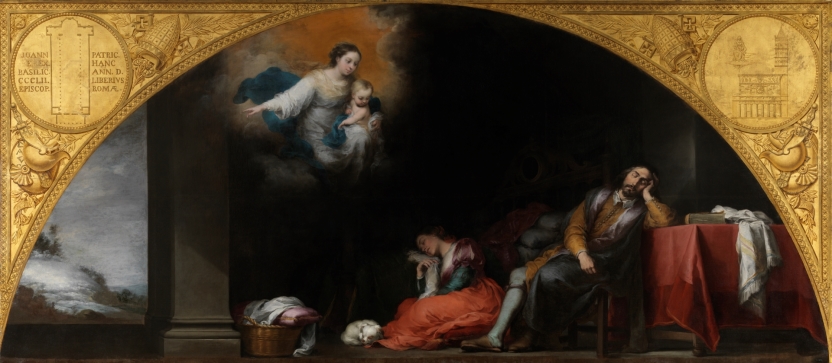
The Foundation of Santa Maria Maggiore in Rome. The Patrician's Dream
Oil on canvas. 1664 - 1665
This painting and its companion, The Patrician Reveals his Dream to the Pope (P995), are among Murillo’s most renowned works. The two arched works were intended to hang beneath a small dome in the recently remodeled Sevillian church of Santa María la Blanca in 1665, and they narrate the story of the founding of the Roman basilica of Santa Maria Maggiore as succinctly set out in the Roman Breviary’s information about the feast of Sancta Mariae ad Nives, held on August 5 (lectio 5, 6 and 7)
ARTWORK
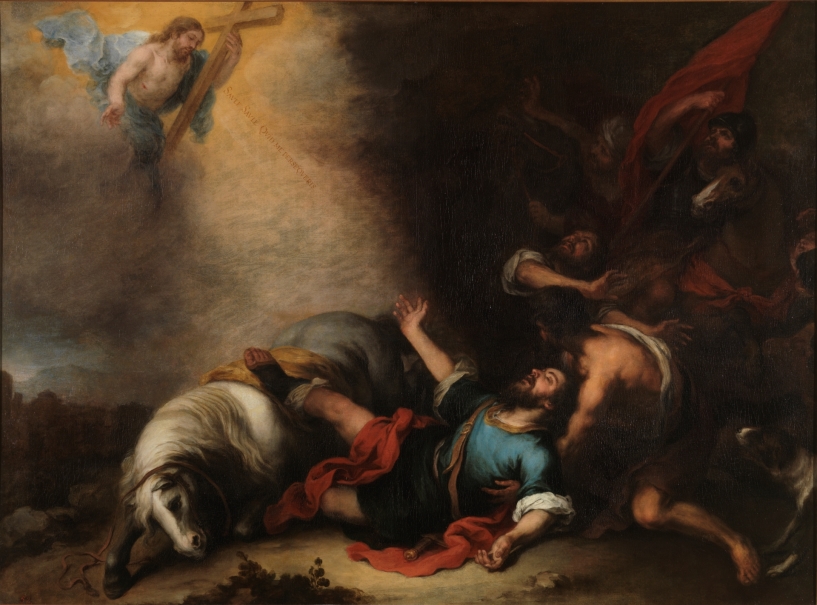
The Conversion of Saint Paul
Oil on canvas. 1675 - 1682
Saint Paul fell from his horse as he heard Christ’s words “Why persecutest thou me?” which brought about his conversion. Murillo’s interpretation is notably dynamic, making use of the contrast between the area only occupied by the glow of light and the figure of Christ, and the crowded group of Saint Paul and his companions, set against a dark background.
ARTWORK
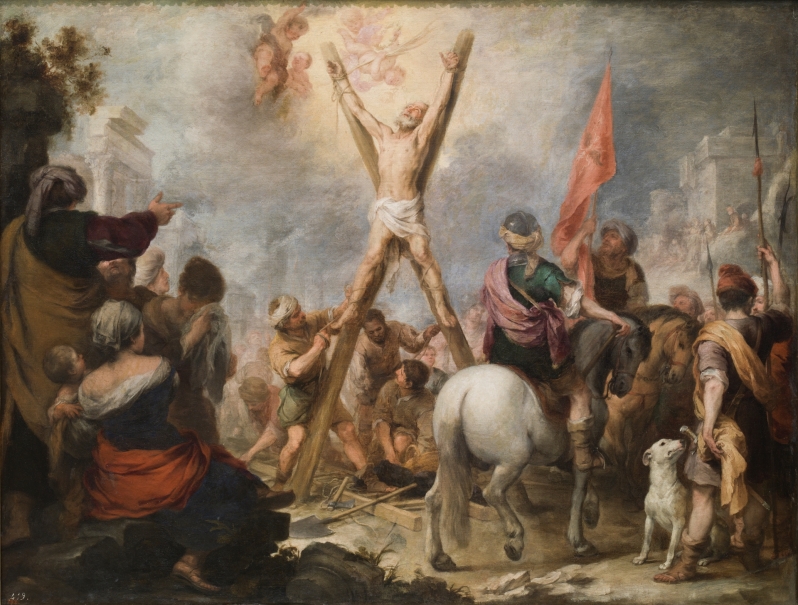
The Martyrdom of Saint Andrew
Oil on canvas. 1675 - 1682
At the centre of this painting, the apostle Saint Andrew is being tied to the X-shaped cross on which he will die. His muscles are taut and he raises his eyes heavenward, where several angels carry the palm and crown of martyrdom. The cross is tall, allowing Murillo to place the saint in the middle ground, surrounded by a great variety of figures who play different roles and express a range of emotions. Murillo has turned Andrew´s death into an exemplary spectacle: labourers prepare the scene of
ARTWORK
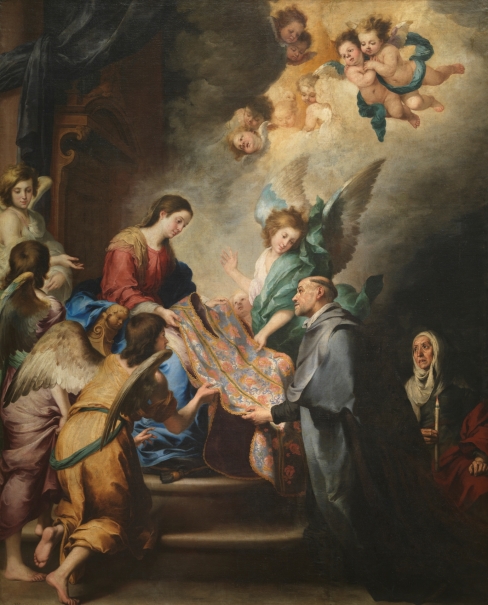
The Apparition of the Virgin to Saint Ildephonsus
Oil on canvas. Ca. 1655
This miraculous scene from the life of Saint Ildefonso portrays the moment when the Virgin descended from Heaven to give him a chasuble as a prize for his praises. The choice of this subject corresponds to the Counterreformation policy carried out in Spain, where devotion to Mary was one of its fundamental pillars. The composition is divided into an upper, divine world and a lower, earthly one. The two parts are lined by the chasuble and by the characters´ gestures and gazes. The pictorial techn
ARTWORK
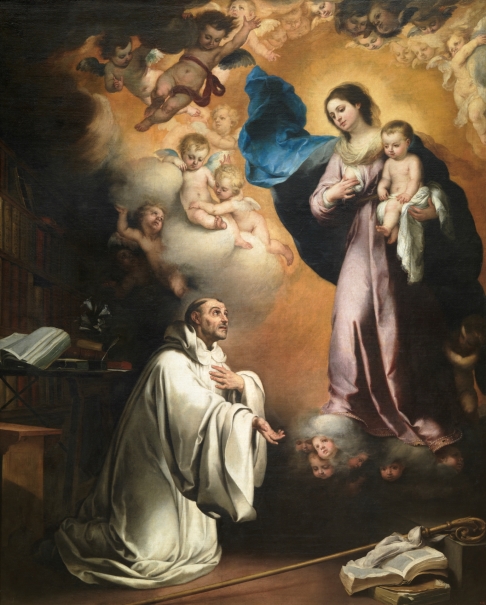
The Apparition of the Virgin to Saint Bernard
Oil on canvas. Ca. 1655
The Virgin appears miraculously to Saint Bernard to offer him her milk as a reward for his praises and defense. The Saint is surprised while studying and falls to his knees. His desk and bookshelves appear behind him and other books, and an abbot´s staff, lie on the floor. The subject and size of this work suggest that it was probably an altar painting made for a Cistercian convent. Yet, there is no known documentation until it appeared in the collection of Queen Isabel Farnesio in 1745. Through
ARTWORK
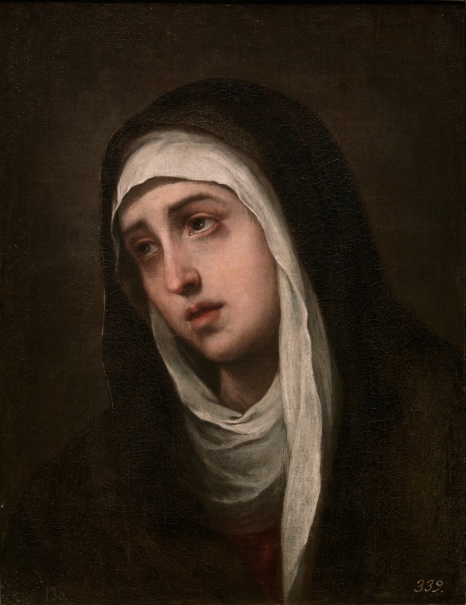
Mater Dolorosa
Oil on canvas. 1660 - 1670
La Virgen, pintada de busto y levemente girada hacia la izquierda, surge desde el fondo neutro gracias a la iluminación dirigida al rostro, que entra por el lateral, hacia el que se inclina la figura. Lleva, debajo del velo que le cubre la cabeza, una toca blanca que rodea la cara y el cuello y cuyo borde despegado origina zonas de sombras. De nuevo en esta imagen, Murillo demuestra ser el pintor español que mejor expresa el sentir católico del momento. Es de suponer que quien realiza temas amab
ARTWORK
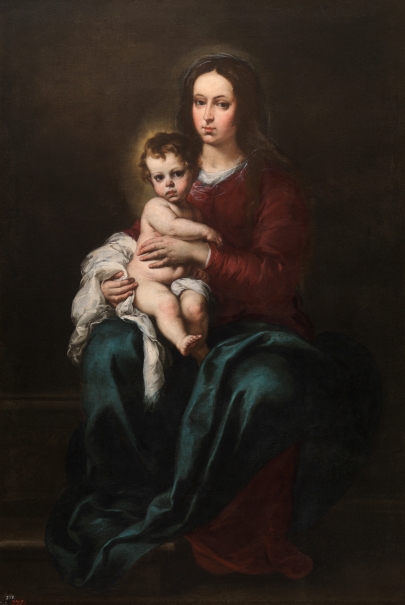
The Virgin and Child
Oil on canvas. 1655 - 1660
In this painting, the Virgin is seated on a stone bench and is, herself, serving as a throne for the Christ Child, who rests on her right leg. The Virgin and Child are slightly larger than life-size and fill a major portion of the painting´s surface, creating a sense of monumentality. Murillo has placed both figures before a dark background, using the contrast of light and shadow to model their features subtly and effectively. The neutral background and the technique of modelling endow the figur
ARTWORK
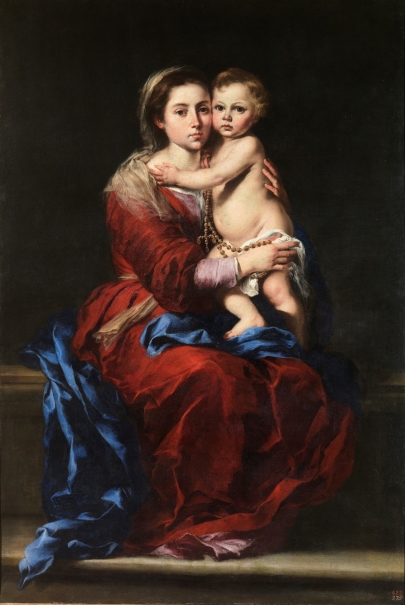
The Virgin of the Rosary
Oil on canvas. 1650 - 1655
In 1836, the English critic John Ruskin lavished praise on Bartolomé Esteban Murillo’s technique and identified the uniqueness of his approach: It is true that his Virgins are never such goddess-mothers as those of Correggio or Raphael, but they are never vulgar: they are mortal, but into their mortal features is cast such a light of holy loveliness, such a beauty of sweet soul, such an unfathomable love, as renders them occasionally no unworthy rivals of the imagination of the higher mas
ARTWORK
The Aranjuez Immaculate Conception
Oil on canvas. 1675 - 1680
The Museo del Prado has five Immaculate Conceptions by Murillo, who depicted this subject in response to its remarkable popularity in Spain. This devotion became a sign of national identity. This version, formerly in Aranjuez, is among Murillo’s most mature and elegant and in which he most effectively conveys the sense of the figure rising upwards.Over the course of a century and a half, a particular manifestation of religious devotion developed in Spain that would become one of the realm´s fore
ARTWORK
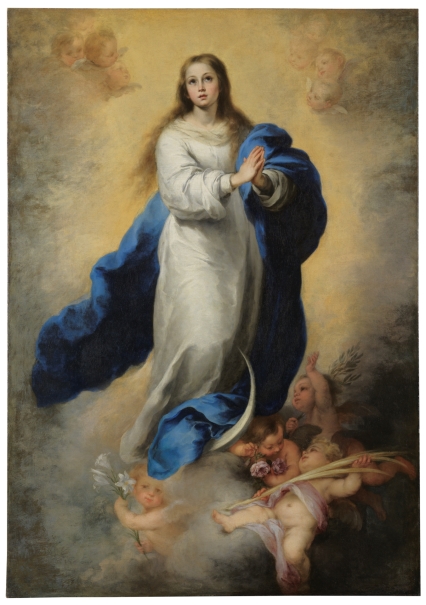
The Immaculate Conception of El Escorial
Oil on canvas. Ca. 1665
Bartolomé Esteban Murillo’s versions of the Immaculate Conception were among his greatest iconographic successes. His treatment of the subject met with public acclaim, not only for the tender beauty of his figures but also because his interpretations were perfectly in tune with the groundswell of popular devotion in the seventeenth century. In Seville, as elsewhere in Catholic Europe, the belief that Mary was free of original sin from the moment of her conception sparked lively debate, si
ARTWORK
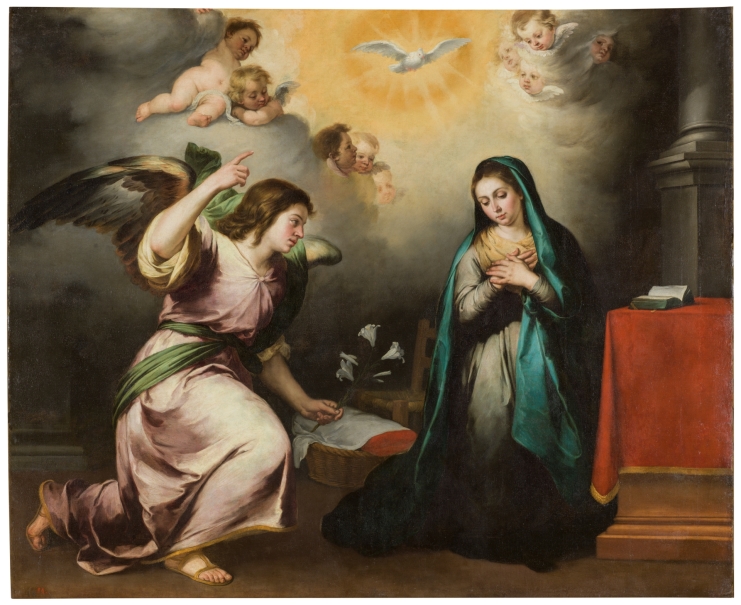
The Annunciation
Oil on canvas. Ca. 1650
The Archangel Gabriel has descended from the heavens and kneels before Mary to announce the birth of Christ. The Angel holds some white lilies symbolising purity in his left hand while with the right he points to the Holy Spirit. Mary kneels in prayer, her hands crossed on her breast in a gesture of acceptance. The use of chiaroscuro suggests that this is an early work.
ARTWORK
Loading...

Loading...

Up