formularioRDF
The itinerary <em>TITULORECORRIDO</em> has been successfully created. Now you can add in works from the Collection browser
<em>TITULOOBRA</em> added to <em>TITULORECORRIDO</em> itinerary

Metabuscador

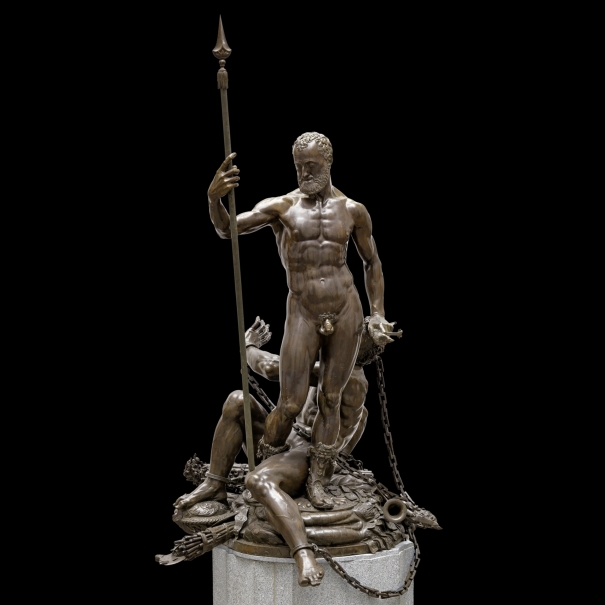
Emperor Carlos V and the Fury (The nude figure)
Cast . 1551 - 1555
This sculpture was commissioned by Charles V (1500- 1558) in 1549 from the Italian sculptor Leone Leoni. The artist had it cast in Milan in separate pieces: the nude figure of the Emperor and the detachable armour in 1551 (inv. E000273/001), the figure of Fury in 1553 (inv. E000273/002, E000273/003), and the pedestal with its trophies and weapons in 1555 (inv. E000273/004, E000273/005). The Latin inscription on the base: «CAESARIS • VIRTUTE • DOMITUS • FUROR» [The Fury is dominated by Caesar´s v
ARTWORK
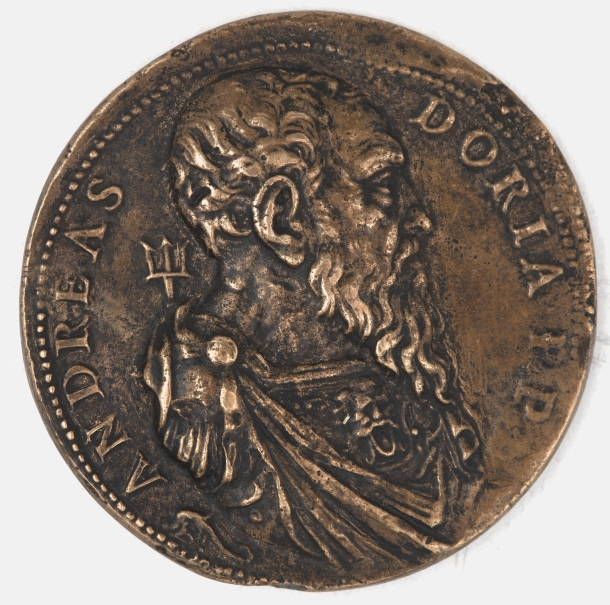
Andrea Doria - Self-Portrait Leone Leoni
Cast . Ca. 1541
En el anverso busto de Andrea Doria (1468-1560), a la derecha. Cabeza descubierta y barbada. Lleva armadura labrada, cadena y manto sujetado por un broche. Detrás de él, un tridente; y en el corte del busto, un delfín. Reverso anepigráfico. Cabeza descubierta de Leone joven, a la derecha; cabello corto, bigote y perilla. Detrás, una galera de la que se aleja una pequeña barca. Cierra un círculo a modo de cadena.En 1540 Leone es condenado a las galeras del papa por su mortal agresión a un compañe
ARTWORK
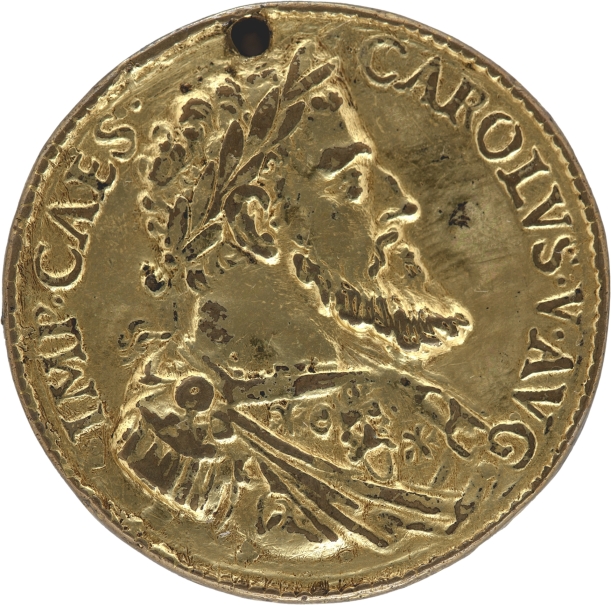
Medal of Charles V / Personification of the River Tiber (Tyberis)
Ca. 1547
En el anverso presenta un retrato de Carlos I de España y V de Alemania, representado de busto, de perfil, con el rostro barbado, vestido a la romana, coronado de laurel y con la insignia del toisón al cuello sobre la coraza; en el reverso, se representa la figura de un anciano desnudo, de larga barba, sedente, que vierte el líquido contenido en la vasija que porta en su mano derecha, personificando al río Tíber, como identifica la inscripción en el exergo. Medallas similares documentadas existe
ARTWORK
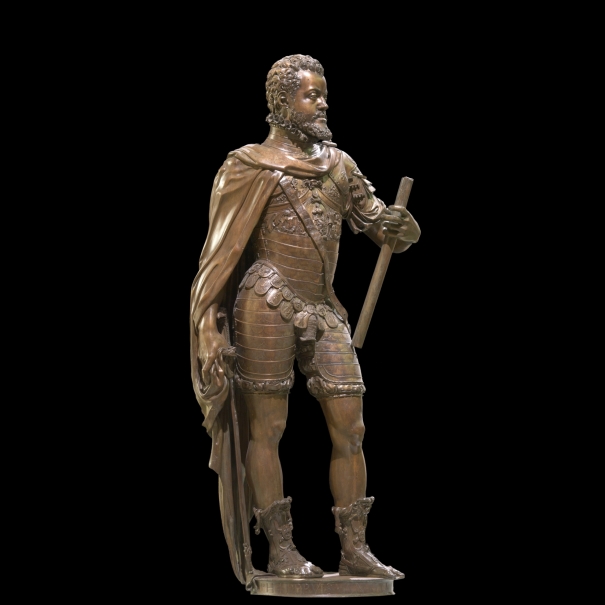
Leone Leoni – (Attributed to)
Philip II
Cast . 1551
The son of Emperor Carlos V and Empress Isabel of Portugal, Felipe II was born in Valladolid in 1527. In October, 1555 he was named ruler of the Low Countries and in January, 1556 he became King of Spain. The following year he married his third wife, Isabel of Valois and in 1570 he married Ana de Austria, mother of the future Felipe III. He died in El Escorial in 1598. Dressed in Armor, he is represented at the age of 24. He carries a baton in his left hand while his right hand rests on his swor
ARTWORK
Emperor Carlos V
Cast . 1553 - 1555
An image of the Emperor (1500-1558) with the armor he wore during the Battle of Mühlberg and the customary attributes of his power: the Golden Fleece and the Sash. The profuse carving on the armor shows numerous motives. A low relief on the breastplate Christ standing on the Cross, alluding to the Emperor´s condition as a “soldier of Christ”, or “defender of the Faith.” The epaulettes have a winged figure bearing a palm leaf, symbolizing Victory. The pedestal shows an eagle, symbolizing the
ARTWORK
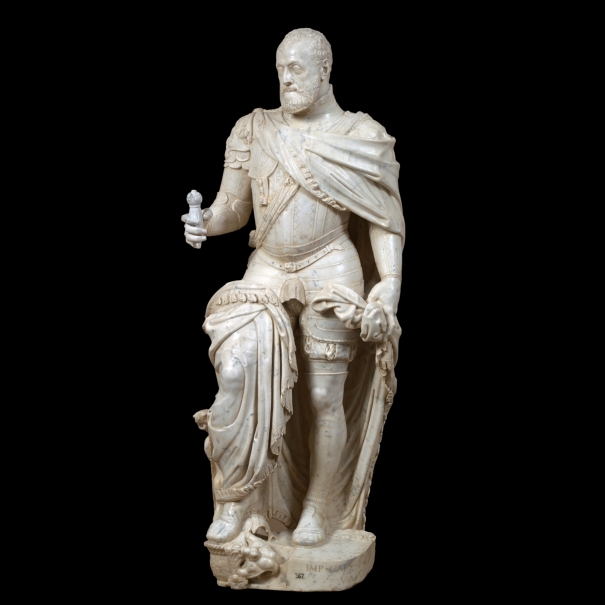
Carlos V
Sculpted . Ca. 1553
This larger than life-size statue represents the Emperor (1500-1558) on foot, with half-armor and a baton. The Golden Fleece hanging on his chest, the sword in his right hand and the robes he gathers with his left, complete the symbols of his royal authority. The base of this sculpture bears a helmet with fantastic motives on which the Emperor rests his leg, behind the imperial eagle. This image is closely related to classical representations and is of the type called all´antica during the Renai
ARTWORK
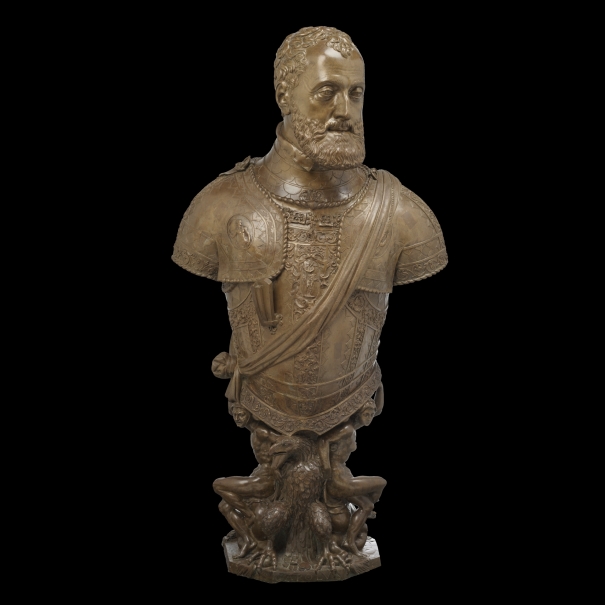
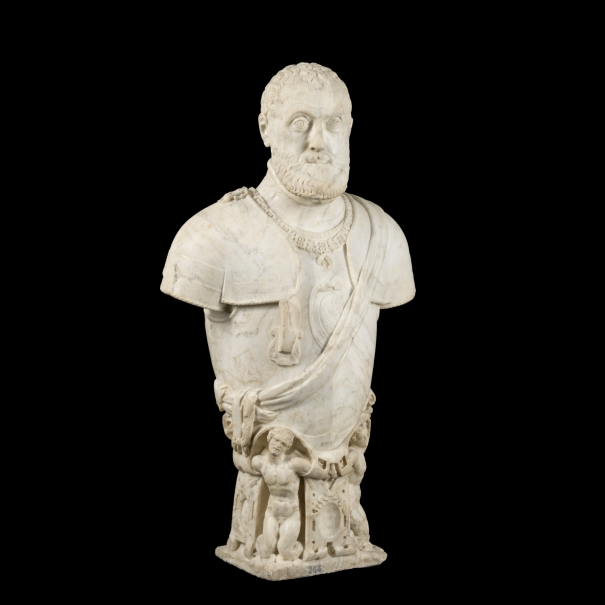
Emperor Carlos V (bust)
Sculpted . 1553
The Emperor (1500-1558) is represented with attributes alluding to his power: armor, the necklace of the Golden Fleece and a crossing sash. The armor has a low relief of the Virgin Mary carved on the chest, representing the armor Carlos V wore during the Battle of Mühlberg in 1547. The bust sits on a base carved from the same piece of marble and adorned with the mask of a satyr. It is also held by two small figures of a man and woman ending in fish tails. An oval cartouche in the center bea
ARTWORK
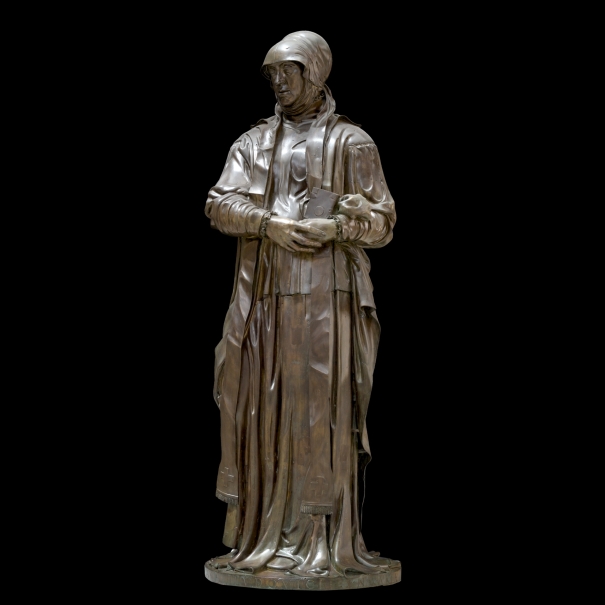
Queen Mary of Hungary
Cast . 1553 - 1564
Together with her brother Charles V, Mary of Hungary (1505–1558) was Leone Leoni’s most important patron at the imperial court. Leoni and Mary, governor of the Low Countries, met on three occasions: in Brussels in 1549, in Augsburg three years later, and again in Brussels in 1556.The present bronze, together with a further nine, full-length figures, was commissioned in 1549 for the dynastic gallery that Mary had devised for her palace at Binche. In fact, Leoni delayed the execution of the projec
ARTWORK
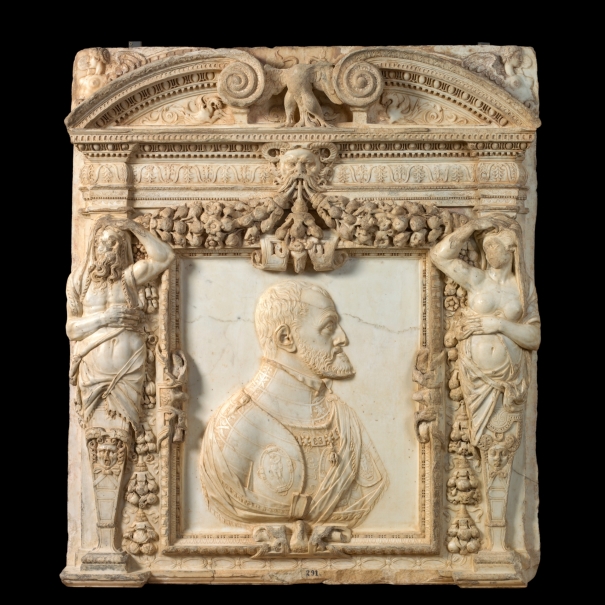
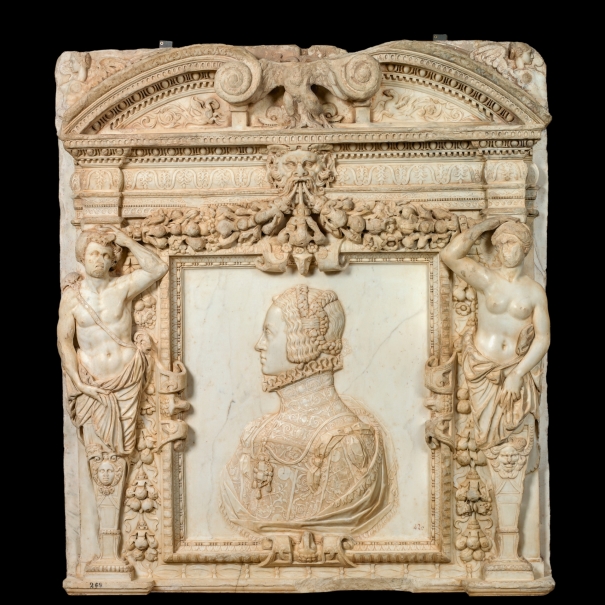
Emperor Carlos V
Sculpted . 1550 - 1555
The bust of Carlos V (1500-1558) appears in profile in low relief, set in a richly sculpted frame. He wears the Golden Fleece and Sash. His armor represents Christ with the Cross, alluding to the consideration of Carlos V as a “Christian Knight.” In the frame, a male and female figure, both ending in inverted pyramidal pedestals, flank the bust. The upper part of the curved pediment is topped by an eagle, symbolizing the Empire, with two sphinxes and chimeras at the sides. The garlands and sheep
ARTWORK
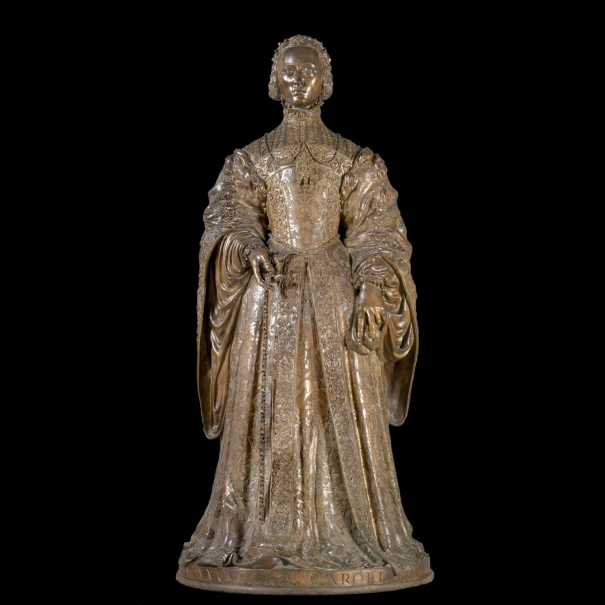
Empress Isabella of Portugal
Cast . 1564
The Empress Isabella (1503-1539) wears a luxurious ornamental skirt with grutesco decorations in fashion during the fifteen thirties. Carlos V commissioned Leone Leoni to make this statue along with other portraits of the Hapsburgs. It was carried out years after Isabel´s death, and the artist based it on certain portraits by Titian (P415, for example). Stylistically, it is inspired by the statue of Margarita de Austria in the Mausoleum of Maximilian I at Innsbruck. Its finishing details were ch
ARTWORK
Empress Isabella of Portugal
Sculpted . 1550 - 1555
The bust of Isabel of Portugal (1503-1539) is represented in profile in a profusely sculpted frame, just like the relief carving of Emperor Carlos V (E00291) that is paired with this one. Beginning with the image of the Empress appearing on medals he, himself, has crafted at an earlier date, Leoni represents her with the same clothing and jewels. These are repeated in various of his works and constitute her most customary image. The detailed and precise style of the bust is similar to that of a
ARTWORK
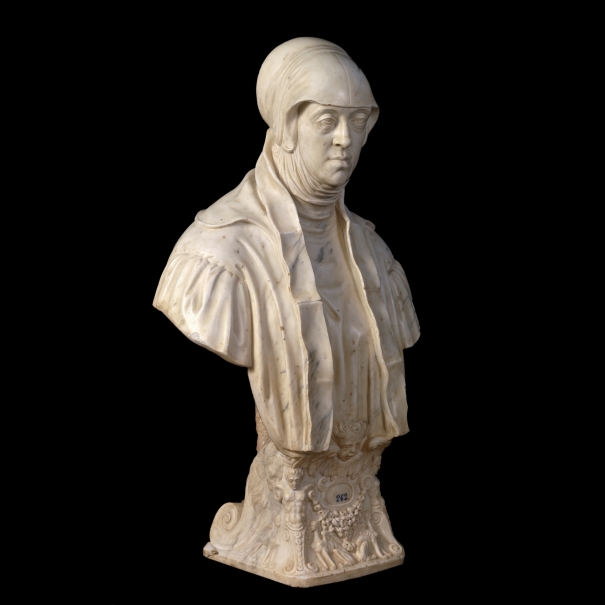
Queen Mary of Hungary
Sculpted . 1553 - 1555
Mary, the sister of Charles V, was regent of the Low Countries from 1531 to 1555. Somewhat larger than life-sized, Maria of Hungary appears wearing a widow´s headdress, in a manner very similar to the full-length sculpture Leone Leoni also made of her (E00263), which is in the Prado Museum as well. The pedestal is made from the same piece of marble, with various Renaissance decorations, including garlands, sphinxes, inverted pyramids and a winged seraph on the front. Leoni made various similar b
ARTWORK
Loading...

Loading...

Up