formularioRDF
The itinerary <em>TITULORECORRIDO</em> has been successfully created. Now you can add in works from the Collection browser
<em>TITULOOBRA</em> added to <em>TITULORECORRIDO</em> itinerary

Metabuscador

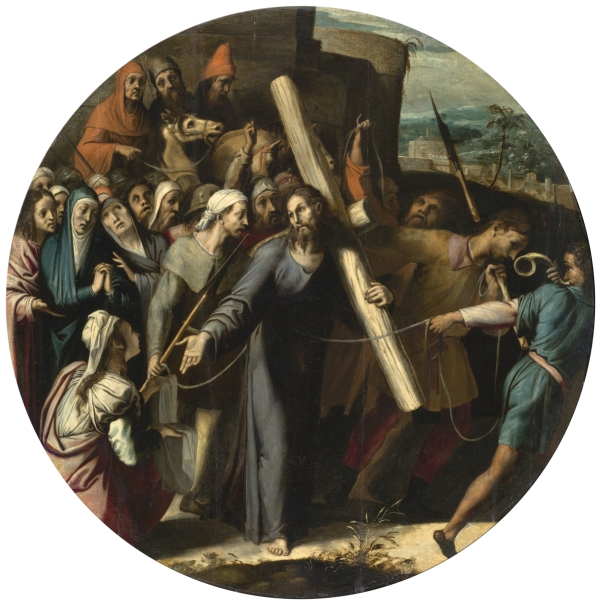
Christ on the Way to Calvary
Oil on oak panel. Ca. 1547
Until this donation by Placido Arango in 2015, the Museo del Prado had no paintings by Pieter van Kempeneer, an artist born in Brussels and first documented in Seville in 1537 after a period spent in Italy (Bologna, Venice and Rome). Known as Pedro de Campaña in Spain, Kempeneer remained here until 1563 before returning to his hometown. His oeuvre is characterized by numerous altarpieces and devotional paintings, some of small dimensions, in which he reveals himself as an excellent drafts
ARTWORK
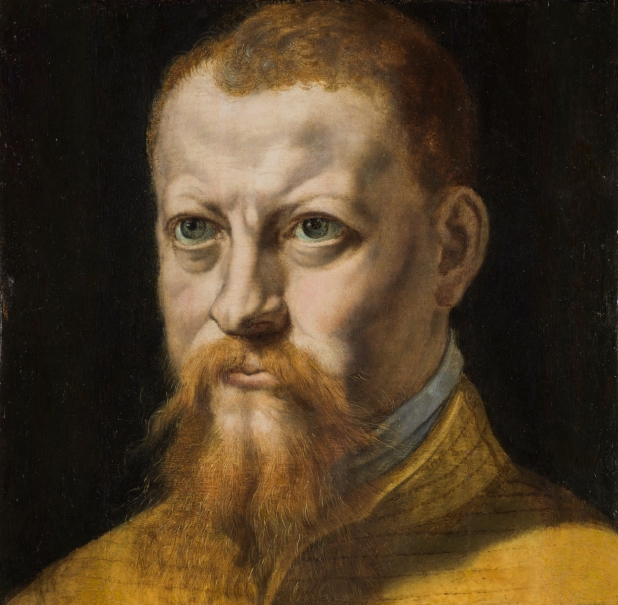
Self-portrait
Oil on oak panel. Ca. 1550
This work is fundamental for a knowledge of the origins of portraiture in Spain and the role of Pedro Campaña - a Brussels-born artist who worked in Seville - in its emergence. It is also a self-portrait, a type of work rarely produced in sixteenth-century Spain. The exquisite, fine brushstrokes and detailed drawing reveal the exceptional quality of Campaña’s work and his Flemish roots. Painters often saw their self-portraits as a vehicle for displaying their pride and personal amb
ARTWORK
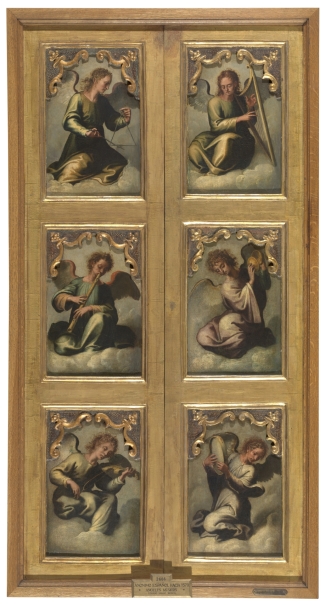
Angels
Oil on panel. 1550
The six musician angels (triangle, harp, flute, castanets, a type of violin and a tambourine) decorated the doors of a tabernacle. Despite the chromatic variety, the choice of a cool palette produces a technical result close to grisaille. This dissonant, almost Mannerist effect combined with the expressionistic physical types and the rather sketchy treatment of the figures is characteristic of Pedro de Campaña.
ARTWORK
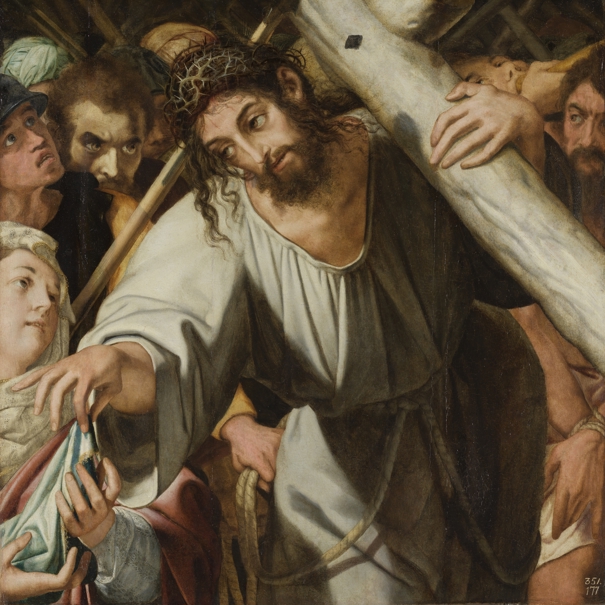
Christ on the Way to Calvary
Oil on oak panel. 1550 - 1555
This panel was intended for a private chapel. The marked chiaroscuro, the lightness of the paint layer and the pathos of the figures - from Christ’s serenity to the rough appearance of the soldiers - reflect a change in the Flemish master’s style during his stay in Seville in the mid-sixteenth century. His rendering of human physiognomy recalls models by Sebastiano del Piombo as well as the Mannerist approach favoured by Raphael’s followers. Their influence is also apparent in the monumental tre
ARTWORK
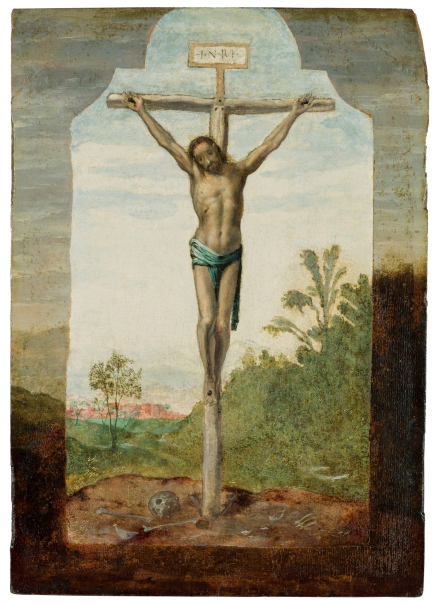
Crucifixion
Oil on oak panel. Ca. 1550
In this work, as in the rest of his creations, Pieter Kempeneer demonstrates a refined Flemish technique that allows him to portray all sorts of details with precision. This is especially remarkable in Christ’s figure, which was conceived using a strong anatomy that showcases the muscled torso and advancing leg. Both the leg and the torso are outlined with subtle shading and light chiaroscuro, which constitutes one of Kempeneer’s signature techniques. Likewise, the precision in design is evident
ARTWORK
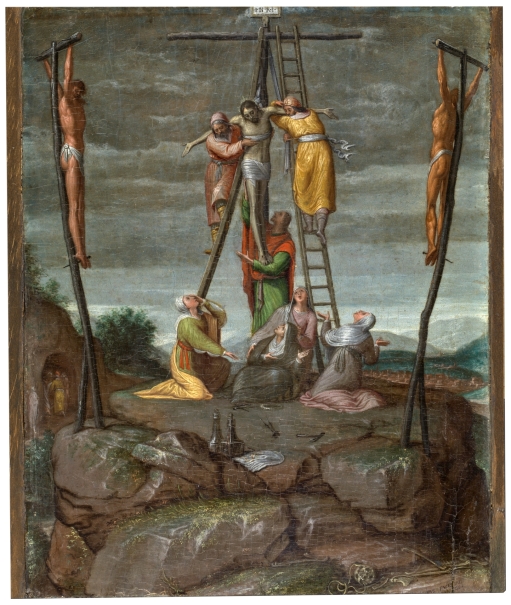
The Descent from the Cross
Oil on oak panel. Ca. 1570
Calvary and The Descent from the Cross were two of the most frequent subjects in Pedro de Campaña’s oeuvre. Their content, as well as the painter’s Flemish training, explain his manner of emphasizing the markedly dramatic character of their compositions, stressing the figures’ expressive qualities in very contrived nocturnal settings. It is no surprise that these subjects continued to occupy Campaña towards the end of his career, after he returned to Brussels around 1563. The famou
ARTWORK
Loading...

Loading...

Up