formularioRDF
The itinerary <em>TITULORECORRIDO</em> has been successfully created. Now you can add in works from the Collection browser
<em>TITULOOBRA</em> added to <em>TITULORECORRIDO</em> itinerary

Exhibition

Goya and the Enlightened Court

Museo de Bellas Artes. Bilbao 2/14/2018 - 5/28/2018

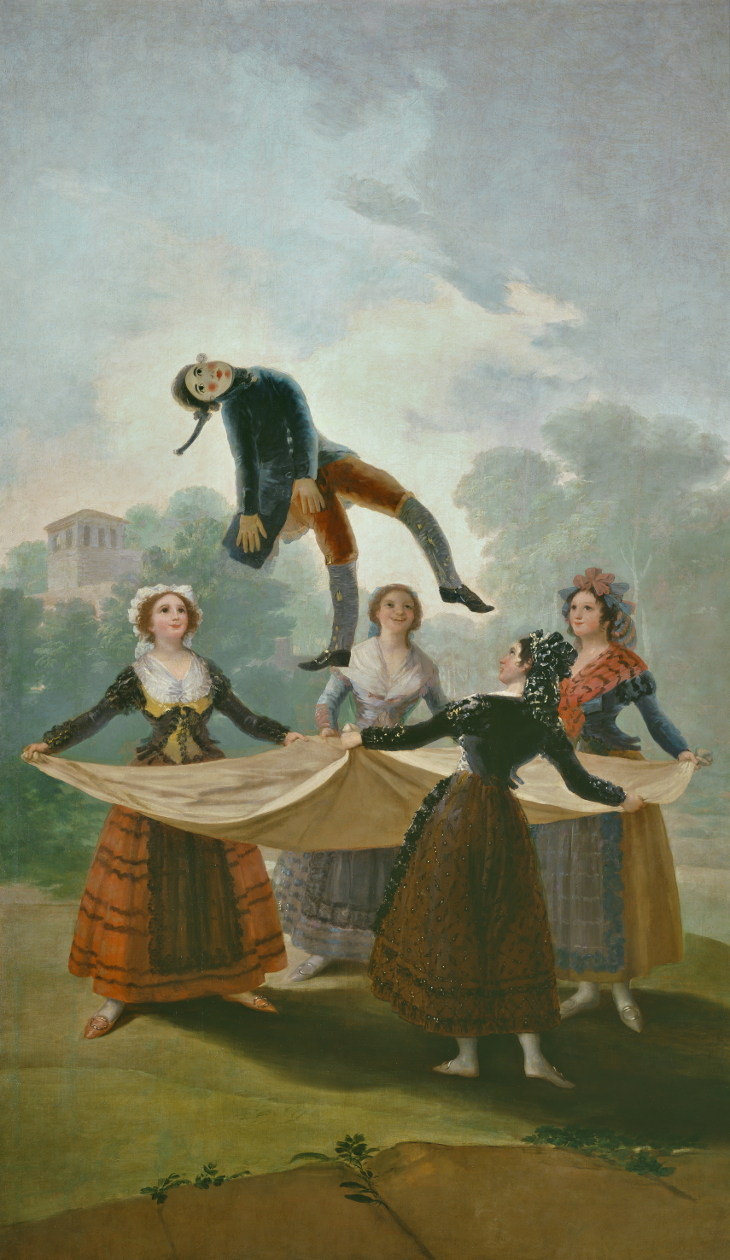
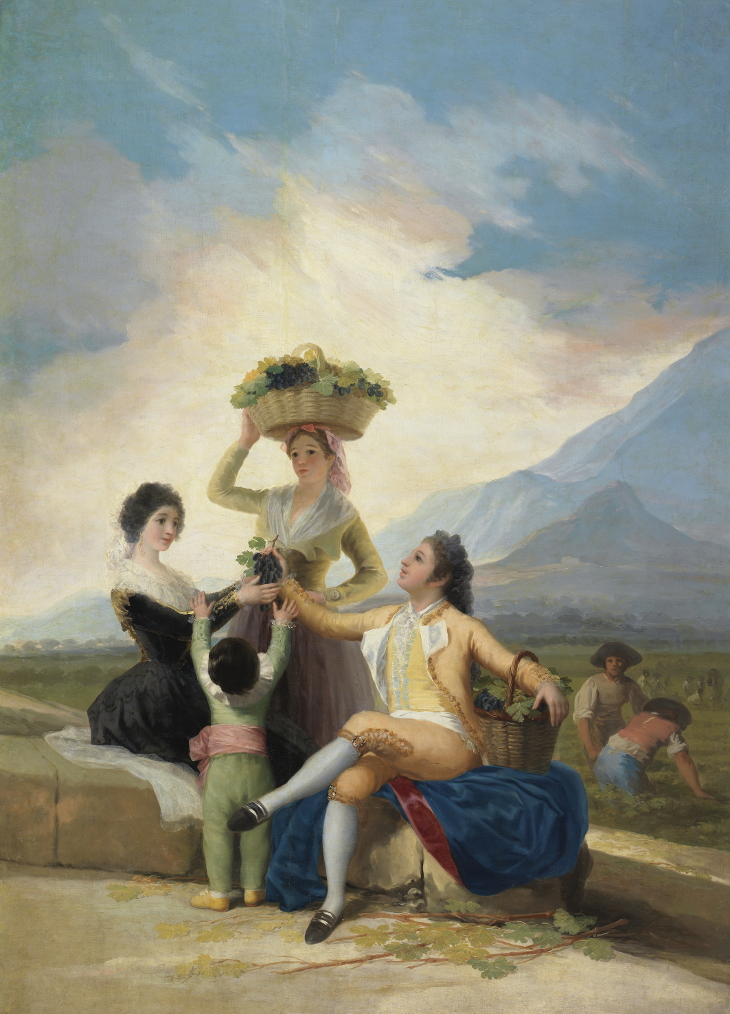
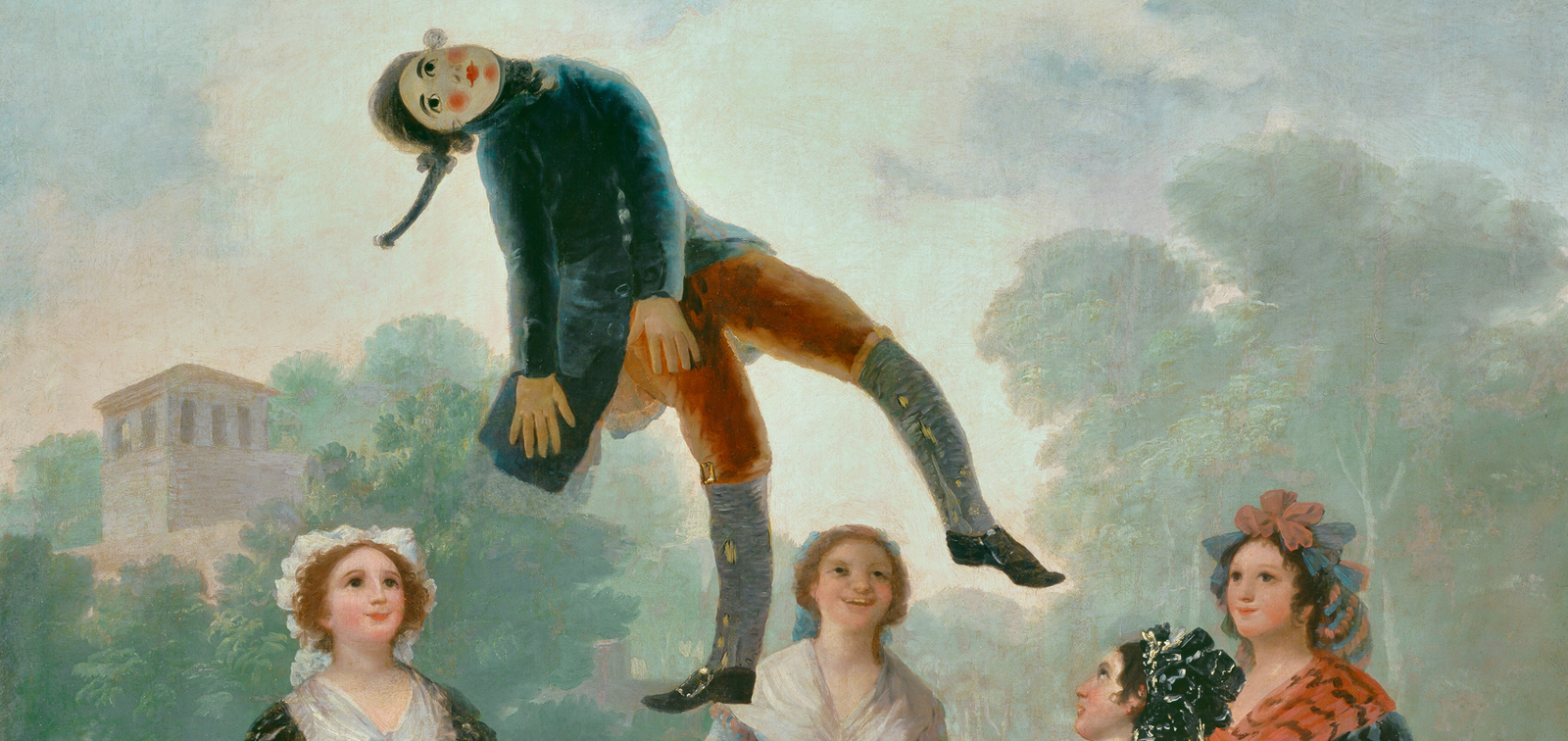
This exhibition, organised by the Museo Nacional del Prado, Fundación Bancaria “la Caixa” and the Bilbao Fine Arts Museum, features a total of ninety-six pieces that review Goya’s years as court painter, including such iconic works as Blind Man’s Buff, The Grape Harvest or Autumn, and The Straw Manikin.

Given that this is Bilbao’s first Goya exhibition, a special section has been added about the extension of the court to the Basque Country between the late eighteenth and early nineteenth century that includes the likenesses of eleven Basque and Navarran individuals, among them the artist’s splendid portraits of the Count of Cabarrús and Marquess of San Adrián.

Curators:
Manuela B. Mena (Head of Conservation of Eighteenth-Century and Goya Works) and Gudrun Maurer (Conservation of Eighteenth-Century and Goya Works).

RDF

RDF

Co-organized by:

Exhibition

The exhibition

The exhibition
The Straw Manikin
Francisco de Goya y Lucientes
1791 - 1792. Oil on canvas, 267 x 160 cm.
Museo Nacional del Prado

After training in Zaragoza and Italy, Francisco de Goya (Fuendetodos, Zaragoza, 1746–Bordeaux, 1828) settled in Madrid in 1775 and came to the court of Charles III to work on cartoons for hunting-themed tapestries intended for El Escorial. Recognition of his talent came years later when he was named painter to the king, in 1786, and subsequently chief court painter in 1799. But despite his success at court, Goya never lost touch with his native Zaragoza. His correspondence with Martín Zapater, a childhood friend, tells us a great deal about his relationship with relatives and friends, as well as providing key insights into his professional development. The Prado’s remarkable loan of thirteen original letters provides a documentary counterpoint to the vision of Goya as court painter. That is precisely the focus of this exhibition, which explores the painter’s success at the courts of Charles III and Charles IV, but also the enduring memory of his roots through contact with those closest to him.

‘Zaragoza-My heart-Zaragoza-Zaragoza’

Born in the small village of Fuendetodos, Goya grew up in Zaragoza, where his parents resided and he led a simple life until 1775. In 1773 he married Josefa Bayeu—whose brothers were Francisco, court painter to Charles III, Ramón and Friar Manuel Bayeu, also painters—and, at the invitation of his brother-in-law, set out for Madrid to embark on the court career he had dreamt of since his youth.

He trained under José Luzán in Zaragoza (1760–1764), unsuccessfully applied to the Academia de Bellas Artes de San Fernando for a grant to study abroad (1762) and later competed for the academy’s painting prize (1766), which he also failed to win. Goya travelled to Rome at his own expense to study at the drawing academy there (1769–1771), and as soon as he returned to Spain at the age of twenty-three, he landed several major commissions, such as the mural paintings for the choir in the Basilica of Nuestra Señora del Pilar and the church of the Aula Dei charterhouse, plus a substantial number of religious paintings for different clients.

Artists, architects, sculptors and aristocratic patrons, as well as the painter’s friends who were merchants or prominent businessmen of that era, like Martín Zapater, Juan Martín de Goicoechea, Ramón Pignatelli and many others, kept Goya connected to Zaragoza, the memory of which stayed with him until the end of his days in Bordeaux.

Goya and Madrid, 1775: Hunting

Goya and Madrid, 1775: Hunting
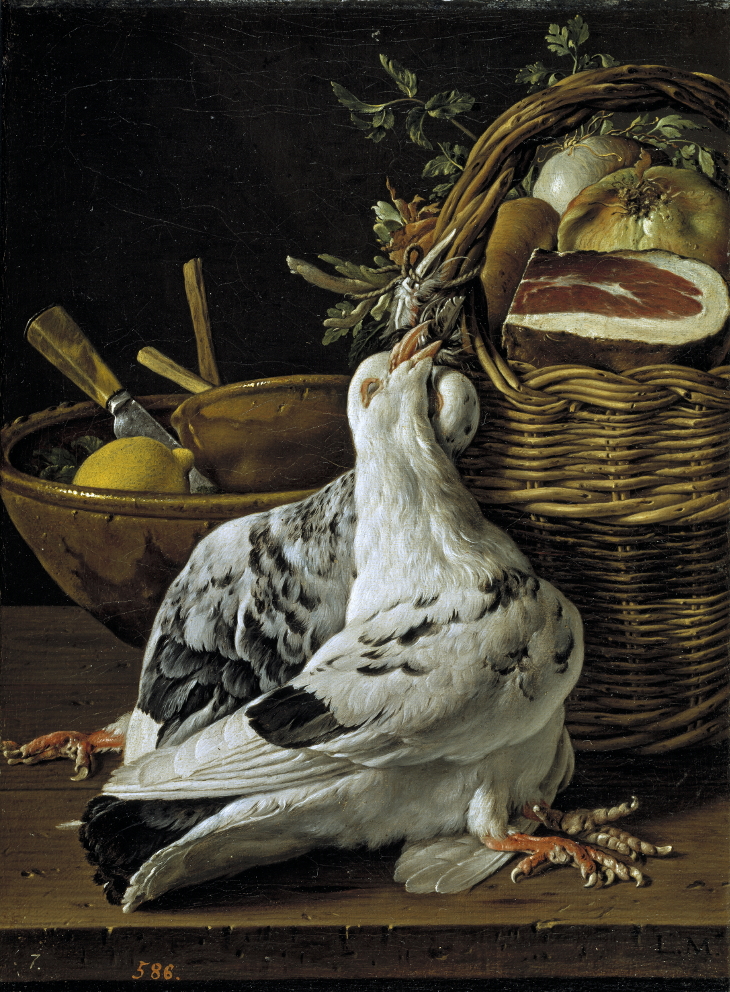
Still Life with Pigeons, Food Basket and Bowls
Luis Egidio Meléndez
Third quarter of the 18th century. Oil on canvas, 50 x 36 cm.
Museo Nacional del Prado

After moving to Madrid with his family in 1775, Goya’s first job was to produce nine cartoons for hunting-themed tapestries to decorate the palace at El Escorial. Goya was a fan of small game hunting, ‘the greatest amusement in all the world’, a passion he shared with Martín Zapater, as their correspondence reveals. This sport, which both men had the privilege of practising, was formerly reserved for the royal family, the nobility and the clergy.

But society was changing, with the bourgeoisie playing an increasingly prominent role in government, and those changes are reflected in official portraits from that period and hunting pictures like Goya’s cartoons, in which classical references are used to ennoble people of lower birth or status. As for the hunting still life, this genre was characterised by the realistic depiction of the hunter’s trophy, which had previously been more symbolic in nature.

The Enlightened Court: Point of Convergence

The Enlightened Court: Point of Convergence
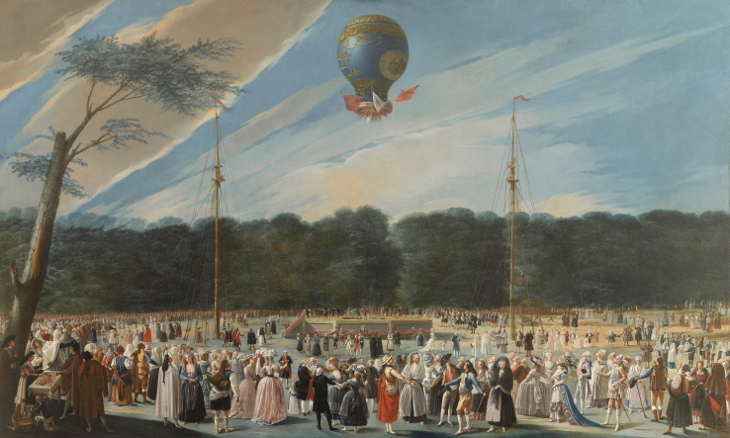
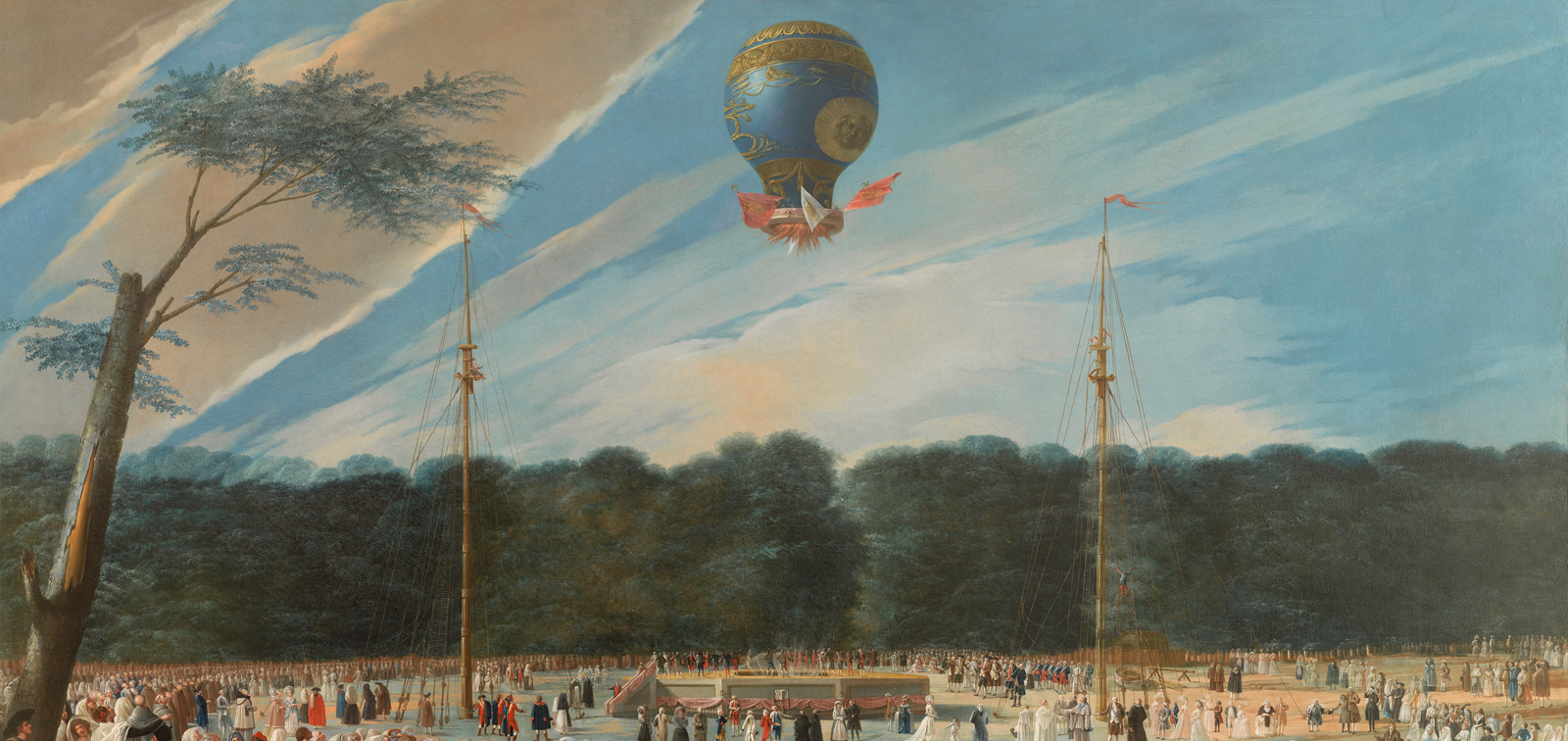
Ascent in a Montgolfier Ballon in Aranjuez
Antonio Carnicero
C.1784 Oil on canvas, 169 x 279.5 cm
Museo Nacional del Prado

Madrid had been at the height of its splendour since the Bourbons, the French dynasty that had inherited Louis XIV’s grandeur and modern spirit, came to the Spanish throne in the year 1700. By Goya’s time, Spain had already had three Bourbon monarchs: Philip V and his sons by Maria Luisa Gabriella of Savoy, Louis I and Ferdinand VI. And in 1775 the throne was occupied by Charles III, son of Isabella Farnese. An Enlightened monarch surrounded by ministers with progressive ideas like Esquilache, Campomanes and Floridablanca, he continued to modernise the city and the realm, promoted the growth of industry and trade, and introduced a social order that, for the first time, included an incipient middle class and a general population with better employment opportunities.

The arts also benefited from the crown’s support, which established fine arts academies and extended invitations to foreign architects and artists, like the sophisticated French portraitists Houasse, Ranc and Van Loo; Giaquinto, Tiepolo and other Italian creators of mythological compositions; and the architects who worked on the new royal palace, including Filippo Juvara, Giovanni Battista Sacchetti and, in the middle of the century, Francesco Sabatini, as well as other projects supervised by Juan de Villanueva. Exquisite Rococo painters like Flipart, Amigoni and Paret gave way to the neoclassical master Anton Raphael Mengs, who in the 1770s was overtaken by rising young Spanish artists, among them the brilliant Goya.

Friendship and Success

Friendship and Success
The Grape Harvest or Autumn
Francisco de Goya y Lucientes
1786. Oil on canvas, 267.5 x 190.5 cm
Museo Nacional del Prado

Ten years after arriving at court, Goya was named painter to the king in 1786. He had been inducted into the Real Academia de Bellas Artes de San Fernando in 1780, and soon afterwards he left for Zaragoza to paint the frescos on the dome of the Basilica of Nuestra Señora del Pilar. The result was not pleasing, and the council of works forced him to accept Francisco Bayeu’s corrections. This was quite humiliating for an artist who was already a confirmed academician, and Goya returned to Madrid, never to work in his hometown again. He did not receive any more royal commissions, either, as Bayeu had the last word on those, but Goya still prospered thanks to the support of the Count of Floridablanca, Secretary of State, influential figures such as the Infante Luis de Borbón and the Duke and Duchess of Osuna, and intellectuals like Jovellanos and Ceán Bermúdez.

Goya was finally promoted to court painter in 1789, and not long afterwards he told his friend Zapater, ‘Everyone from the king down knows me.’ In 1790 he made an unannounced trip to Zaragoza and was reunited with his friend, whom he portrayed on that occasion and again in 1797 (the Bilbao picture), as a prominent member of Aragonese society whose early years of hardship, like Goya’s, had become a distant memory.

During what has been dubbed the ‘prodigious decade’, the artist’s fame grew and he painted the most illustrious members of the aristocracy and political class. As official painter to Charles IV and Maria Luisa, he also painted their portraits.

Feminine Refinement in the Eighteenth Century

In the second half of the 18th century, Spanish society developed a concept of ‘refinement’ that was related to the idea of ‘civilisation’. It signified a desire to elevate oneself by acquiring good manners, customs and tastes and was manifested in new social activities and attire. With the proliferation of intellectual gatherings and evenings, parties, balls, theatre outings, and leisurely drives and strolls, it became more common to see women occupying public spaces. Their attire played a vital role in this context, as a way of being seen in society and as a sign of civilised customs. These changes affected all social classes, whose boundaries became blurred thanks to the democratisation of fashion and access to increasingly affordable fabrics. As a result, appearances could often be deceiving, and a ‘national costume’ was invented in a vain attempt to solve this problem. The portraits and scenes in this section, featuring nobles, majos and petimetras, show how fashion evolved from Rococo exquisiteness and decorative extravagance to neoclassical simplicity with revolutionary undertones.

Portraits of Basques and Navarrans

As this is the first exhibition dedicated to Goya’s painting to open in Bilbao, the museum went to the effort of creating an additional section that shows how the court extended to the Basque Country in the late 18th century and and early 19th century. This portrait gallery presents eleven Basque and Navarran individuals, mostly from political, business and military circles, who sat for Goya during that period, including Miguel de Múzquiz y Goyeneche, Marquess of Villar de Ladrón and Count of Gausa, the treasury minister who backed the establishment of the Banco de San Carlos in 1782; General José de Urrutia, the only officer of his century to achieve that rank on his own merits rather than by virtue of noble birth; Martín Miguel and Juana Galarza de Goicoechea, the Navarran parents of Goya’s daughter-in-law, pictured as a couple; and Leocadia Zorrilla, the artist's protégée and housekeeper during his final years in Bordeaux.

Between the portrait of the Count of Gausa, from about 1783, in which the artist was still following certain conventions, and that of Joaquín María Ferrer y Cafranga, one of his last portraits painted in 1824, we can observe an extraordinary process of psychological introspection and, at the same time, a significant evolutionary journey that reveals Goya’s true genius, whimsy and originality.

Print on demand

Print artworks available in our catalogue in high quality and your preferred size and finish.

Image archive

Request artworks available in our catalogue in digital format.

Up