“My friend, the time has come for the greatest endeavor in painting that has been offered in Madrid, and it is that His Majesty has determined to have the paintings made for the church of San Francisco el Grande [of] this court, and he has deigned to appoint me.”
Letter from Goya to Martín Zapater, 25th July 1781
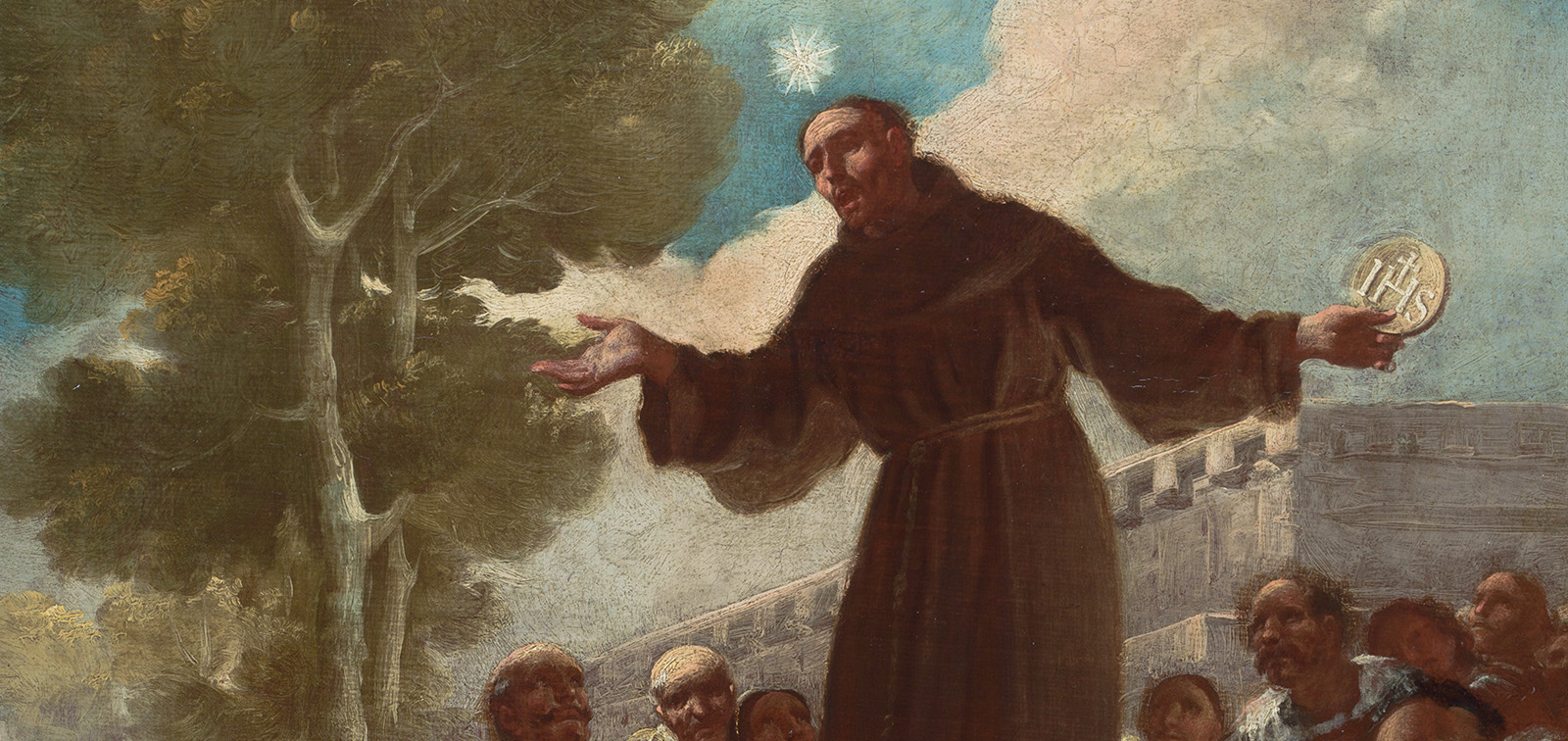
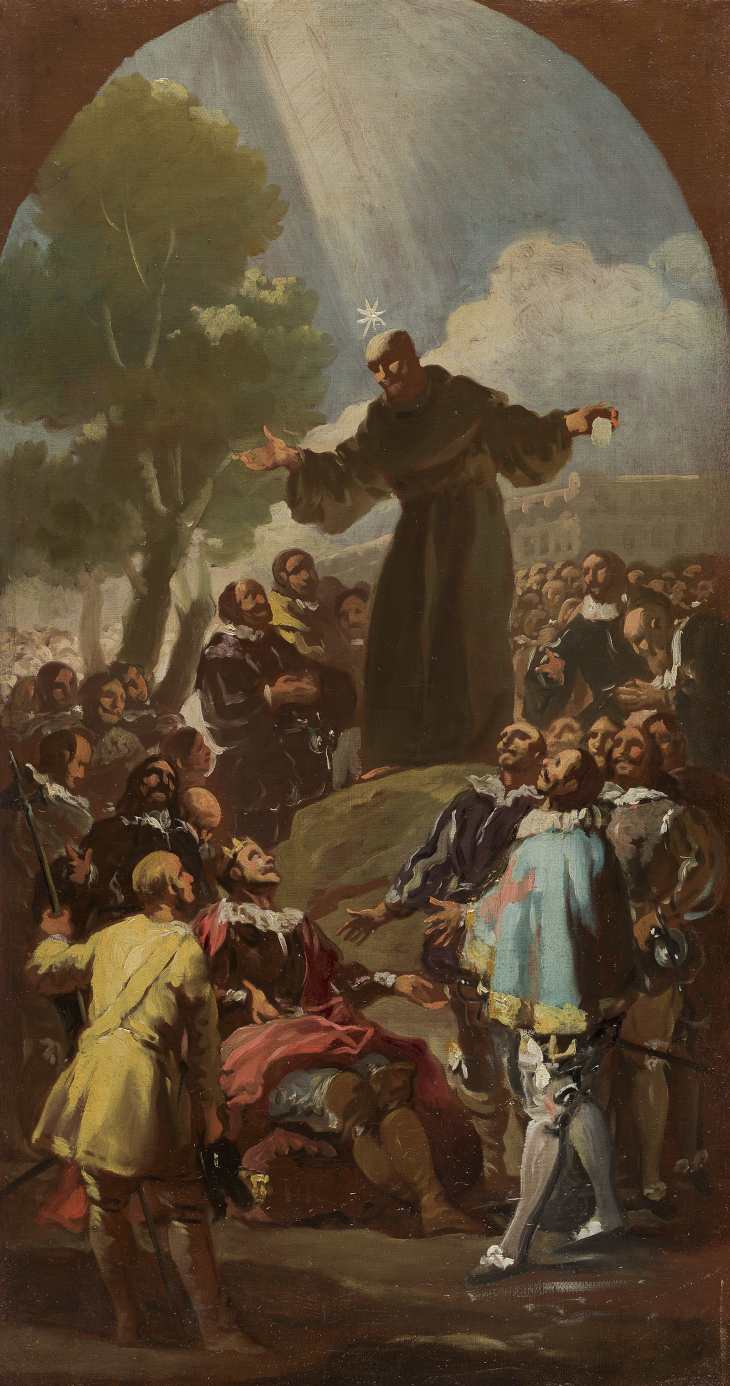
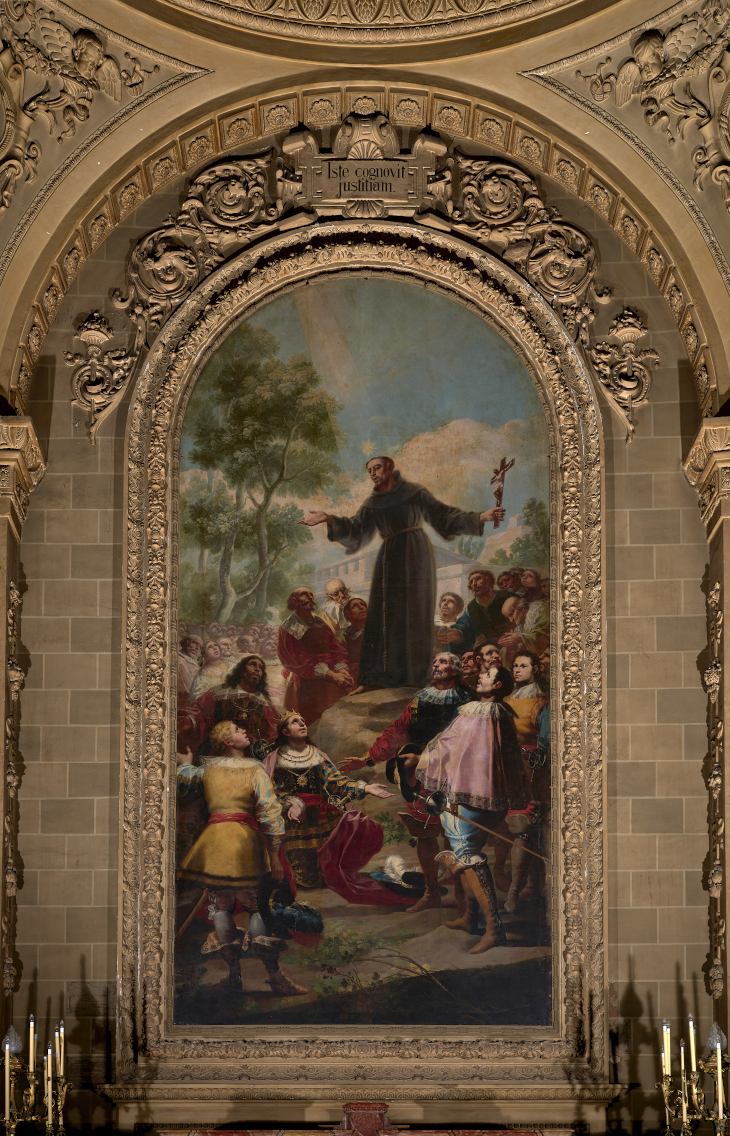
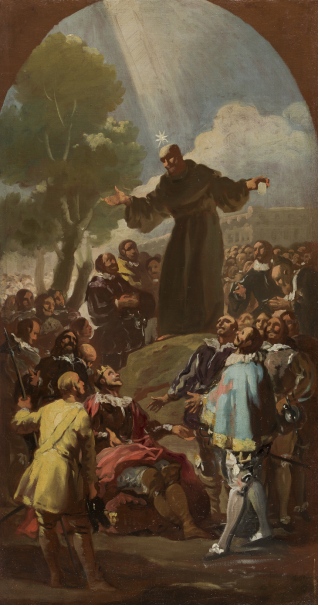
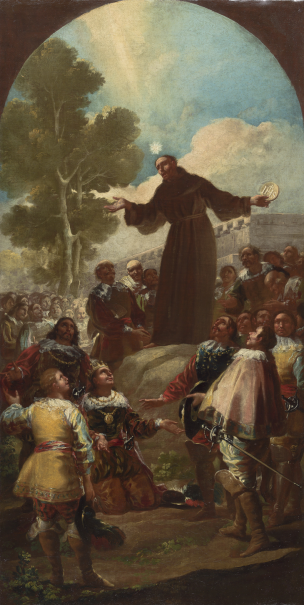
The Tatiana Pérez de Guzmán el Bueno Foundation is committed to preserving its own historical-artistic heritage and sharing it with the society. Its painting collection includes two sketches made by Goya for his altar painting The Preaching of Saint Bernardine of Siena, painted for the Royal Basilica of San Francisco el Grande in Madrid, which have not been exhibited in the last one hundred years.
In order to make them known, the Foundation wanted to count on the collaboration of the Museo Nacional del Prado. Thanks to this project we have had the opportunity to increase the knowledge about the great artist. The works have been studied and restored in the museum and will be exhibited in its rooms for a year. The research carried out during this time has been compiled in an academic publication.
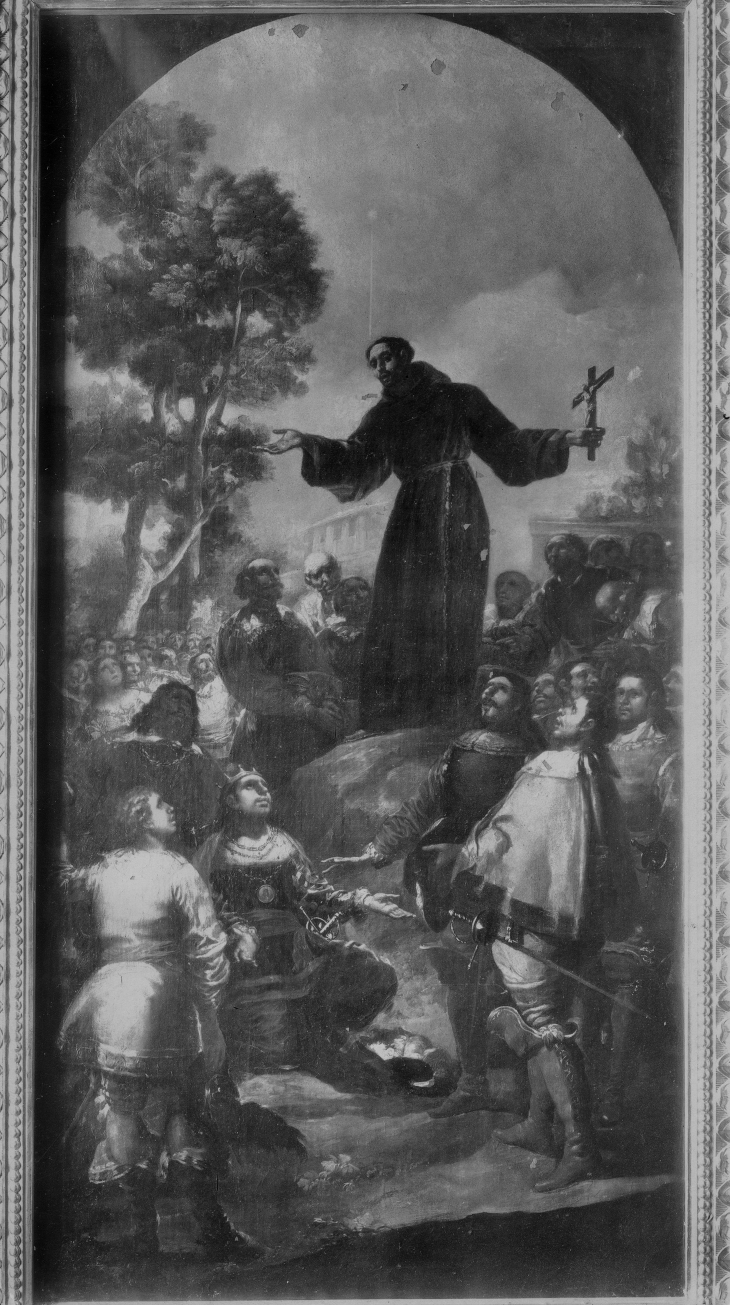
The Foundation's sketches were documented in 1867 in the collection of the VII Marquis de la Torrecilla, direct ancestor of Tatiana Pérez de Guzmán el Bueno. The first of them was exhibited in 1900 in Madrid and in 1920-21 in London, while the second one is being shown for the first time. Although both were published in black-and-white photographs taken in the early to mid-1900s, information about their whereabouts was lost in the following decades. The knowledge they provide is of fundamental importance, as they reveal the rational and precise method followed by the artist when developing a monumental work of great technical and compositional complexity.
The 20th of July, 1781, Goya obtained the royal commission to paint one of the seven altar paintings for the new basilica of San Francisco el Grande in Madrid, one of the largest basilicas built in the eighteenth century. The other paintings were executed by the chamber painters Andrés de la Calleja, Antonio González Velázquez, Francisco Bayeu and Mariano Salvador Maella, as well as by Gregorio Ferro, an academician of merit like Goya, and by José del Castillo, then still untitled. The works, still in the basilica today, depict themes from the life of St. Francis of Assisi and his followers, as well as Marian themes. Goya depicted the sermon that St. Bernardine of Siena dedicated to the Virgin in 1444 in L'Aquila, in the presence of Alfonso V of Aragon, King of Naples, during which one of the twelve Marian stars descended from heaven and illuminated him.
The artists prepared, as can be deduced from the documentation, two different sketches, a smaller and a larger one. In the case of Goya, the whereabouts of the latter is unknown, which would show the state immediately prior to the final work, although it is very likely that it is the reproduced work known from old photographs. Throughout the year of the exhibition, eight of Goya's nineteen letters to his friend Martín Zapater will also be shown in four turns, one per quarter, two in each turn, in which the artist provided information about this project, his work on the sketches and the positive public criticism of his definitive painting.