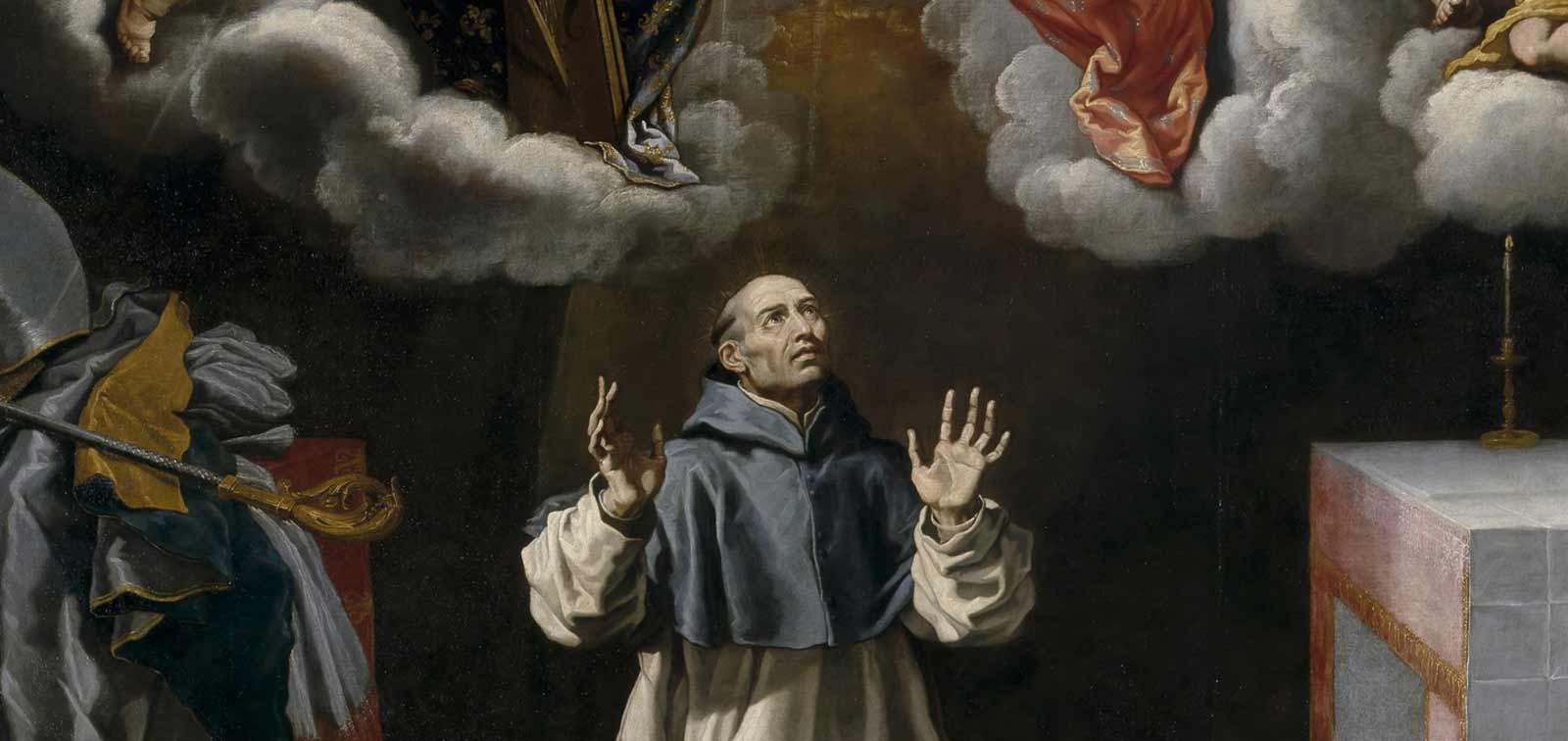
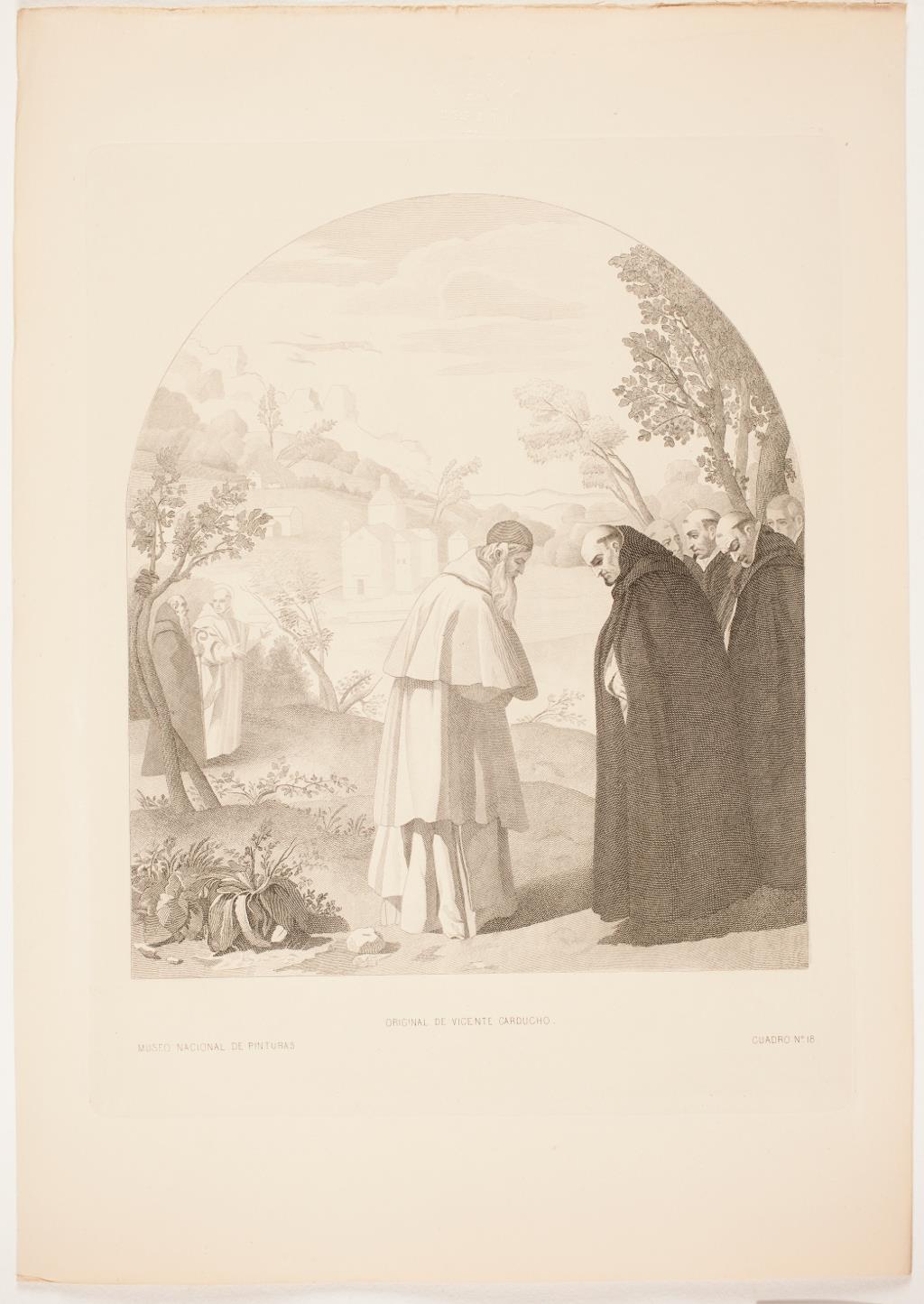
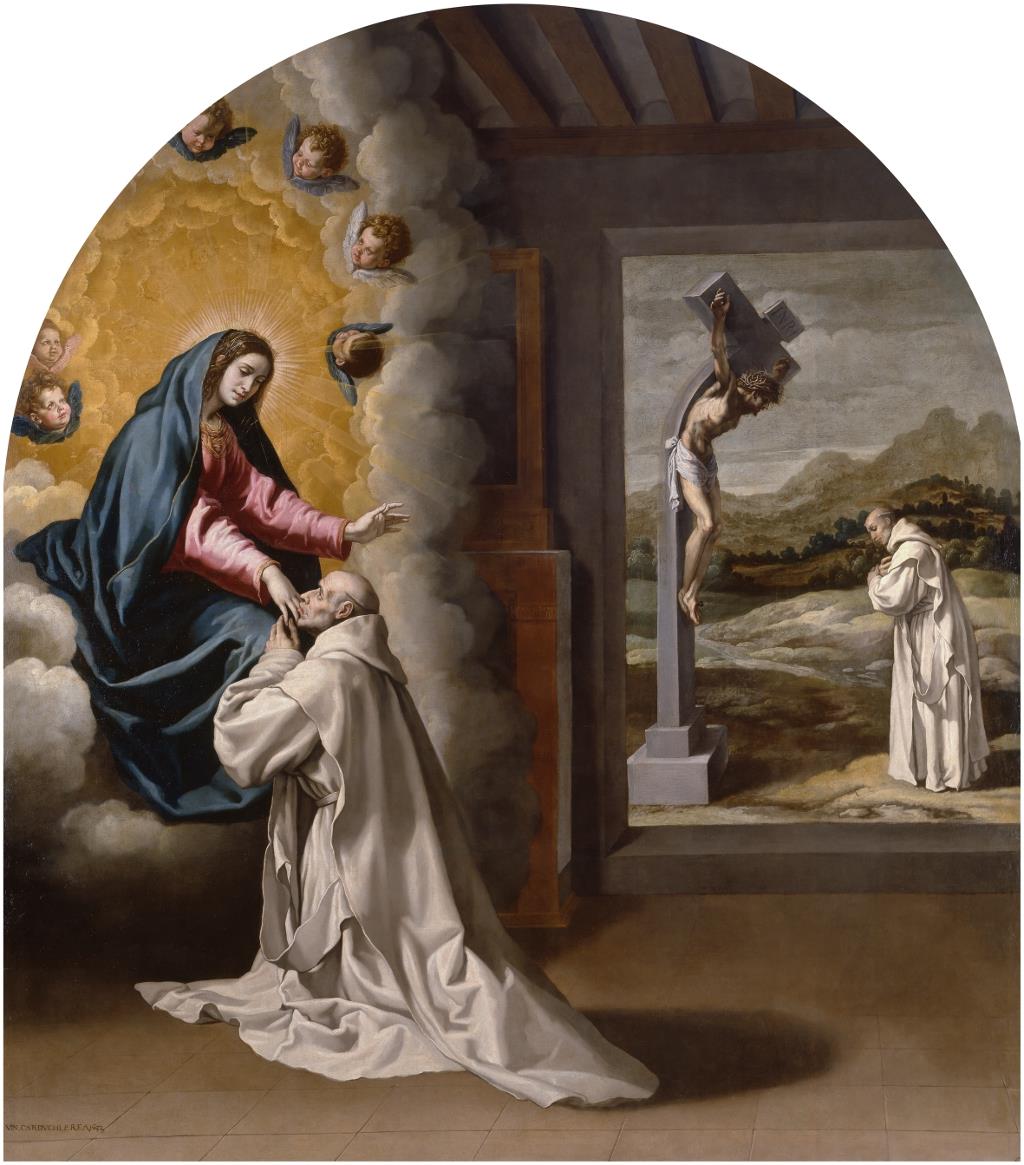
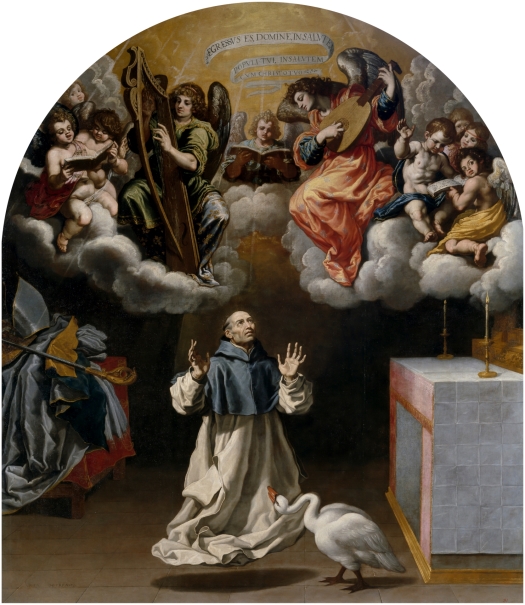
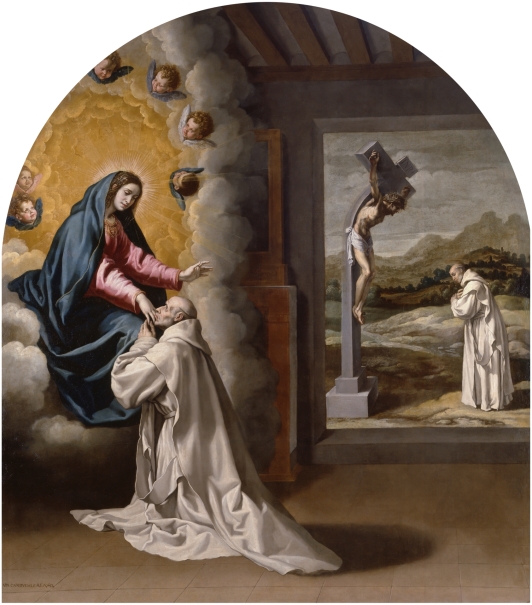
On 29 August 1626, Vincenzo Carducci (c.1576–1638) signed a contract to produce the most comprehensive and ambitious series of paintings ever dedicated to the Carthusian order: a set of fifty-six large canvases intended for the great cloister of the Charterhouse of El Paular in Rascafría, Madrid. This monastery had been built under the patronage of John I of Castile (1358–1390) and still enjoyed royal favour during the reign of Philip IV (1605–1665), as is apparent in this commission, which included two smaller canvases with the coats of arms of the monarch and the order that have since disappeared.
The fifty-four surviving pictures are divided into two groups: the first twenty-seven illustrate the life of the order’s founder, Saint Bruno of Cologne (1035–1101), from the moment he decided to leave public life and retreat into the Chartreuse Mountains, in France, to his death and first posthumous miracle.
The second group depicts the most salient events in the lives of the Carthusians across Europe between the eleventh and the sixteenth century, showing the founding of the order and the identifying traits of its members: their seclusion in solitary yet incredibly beautiful locations, their life of humility, mortification and penance, and their devotion to study and prayer.
The cycle ends with a group of ‘heroic’ scenes portraying the persecution and martyrdom suffered by some Carthusian communities in the 1400s and 1500s. These images were intended to strengthen the monks’ faith while also illustrating the religious and territorial conflicts raging in Europe at the time. Additionally, the series is an accurate reflection of Baroque spirituality, with its predilection for prayer, martyrdom, miracles and ecstatic visions.
The author of the entire set, Vincenzo Carducci, was the most respected and prestigious artist at the court in Madrid as well as an art theoretician, and therefore the man best prepared to take on such a complex assignment. The job required an extensive knowledge of how to design massive and challenging scenes, a mastery of space, narrative talent, the ability to arrange numerous figures, a talent for capturing emotions and gestures, and a skilful use of colour to give the entire series a generally pleasing effect. All these aspects were essential to what the seventeenth century considered the noblest genre: history painting.
Vincenzo Carducci was born in Florence but soon made his way to Spain, arriving in 1585 with his brother and fellow painter Bartolomeo Carducci (c.1560–1608), who assisted Federico Zuccaro (1540/41–1609) with the decorations for the Monastery of El Escorial. In their new home, the brothers were known as Vicente and Bartolomé Carducho. Thanks to the timing of his arrival, Vincenzo was trained among the rising stars of late sixteenth-century Spanish art, under the influence of Tuscan classicism and the educational aspirations of the Escorial painters. In the first third of the seventeenth century, he worked on the most important jobs of that period in Madrid, Valladolid, Toledo and Guadalupe, Cáceres, often collaborating with Eugenio Cajés (1575–1634). In the Hall of Realms at the Palace of El Buen Retiro, the most symbolically significant decorative programme created during the reign of Philip IV, he was the only artist to paint three compositions of battles won by Spanish troops in the 1620s. Carducci made them in 1634, a year after publishing one of the most important Spanish art treatises of the 1600s: his famous Diálogos de la pintura [Dialogues on Painting], written while he was working on the canvases for El Paular.
He executed the series between 1626 and 1632, following a laborious creative process that involved making numerous drawings and sketches, in which some of the painter’s assistants participated. The set remained at El Paular until the ecclesiastical confiscations of 1835, when the Spanish government seized the assets of religious orders.