formularioRDF
The itinerary <em>TITULORECORRIDO</em> has been successfully created. Now you can add in works from the Collection browser
<em>TITULOOBRA</em> added to <em>TITULORECORRIDO</em> itinerary

Venus and Adonis. Veronese

Venus and Adonis is a painting by Veronese, an Italian painter.  

The painting is from 1580.

ETR (Easy to Read) icon
© Easy-to-read european logo: Inclusion Europe. More information at: Easy-to-read

What is the subject?

This painting depicts a story by the ancient Roman poet Ovid.

The story was about a love that ends suddenly and tragically.

Venus was the Roman goddess of love and beauty.

Adonis was a handsome young man who fell in love with Venus and the goddess Proserpina.

Venus and Proserpina shared Adonis during the year.

Adonis liked to hunt, and the goddess Venus accompanied him.

Adonis died on one of these hunts.

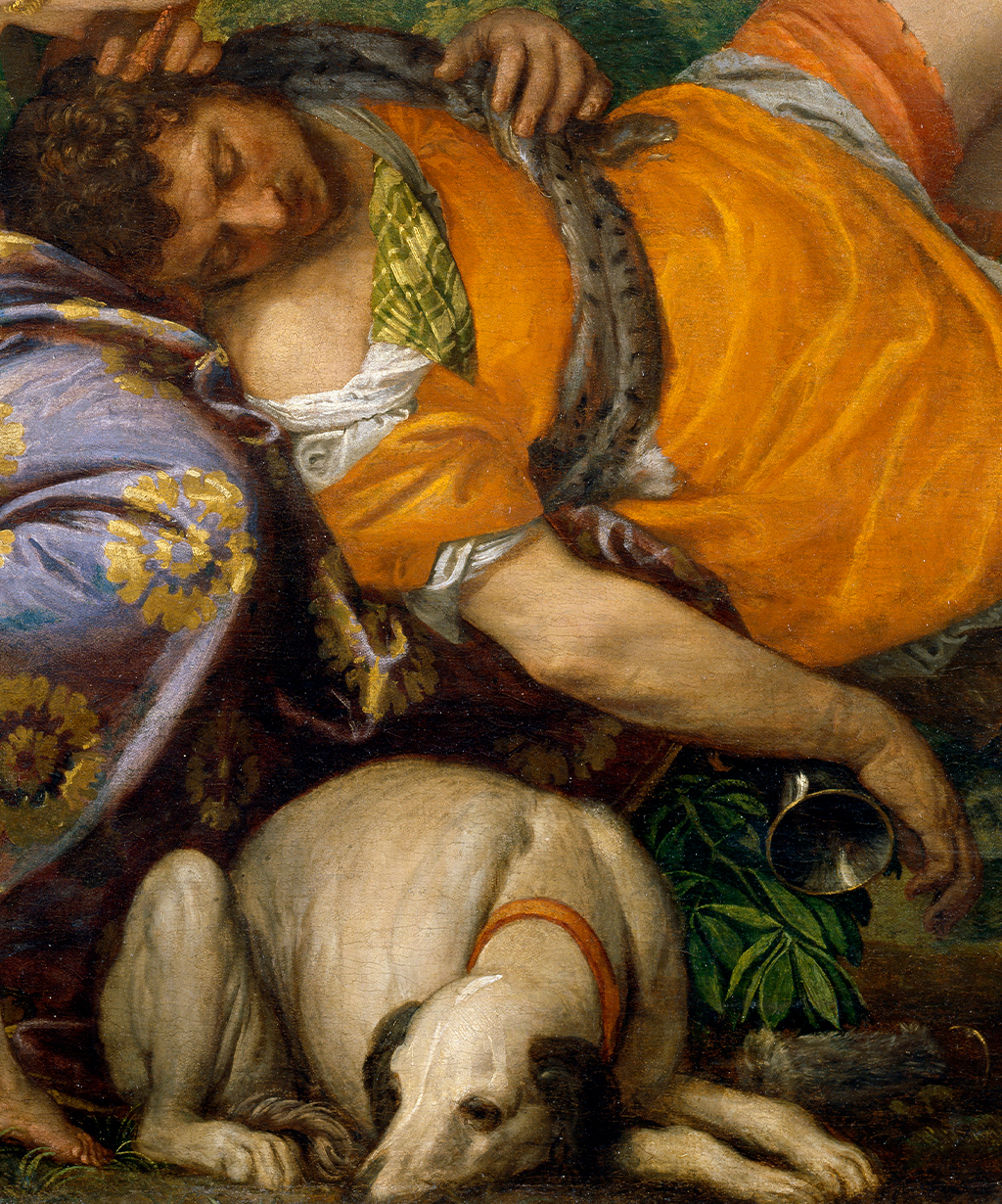
In the painting, the Renaissance painter Veronese shows the moment before Adonis dies.

In the painting, Adonis sleeps lying on Venus.

She is surprised because one of the dogs starts barking.

The dog smells that a wild boar is nearby.

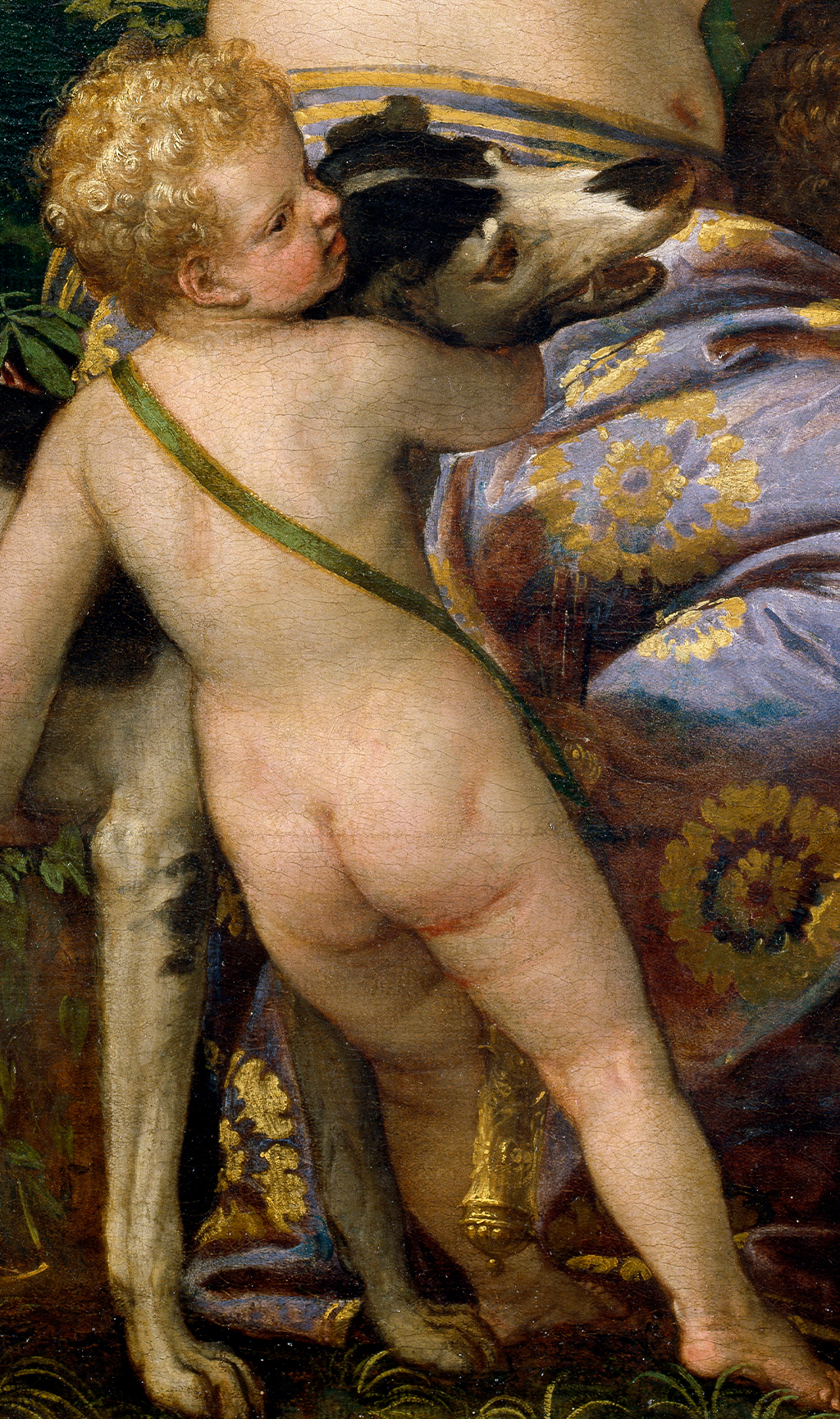
The boy is Cupid.

Cupid is the Roman god of love.

Cupid holds the dog to calm him and prevent Adonis from waking up.

According to the legend told by Ovid, the barking dog woke Adonis.

Adonis went to hunt the boar.

Adonis wounded the boar, but the boar attacked and killed the man.

Veronese paints Venus and Adonis in a pose similar to that of the Pietà.

In the Pietà, the Virgin Mary holds the dead Jesus Christ.
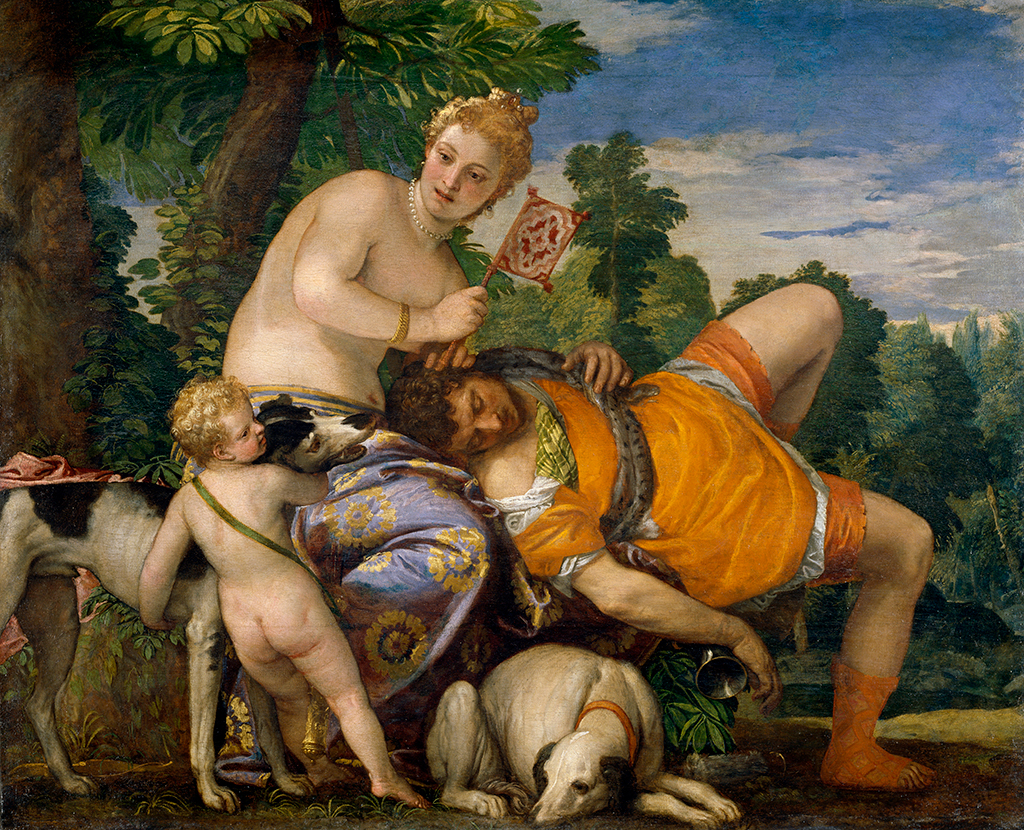
Venus,AdonisandCupid
Venus, Adonis and Cupid by Veronés

Why is the painting relevant?

Veronese imitates the Pietà in this painting to show that there will be a tragedy.

Venus senses that Adonis may die in the hunt.

Veronese used unusual colours for his time, such as orange in the clothes of Adonis and purple in the clothes of Venus.

Veronese used bold and contrasting colours in his paintings.

This style was common among Venetian painters of the 16 century.

DetailAdonis
Detail of Adonis

The history of the painting

Veronese painted this picture when he lived in Rome.

He also created another painting dedicated to another mythological legend of love that ended in tragedy.

The other painting was entitled Cephalus and Procris.

Velázquez bought the 2 paintings during his second travel to Italy.

Later, the paintings became the property of the kings.

DetailCupid
Detail of Cupid
Funded by the European Union - NextGenerationEU Government of Spain - Ministry of Culture Recovery, Transformation and Resiliency Plan Museo Nacional del Prado

Funded with the National Recovery and Resilience Plan (NRPP) , Spain’s Next Generation EU financing and according to the initiatives within the component C.24.I3 Digitization and valorization of major cultural services. The project is part of Campus Prado within Accessibility and Signage: Revitalization of the Urban Environment action line and as a universal accessibility activity.

Up