Chained
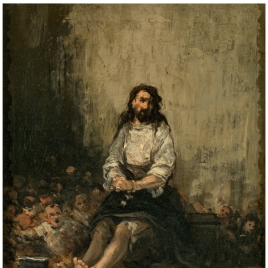
Ca. 1850. Oil on tin plate.Not on display
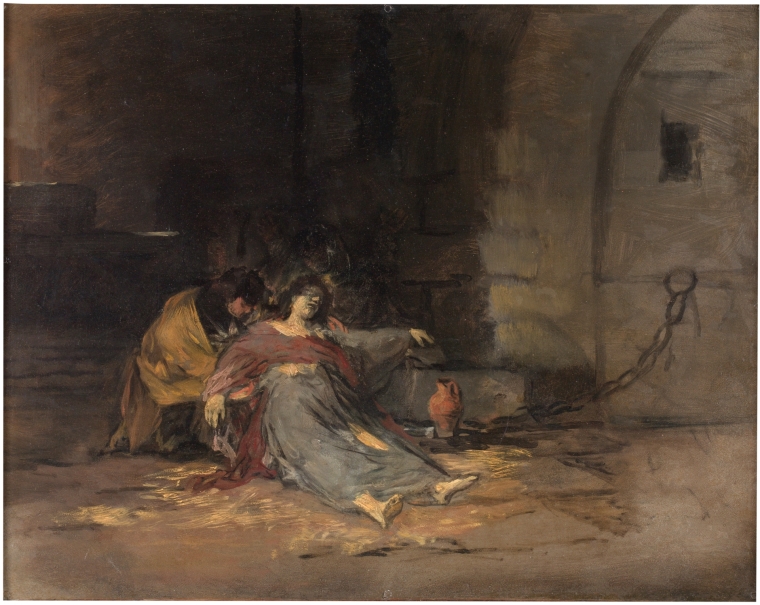
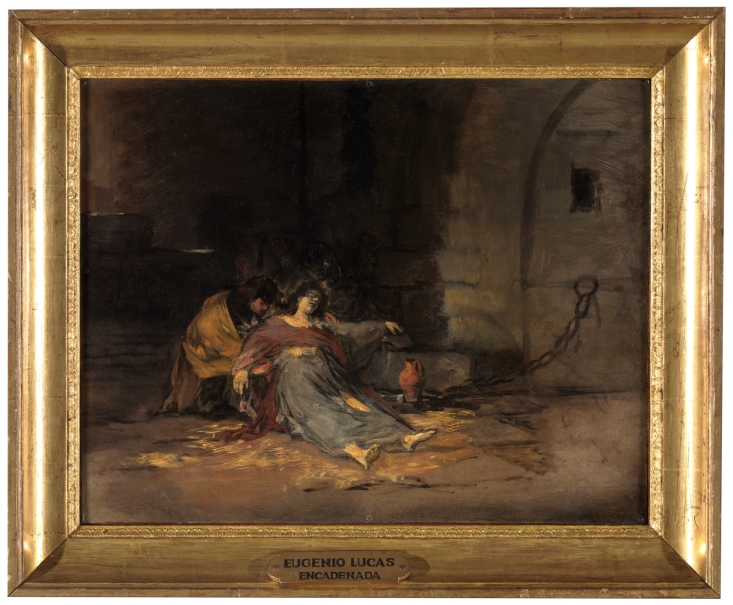
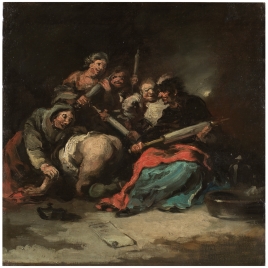
This work may be the result of the impression left by the trial and execution of the priest Merino, which took place in 1852. This was due to the attempted regicide of Isabella II, when Eugenio Lucas Velázquez began a series of paintings about the inquisitorial process and tortures. His settings are generally caves or dark, sinister, underground places, where the protagonists resign themselves, exhausted by the weight of injustice. In this case, as in others, the artist is inspired by Goyaesque themes, particularly from The Caprices. Without strictly following Goya´s models, he denounces –like the Aragonese artist– the bias of the judgement and disproportionate sentences.
Here, dark tones predominate, giving the scene a gloomy aspect. The artist depicts a woman in despair and an old woman holding her from behind. He achieves the lightness of the woman´s skin using impasto. The only touches of colour are the purple shawl, the blue tunic and the little light that seems to filter through the left side. The painting came from the General Commissariat of the Service for the Defence and Recovery of Artistic Heritage, created immediately after the Civil War, which handed it over to the Museo Nacional de Arte Moderno.
Pita Andrade, José Manuel; Gállego, Julián, De Greco à Picasso. Cinq siècles d'art espagnol, Madrid, Ministerio de Cultura, 1987, p.358