The Tagus, Toledo
1905 - 1906. Oil on canvas.Not on display
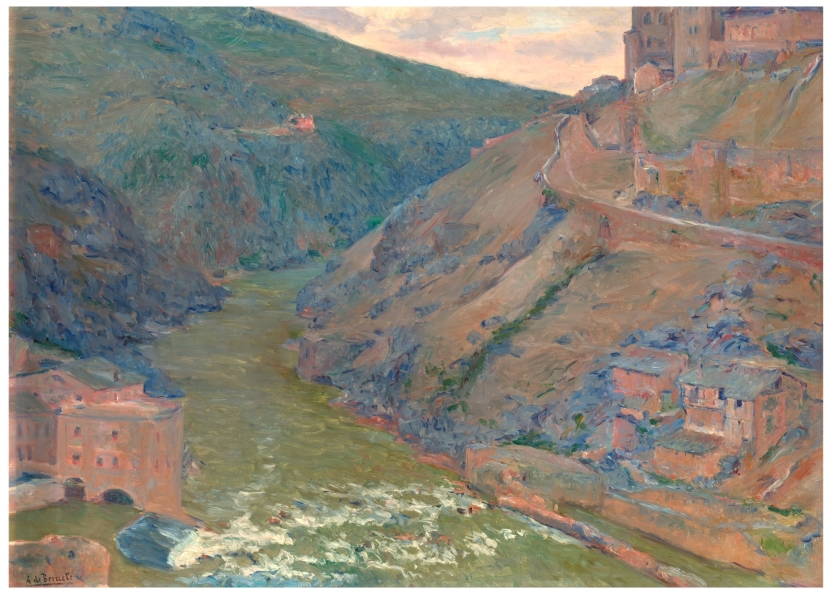
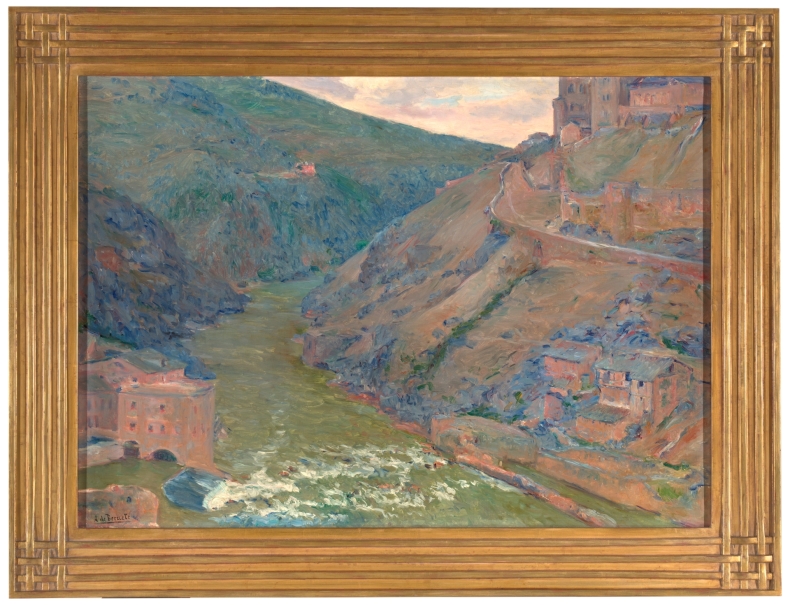
Along with Madrid, Toledo was one of the cities Beruete most painted, these works belonging to different periods of his career and executed from the most diverse parts of the city. The painter took this view from the hills outside the city walls, near the castle of San Servando, on the other side of the Tagus River that surrounds Toledo, where the painter liked to walk. On the left is a water mill, built next to a waterfall of the river, in which the sparkling waters swirl. On the other bank, the road leading up to the Alcázar of Toledo is partially visible. The painting is a magnificent example of the extraordinary artistic ease that Beruete´s art reached at its apex. He is undoubtedly the Spanish landscape painter who came closest to the postulates of French Impressionism. He employs very small colour ranges, which oscillate between blues, greens, and greys. This purely pictorial and essentially coloristic treatment of the landscape tries to capture the almost monochrome impression of the Toledo landscape. This style to some extent evokes the same spirit of Monet’s series on Rouen Cathedral or the Houses of Parliament in London. The splendid richness of his workmanship, especially in the foams of the water and the shadows of the clearing, along with the originality of the framing, seen plunging from the top of the mountain, attest to the modernity of Beruete´s art in the Spanish landscape of his time.
Museo Nacional del Prado, Pintura española del siglo XIX : del neoclasicismo al modernismo : obras maestras del Museo del Prado y colecciones españolas / [José Luis Díez], Madrid, Madrid: Ministerio de Cultura, Dirección General de Cooperación Cultural, 1992, p.190, nº54