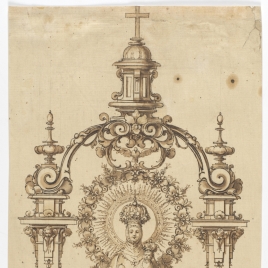
Sebastián de Herrera Barnuevo
Madrid, 1619 - Madrid (Spain), 1671Spanish painter, sculptor and architect. Son of the sculptor Antonio Herrera, he received his early education in his father's workshop. In 1638, after the arrival of the Granada-born Alonso Cano in Madrid, he entered his studio and became his main assistant. Thanks to his master, with whom he maintained a close relationship of friendship, he cultivated the three arts. In 1645 he collaborated with him in the execution of the altarpieces of the Madrid church of Getafe, with an "Adoration of the Shepherds" (in situ). In 1649 he received his first important royal commission: the ephemeral architectures erected in Madrid for the entry of Doña Mariana of Austria, fourth wife of Philip IV, which allowed him to obtain the title of valet. In 1662, he was named Master of Works of Royal Building Projects; in 1667, upon the death of Juan Bautista del Mazo, chamber painter; and three years later, custodian of El Escorial. Although few works by his hand are preserved, his role in the development of the three arts in the Madrilenian Baroque must have been important.
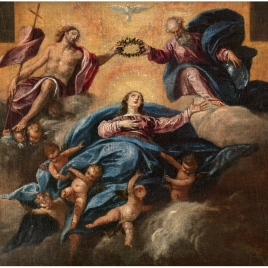
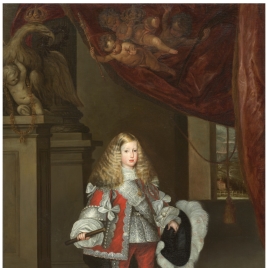
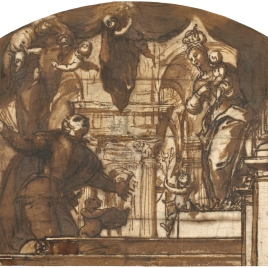
As an architect he was involved in many projects for altars, altarpieces and reliquaries, of which we have news through the drawings preserved, being noteworthy the preparatory for the altar of San Isidro (National Library, Madrid) and the Holy Family or the two Trinities for the church of the Jesuits in Madrid (in situ), for which he also executed the paintings. As a sculptor, the eagles of the Habsburgs and the Virgin of Guadalupe made in 1653 for the decoration of the chapel of Our Lady of Guadalupe in the convent of the Descalzas Reales in Madrid (all of them now disappeared) stand out. In his painting we can appreciate the Venetian influence of the XVI century and that of the Flemish Pedro Pablo Rubens and Anton van Dyck, through the works of them that were conserved in the royal collections. He cultivated the painting of portraits with works such as Carlos II (Museu Nacional d'Art de Catalunya, Barcelona) and religious painting with works such as El triunfo de San Agustín and Coronación de la Virgen (Prado, from the bequest of Pablo Bosch, 1915) (Burguera, B. in: Enciclopedia M.N.P., 2006, volume IV, 1276-1277).