formularioRDF
The itinerary <em>TITULORECORRIDO</em> has been successfully created. Now you can add in works from the Collection browser
<em>TITULOOBRA</em> added to <em>TITULORECORRIDO</em> itinerary

Metabuscador

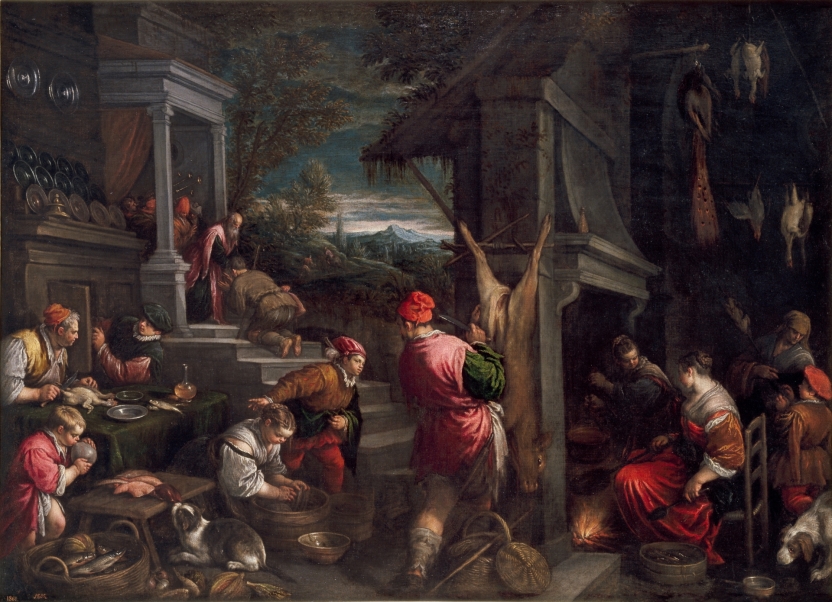
The Return of the Prodigal Son
Oil on canvas. Ca. 1570
This work portrays the well-known New Testament parable (Luke, 15: 11-32) illustrating the repentance of the sinner and the virtues of forgiveness. The pretext for the setting is the banquet given by the father to celebrate the return of the son, in which, according to the gospel, a fatted calf was served. The painter chose to recreate the festive nature of the event, ignoring the angry protests of the eldest son (often identified with the Jewish people) at the welcome with which the younger pro
ARTWORK
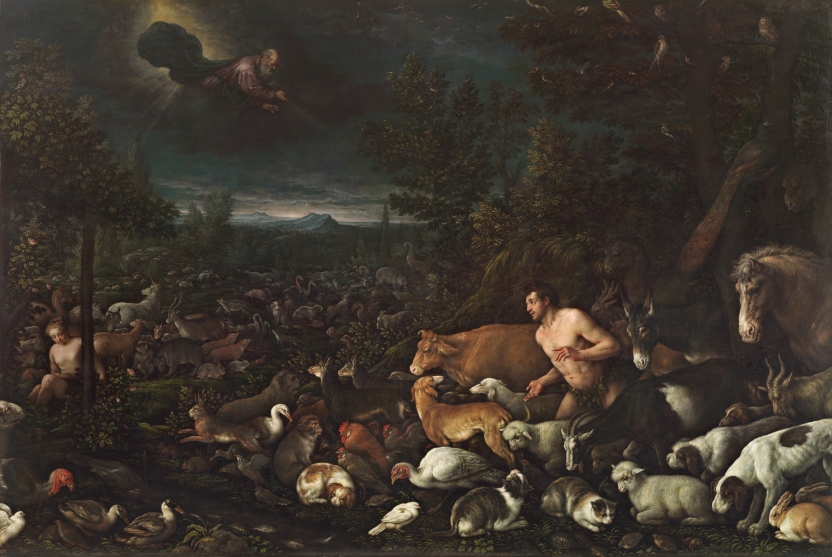
God reprimanding Adam
Oil on canvas. Ca. 1570
It is surprising that such a significant passage was seldom represented pictorially, whereas there are many examples of the moment immediately after the expulsion from Paradise. Neither was it a frequent theme of the Bassano bottega, despite lending itself well to a display of masterful representation of animals. In fact, this is the only known version. Jacopo convincingly depicted the moment God discovered man´s disobedience, which led to his expulsion from Paradise. Faithfully following the te
ARTWORK
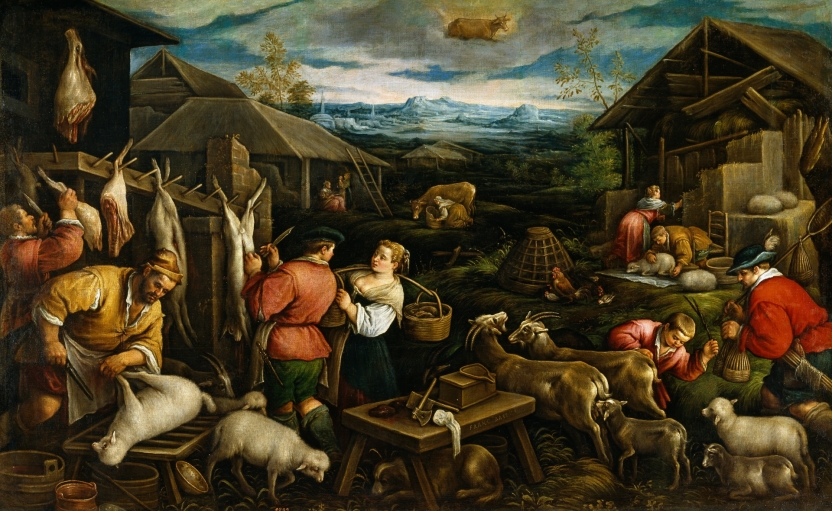
April (Taurus)
Oil on canvas. Late XVI century
Although there is no extant set of the twelve months of the year painted by Jacopo, it is possible that he invented this series. Certainly, the inventory taken in Bassano del Grappa following his death in 1592 mentions sketches of the twelve months from January to December (two different versions of some, such as May and June), and a further seven of unspecified months. In 1648, Ridolfi referred to a series painted by Jacopo for Emperor Rudolf II, which pleased the ruler so much that he offered
ARTWORK
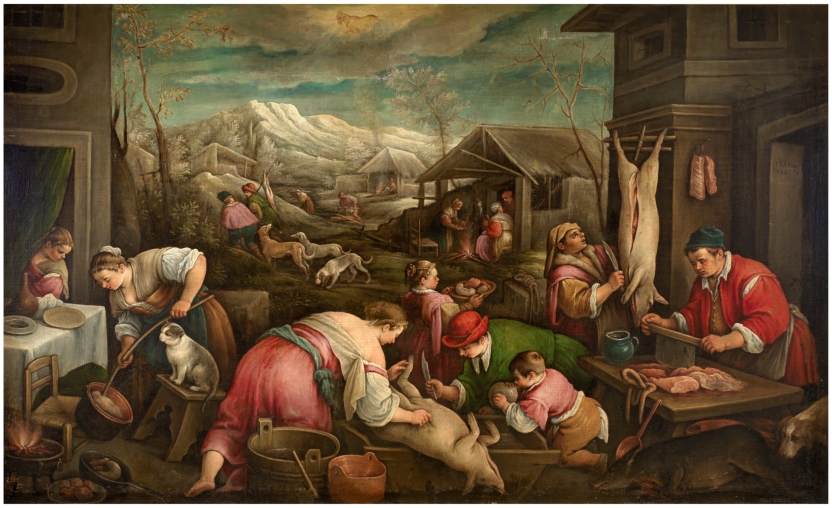
December (Capricorn)
Oil on canvas. Late XVI century
Although there is no extant set of the twelve months of the year painted by Jacopo, it is possible that he invented this series. Certainly, the inventory taken in Bassano del Grappa following his death in 1592 mentions sketches of the twelve months from January to December (two different versions of some, such as May and June), and a further seven of unspecified months. In 1648, Ridolfi referred to a series painted by Jacopo for Emperor Rudolf II, which pleased the ruler so much that he offered
ARTWORK
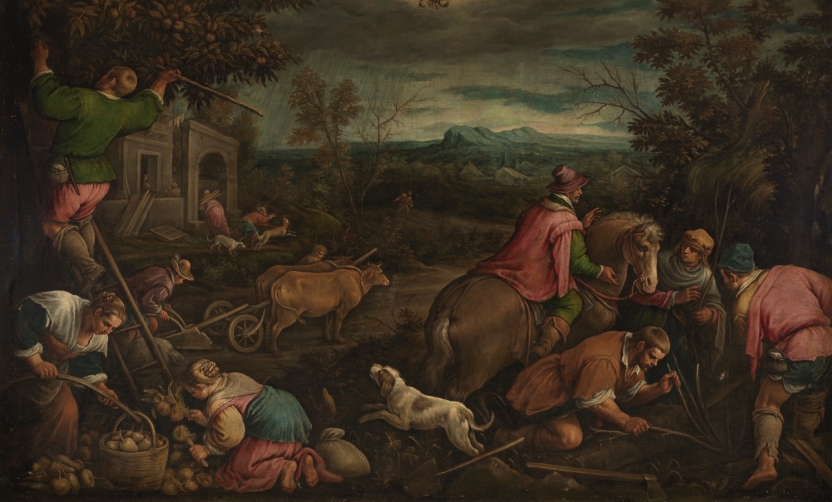
October (Scorpio)
Oil on canvas. Late XVI century
Although there is no extant set of the twelve months of the year painted by Jacopo, it is possible that he invented this series. Certainly, the inventory taken in Bassano del Grappa following his death in 1592 mentions sketches of the twelve months from January to December (two different versions of some, such as May and June), and a further seven of unspecified months. In 1648, Ridolfi referred to a series painted by Jacopo for Emperor Rudolf II, which pleased the ruler so much that he offered
ARTWORK
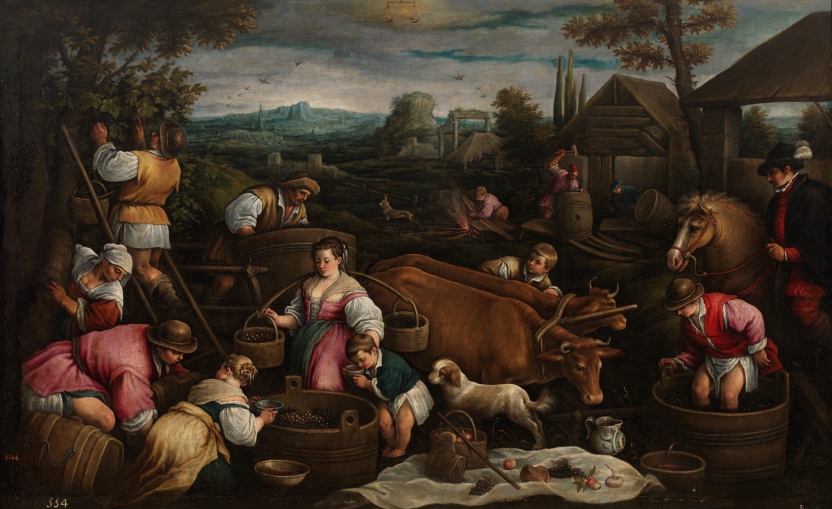
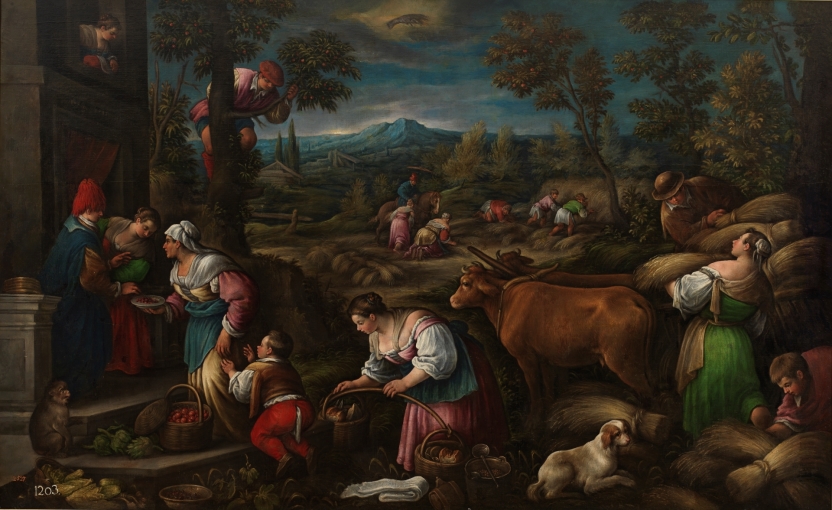
September (Libra)
Oil on canvas. Late XVI century
Although there is no extant set of the twelve months of the year painted by Jacopo, it is possible that he invented this series. Certainly, the inventory taken in Bassano del Grappa following his death in 1592 mentions sketches of the twelve months from January to December (two different versions of some, such as May and June), and a further seven of unspecified months. In 1648, Ridolfi referred to a series painted by Jacopo for Emperor Rudolf II, which pleased the ruler so much that he offered
ARTWORK
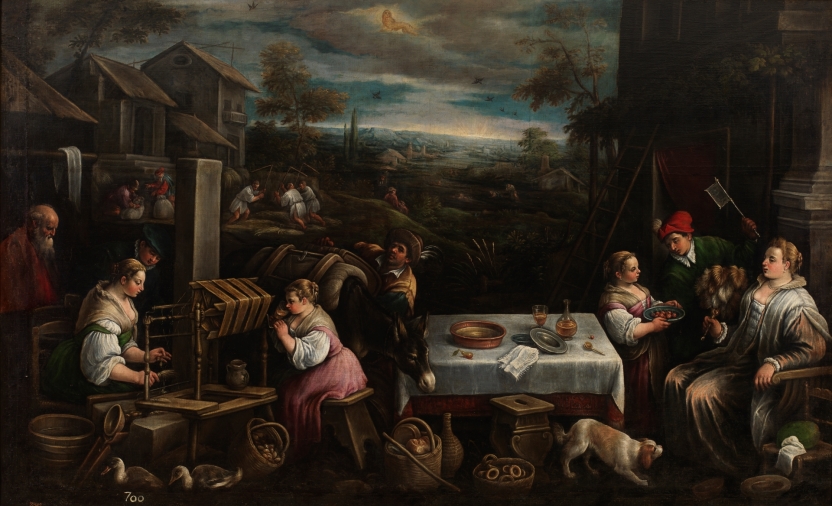
July (Leo)
Oil on canvas. Late XVI century
Although there is no extant set of the twelve months of the year painted by Jacopo, it is possible that he invented this series. Certainly, the inventory taken in Bassano del Grappa following his death in 1592 mentions sketches of the twelve months from January to December (two different versions of some, such as May and June), and a further seven of unspecified months. In 1648, Ridolfi referred to a series painted by Jacopo for Emperor Rudolf II, which pleased the ruler so much that he offered
ARTWORK
May (Gemini)
Oil on canvas. s XVI - XVII century
Although there is no extant set of the twelve months of the year painted by Jacopo, it is possible that he invented this series. Certainly, the inventory taken in Bassano del Grappa following his death in 1592 mentions sketches of the twelve months from January to December (two different versions of some, such as May and June), and a further seven of unspecified months. In 1648, Ridolfi referred to a series painted by Jacopo for Emperor Rudolf II, which pleased the ruler so much that he offered
ARTWORK
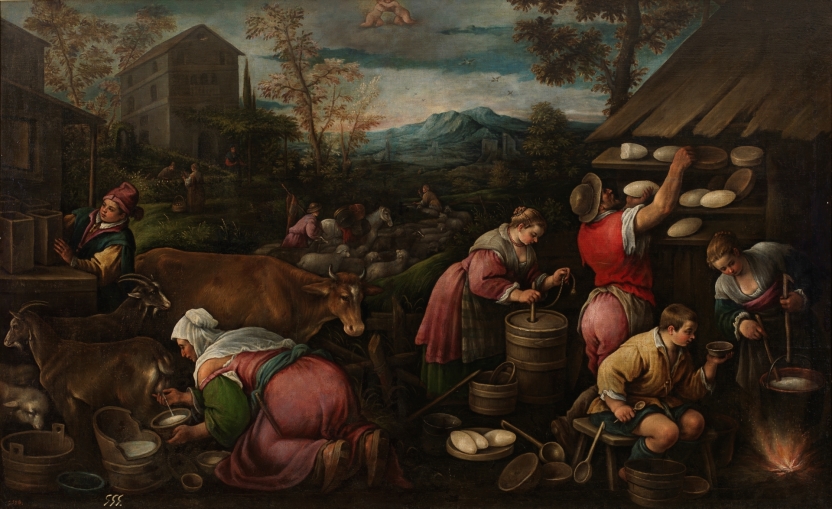
June (Cancer)
Oil on canvas. s XVI - XVII century
Although there is no extant set of the twelve months of the year painted by Jacopo, it is possible that he invented this series. Certainly, the inventory taken in Bassano del Grappa following his death in 1592 mentions sketches of the twelve months from January to December (two different versions of some, such as May and June), and a further seven of unspecified months. In 1648, Ridolfi referred to a series painted by Jacopo for Emperor Rudolf II, which pleased the ruler so much that he offered
ARTWORK
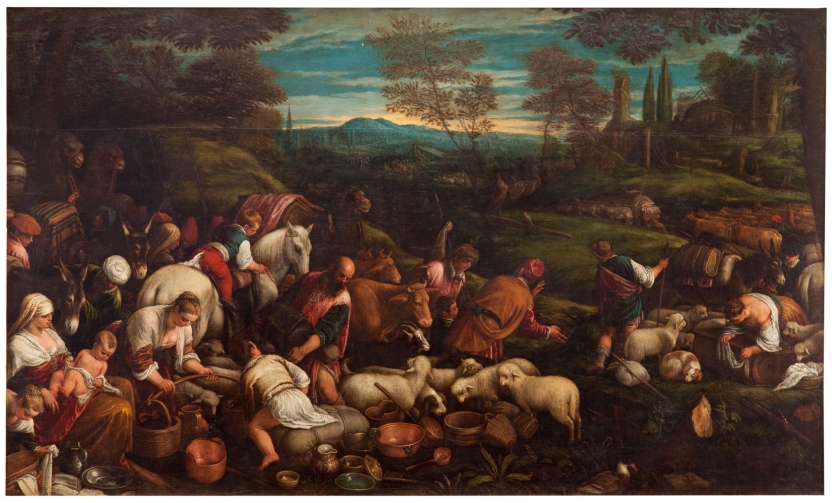
Jacob's Journey
Oil on canvas. Second half of the XVI century
As Arslan points out, this is the best known version of the Partenza per Canaan (Venice, Palazzo Ducale; 150 x 205 cm) which Jacopo Bassano painted for the Venetian patrician Jacopo Contarini, whose descendant, Bertucci Contarini, donated at the beginning of the 18th century to the Palazzo del Governo in Venice, where it is mentioned as hanging in 1733. The original, dated to approximately 1579, is the last and most grandiose rendering of a theme that was very dear to Jacopo and which he first p
ARTWORK
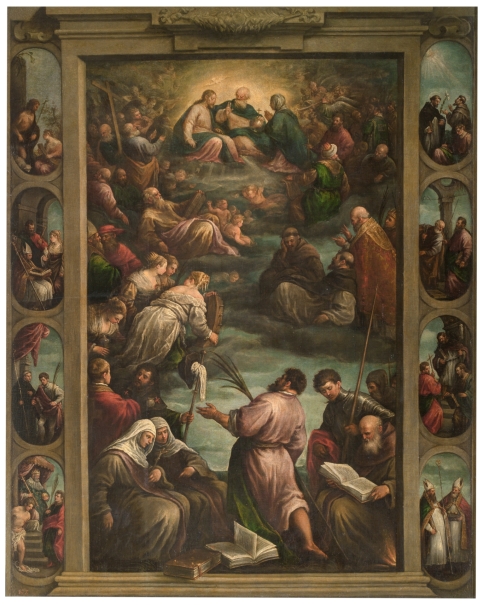
Virgin in Heaven
Oil on canvas. Second half of the XVI century
This work is a variation on the painting executed by Jacopo towards 1580 for the main altar of the church of the Capuchins in Bassano del Grappa (Museo Civico, inv. 18), a large work (237 x 155 cm) with over fifty figures that constitutes una sorta di compendio di tutte le positure fatte da Jacopo Bassano per le sue opere (Marini: 1992, p. 298), and which was inspired by Titian´s La Gloria (P432), with which he would have been familiar through Cornelius Cort´s print. His sons adopted the composi
ARTWORK
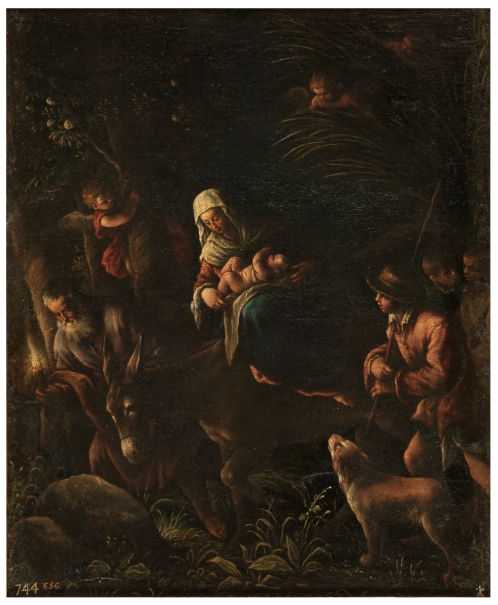
Flight into Egypt
Oil on canvas. Second half of the XVI century
Unlike the adoration of the shepherds, which took place at night according to the gospel account, the nocturnal setting for the Holy Family´s flight into Egypt was an invention of the painter, since Mathew 2: 13-15 narrates how an angel appeared to Joseph in a dream and warned him that the child was in danger, but does not state that the Family departed at night or preferred to leave at sunset. Indeed, there were few pictorial precedents of night-time Flight scenes, and Jacopo himself had always
ARTWORK
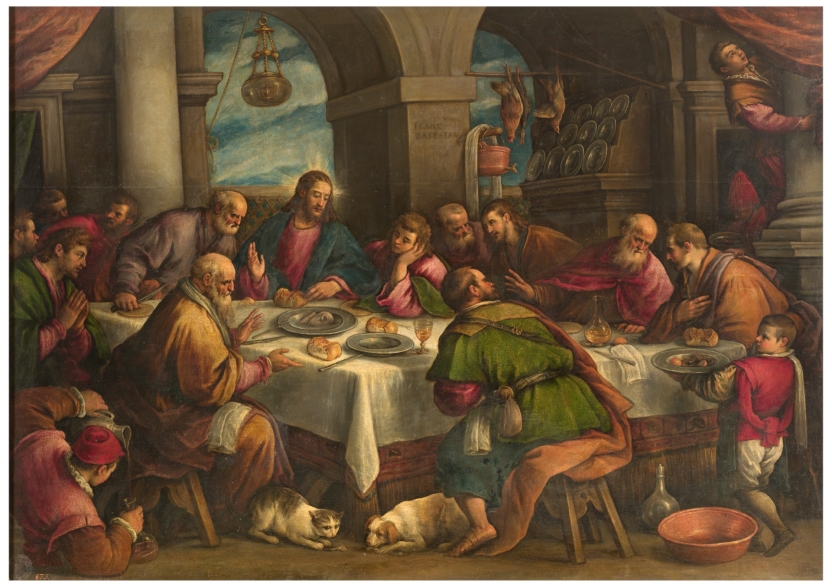
Last Supper
Oil on canvas. Ca. 1586
Although Bettini noted a number of paternal precedents for this painting, it is a personal interpretation by Francesco of the gospel passage. Three versions are known, of which the Prado painting is the last. The first, dated about 1585, was auctioned by Sotheby´s of Florence in 1984, and there is a preparatory drawing of the figures of the elderly man with a bear and the page on the left (Vienna, Albertina, n. 1.699), which Rearick linked to the Prado painting. The second was painted in 1
ARTWORK
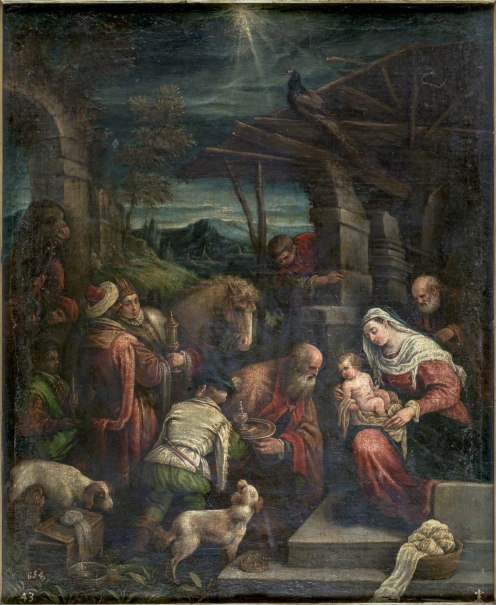
The Adoration of the Magi
Oil on canvas. Second half of the XVI century
This is a condensed version in vertical format of the Adoration of the Magi at the Galleria Borghese in Rome (inv. 150), a painting that is difficult to attribute and which Arslan believed to be by Francesco and Rearick by Leandro, though Ballarin ascribed it to Jacopo, dating it around 1576. The inferior quality of the Prado painting, which is signed by Francesco, supports Ballarin´s hypothesis. There are further perceptible differences deriving from the smaller size of the Prado version (86 x
ARTWORK
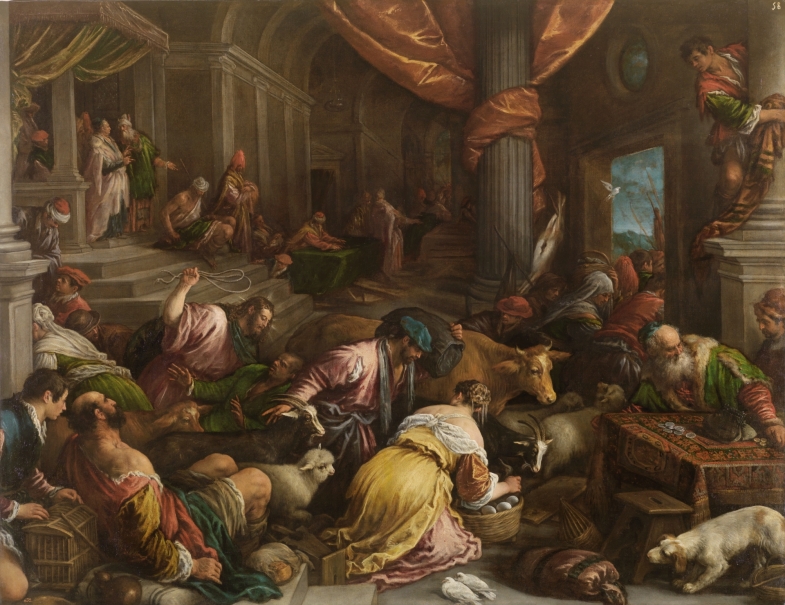
Expulsion of the Merchants from the Temple
Oil on canvas. Ca. 1585
This replica by Francesco of the original painted by his father in 1583-85 (London, National Gallery no. 228) exemplifies how Jacopo´s inventions were transformed and adapted by the bottega, sometimes with surprising results. Francesco was unable or unwilling to attempt the complex spatial arrangement of his father´s work, in which the indoor area opened onto the outdoor space at three points: two architraved doors in the right-hand wall, and an arcade in the background that provided the vanishi
ARTWORK
Loading...

Loading...

Up