formularioRDF
The itinerary <em>TITULORECORRIDO</em> has been successfully created. Now you can add in works from the Collection browser
<em>TITULOOBRA</em> added to <em>TITULORECORRIDO</em> itinerary

Metabuscador

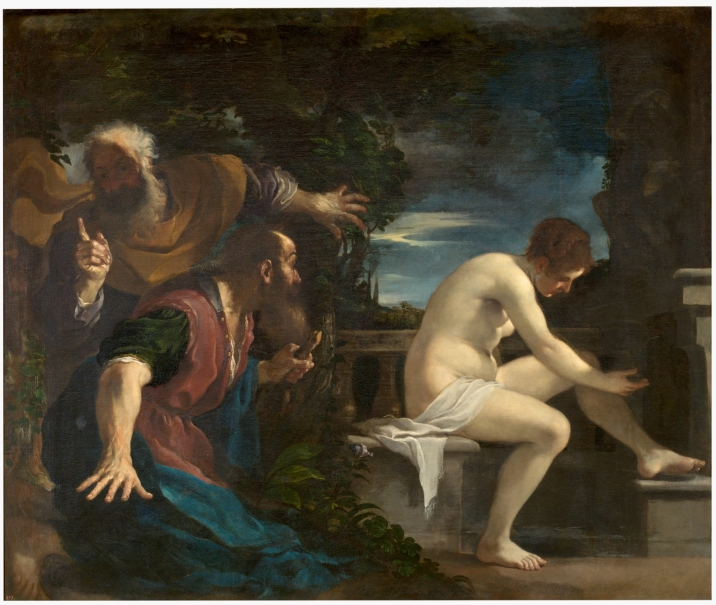
Susannah and the Elders
Oil on canvas. 1617
Historian Denis Mahon has masterfully shown that this painting and two other famous works by Guercino -Lot and his daughters (Monastery of El Escorial, Madrid) and The return of the Prodigal Son (Galleria Sabauda, Turin)- were painted for Cardinal Alessandro Ludovisi in 1617 and 1618, while the artist was in Bologna.According to the Old Testament (Daniel:13), Archian and Sedechia were two elderly judges who regularly visited the home of a rich man named Joachim to discuss certain cases. One hot
ARTWORK
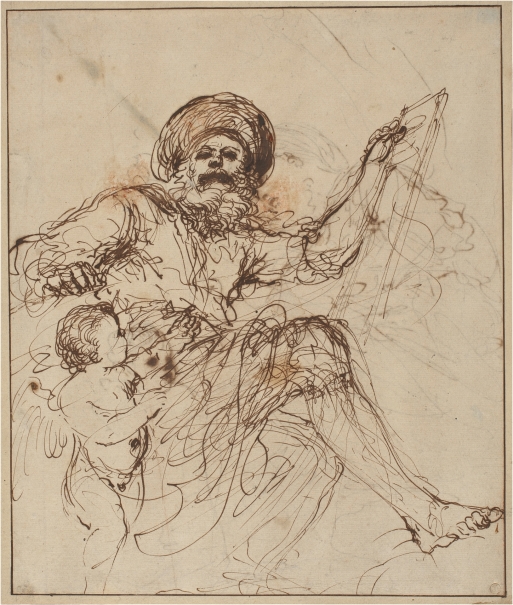
Study of a prophet / Human figure with a child
Pencil, Grey-brown ink on dark yellow paper. Ca. 1627
This drawing was first identified by Manuela Mena Marqués as a preparatory study for Prophet Jeremiah, one of a group of six prophets painted in fresco by Guercino for the cupola of Piacenza’s cathedral in 1627. Sir Denis Mahon, the renowned Guercino scholar, had separately noted other studies relating to the same commission, including some related to the figure of Jeremiah.Commissioned by the bishop of Piacenza, the painting of the cathedral’s cupola was commenced in 1625 by Pier Frances
ARTWORK
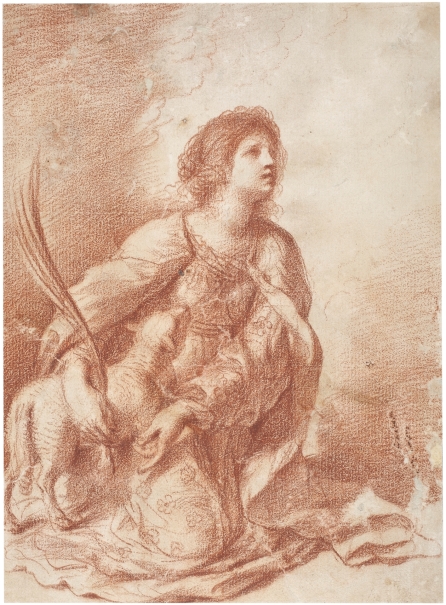
Saint Agnes
Red chalk on dark yellow paper. 1650 - 1660
This drawing, formerly in the Spanish Royal Collection, was recognised as an autograph work by Guercino by Manuela Mena Marqués. The suggested date for it is around the 1650-60, when Guercino had attained artistic maturity, a date that stylistically seems correct. Mena Marqués also proposed that the drawing stood alone and was not intended as a preparatory work for a painting, a hypothesis that also seems likely. She also suspected that it was intended as a modello for an engraving
ARTWORK
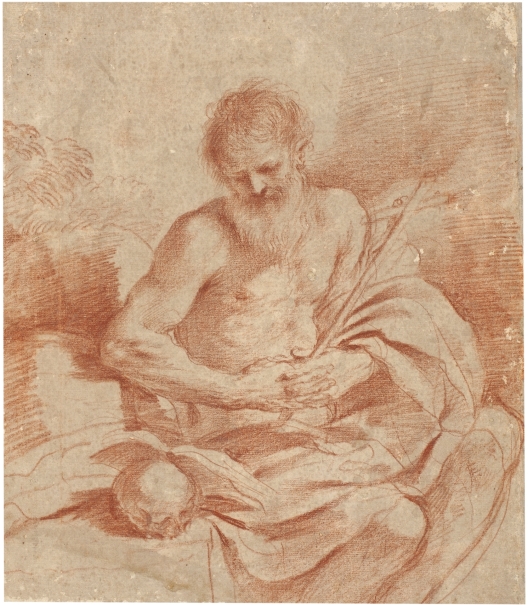
The penitent Saint Jerome
Red chalk on grey paper. XVII century
En el dibujo aparece San Jerónimo sentado sobre unas rocas, semidesnudo, con un crucifijo entre las manos y meditando entre sus escritos. Estilísticamente corresponde a los dibujos fechados en la década de 1630. A pesar de las numerosas versiones pictóricas que Guercino hizo del tema de San Jerónimo, el dibujo no corresponde a ninguna de ellas.La faceta de Guercino como dibujante se relaciona estrechamente con el estilo y la técnica de Ludovico y Annibale Carracci, en apuntes rápidos a pluma, a
ARTWORK
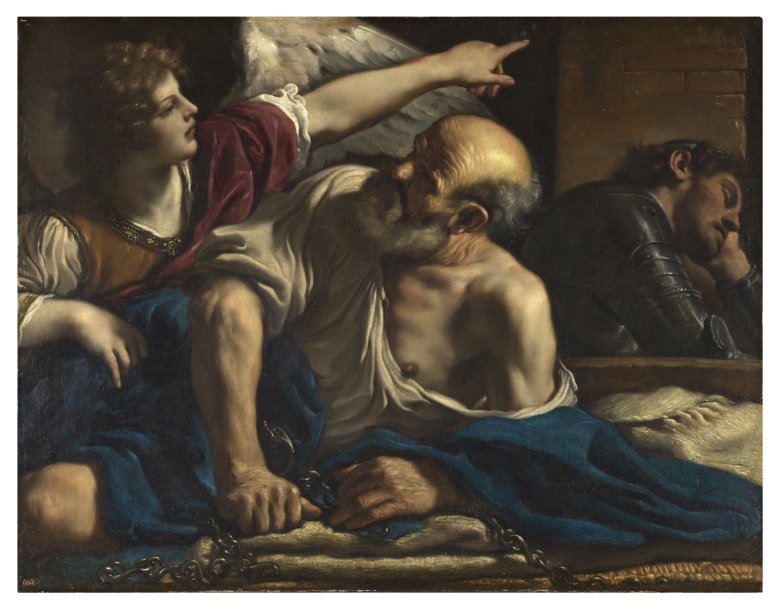
Saint Peter freed by an Angel
Oil on canvas. Ca. 1622
A youthful looking angel with curly hair imperiously points out the path of freedom to an astonished Saint Peter, depicted as a man of advanced age confined in a prison. In the background, clad in a suit of armour, the gaoler sleeps, impervious to what is going on behind his back. The two main figures are attired in vaguely classical dress: that of the angel is simple but sumptuous, in accordance with her celestial nature and ideal beauty, whereas the first pope is draped in tattered clothing ow
ARTWORK
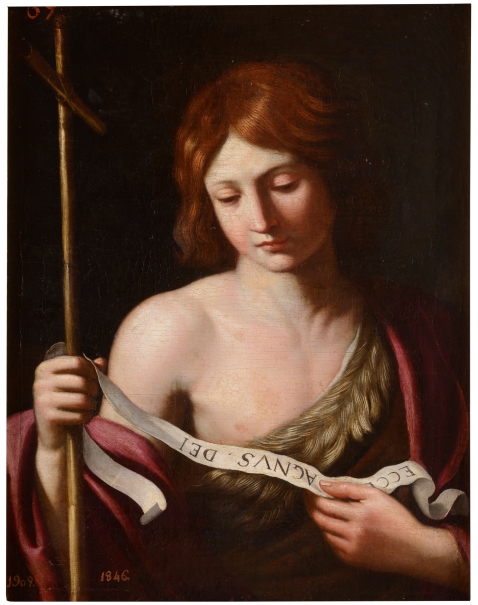
Saint John the Baptist
Oil on canvas. 1645 - 1670
San Juan Bautista aparece representado de medio cuerpo. La obra copia la composición análoga de Guercino, datada hacia 1645, que conserva la Pinacoteca Capitolina de Roma (inv. PC 286), donde ingresó en 1748 con la compra de la colección Sacchetti. Pérez Sánchez (1965) la consideró erróneamente copia de Guido Reni. (Información actualizada por el Departamento de Pintura Italiana y Francesa hasta 1800 el 20/10/2021)
ARTWORK
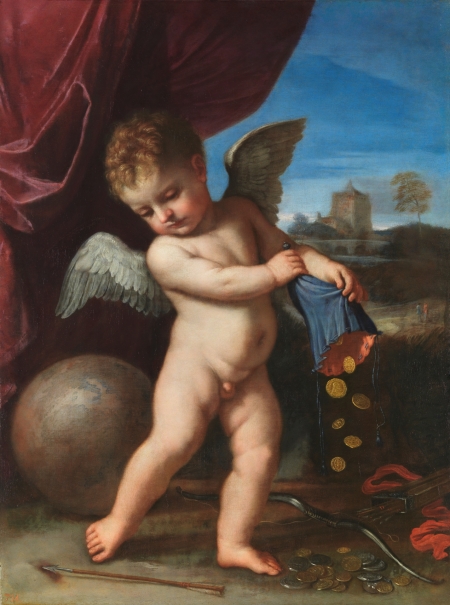
Cupid spurning Riches
Oil on canvas. Ca. 1653
The papal nuncio to Spain, Camillo Massimo (1620–1677), presented Guercino’s Cupid spurning Riches and Guido Reni’s Cupid with a Bow (P150) to King Philip IV as diplomatic gifts in 1655, and the pair are documented in the inventories of the Spanish royal collection from 1666. Guercino’s painting depicts a youthful Cupid emptying a bag of gold coins, which are shown falling to the ground. More gold and silver coins are piled at his feet, and a bow with a loosened string and an abandoned quiver of
ARTWORK
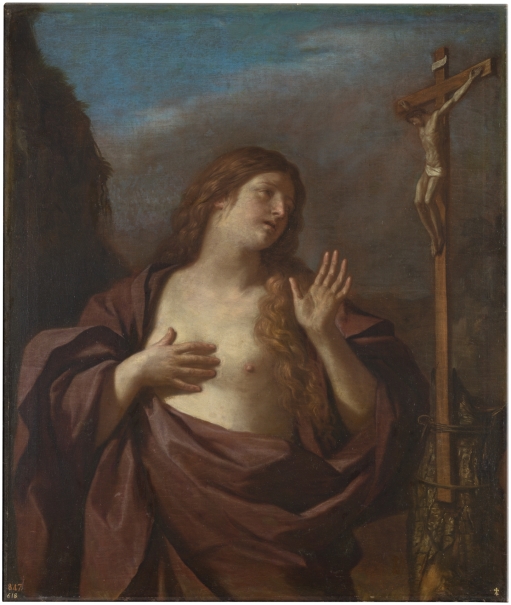
Penitent Magdalen
Oil on canvas. 1645 - 1649
María Magdalena es una de las santas más célebres del cristianismo, por haber conocido a Cristo y porque representó el paradigma de la mujer arrepentida. En su etapa de vida mundana suele caracterizarse con ricas vestiduras. Cuando se muestra como mujer arrepentida -como en esta pintura de Guercino- aparece semidesnuda y con largos cabellos, adorando el crucifijo. Otros dos de sus atributos más reconocibles, no presentes en esta obra, son la calavera -símbolo de la meditación sobre la muerte- y
ARTWORK
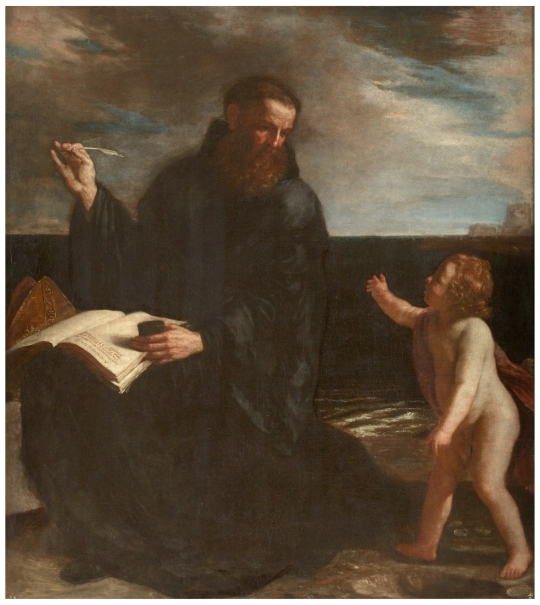
Saint Augustine meditating on the Trinity
Oil on canvas. 1636
According to this saint´s story, he was walking along the seaside meditating about the mystery of the Holy Trinity when he saw a boy filling a hole in the sand with seawater. Saint Augustine asked what he was doing and the boy answered that he was trying to empty the sea by pouring all its water into that hole. Upon hearing his answer, the saint said that that was impossible. The boy´s answer was that, if what he was doing was impossible, it was even less possible to try to understand the myster
ARTWORK
Loading...

Loading...

Up