formularioRDF
The itinerary <em>TITULORECORRIDO</em> has been successfully created. Now you can add in works from the Collection browser
<em>TITULOOBRA</em> added to <em>TITULORECORRIDO</em> itinerary

Metabuscador

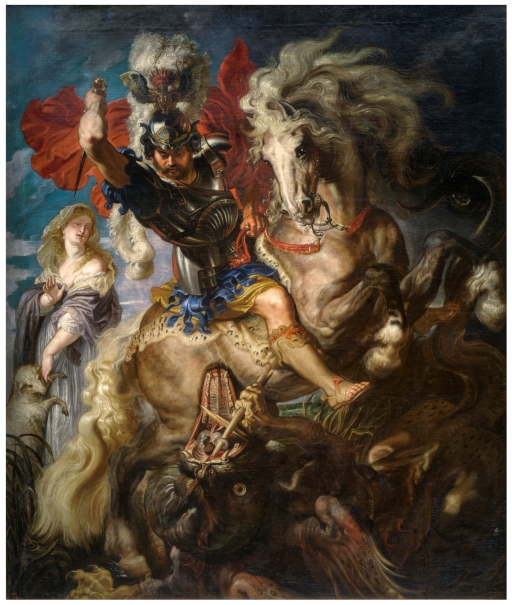
Saint George and the Dragon
Oil on canvas. 1606 - 1608
The tale of Saint George and the Dragon was popularised by the writer Jacopo della Voragine in his Golden Legend. It tells of the arrival of St. George ain Silca, a city of Libya, where there was a large lake inhabited by a dragon, to whom the people threw two sheep a day as food in order to appease the monster´s wrath. When the sheep ran out, they began to sacrifice the inhabitants of the town, chosen by lot; eventually, it was the turn of the king´s daughter. On her way, she met Sa
ARTWORK
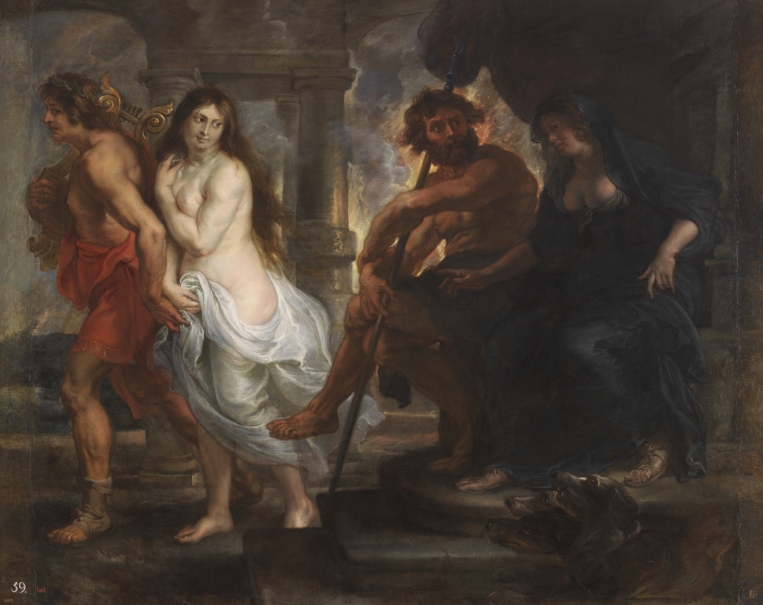
Orpheus and Eurydice
Oil on canvas. 1636 - 1638
Orpheus descends into the Underworld to recover his wife, Eurydice, who died after being bitten by a serpent. Pluto and Proserpina, the god and goddess of the underworld, are so moved by the music of his lyre that they accede to his request. The only condition they impose is that he contains his desire and not look at his beloved until they have both fully departed the underworld. On the basis of this story from Ovid´s Metamorphoses (book X, 1-59), Rubens designs a very balanced painting. On the
ARTWORK
Peter Paul Rubens – (and workshop)
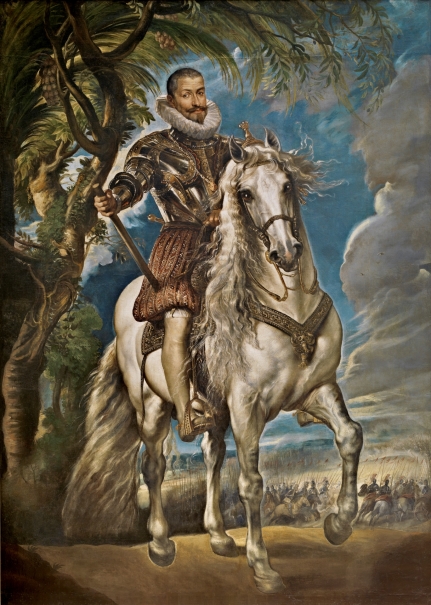
Equestrian Portrait of the Duke of Lerma
Oil on canvas. 1603
Felipe III´s favorite, Francisco de Sandoval y Rojas, Marquis of Denia and First Duke of Lerma is shown as chief of the Spanish Armies. Wearing half armor, he rides a white steed and carries a ruler´s staff. The scallop of the Knights of Saint James at his neck is the only decorative element in this portrait, whose decidedly military orientation is reinforced by the cavalry battle in the background. Made in 1603, during Rubens´ first visit to Spain, this work shows the power an
ARTWORK
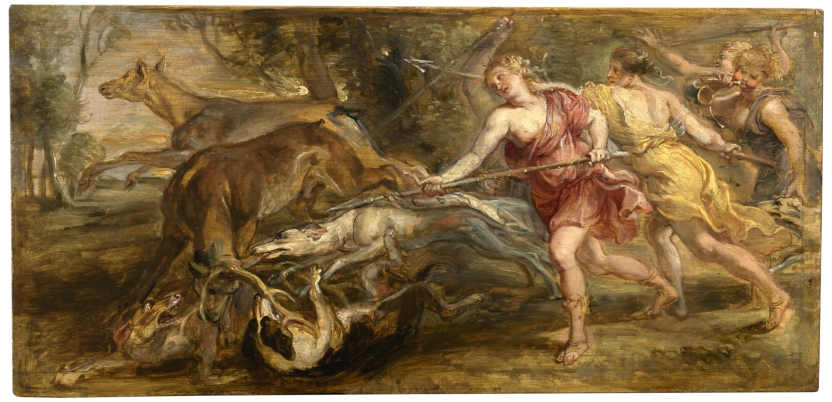
Diana and her Nymphs hunting
Oil on oak panel. 1636 - 1637
Recognizable by the crescent-moon-shaped diadem on her head, Diana hunts deer with spears and dogs, accompanied by various nymphs. The extremely horizontal composition is one of the peculiarities of this work, which belongs to an important sect of sketches made by Rubens for the pictorial decoration of the Torre de la Parada. On these small panels, the painter defined the design, colors, forms and structure of the future work so that one of his assistants could make the definitive canvas. Of all
ARTWORK
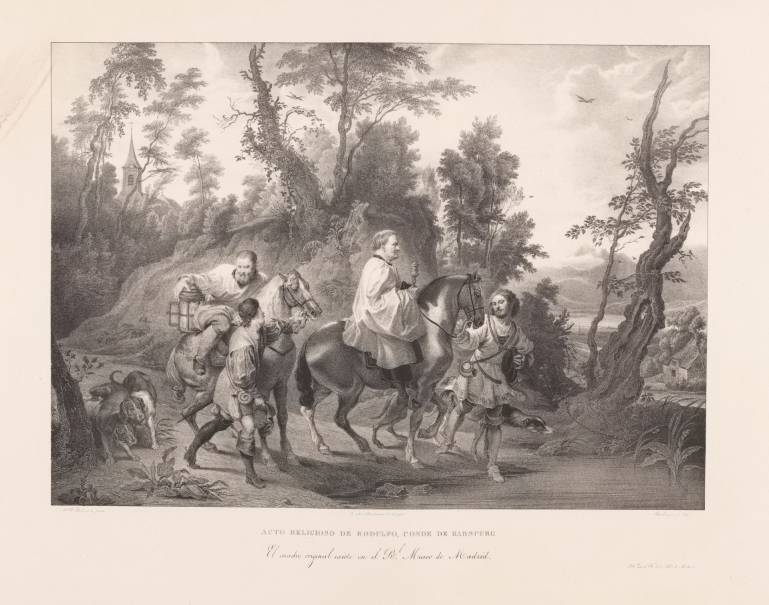
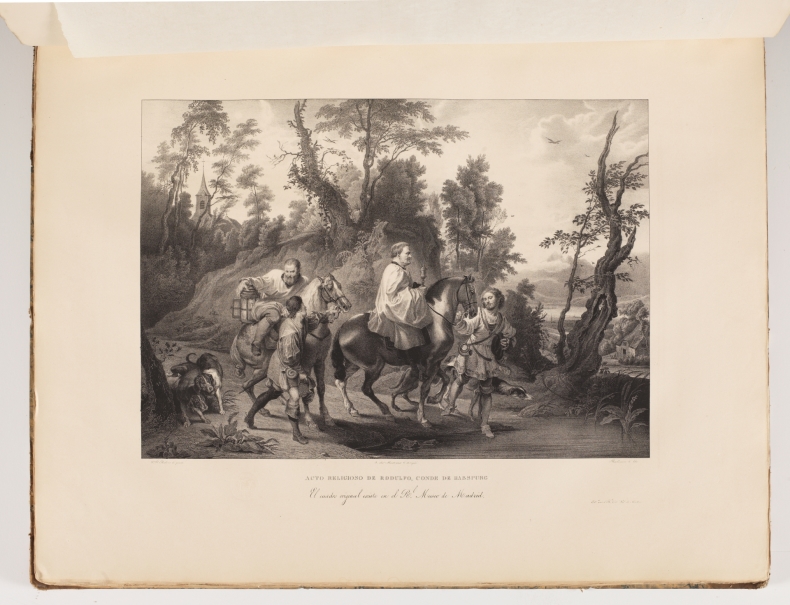
Act of Devotion by Rudolf I of Habsburg
Lithographic aquatint, Pen lithography, Crayon lithography, Scraper on wove paper. 1832 - 1837
Es una litografía de Léon-Auguste Asselineau (1808 –1889) que reproduce el lienzo pintado por Rubens, cuya firma aparece en la estampa, y por Jan Wildens (P01645). Rubens realizó las figuras y el paisaje fue pintado por Wildens. Esta estampa se entregaba con el cuadernillo CXXXIX acompañado de un texto explicativo de José Musso y Valiente. Iba encuadernada en el tomo III de la serie dirigida por José de Madrazo, Colección litográfica de cuadros del rey de España el señor don Fernando VII, editad
ARTWORK
Leon-Augusto Asselineau – Lithographer
Peter Paul Rubens – (Author of the original work)
Jan Wildens – (Author of the original work)
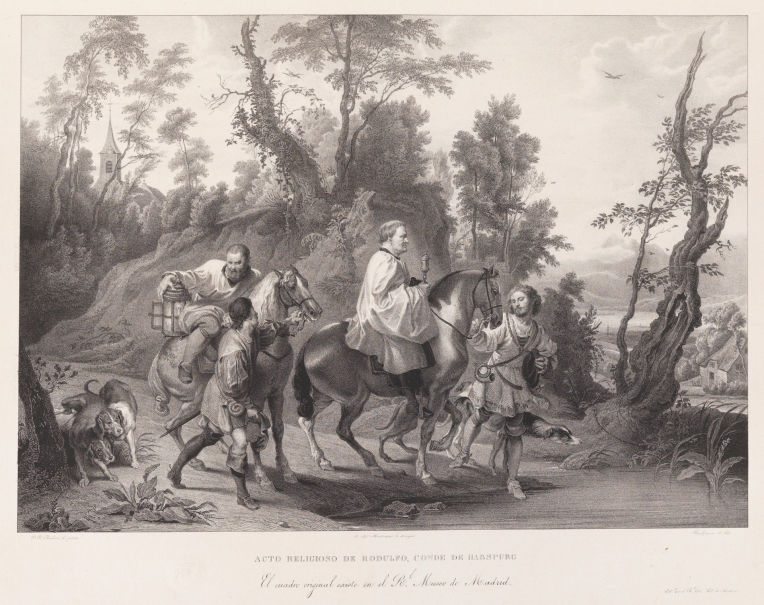
Act of Devotion by Rudolf I of Habsburg
Pen lithography, Lithographic aquatint, Scraper, Printing on japon, Crayon lithography on wove paper. 1832 - 1837
Es una litografía de Léon-Auguste Asselineau (1808-1889) que reproduce el lienzo pintado por Rubens, cuya firma aparece en la estampa, y por Jan Wildens (P01645). Rubens realizó las figuras y el paisaje fue pintado por Wildens. El título que aparece en la estampa es Acto religioso de Rodulfo, Conde de Hasburg. Esta estampa se entregaba con el cuadernillo CXXXIX acompañado de un texto explicativo de José Musso y Valiente. Está encuadernada en el tomo III de la serie dirigida por José de Madrazo,
ARTWORK
Leon-Augusto Asselineau – Lithographer
Peter Paul Rubens – (Author of the original work)
Jan Wildens – (Author of the original work)
Act of Devotion by Rudolf I of Habsburg
Lithographic aquatint, Scraper, Pen lithography, Crayon lithography on wove paper. 1832 - 1837
Es una litografía de Léon-Auguste Asselineau (1808 –1889) que reproduce el lienzo pintado por Rubens, cuya firma aparece en la estampa, y por Jan Wildens (P01645). Rubens realizó las figuras y el paisaje fue pintado por Wildens. Esta estampa se entregaba con el cuadernillo CXXXIX acompañado de un texto explicativo de José Musso y Valiente. Está encuadernada en el tomo III de la serie dirigida por José de Madrazo, Colección litográfica de cuadros del rey de España el señor don Fernando VII, edita
ARTWORK
Leon-Augusto Asselineau – Lithographer
Peter Paul Rubens – (Author of the original work)
Jan Wildens – (Author of the original work)
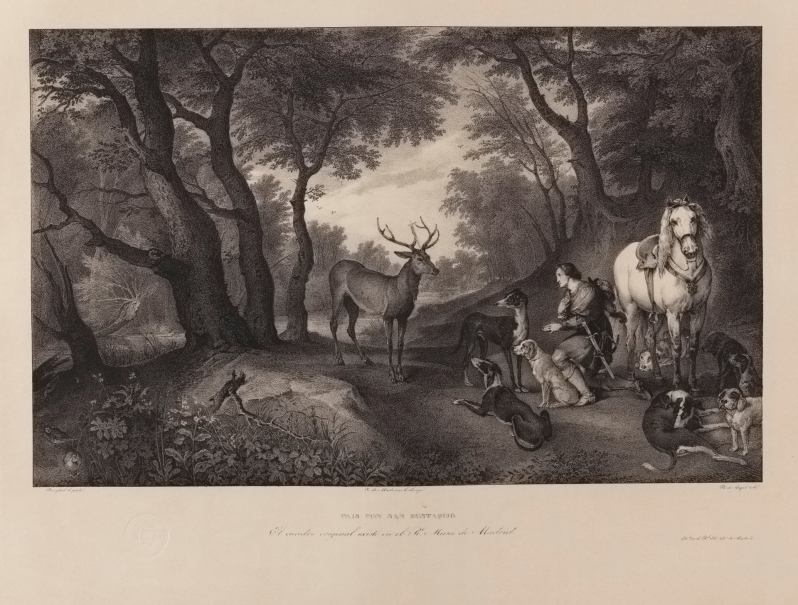
The Vision of Saint Hubert
Lithographic aquatint, Pen lithography, Scraper, Crayon lithography on wove paper. 1829 - 1832
Es una litografía de Andreas Pic de Leopold (1789?-después de 1860). Produce el lienzo, conservado en el Museo Nacional del Prado (P01411), de la conversión de san Huberto, cuya figura del santo fue pintada por Rubens; el resto de la composición es de la mano de Jan Brueghel el Viejo. El lienzo, en su momento, se creyó solo de Brueghel, tal y como se indica en la letra de la estampa. El título que aparece en la estampa es: Pais con San Eustaquio. Este santo era un romano del siglo II convertido
ARTWORK
Andreas Pic de Leopold – Lithographer – (The original work, according to inscriptions, attributed to: Jan (Jan 'Velvet' Brueghel) Brueghel the Elder)
Jan (Jan 'Velvet' Brueghel) Brueghel the Elder – (Author of the original work)
Peter Paul Rubens – (Author of the original work)
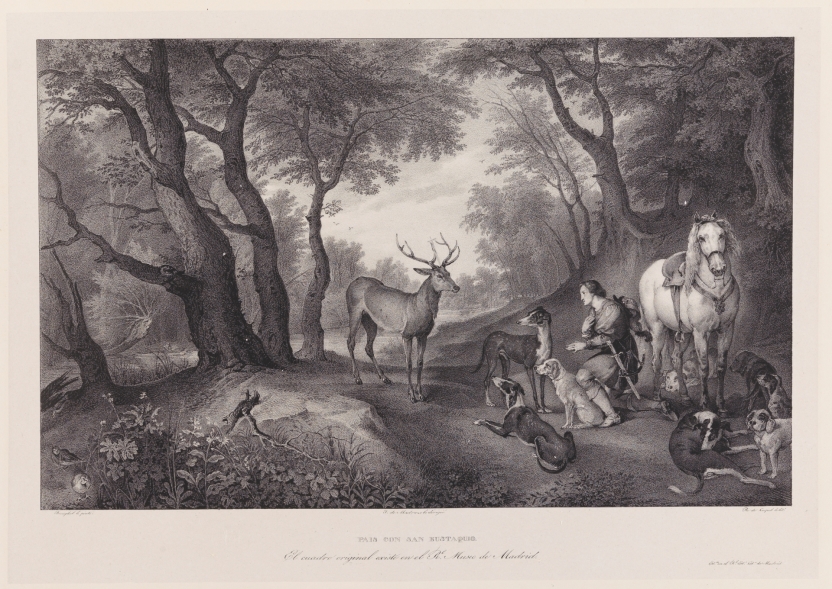
The Vision of Saint Hubert
Pen lithography, Lithographic aquatint, Crayon lithography, Printing on japon, Scraper on wove paper. 1829 - 1832
Es una litografía de Andreas Pic de Leopold (1789?-después de 1860). Reproduce el lienzo, conservado en el Museo Nacional del Prado (P01411), de la conversión de san Huberto, cuya figura del santo fue pintada por Rubens; el resto de la composición es de la mano de Jan Brueghel el Viejo. El lienzo, en su momento, se creyó solo de Brueghel, tal y como se indica en la letra de la estampa. El título que aparece en la estampa es: Pais con San Eustaquio. Este santo era un romano del siglo II convertid
ARTWORK
Andreas Pic de Leopold – Lithographer – (The original work, according to inscriptions, attributed to: Jan (Jan 'Velvet' Brueghel) Brueghel the Elder)
Jan (Jan 'Velvet' Brueghel) Brueghel the Elder – (Author of the original work)
Peter Paul Rubens – (Author of the original work)
The Vision of Saint Hubert
Lithographic aquatint, Crayon lithography, Printing on japon, Scraper, Pen lithography on wove paper. 1829 - 1832
Es una litografía de Andreas Pic de Leopold (1789?-después de 1860). Reproduce el lienzo, conservado en el Museo Nacional del Prado (P01411), de la conversión de san Huberto, cuya figura del santo fue pintada por Rubens; el resto de la composición es de la mano de Jan Brueghel “el Viejo”. El lienzo, en su momento, se creyó solo de Brueghel, tal y como se indica en la letra de la estampa. El título en la estampa es: Pais con San Eustaquio. Este santo era un romano del siglo II convertido al crist
ARTWORK
Andreas Pic de Leopold – Lithographer – (The original work, according to inscriptions, attributed to: Jan (Jan 'Velvet' Brueghel) Brueghel the Elder)
Peter Paul Rubens – (Author of the original work)
Jan (Jan 'Velvet' Brueghel) Brueghel the Elder – (Author of the original work)
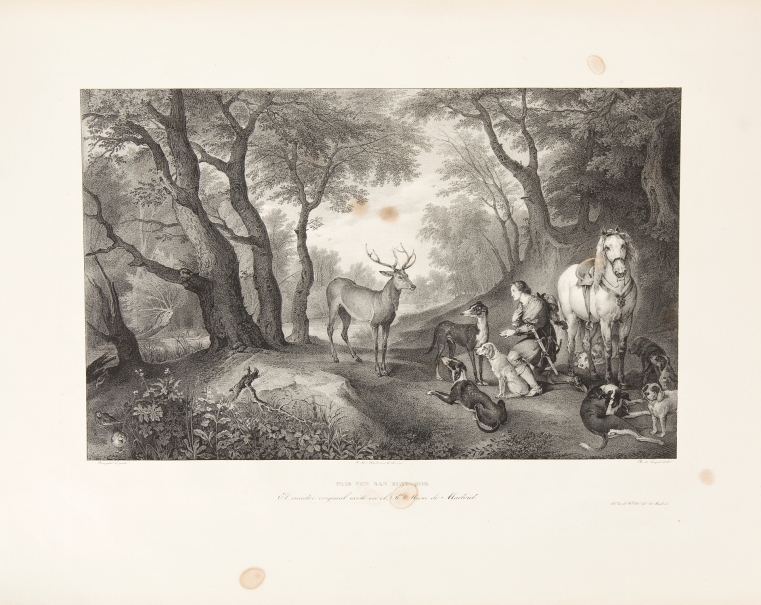
The Vision of Saint Hubert
Lithographic aquatint, Pen lithography, Scraper, Crayon lithography on wove paper. 1829 - 1832
Es una litografía de Andreas Pic de Leopold (1789?-después de 1860). Reproduce el lienzo, conservado en el Museo Nacional del Prado (P01411), de la conversión de san Huberto, cuya figura del santo fue pintada por Rubens; el resto de la composición es de la mano de Jan Brueghel el Viejo. El lienzo, en su momento, se creyó solo de Brueghel, tal y como se indica en la letra de la estampa.El título que aparece en la estampa es Pais con San Eustaquio. Este santo era un romano del siglo II convertido
ARTWORK
Andreas Pic de Leopold – Lithographer – (The original work, according to inscriptions, attributed to: Jan (Jan 'Velvet' Brueghel) Brueghel the Elder)
Peter Paul Rubens – (Author of the original work)
Jan (Jan 'Velvet' Brueghel) Brueghel the Elder – (Author of the original work)
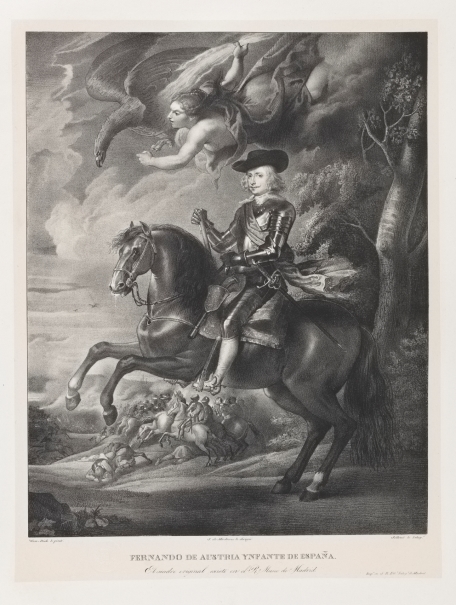
The Cardinal-Infante Don Fernando de Austria, at the Battle of Nördlingen
Lithographic aquatint, Crayon lithography, Pen lithography, Scraper, Printing on japon on wove paper. 1826 - 1829
The Company for the engraving of the paintings from the Royal Palaces was one of the Spanish Enlightenment’s major undertakings during the second half of the 18th century. It supervised the reproduction of prints of paintings from the Royal Collections and its early projects were carried out by Francisco de Goya, who reproduced some of Velázquez’s paintings in 1778, and by Juan Barcelón and Nicolás Barsanti, who reproduced The Labors of Hercules after the fresco that Luca Gi
ARTWORK
Pierre-Jules Jollivet – Lithographer – (The original work, according to inscriptions, attributed to: Anthony van Dyck)
Peter Paul Rubens – (Author of the original work)
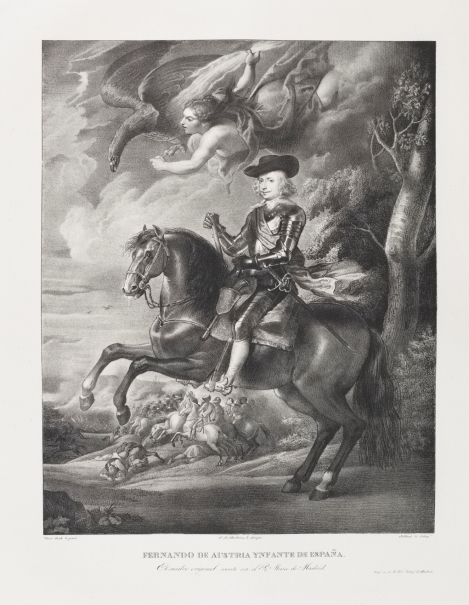
The Cardinal-Infante Don Fernando de Austria, at the Battle of Nördlingen
Lithographic aquatint, Scraper, Crayon lithography on wove paper. 1826 - 1829
The Company for the engraving of the paintings from the Royal Palaces was one of the Spanish Enlightenment’s major undertakings during the second half of the 18th century. It supervised the reproduction of prints of paintings from the Royal Collections and its early projects were carried out by Francisco de Goya, who reproduced some of Velázquez’s paintings in 1778, and by Juan Barcelón and Nicolás Barsanti, who reproduced The Labors of Hercules after the fresco that Luca Gi
ARTWORK
Pierre-Jules Jollivet – Lithographer – (The original work, according to inscriptions, attributed to: Anthony van Dyck)
Peter Paul Rubens – (Author of the original work)
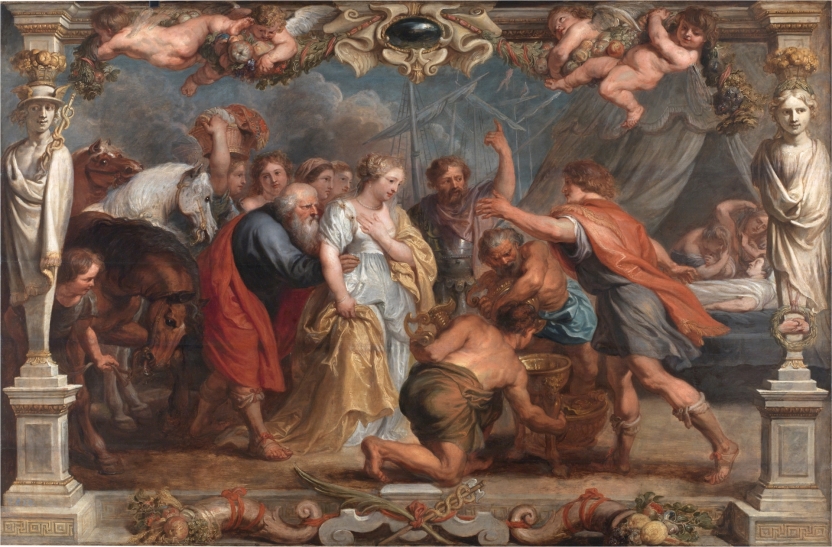
Briseis returned to Achilles by Nestor
Oil on panel. 1630 - 1635
A model for the tapestry on the same subject that belongs to a series of eight about the Greek hero. The Story of Achilles is smaller than other projects by Rubens, but the quality of its sketches, models and tapestries make it one of his most important.Achilles vowed to take revenge on Hector for the death of his friend Patroclus. His anger with Agamemnon had subsided and he decided to take up arms and resume his place among the Greeks. Upon hearing about his decision, Agamemnon sent the splend
ARTWORK
Peter Paul Rubens – (and workshop)
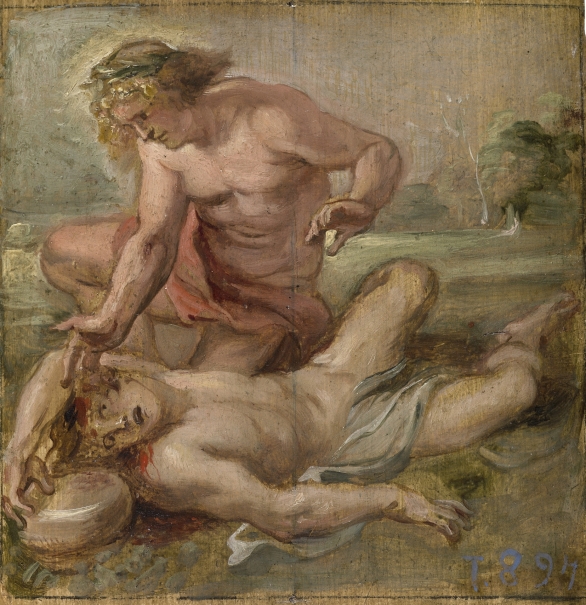
The Death of Hyacinth
Oil on panel. 1636 - 1637
Apollo helplessly contemplates the death throes of his beloved Hyacinth, who was hit by one of the discs the two were throwing in a display of their athletic skills. This is one of the preparatory sketches Rubens made for the painting Jan Cossiers carried out for use in the Torre de la Parada. Rubens based this work on a sketch by Michelangelo, revealing his interest in Renaissance artists.
ARTWORK
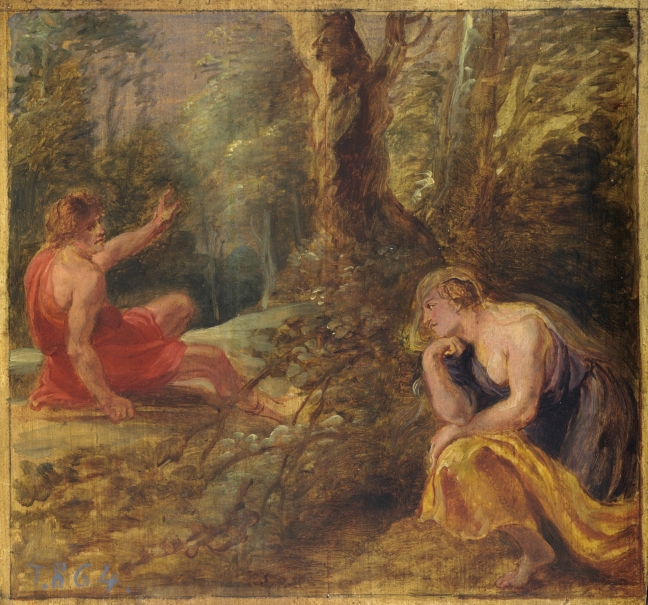
Cephalus and Procris
Oil on panel. 1636 - 1637
Fearing she was a victim of infidelity, Procris followed her beloved Cephalus to a clearing in the woods, where he was resting during a hunting expedition. The young woman´s jealousy led her to her death when Cephalus mistook her for wild game and shot her with an arrow. Rubens chose to depict that story from Ovid´s Metamorphoses in this preparatory sketch for a painting intended to decorate the Torre de la Parada. The definitive painting by Peeter Symons was often mistakenly thought to represen
ARTWORK
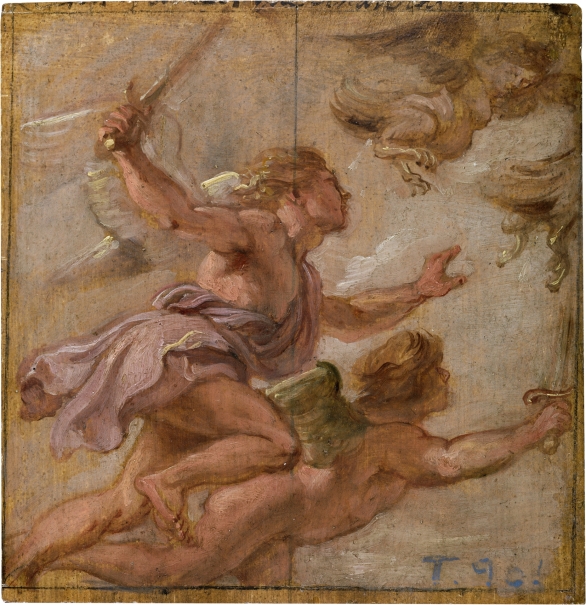
The Persecution of the Harpies
Oil on panel. 1636 - 1637
In his Metamorphoses, Ovid tells of the moment when the Harpies, monstrous beings that were half bird and half woman, were pursued and killed by two of the Argonauts that accompanied Jason. On this panel, Rubens depicts the scene that served as a preparatory sketch for a painting by Erasmus Quellinus that hung in the Torre de la Parada. The subject is one of the most enigmatic of the whole series. Before its true meaning was known, it was interpreted as the “banishment of the night” or as “angel
ARTWORK
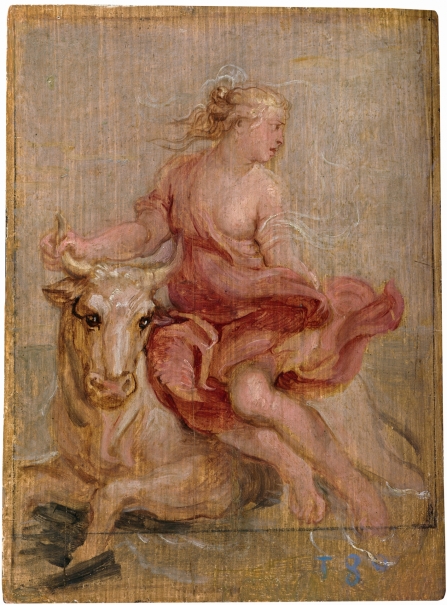
The Rape of Europe
Oil on panel. 1636 - 1637
Europe turns a last glance at her companions, who are located outside the composition, as Jupiter carries her away. The god was profoundly enamored of her and transformed into a bull in order to approach her. This story from Ovid´s Metamorphoses is depicted by Rubens in a very succinct manner in this preparatory sketch for a painting Erasmus Quellinus made for the Torre de la Parada.
ARTWORK
Loading...

Loading...

Up