
Loading...
The Villaescusa legacy
Felipe Garín Llombart, Museum Director, 1991-1993The Villaescusa legacy
Felipe Garín Llombart, Museum Director, 1991-1993
Not long after being appointed director, I received a call from the President of the Trust and he told me there was an important inheritance from a person who had died and left their legacy to the Prado Museum. With the funds from that inheritance we were able to buy some important works, provided we had the unanimous support of the Trust. Among these works there was a splendid still life by Sánchez Cotán and with a few others that he had painted, very few because he had only painted six or eight, we set up a spectacular exhibition including the Still Life with Thistle, the painting we had just bought.
The Villaescusa legacy, the one I'm speaking of, allowed us to carry out the effort of purchasing works of art that in some way could complete, and I know it's presumptuous to use the verb 'to complete', but yes, in some way they could complete the collection of the Prado Museum, which has a splendid collection, in other words, there are Museums in Europe and in the Americas that want to be Museums, which have the means or they have patrons, and they say we don't have anything by such and such Flemish or French painter, and they go out and add to their collection in a systematic fashion. But the Prado does not work that way. It is a Museum that has incorporated collections, initially the royal collection, which has progressively been completed by the kings and queens according to their wishes and their taste.
Afterwards the collection was increased substantially, more in terms of volume than sheer quality, with the confiscation of the Museum of the Trinity, whose collection was added to that of the Museum, then came an important number of donations, plus the purchases that were possible thanks to the Villaescusa legacy and also other purchases. Based on the collection we had, it was a matter of exhibiting the works that people want to see, making it a consistent exhibition insofar as that is possible, allowing people to know what they are going to see beyond any possible totems within the collection.
In other words, the exhibition discourse should be reasonably logical.
Director of the Museo del Prado, and previously been a member of its Board of Trustees. After his departure, he appoints Honorary Director. He is also at the helm of museums such as the Museo de Bellas Artes de Valencia San Pío V and the Museo Nacional de Cerámica y Artes Suntuarias González Martí, both located in the same city.
Interview recorded on June 07, 2018
Interview index
6 / 11-
The three conditions -
Professor Pérez Sánchez and his honesty -
The Museum staff in 1991 -
The need for an enlargement -
The challenge of transferring the Guernica -
The Villaescusa legacy -
Relationship with the media -
Official visits tell so much -
Works of art speak to you -
What the Prado taught me -
The Prado. A turning point in one's life
- Included in themes
- Increase of the collection
- Collective
- Management
- Chronology
- 1990-2000
- RDF
- RDF
Collective
Management
José María Luzón Nogué
Museum Director, 1994-1996
Francisco Calvo Serraller
Museum Director, 1993-1994
Fernando Checa Cremades
Museum Director, 1996-2001
Gabriele Finaldi
Assistant Director of Conservation and Research, 2002-2015
Manuela Mena Marqués
Head of the Department of Conservation of 18th Century Painting and Goya, 1978-2019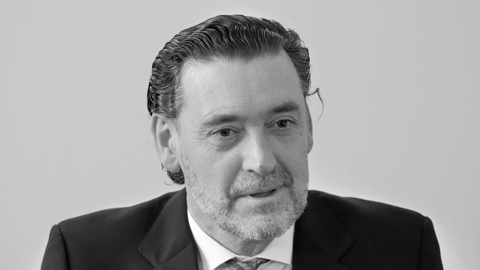
Miguel Zugaza Miranda
Museum Director, 2002-2017
Theme
--
Voces del Prado