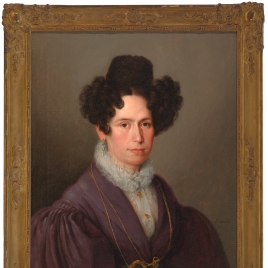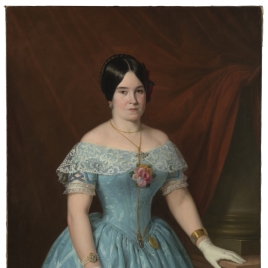
Fernanda Pascual
1832. Oil on canvas.Not on display
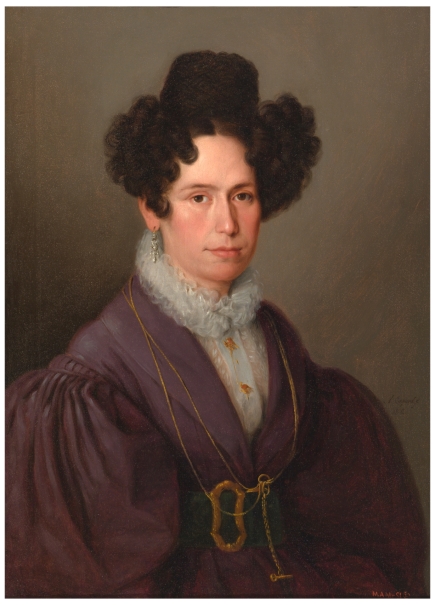
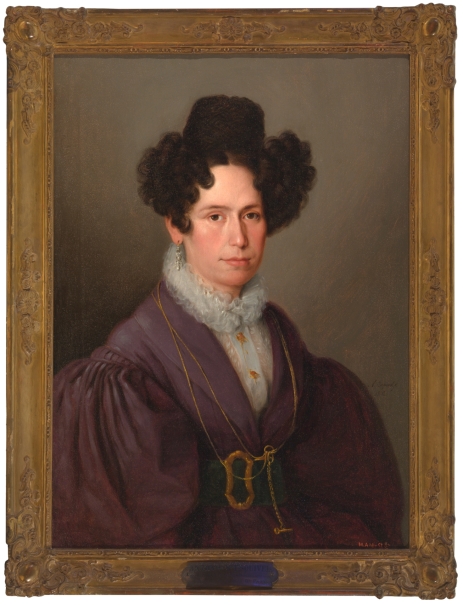
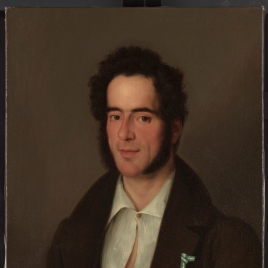
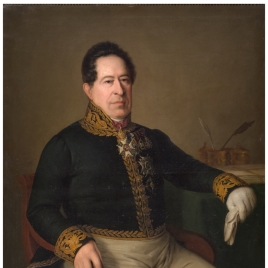
This painting portrays Fernanda Pascual, wife of Santiago Miranda y Montijano. The pair of portraits of the Miranda Pascual couple, consisting of this work and the portrait of "Santiago Miranda" (P04298), is a clear example of one of the most widespread and characteristic forms of Spanish Romanticism, the cabinet portrait. These paintings were markedly intimate and were usually destined to the private rooms of their owners. There are numerous portraits of this format in Esquivel’s artistic production. Their small size made them very affordable, and the main aim of these works was to faithfully capture the likeness of the model. Esquivel consequently mostly focused on portraying the faces of the sitters, and avoided any details of the setting that might distract the viewer´s attention. Thus, Fernanda Pascual´s gentle face, which the artist executed with a less than flattering honesty, is more brightly lit than the rest of the portrait. The light delicately shadows her flesh tones, highlighting the contours of her features in a very subtle manner. The depiction of the women´s clothing, whose delicate colour stands out faintly against the cold tones of the background, is particularly impressive in the gauzy shirt with its curly ruffled collar, which is painted with soft shades. Esquivel describes meticulously some of the details of her attire, such as the jewellery, or the gold brooches with tropical bird motifs on the shirt. These items, trappings of the era’s refined bourgeois Romanticism, were fully modern accessories at the time. The earrings seem like much older pieces. However, as with the valuable watch under her belt, the lady does not wear these ornaments ostentatiously, but rather naturally as part of a domestic setting. The artist probably executed the pair of portraits at the same time, in 1832.
G. Navarro, C., Fernanda Pascual de Miranda (1832). En Barón, J.: El retrato español en el Prado. De Goya a Sorolla, Madrid, Museo Nacional del Prado, 2007, p.108-109, n. 26