formularioRDF
The itinerary <em>TITULORECORRIDO</em> has been successfully created. Now you can add in works from the Collection browser
<em>TITULOOBRA</em> added to <em>TITULORECORRIDO</em> itinerary

Metabuscador

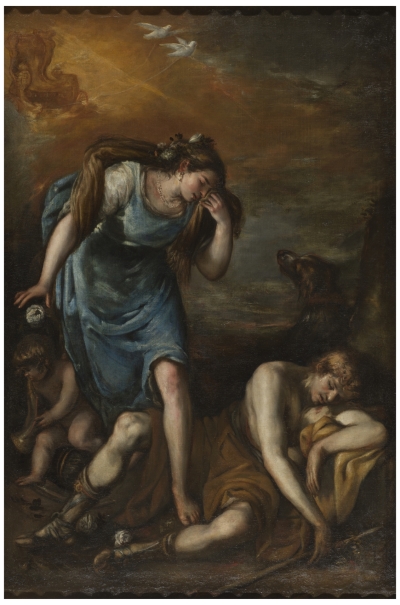
Venus Discovering the Dead Adonis
Oil on canvas. 1640 - 1645
The work depicts Venus, down from the heavens, weeping the death of the young hunter, having found his moribund body in the forest, gored by a wild boar. Cupid, leaning on a quiver with arrows and a bow, carries a hunting horn. In the background, the outline of a dog stands out against an empty landscape.Iconographically, it is worth highlighting the chaste portrayal of Venus, almost completely clothed, and Adonis’ wound, which is in his side rather than the groin, as narrated by Ovid in his Met
ARTWORK
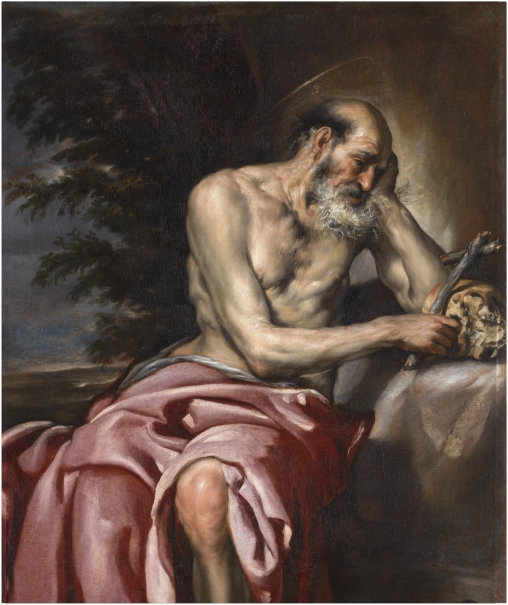
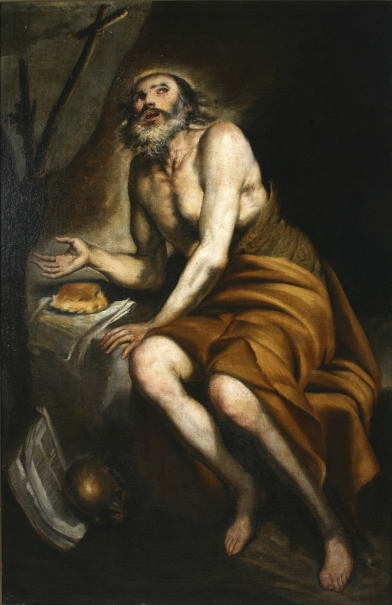
Penitent Saint Jerome
Oil on canvas. Second quarter of the XVII century
There were plentiful depictions of Saint Jerome during the Modern Era, including some examples by Polo himself. The works of this Saint and Doctor of the Church worked as a bridge between the ancient classical world and the new Christianity. He devoted his long life to intense study and intellectual work, first in Rome and later in the East. After deciding to retire for four years to the desert of Chalcis, he settled permanently in Bethlehem. There – with his erudite mastery of Latin, Greek and
ARTWORK
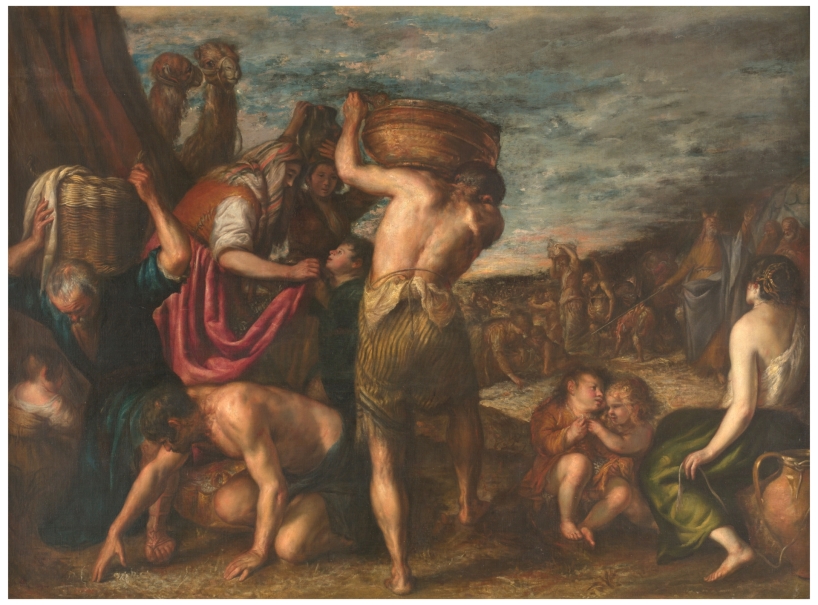
The gathering of manna
Oil on canvas. 1640 - 1645
This remarkable work shows an artist of outstanding quality, superior to the common Madrid painters of his time, a perfect connoisseur of the technique of Titian’s last period and with a personal way of interpreting the nude. The rich colouring is rendered with thick brushstrokes, creating a very dense effect, in the style of Carreño’s altar paintings. Certain elements recall the work of Velázquez: the female figure on the right and the child on the left evoke Venus in the Mirror.
ARTWORK
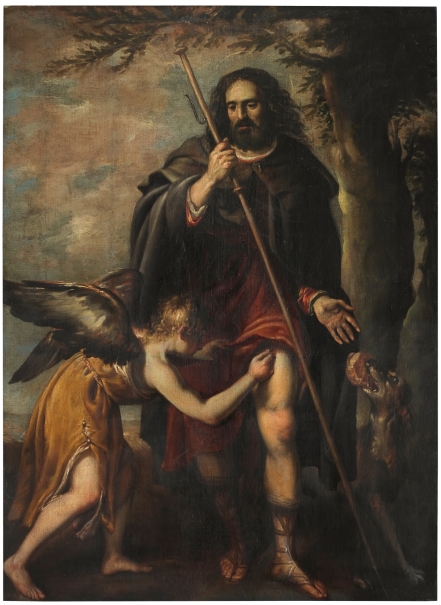
Saint Roch
Oil on canvas. Second quarter of the XVII century
The strong Venetian nature, the richness of colour and the lightness of execution connect this work with Diego Polo’s production. The monumental, solid, massive aura of the figure, which may recall the work of Navarrete el Mudo, is associated with El Escorial. Presumably, Polo not only paid attention to Titian’s work, but also must have seen and studied everything he could find that was in keeping with his Venetian sensibility. First and foremost, these certainly include the monumental figures o
ARTWORK
Saint Paul the Hermit in the desert
Oil on canvas. Second quarter of the XVII century
The former provenance of this painting is unknown. In any case, it must be related to a religious foundation in Madrid or its neighbouring provinces, given that it passed through the Museo Nacional de la Trinidad after the Ecclesiastical Confiscation. With the dissolution of that museum in 1872, the painting became part of the collections of the Museo del Prado and on 3 February 1879 it was transferred as a permanent loan to the Museo de Huesca at the initiative of the Provincial Monuments Commi
ARTWORK
Loading...

Loading...

Up