formularioRDF
The itinerary <em>TITULORECORRIDO</em> has been successfully created. Now you can add in works from the Collection browser
<em>TITULOOBRA</em> added to <em>TITULORECORRIDO</em> itinerary

Metabuscador

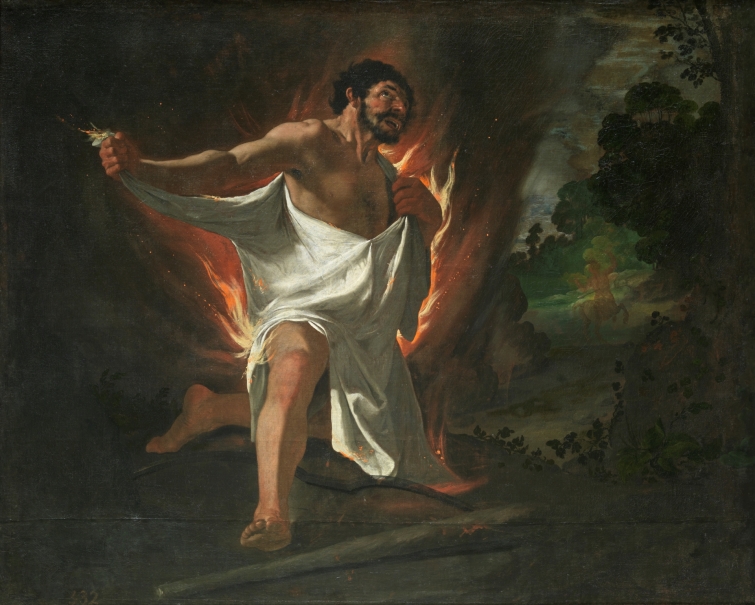
The Death of Hercules
Oil on canvas. 1634
This episode, which illustrates Hercules’s death, was narrated in great detail by Baltasar de Victoria, who tells how the hero killed Nessus the centaur for having attempted to rape Hercules’s bride, Deianira. After the wedding, when it came time to cross the Evinos River that runs through Aetolia, it could not be forded as the water was quite deep. Nessus the Centaur happed to be there and offered to carry Deianira across, [...] On the other bank, he [Hercules] heard voices, and Deianira’s scre
ARTWORK
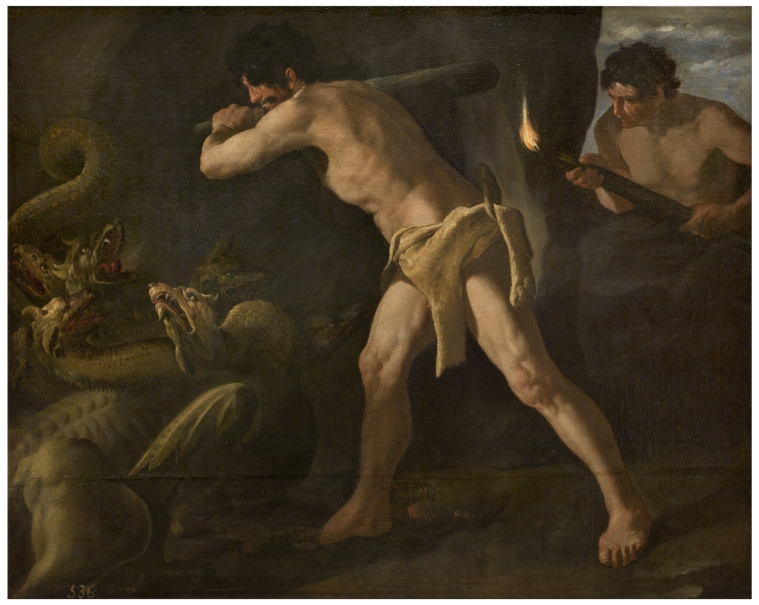
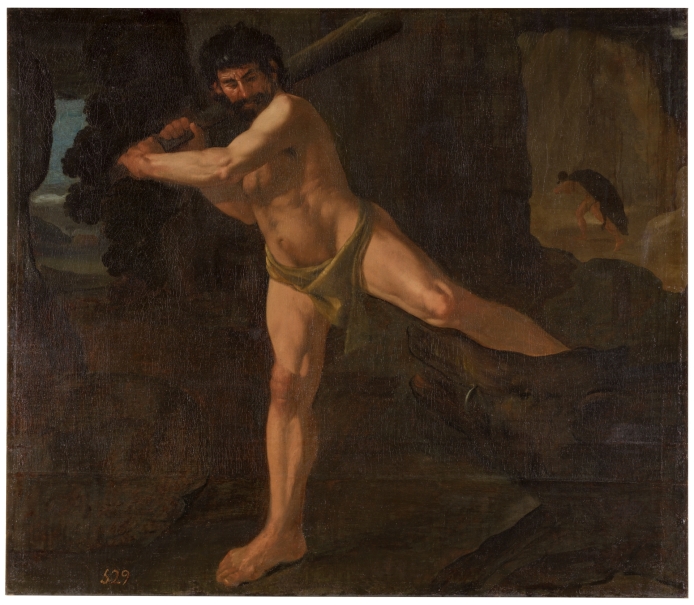
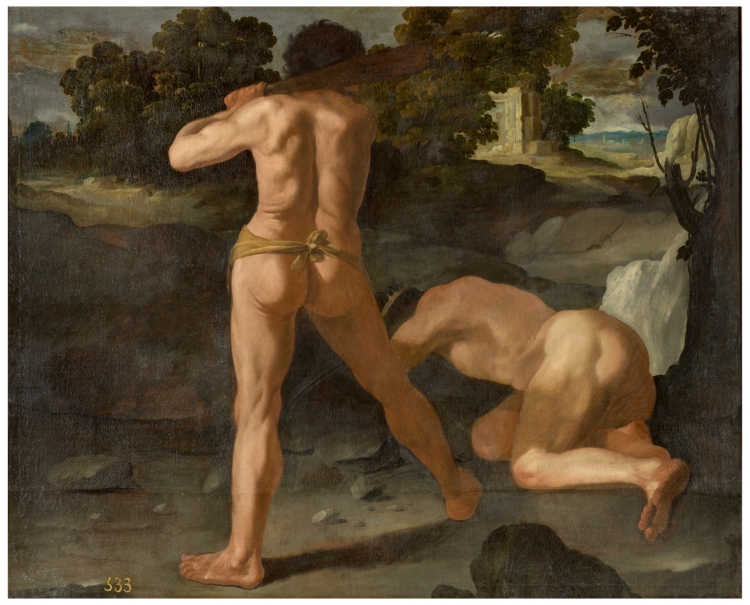
Hercules and the Hydra
Oil on canvas. 1634
The inhabitants of Lerna were terrorized by a multiheaded serpent that left a path of destruction behind. The creature was impossible to defeat because every time it lost one head, two grew in its place. Drawing on his ingenuity, Hercules cornered the serpent with fire and killed it with his club, an episode pictured in Hercules and the Hydra. Grasping his club with a powerful gesture, Hercules is shown just moments before striking the monster.This work is part of a series of ten paintings that
ARTWORK
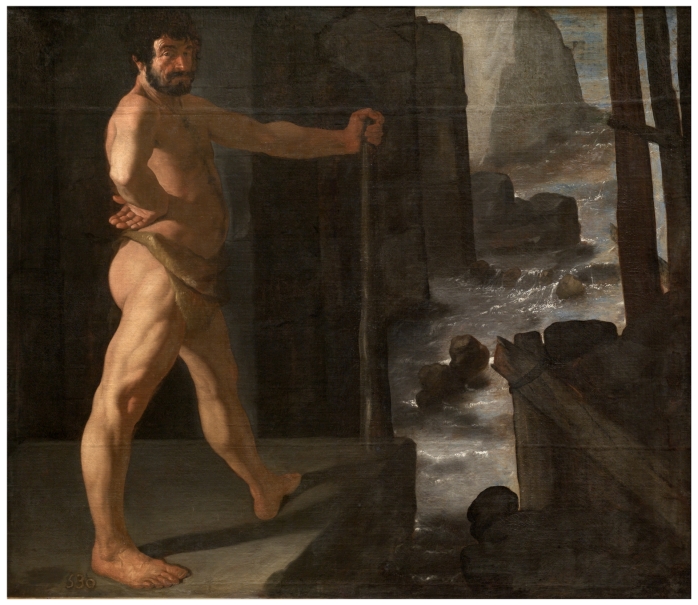
Hercules diverting the Course of the River Alpheus
Oil on canvas. 1634
Hercules looks at the viewer from the left side of the composition, cheerful after having rerouted the Alpheus river in response to a challenge by Augeas, King of Elis. The description of this episode in Charles II’s will as the cleaning of the Augean stables refers to what Pérez de Moya defined as stables where three thousand oxen slept, and very full of manure. As they had never been cleaned, they were contaminating the entire region and interfering with the husbandry of livestock there
ARTWORK
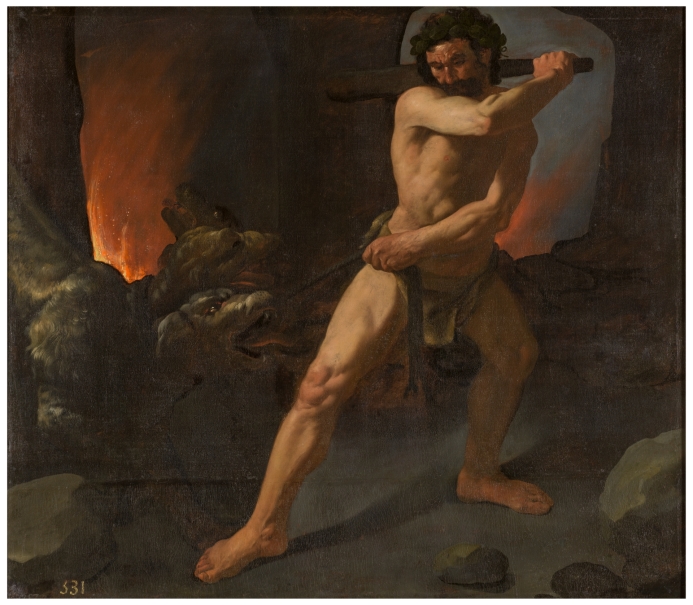
Hercules and Cerberus
Oil on canvas. 1634
Hercules is depicted here fighting with his club against Cerberus, the three-headed dog guarding the entrance to Hades, which lunges at him with its three ferocious mouths. According to the classical Greek myth, the last of the 12 labours that Hercules was commanded to complete was to bring Cerberus forth from the underworld. The rope with which he is pulling Cerberus indicates he is on the verge of gaining control over the beast. This canvas was one of a series of 12 paintings commissioned in 1
ARTWORK
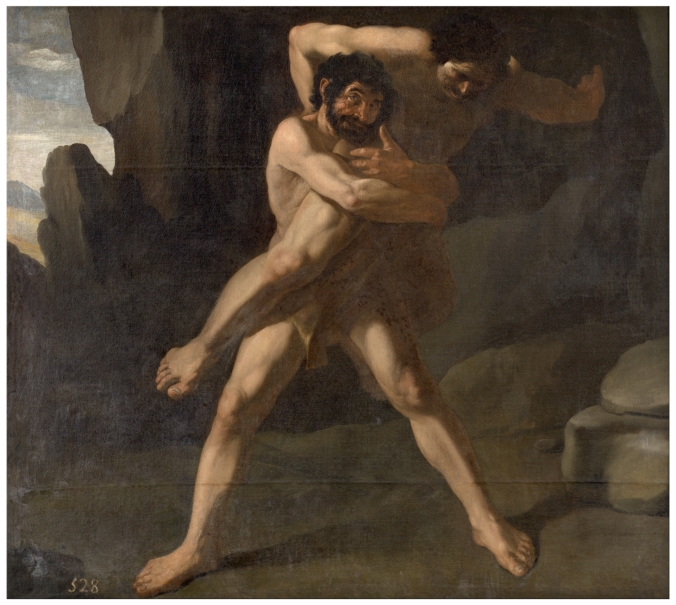
Hercules fighting with Antaeus
Oil on canvas. 1634
Hercules puts the North-African giant to death in yet another demonstration of his capacity to combine cleverness and strength. The creature’s mother was Gaea, goddess of the Earth, who doubled his strength every time he was knocked down, requiring Hercules to break his contact with the ground in order to kill him. Juan Pérez de Moya wrote: Noticing Anthaeus’s trickery, Hercules lifted him in the air and squeezed him so powerfully between his arms that he died. Such was Hercules’s victory
ARTWORK
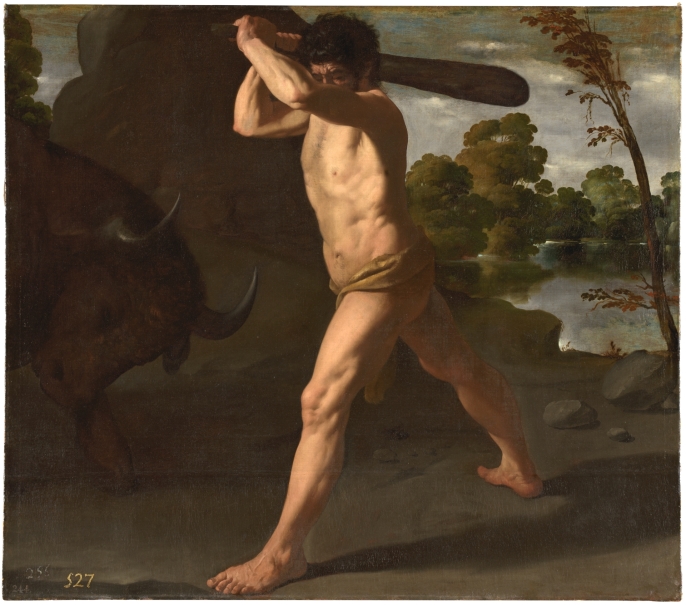
Hercules and the Cretan Bull
Oil on canvas. 1634
At Eurystheus’s behest, Hercules killed the Cretan Bull, a dangerous and ferocious animal that was decimating Crete. The Cretan Bull was a handsome bull that Poseidon had asked the king of Crete to sacrifice. Minos’s decision to sacrifice another animal instead angered the god, who then provoked Pasiphae’s carnal encounter with the bull. Their offspring was the Minotaur, an extraordinary animal pursued and killed by Hercules, who then took to it Mycenae. As Rosa López Torrijos has already
ARTWORK
Hercules and the Erymanthian Boar
Oil on canvas. 1634
Hercules’s encounter with the Erimanthean bore is not the best known of his labors. At first glance, it would appear to be nothing more than a new demonstration of his capacity to vanquish evil and save humanity from its excesses. Zurbarán’s depiction places the hero in the foreground at the center of the composition. He is about to kill the colossal wild bore that was laying waste to the land around Mount Erymanthus in Arcadia, terrifying its shepherds and attacking their herds. Hercules
ARTWORK
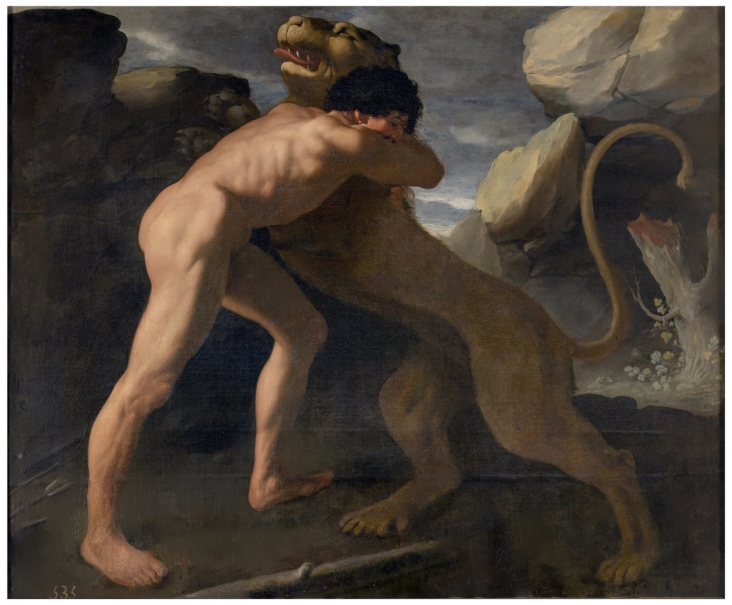
Hercules fighting the Nemean Lion
Oil on canvas. 1634
A lion was ravishing the region of Nemea and frightening its inhabitants to such a degree that they could no longer work the land. The Marquis of Villena’s Twelve Labors of Hercules, along with Juan Pérez de Moya’s Secret Philosophy (1585) and Baltasar de Victoria’s Theater of the Gods of the Pagan World (1620-1624), were almost certainly the reference texts for the conception of the Labors of Hercules series for the Hall of Realms. Villena set this scene in the rough, stony surroundings
ARTWORK
Hercules defeats King Geryon
Oil on canvas. 1634
This painting depicts the moment after Hercules has killed King Geryon, identified by the crown on his head. The monarch had come to defend his herd of oxen and cows after the god Eurystheus had ordered Hercules to steal them.This work is part of a series of ten paintings that Francisco de Zurbarán was commissioned to paint in 1634 as decoration for the Hall of Realms in the Buen Retiro Palace. Constructed in the 1630s on the outskirts of Madrid, the palace was a large suburban villa buil
ARTWORK
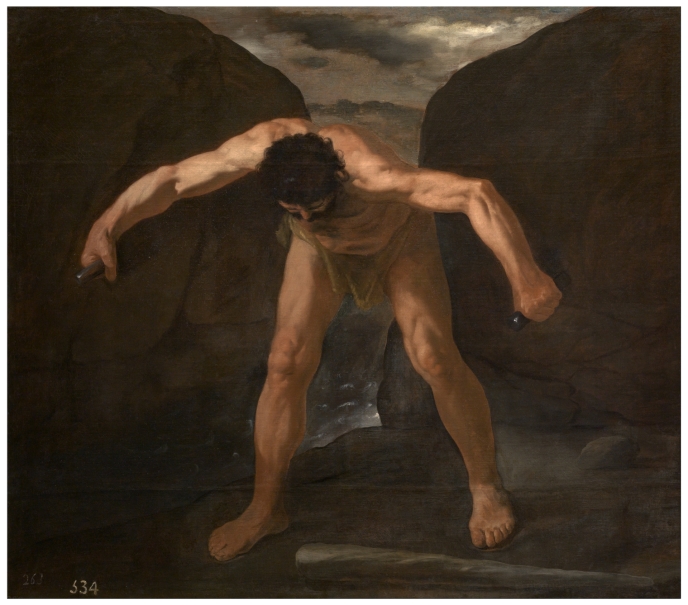
Hercules separates Mounts Calpe and Abylla
Oil on canvas. 1634
The Greek hero’s deeds that took place in the Iberian Peninsula, of which this is one, were interpreted as demonstrating his status as mythical forerunner of the Spanish monarchy.Hercules is shown making a great effort at the center of the composition. His legs are spread and gently flexed as he leans forward with bowed head and arms resting on two metal grips bolted to two enormous boulders to help him move them. A small expanse of the sea is visible between them at the very center of the compo
ARTWORK
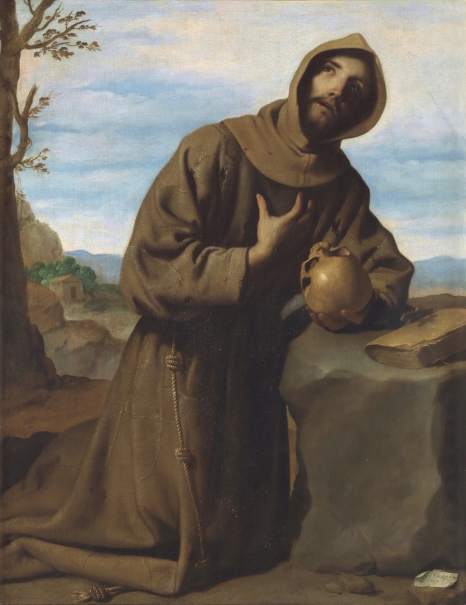
Saint Francis in Prayer
Oil on canvas. 1659
We can identify Saint Francis by his habit, his rope belt and the wound on his right hand. He raises his gaze towards heaven and holds a skull in his left hand. A crucifix rests on a book in front of him in this scene that presents him deep in prayer as a direct result of his meditations.Painted in Madrid in 1659 during the final years of Zurbarán’s life, Saint Francis at Prayer is a paradigmatic example of the subjects, narrative formulas and descriptive techniques that characterize that
ARTWORK
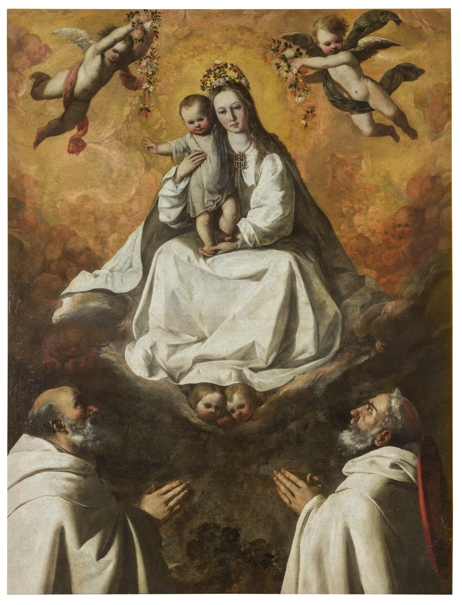
The Virgin of Mercy with two Mercedarians
Oil on canvas. 1635 - 1640
In a markedly symmetrical composition, the Virgin of Mercy, identifiable by the coat-of-arms at her neck, presents the Christ Child in the presence of two Mercedarian monks, probably Saint Raymond Nonnatus (who was a cardinal) and Saint Peter Nolasco, founder of the Order. The work was probably in the monastery of the Barefoot Mercedarians in Seville.
ARTWORK
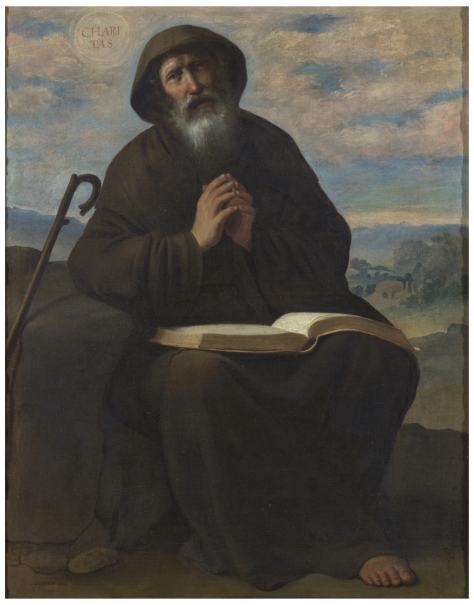
Saint Francis of Paola
Oil on canvas. 1659
The figure shown here is identifiable, by his habit and the disc bearing the word charitas, as Saint Francis of Paola (1416-1507). The painting is a companion-piece - sharing the same date, size and composition - to Saint Francis in Prayer, also in the Prado (P008207). Both are superb examples of the shift towards greater luminosity and a more varied use of colour characteristic of Zurbarán’s later years.
ARTWORK
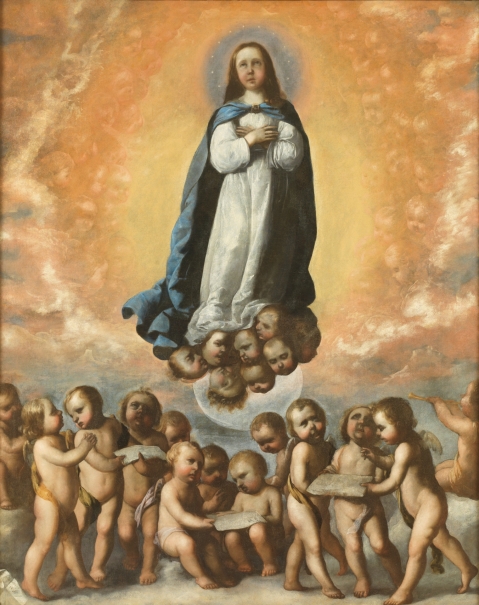
The Immaculate Conception as a Child
Oil on canvas. 1656
The Virgin Mary is presented as a little girl with her hands crossed over her chest. Wearing blue and white, she ascends on a group of angels’ heads as the heavens open to welcome her. This differs from earlier versions of the same subject by Zurbarán in its lack of symbols of the litanies and in the presence of a group of singing angels that occupy the entire bottom of the painting and are said to be based on models by Guido Reni.Beside being an iconographic rarity, the group of little a
ARTWORK
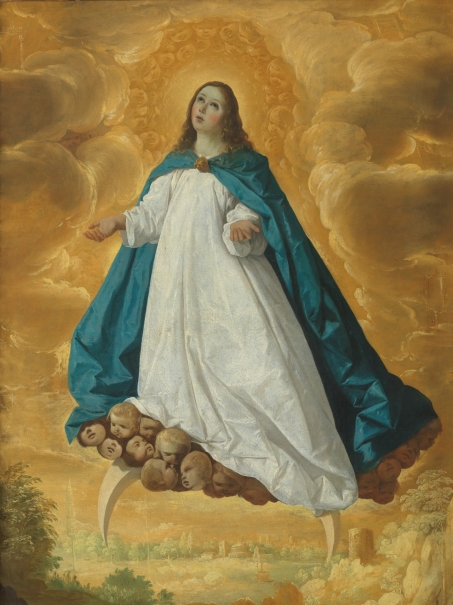
Immaculate Conception
Oil on canvas. Ca. 1635
The Immaculate Conception was one of Zurbarán’s most frequent subjects, as it was particularly popular with institutional and private clients in Seville, as well as very compatible with his skills as a narrator. Despite the story’s compositional limitations, he managed to achieve a notable variety that helped him avoid repeating himself. Here, for example, he offers a narrative and compositional alternative to other Immaculate Conceptions from the early decades of his career, including on
ARTWORK
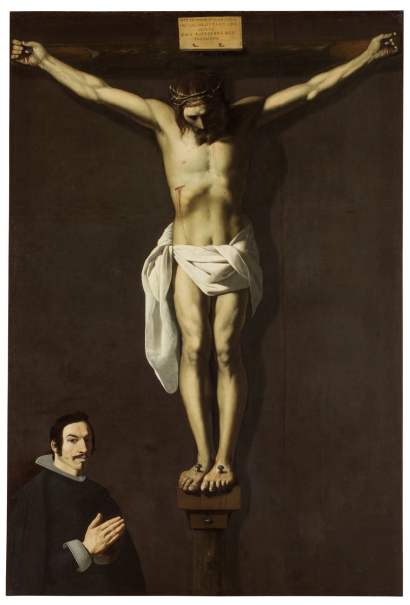
The Crucified Christ with a Donor
Oil on canvas. 1640
Francisco de Zurbarán cultivated a variety of genres over the course of his career, including still life, portraiture and history painting, but the majority of his works were religious. Many of the latter belonged to series employed in the decoration of monasteries, while others were single images for religious settings, including those he painted for private use. One of his religious subjects was Christ on the cross, which he depicted at least a dozen times with numerous variants between
ARTWORK
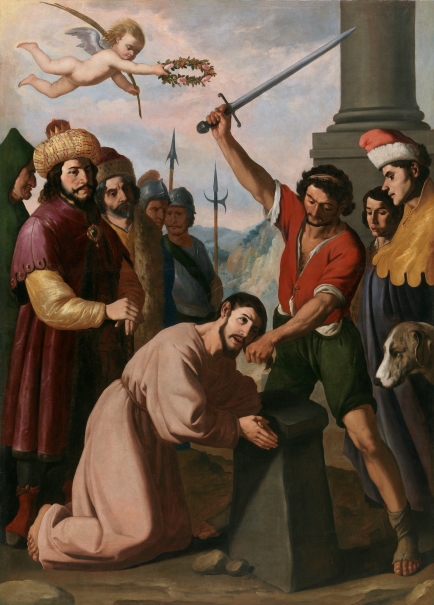
The Martyrdom of Saint James
Oil on canvas. Ca. 1640
The apostle Saint James is shown kneeling with his hands together in prayer, offering his neck up to the sword of the executioner whoprepares to decapitate him. Standing before the apostle, wearing a curious sort of headdress, is the authority who decreed his death. Behind Saint James are soldiers with halberds and various other figures who probably represent Herod Agrippa and the Jews who, according to the Acts of the Apostles (12:1-2), were pleased with the death of the man they considered the
ARTWORK
Loading...

Loading...

Up