
Loading...
1936: The Committee for the Confiscation and Protection of Art Treasures (JIPTA)
Ángel Macarrón Serrano, Transportation of Works (Casa Macarrón), 1937-19391936: The Committee for the Confiscation and Protection of Art Treasures (JIPTA)
Ángel Macarrón Serrano, Transportation of Works (Casa Macarrón), 1937-1939
My father was involved in the Heritage Committee in the Red zone. He was on the Committee alongside the Professor of Anatomy, Curro, who was the best Professor of Anatomy that the Fine Arts School has ever had. Antonio Fernández Curro was a friend of my father’s, a close friend, almost as if he were a member of the family. They worked on the side of the Republic during the Civil War, involved in recovering the country’s heritage. And then they continued the work later on. But Curro didn’t, because he was a Professor at the Fine Arts School, so he had to occupy his post. Although I think the Fine Arts School was closed during the war. He must have spoken to someone to get us in, because, of course, the shop was empty, and we needed some kind of income to survive. So my father worked in both places, for Heritage and with my grandmother. My grandmother was still alive, and she looked after the shop, together with my Aunt Juliana, who was one of the partners, and my sister. The three women ran the business at the shop, whilst we worked for Heritage.
Before Geneva, me and my brother worked on the Committee for the Confiscation and Protection of Art Treasures with all the works that had disappeared. Someone might come to recognise something, and they would have to make a sworn declaration. They had to give us as many details as possible. For example, whether the work had a burn-mark in some place, the kind of thing that helped us to check whether the work was really theirs. It was really necessary with all the material we had. We had several posts and I, specifically, worked at the National Archaeology Museum, which is where we photographed almost all of the pieces that we brought there. Then they sent me to take charge of a store located at the Church of San Fermín de los Navarros. The Committee commissioned Casa Macarrón to carry out this work. And the person who contacted me to ask us to do the work was not Fernando Álvarez de Sotomayor but Pedro Muguruza, who was the one who was in charge of everything. He’d known me virtually since I was child.
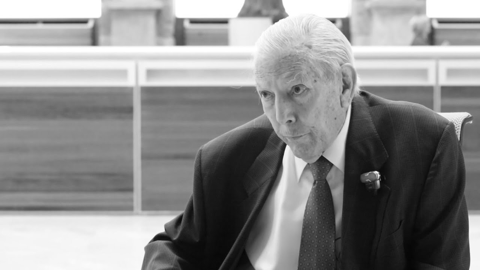
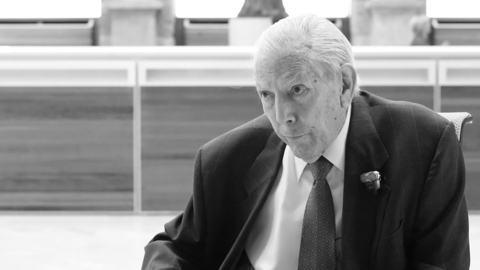
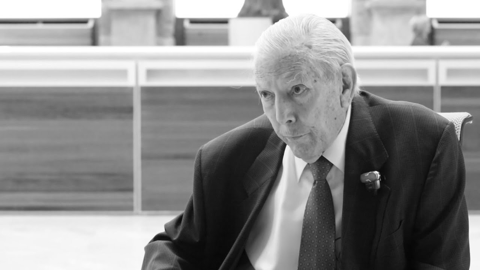
He is the grandson of the founder of Casa Macarrón, a company dedicated to transporting works of art, and helped to evacuate works from the Museo del Prado during the Spanish Civil War, and later return it.
Interview recorded on September 12, 2013
Interview index
4 / 6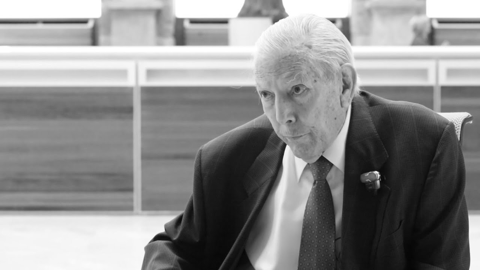
- Included in themes
- A crucial chapter: The Spanish Civil War
- Collective
- Transportation of Works
- Chronology
- 1930-1940
- RDF
- RDF
Theme
--
Voces del Prado