
Loading...
The architecture of Villanueva and the structure of the collections
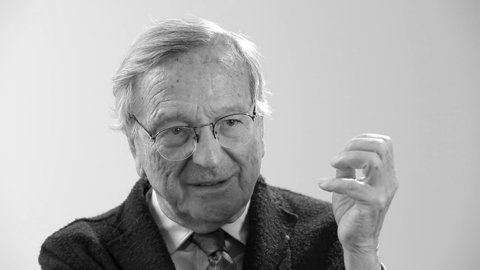
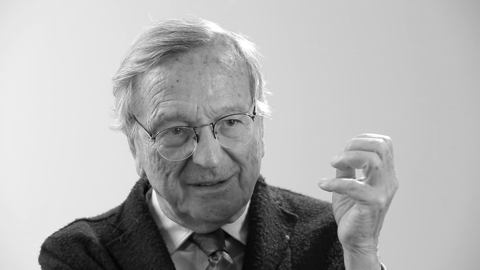
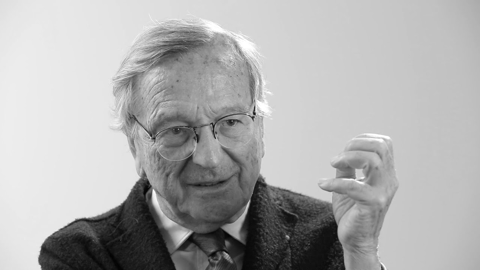
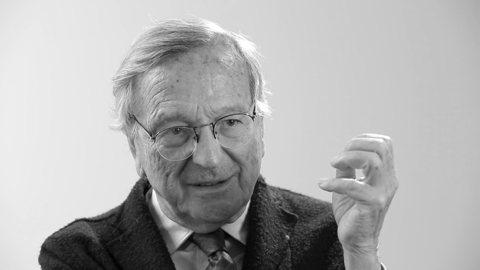
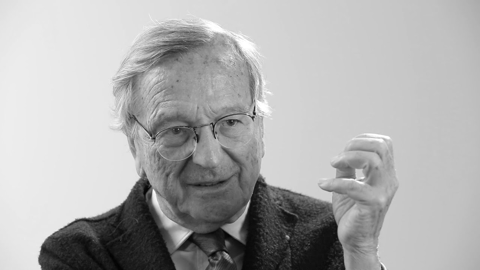
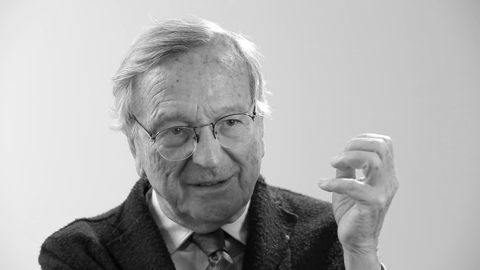
Rafael Moneo Vallés, Trustee and architect of the Jerónimos extension, 1994-What's onThe architecture of Villanueva and the structure of the collections
Rafael Moneo Vallés, Trustee and architect of the Jerónimos extension, 1994-What's on
One of the most beautiful aspects of the Prado in terms of its buildings and its architecture, is that I consider this to be one of the few museums – if not the only museum – in which the buildings actually help to structure and organise the collections. I see the Prado as the shared home of Velázquez and Goya. Naturally, it also provides a home for all the other painters that complete Spain’s contribution to the history of painting. The very architectural structure of the Museum, a building that was not expressly designed for its purpose, has helped to facilitate the hierarchy, structure and exhibition of the collections in accordance with the Museum’s architectural design. I believe it is highly appropriate that Velázquez should occupy the apse, an area that Villanueva focused so much attention on, understanding this hall to be the place where the members of the different academies that shared the building would congregate. And I also believe it is appropriate that Goya, who has perhaps become the artist most closely identified with the Museum, should be located at the end, as a kind of culmination. Furthermore, the importance of the Grand Gallery means that the Museum’s Directors have been able to set out the collections in such a way as to relate the history of Spanish painting, and even universal painting, as it were. You asked me before about my memories as a child: well, I recall a Prado in which, undoubtedly under the influence of Sánchez Cantón, the longitudinal gallery served to describe the development of Spanish painting. Starting with Berruguete and continuing with Ribera, next to El Greco, Murillo, Zurbarán and, at the end, even Herrera el Mozo; Velázquez in the highly distinguished hall consisting of the apse, and, finally, Goya. I believe the current layout has sought to provide a clearer explanation of how Velázquez learnt his craft. It helps us to understand Velázquez and El Greco from the perspective of the history of Venetian painting. In this respect, Titian, Tintoretto, Veronese and, finally, Rubens, help to explain Velázquez’s paintings as a conscious, rather than accidental, contribution to the history of art. We can also see the marvellous version of reality offered by the Baroque area, featuring Velázquez’s awareness of his own masters. The layout today is a little different to the one I encountered during my childhood, but it still essentially shines a light on the significance of Velázquez and Goya, and perhaps even grants them marginally greater importance, together with the work of El Greco. All of this means that the architecture and the collections really work together in a way that is quite unusual in many other museums.
Trustee of the Friends of the Museo del Prado Foundation since 1994, he is responsible for the Jerónimos extension from 2000 to 2007.
Interview recorded on October 30, 2017
Interview index
4 / 9-
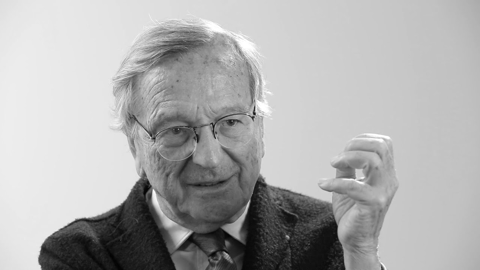
The Prado: the great depository of Spanish history -
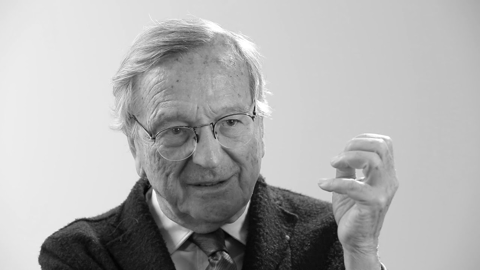
Being a member of The Board of Trustees -
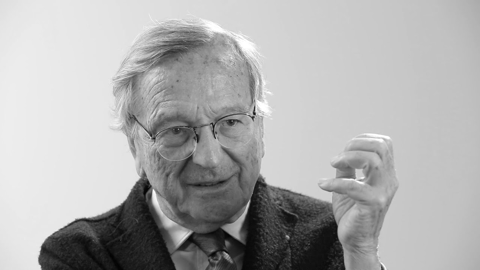
The Friends Foundation: a great help -
The architecture of Villanueva and the structure of the collections -
Velázquez: A recurring visit -
The great challenges of the expansion project -
The new expansion: The Prado Campus -
Inauguration without banality: successful museum management -
There are many things in Velázquez that we can learn from
Collective
Friends Foundation
Theme
--
Voces del Prado