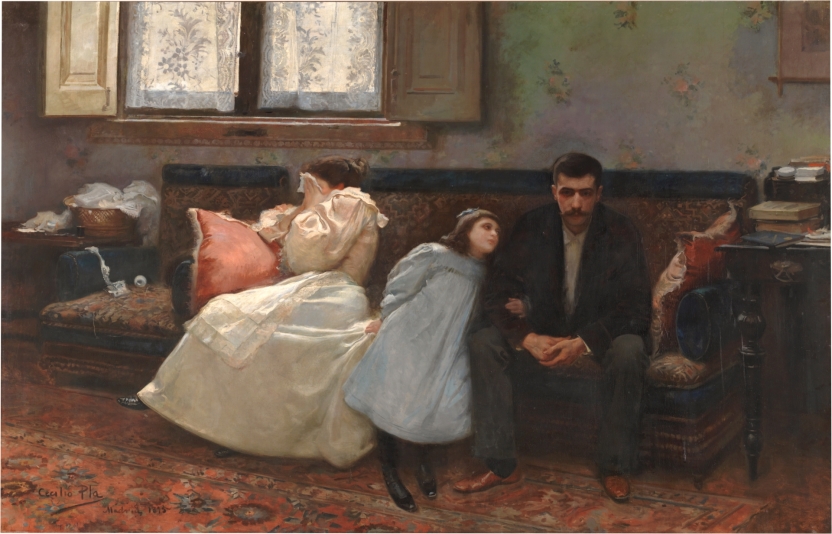
Bond of union
1895. Oil on canvas.Not on display
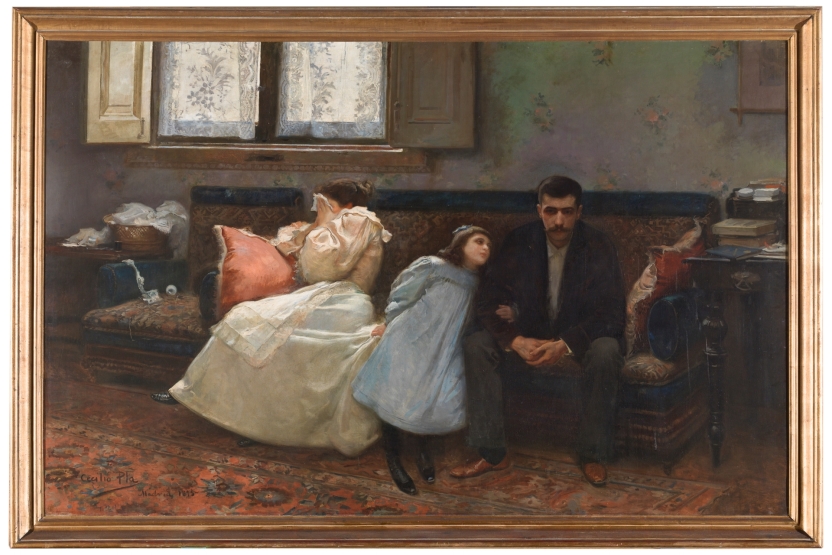
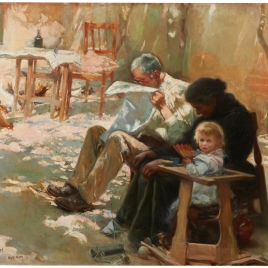
With the gravitation of bourgeois taste toward realism, indulging a fascination with the mundane in the everyday became something of a peccadillo, not exempt from a certain delight in the subversive frivolity of subjects usually considered inappropriate to art. As an accidental but somewhat morbid spectator of a scene in which he or she has neither a real nor a moral role, the viewer of the painting becomes a voyeur taking pleasure in it. This intrusion into the private –we have no right to know what is going on, much less to speculate on it– where anyone would otherwise feel uncomfortable, here opens itself to explorations of the always complex relationships between chance, logic and the instinctiveness of the gaze. As with other paintings peculiar to this trend of Realism that took prizes at national exhibitions, this work won the second-class medal at the National Exhibition of 1895. The painter conceived the representation in traditional narrative terms, where each figure, each gesture and each decorative element communicates an explicit message, as is expected of a painted expression of a literary discourse. It is easy to understand that a family argument has just taken place: the wife, turned away from her husband, reacts with tears which she tries to wipe away with a handkerchief; at the other end of the sofa, the man, with haughty indifference, tries to remain unaffected, although his masculine features betray inner turmoil; and their daughter, who gives the painting its title, attempts to reconcile her parents. (Reyero, C. in ‘Lazo de Unión’, Ternura y Melodrama. Pintura de escenas familiares en tiempos de Sorolla [‘Bond of Union’ Affection and Melodrama. Paintings of family scenes during Sorolla’s time]. Conselleria de Cultura i Educació de la Generalitat Valenciana, 2003, p. 328).