The Infant Saint John the Baptist with the Lamb
1681. Oil on canvas.On display elsewhere
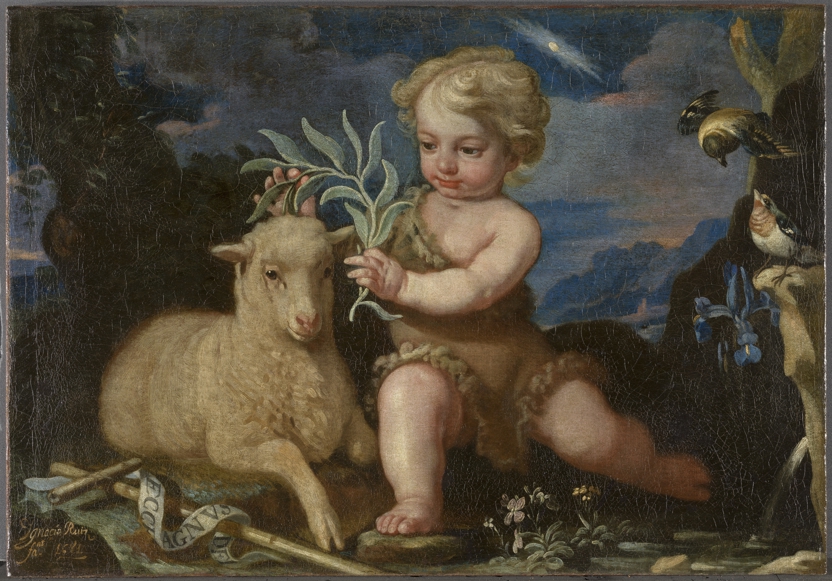
The artist depicts Saint John the Baptist with the lamb of the Passion, next to which rests a cross with the inscription Ecce Agnus Dei in the phylactery. The work, signed and dated 1681, aims to symbolically convey the ultimate purpose of the birth and death of Christ. This was a fairly widespread theme in 17th-century Spanish painting and was closely related to depictions of the Christ Child during the Passion. Francisco Ignacio shows interest in qualifying the figure of Saint Juanito with a series of symbols, revealing his dedication to the didactic purpose advised by Christian orthodoxy after the Council of Trent, which the painter will always strive to follow.
The illumination of the pinkish flesh tones of Saint John the Baptist and the ochre of the lamb stand out against the blues, grays, and browns of the landscape. The depiction of the child and the style reveal influences of José Donoso, also a disciple of Carreño. Francisco Ignacio collaborated with him at least since 1679. According to the painter, companion and friend of Ruiz, Antonio Palomino (1655–1726), after this collaboration his style degenerated slightly and became somewhat rougher, but always very corrected.
Zapata Fernández de la Hoz, Teresa, Francisco Ignacio Ruiz de la Iglesia (1649-1703) en el Museo del Prado: revisión y nuevas atribuciones. Boletín del Museo del Prado, Museo del Prado, 2013, p.82-95 [82 f.1]